
Length
InferredAbout 2.3 m; museum reference
Educational estimate with unspecified specimen and method. The secure type is immature; this does not establish mature size. [D3] [D5]
EXHIBIT 194
Avaceratops lammersi
Avaceratops is known securely from an immature skeleton, making the adult appearance particularly difficult to establish. [5]
TWO WAYS TO PICTURE THE PAST
Compare the evidence with the familiar movie image. The illustrations are not to a shared scale.
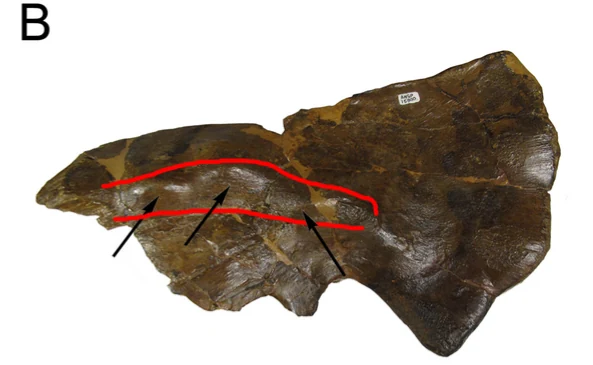
Photographed Avaceratops squamosal, a side-frill bone, cropped from the original comparative figure. Red lines and arrows mark bone features, not living coloration. The image does not supply missing adult horns or a complete frill reconstruction. [2]
Avaceratops squamosal.png · Héctor E. Rivera-Sylva, Brandon P. Hedrick and Peter Dodson. CC BY 4.0. Proportional resizing and WebP conversion; no anatomy edits. Current Commons composition preserved.
The photograph or figure shows the credited fossil material; displayed mounts and labels can include interpretation.
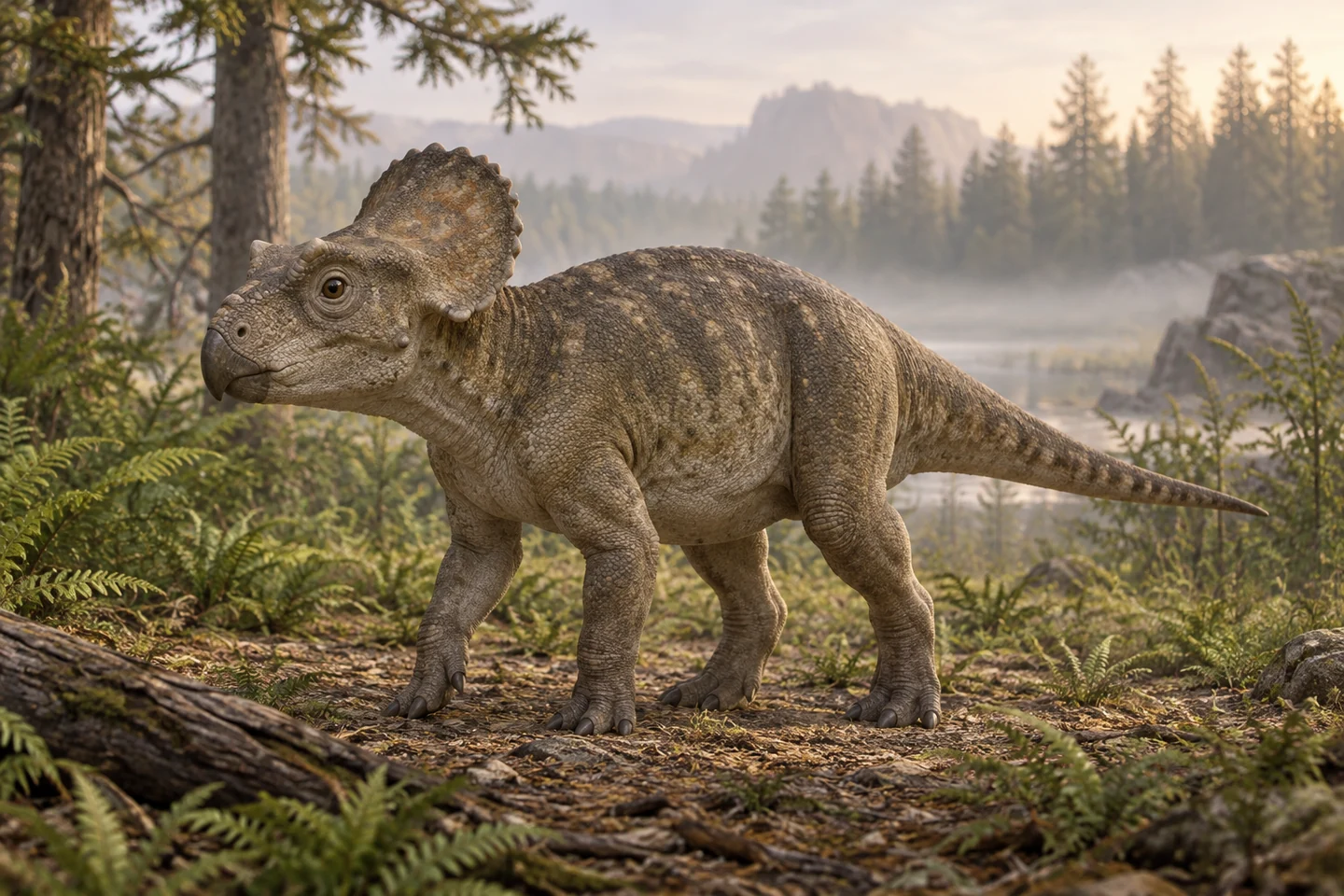
Original cinematic interpretation of Avaceratops. This depicts a conditional immature-type reconstruction. The unpreserved nasal and brow regions, whole body and covering are comparative; it does not combine the type with the disputed larger skull MOR692. Lighting, colors and scenery are artistic choices; this image does not document directly observed behavior. Lighting, coloration and scenery are artistic choices. This image does not document a fossil locality or behavior.
Original artwork · artistic interpretation.
Scientific view: source-informed reconstruction, credited paleoart or specimen-based imagery. Movie-style view: Original artistic interpretation. Reconstructions involve uncertainty.
MEET THE ANIMAL
Avaceratops comes from the Careless Creek Quarry in Montana, where sandy river deposits preserved its remains. Researchers compare the rock layers with the Judith River Formation's wider sequence to place the discovery in context. That correlation has uncertainties, so the quarry's location is more secure than a highly precise date for the individual dinosaur. [D4]
The original specimen was immature. Its frill and other skull features therefore need to be read as the anatomy of a growing animal. Features can change with age, making it risky to treat every juvenile difference as a permanent adult characteristic. Comparative research also cautions that incomplete frill bones cannot securely show whether openings were absent in the complete, mature structure. [D8]
The Natural History Museum identifies Avaceratops as a plant eater and lists a length of about 2.3 metres. That is a reference figure without a stated specimen, calculation or growth stage. It should not quietly become a maximum adult length. The known young individual still leaves questions about adult appearance and size. [D3]
PREHISTORIC ANIMAL DOSSIER
The animal, the evidence, and the questions still open.
Bone histology shows active growth. A short frill in a young animal cannot automatically define its adult ornamentation. [D5] [D2]
Profile scope: A. lammersi, chiefly immature holotype ANSP 15800; MOR 692 is excluded from secure adult reference measurements. [D2]
Source supported identifies a description documented by the cited source. Inferred marks a reconstruction or functional estimate. Debated marks competing interpretations. Not established means the sources reviewed for this dossier do not support a firm conclusion; it does not mean a behavior never occurred.
A size reference is an estimate, not a population range. Nesting evidence does not by itself establish courtship, mate choice, or lifelong pairing.
About 2.3 m; museum reference
Educational estimate with unspecified specimen and method. The secure type is immature; this does not establish mature size. [D3] [D5]
Not established here
No inspected mass model securely tied to the immature type was located. Uncertain adult MOR 692 is not substituted. [D2]
Plant eater
Museum herbivory assignment; the reviewed evidence does not identify an exact menu or preserved meal. [D3]
Campanian; Montana river deposits
Careless Creek Quarry, Judith River Formation; likely lower McClelland Ferry Member. Local bed-age correlation remains imperfect. [D4]
Four-legged body plan
Ceratopsid posture inferred comparatively; genus-specific trackways, gait and speed are not established here. [D7]
Short frill in an immature individual
The type lacks frill epimarginals, potentially a juvenile feature. Incomplete parietals make permanently absent adult windows uncertain. [D2]
Not established here
ANSP 15800 was juvenile or young subadult with rapidly growing bone. Its growth stage does not establish breeding age, nests or parental care. [D5]
Not established here
Ceratopsian sexual-selection hypotheses are comparative. Ornament shape does not establish this genus’s mate choice, courtship sequence or sex-specific roles. [D6]
Not established here
A partial type skeleton and uncertain adult skull association do not establish a living herd, social organization or solitary habits. [D1] [D2]
Sources and inspection notes for the claims in this profile.
THE STORY IN THE FOSSILS
An older 4.2 m adult reconstruction relied on the second skull MOR 692. The later assessment requires intermediate growth stages before that skull can securely define adult Avaceratops. [1] [2]
The sampled type’s ribs are heavily remodeled. Histological work cautions that rib growth marks can be poor chronological records, so a missing annual line cannot establish age. [5]
The dossier identifies the scope of each reference estimate. A mount, an individual fossil and a species-wide adult range are different measurements. Comparison metrics remain unavailable where adult scope has not been established. Unknown does not mean zero.
Sources support the stated claims and scopes. Refer to the evidence notes for uncertainty.
KEEP EXPLORING
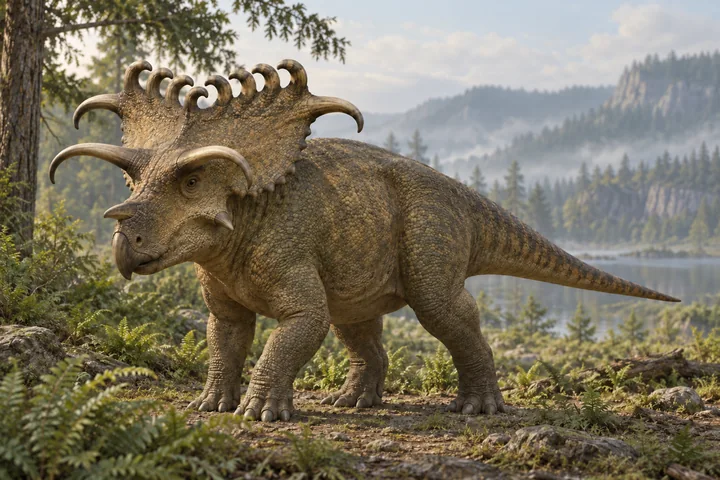
Kosmoceratops richardsoni
Kosmoceratops carried an unusually ornate head with fifteen horn-like features, including a curled frill margin.
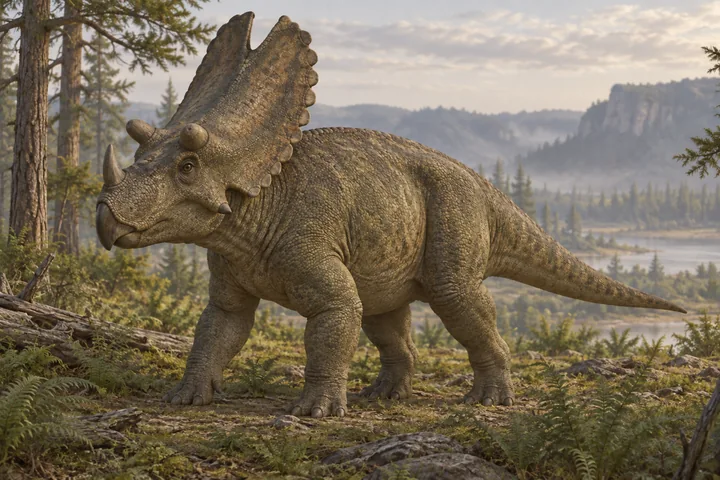
Utahceratops gettyi
Utahceratops combined an elongated frill with short, blunt brow horns that projected strongly sideways.
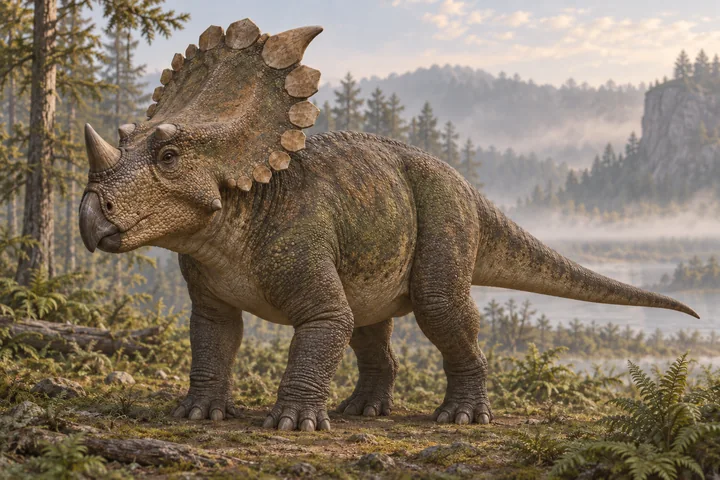
Regaliceratops peterhewsi
Regaliceratops had a crown-like frill and an unusual combination of a prominent nasal horn and reduced brow horns.