
Length
InferredAbout 6–7 m; museum reference
NHMU’s educational reconstruction interval is not a measured individual or species-size range; specimen, method and maturity are unspecified. [D7]
EXHIBIT 192
Utahceratops gettyi
Utahceratops combined an elongated frill with short, blunt brow horns that projected strongly sideways. [7]
TWO WAYS TO PICTURE THE PAST
Compare the evidence with the familiar movie image. The illustrations are not to a shared scale.
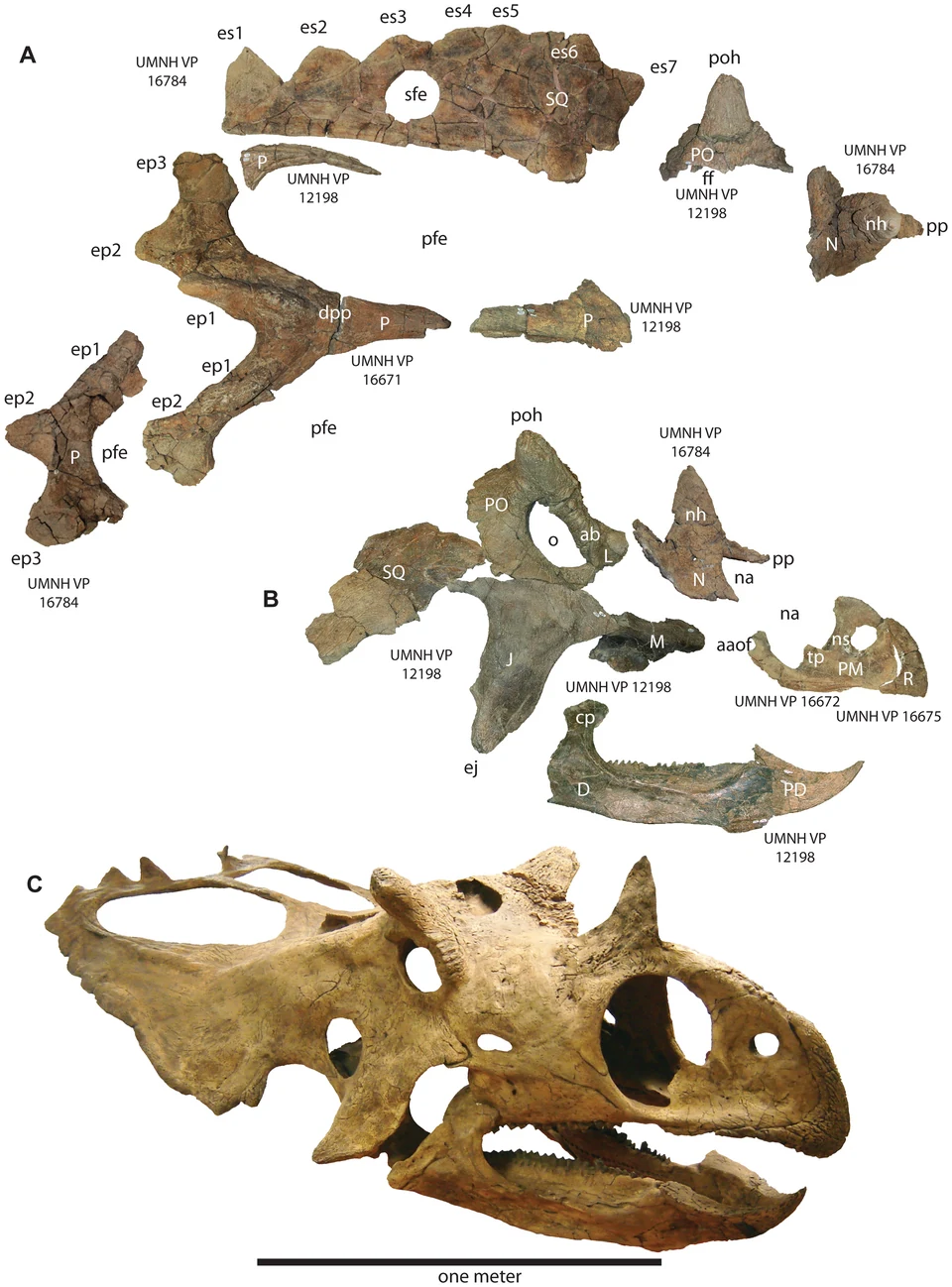
Published cranial-element composite and restored skull cast, assembled from multiple Utahceratops specimens; orbital photography is reversed in the original figure. This is not one complete skull. Living colors and soft tissues remain uncertain. [1]
Utahceratops.png · Scott D. Sampson, Mark A. Loewen, Andrew A. Farke, Eric M. Roberts, Catherine A. Forster, Joshua A. Smith and Alan L. Titus. CC BY 2.5. Proportional resizing and WebP conversion; no anatomy edits. Current Commons composition preserved.
The photograph or figure shows the credited fossil material; displayed mounts and labels can include interpretation.
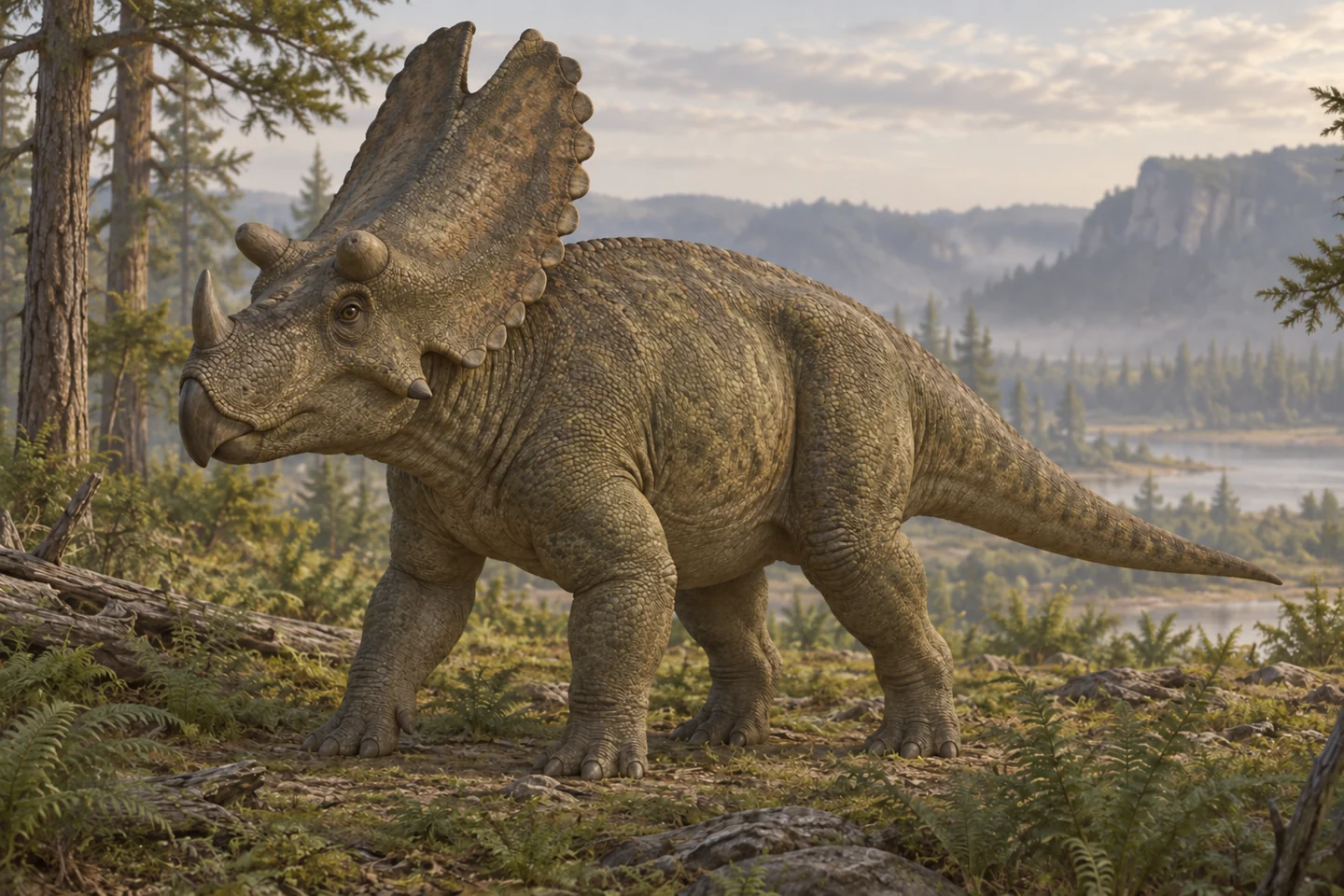
Original cinematic interpretation of Utahceratops. The distinctive short blunt brow horns, posterior nasal horn and notched frill follow the skull evidence. External horn sheaths, skin and living proportions remain reconstructed choices. Lighting, colors and scenery are artistic choices; this image does not document directly observed behavior. Lighting, coloration and scenery are artistic choices. This image does not document a fossil locality or behavior.
Original artwork · artistic interpretation.
Scientific view: source-informed reconstruction, credited paleoart or specimen-based imagery. Movie-style view: Original artistic interpretation. Reconstructions involve uncertainty.
MEET THE ANIMAL
Utahceratops was a large horned dinosaur from Utah's Late Cretaceous rocks. It carried a substantial frill, a nose horn and brow horns directed outward. Its appearance differed from the more elaborately ornamented Kosmoceratops found in the same formation. Discovering these animals helped reveal how varied the horned dinosaurs of western North America could be, even within one region. [D2]
A beak and closely packed tooth columns provided equipment for cutting plant food. The museum's six-to-seven-metre length reference is an educational estimate without a specified measured individual or growth stage. The bony frill also contained openings, but they were covered with skin in life. A fossil's open spaces therefore should not automatically be drawn as holes right through a living animal's head covering. [D7]
A bone accumulation has prompted questions about its social life. Meeting research describes transported and weathered remains rather than a complete group preserved exactly as it stood. Water can bring bones together after death. That evidence makes a stable herd harder to establish and prevents a busy fossil quarry from becoming a detailed story about living family groups without further support. [D3]
PREHISTORIC ANIMAL DOSSIER
The animal, the evidence, and the questions still open.
A beak and closely packed tooth columns processed plants. Mixed-age bonebed remains require taphonomic interpretation before social conclusions. [D7] [D3]
Profile scope: U. gettyi; Utah Kaiparowits specimens, including holotype cranium UMNH VP 16784 and referred partial skeletons. [D1]
Source supported identifies a description documented by the cited source. Inferred marks a reconstruction or functional estimate. Debated marks competing interpretations. Not established means the sources reviewed for this dossier do not support a firm conclusion; it does not mean a behavior never occurred.
A size reference is an estimate, not a population range. Nesting evidence does not by itself establish courtship, mate choice, or lifelong pairing.
About 6–7 m; museum reference
NHMU’s educational reconstruction interval is not a measured individual or species-size range; specimen, method and maturity are unspecified. [D7]
About 3–4 t; institutional reference
The discovery announcement’s estimate lacks a named individual, maturity assessment and mass method; it is not a species range. [D2]
Plant eater
A beak and dental battery of closely packed tooth columns formed cutting surfaces; the exact plants eaten remain unknown. [D7]
Late Campanian; southern Utah
Kaiparowits Formation coastal-plain rivers and floodplains; northern hemisphere landmass Laramidia. [D1]
Four-legged body plan
Ceratopsid posture inferred comparatively; genus-specific trackways, gait and speed are not established here. [D6]
Elongated frill; blunt sideways brow horns
The nasal horn lies unusually far back, behind the nostril. Brow cores are short and dorsolaterally directed. [D1]
Not established here
Sampled limb bones show remodeling that can erase growth marks; this does not establish breeding age, clutch size, nests or parental care. [D4]
Not established here
Ceratopsian sexual-selection hypotheses are comparative. Ornament shape does not establish this genus’s mate choice, courtship sequence or sex-specific roles. [D5]
Mixed-age fossil association; behavior unresolved
Locality 942 contains disarticulated juvenile, subadult and adult remains in a river channel. Weathering and transport complicate any inference of a living herd. [D3]
Sources and inspection notes for the claims in this profile.
THE STORY IN THE FOSSILS
The preliminary taphonomic study found weathered bones that were disarticulated before transport and burial. Their association preserves a depositional history, not a direct snapshot of herd behavior. [3]
The large frill contained bony openings covered by skin in life. A restored skull can show these windows without implying visible holes through the living animal’s neck shield. [7]
The dossier identifies the scope of each reference estimate. A mount, an individual fossil and a species-wide adult range are different measurements. Comparison metrics remain unavailable where adult scope has not been established. Unknown does not mean zero.
Sources support the stated claims and scopes. Refer to the evidence notes for uncertainty.
KEEP EXPLORING
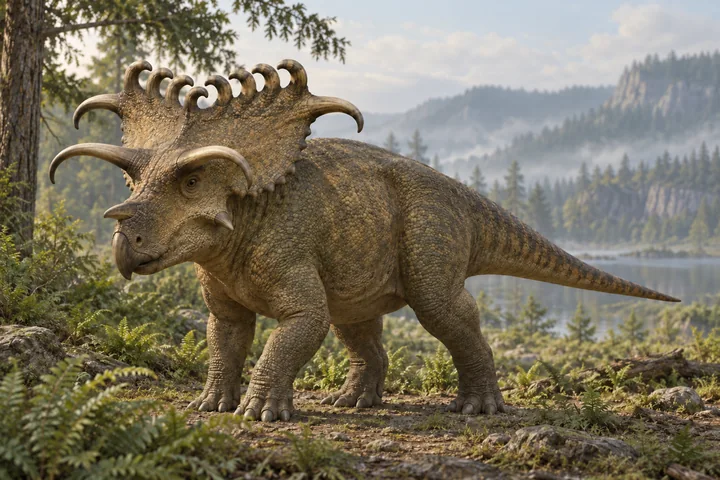
Kosmoceratops richardsoni
Kosmoceratops carried an unusually ornate head with fifteen horn-like features, including a curled frill margin.
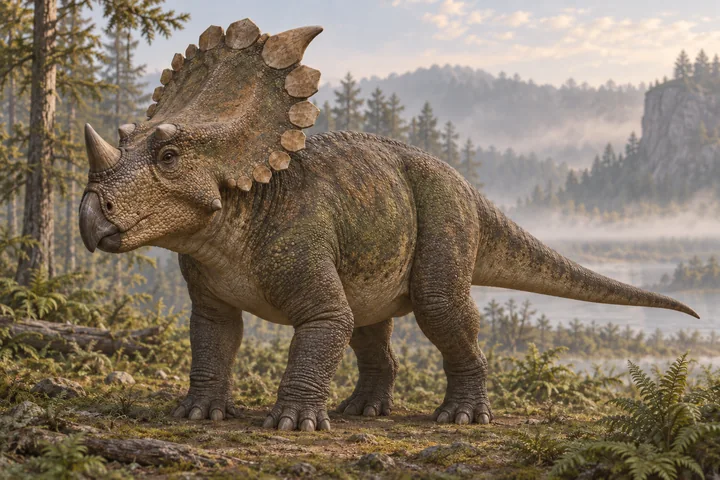
Regaliceratops peterhewsi
Regaliceratops had a crown-like frill and an unusual combination of a prominent nasal horn and reduced brow horns.
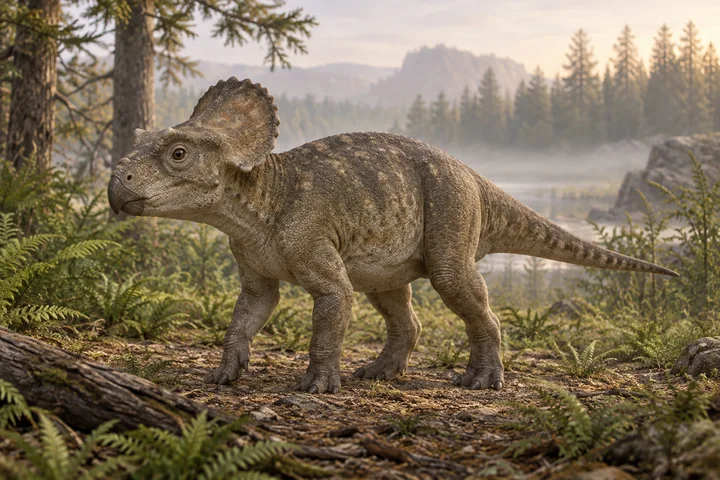
Avaceratops lammersi
Avaceratops is known securely from an immature skeleton, making the adult appearance particularly difficult to establish.