
Body length
InferredOriginal reconstructed estimate:32–34 m.
This historical reconstruction interval is not an adult population range. [D1]
EXHIBIT 274
Futalognkosaurus dukei
Dinosaur
A Patagonian titanosaur with a robust neck and preserved neck, trunk and pelvis skeleton. [1]
TWO WAYS TO PICTURE THE PAST
Compare the evidence with the familiar movie image. The illustrations are not to a shared scale.
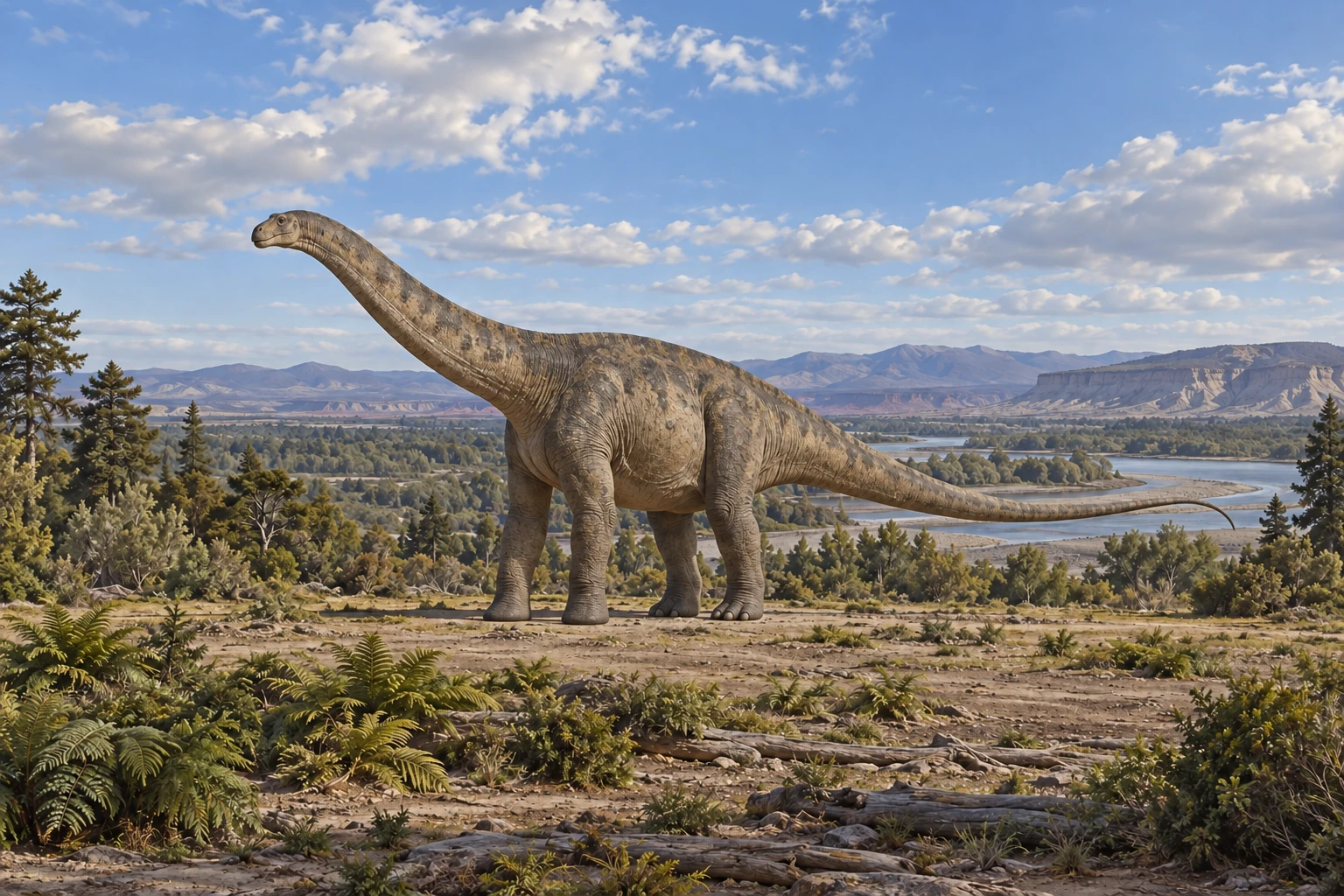
An illustrative reconstruction. Compare its anatomy with the evidence and limitations in the dossier. [2]
Source-informed reconstruction. Appearance evidence [2]. Original illustration; missing anatomy, coloration and scenery include interpretation.
Fossils constrain this life reconstruction. Missing anatomy, coloration and the environmental scene include interpretation; the dossier explains the evidence limits.
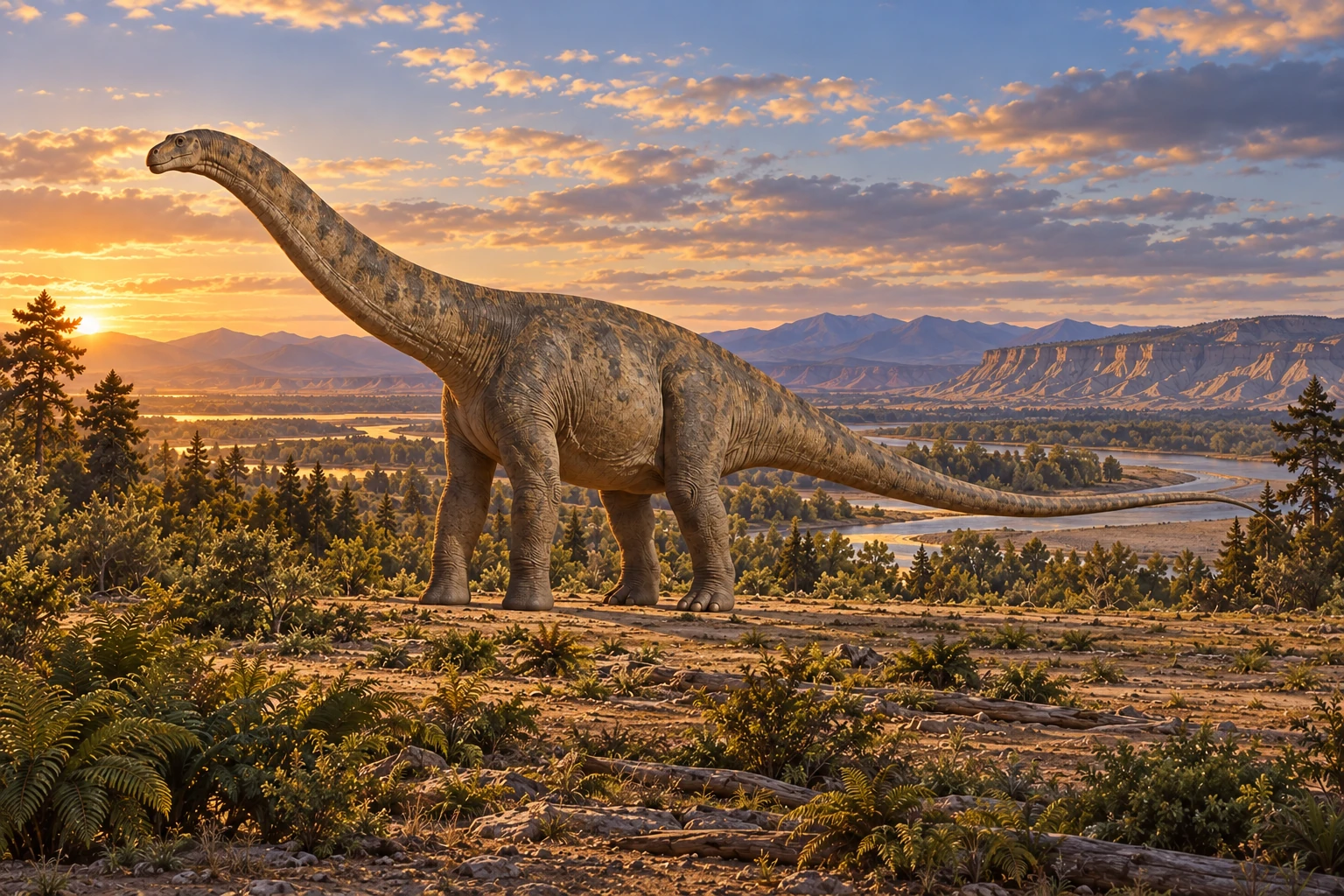
An illustrative reconstruction. Compare its anatomy with the evidence and limitations in the dossier. Lighting, coloration and scenery are artistic choices. This image does not document a fossil locality or behavior.
Original artwork · artistic interpretation.
Scientific view: source-informed reconstruction, credited paleoart or specimen-based imagery. Movie-style view: Original artistic interpretation. Reconstructions involve uncertainty.
MEET THE ANIMAL
Futalognkosaurus was a giant long-necked dinosaur from Patagonia, in present-day Argentina. Its discovery helped scientists investigate a Cretaceous landscape with forests and winding rivers. Leaves, fish and other fossils were found with the dinosaur bones. Those neighbors help reconstruct the surroundings, but they do not tell us exactly which plants this individual ate or how it spent each day. [D1]
An especially useful part of this fossil is its neck and trunk. Many giant dinosaurs are known from very few bones, so a substantial connected body section offers valuable comparisons. Researchers described tall arches on the neck vertebrae and a broad pelvis. Differences in individual bones helped distinguish Futalognkosaurus from other titanosaurs, even when those animals were closely related. [D2]
Important gaps remain. Its skull, feet and most of its tail were not preserved in the holotype. A complete picture therefore needs comparisons with relatives. These missing parts explain why a confident-looking reconstruction should never be mistaken for a complete animal that scientists dug out of the ground. [D2]
PREHISTORIC ANIMAL DOSSIER
The animal, the evidence, and the questions still open.
The preserved torso lacks skull, complete limbs and most tail. [D2]
Profile scope: This exhibit concerns Futalognkosaurus dukei from the Portezuelo Formation of Argentina. [D1]
Source supported identifies a description documented by the cited source. Inferred marks a reconstruction or functional estimate. Debated marks competing interpretations. Not established means the sources reviewed for this dossier do not support a firm conclusion; it does not mean a behavior never occurred.
A size reference is an estimate, not a population range. Nesting evidence does not by itself establish courtship, mate choice, or lifelong pairing.
Original reconstructed estimate:32–34 m.
This historical reconstruction interval is not an adult population range. [D1]
Not established here
Reviewed anatomy does not establish a body-mass interval. [D2]
Plant-eating sauropod inferred.
Quarry leaves describe available vegetation, not identified stomach contents. [D1]
Seasonally humid forest and river landscape.
Meandering channels and an oxbow burial setting do not imply an aquatic dinosaur. [D1]
Four-legged terrestrial movement inferred.
Missing limbs require comparison with other titanosaurs; speed remains unresolved. [D2]
Robust neck, high vertebral arches and broad pelvis.
Head, feet and most tail anatomy remain comparative restorations. [D2]
Not established here
Quarry eggshell was undetermined, not assigned to Futalognkosaurus. [D1]
Not established here
Reviewed bones establish no mating display or sexual dimorphism. [D2]
Not established here
A mixed fossil assemblage does not establish a Futalognkosaurus herd. [D1]
Sources and inspection notes for the claims in this profile.
THE STORY IN THE FOSSILS
Preserved vertebral shapes distinguish the taxon without relying on an imagined complete skeleton. [2]
The quarry combined dinosaur bones with leaves, fish and other remains. Its environmental interpretation separates the living landscape from the events that buried those fossils. [1]
The dossier identifies the scope of each reference estimate. A mount, an individual fossil and a species-wide adult range are different measurements. Comparison metrics remain unavailable where adult scope has not been established. Unknown does not mean zero.
Sources support the stated claims and scopes. Refer to the evidence notes for uncertainty.
KEEP EXPLORING
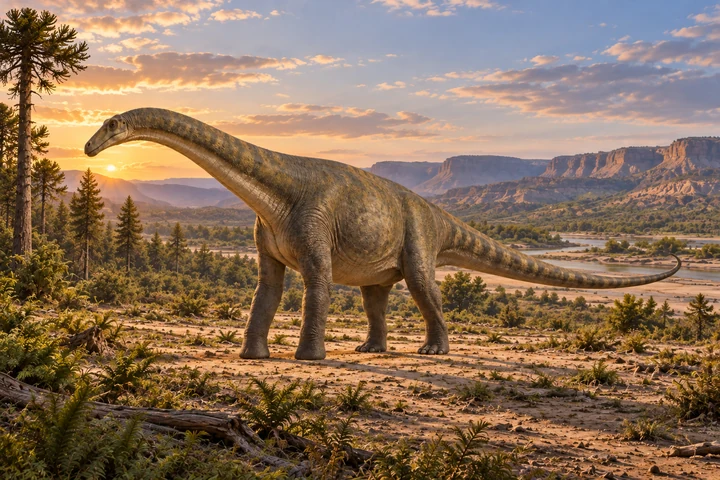
Sarmientosaurus musacchioi
Dinosaur
A Patagonian plant-eating titanosaur whose unusually complete skull allowed researchers to investigate its head and senses.
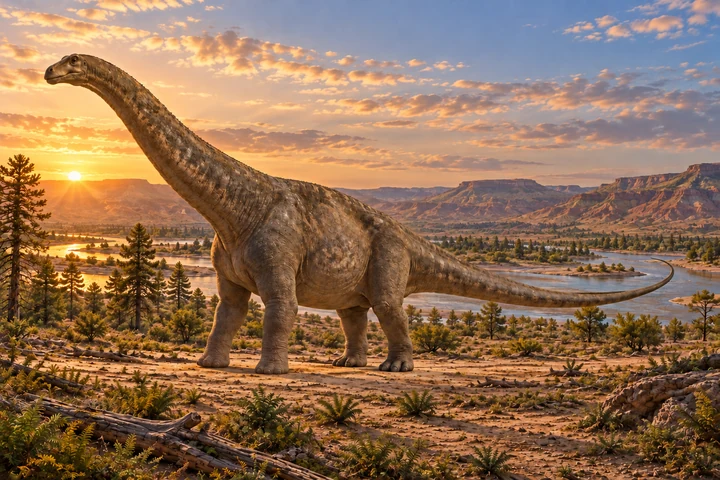
Notocolossus gonzalezparejasi
Dinosaur
An enormous Argentine titanosaur that supplied rare evidence about the short, sturdy hind feet of giant sauropods.
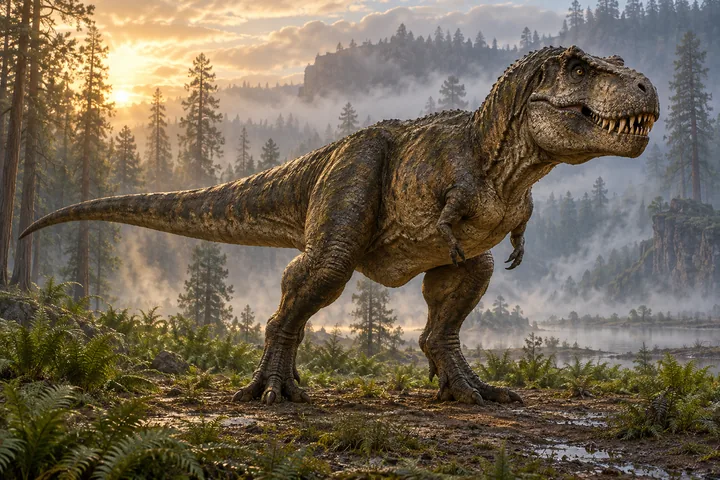
Tyrannosaurus rex
Tyrannosaurus rex was a large meat-eating dinosaur from the final part of the Cretaceous in western North America. Fossil teeth, bite marks and skeletons reveal a powerful animal whose behaviour still invites questions.