
Body length
InferredAbout 5 m (museum reference)
Educational reference without individual or maturity. An older femur regression yielded 4.85 m. [D2] [D4]
EXHIBIT 140
Achillobator giganticus
Achillobator had distinctive limb and pelvic proportions. [1]
TWO WAYS TO PICTURE THE PAST
Compare the evidence with the familiar movie image. The illustrations are not to a shared scale.
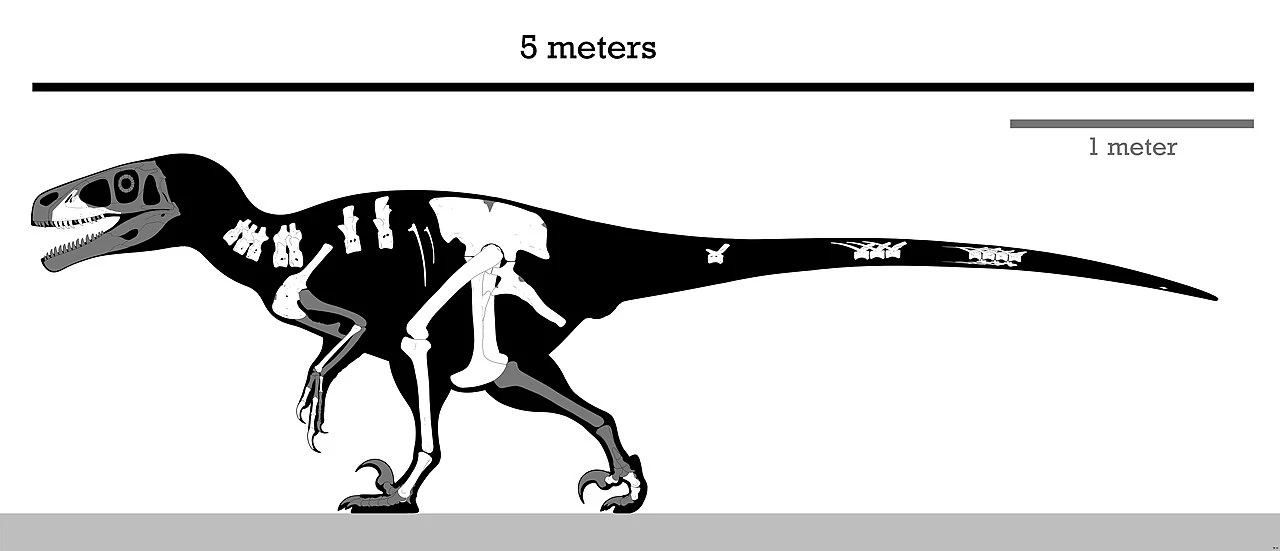
Achillobator giganticus restoration by PaleoNeolitic, based on associated MNUFR 15 type material. Preserved elements appear white and missing bones grey within a hypothetical body outline. Missing regions use comparisons with other dromaeosaurids. The artist’s 5 m restoration and outlined covering are not a measured complete adult body or fossil plumage. [1]
Achillobator Skeleton Reconstruction.jpg · PaleoNeolitic. CC BY-SA 4.0. Current Commons 1280 px preview converted to WebP with proportional thumbnail reduction. No cropping, mirroring, anatomical edits or compositing; original annotations retained. Derivatives retain CC BY-SA 4.0.
Skeletal mounts and drawings may restore missing parts; the caption identifies the displayed material.
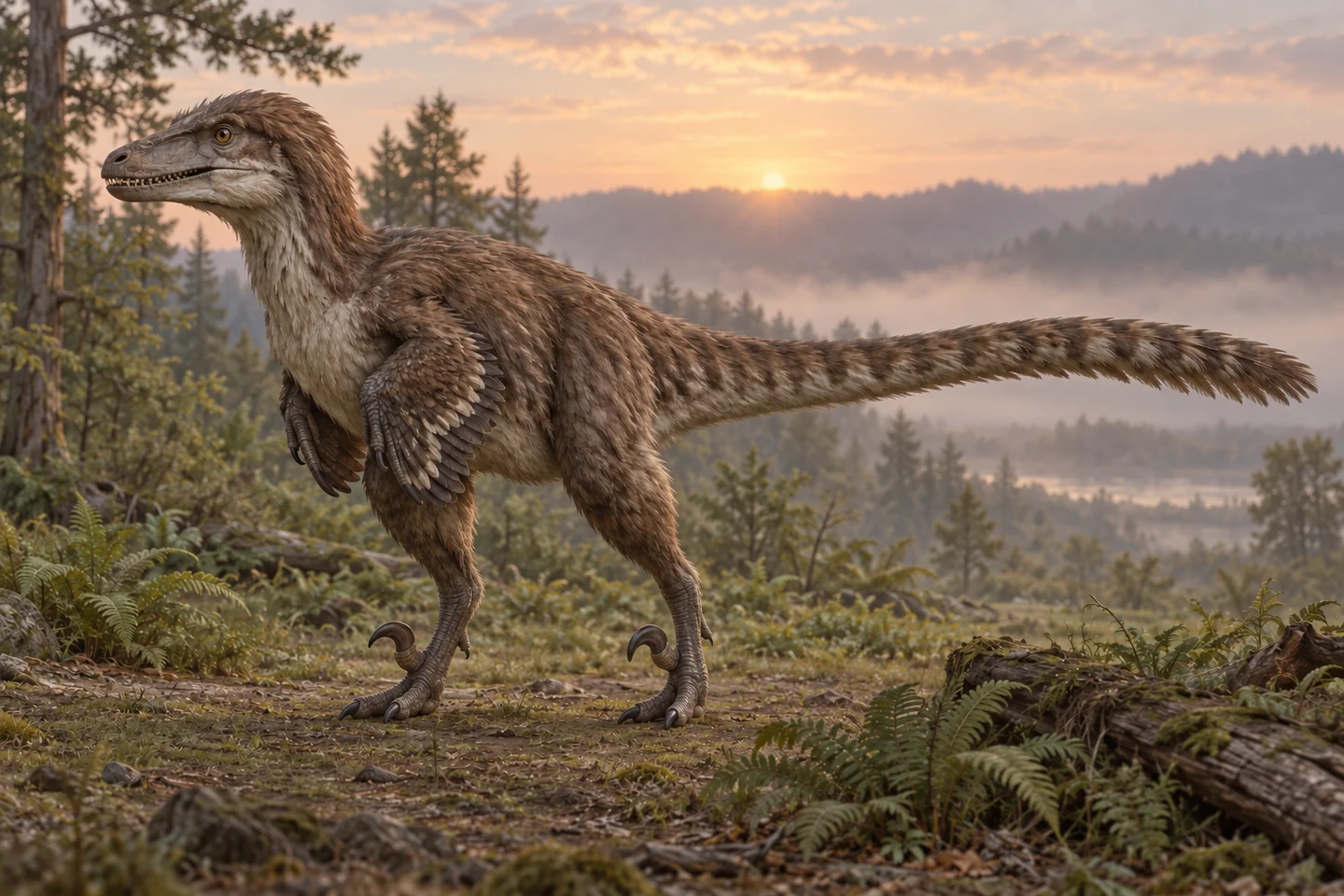
Original cinematic interpretation of Achillobator. Colors, soft tissues, scenery and missing anatomy are reconstructed artistic choices; this is not a directly observed individual or behavior. The incomplete skull and skeleton require comparative whole-body restoration; plumage, soft tissues and full proportions are interpretive. Lighting, coloration and scenery are artistic choices. This image does not document a fossil locality or behavior.
Original artwork · artistic interpretation.
Scientific view: source-informed reconstruction, credited paleoart or specimen-based imagery. Movie-style view: Original artistic interpretation. Reconstructions involve uncertainty.
MEET THE ANIMAL
Achillobator was a large carnivorous dinosaur from Late Cretaceous Mongolia. It belonged to the dromaeosaurids, the dinosaur family often called raptors. Its name means 'Achilles hero.' The Natural History Museum gives a length reference of about five metres, placing this animal on a much larger scale than many familiar small members of the same family. [D2]
An older published calculation produced a length of about 4.85 metres by using the size of its thighbone. A calculation like this reconstructs the missing body by comparison with other animals. It is not the same as finding a complete individual of that length, and it does not establish the largest size reached by mature Achillobator. [D4]
Its museum classification identifies it as a meat eater. It does not specify a daily menu, the size of every prey animal or the method used to catch food. Even for a conspicuously large raptor, those details need their own evidence rather than being supplied by an exciting reconstruction. [D2]
PREHISTORIC ANIMAL DOSSIER
The animal, the evidence, and the questions still open.
Incomplete skeletal material limits adult size and behavior assessment. [D1] [D2]
Profile scope: Genus — Achillobator; A. giganticus and its associated type material. [D1]
Source supported identifies a description documented by the cited source. Inferred marks a reconstruction or functional estimate. Debated marks competing interpretations. Not established means the sources reviewed for this dossier do not support a firm conclusion; it does not mean a behavior never occurred.
A size reference is an estimate, not a population range. Nesting evidence does not by itself establish courtship, mate choice, or lifelong pairing.
About 5 m (museum reference)
Educational reference without individual or maturity. An older femur regression yielded 4.85 m. [D2] [D4]
About 451 kg (limb model)
MNUFR 15; circumference estimated from femoral diameter; maturity unverified. [D3]
Carnivory inferred
Institutional classification; specific prey unverified. [D2]
Late Cretaceous Mongolia
Institutional occurrence summary; precise living microhabitat is not demonstrated. [D2]
Biped with substantial hindlimbs
Femur is longer than tibia in the reviewed diagnosis; running speed remains unmeasured. [D1]
Deep maxillary process; distinctive pelvis
Anatomical review documents unusual pelvic and hindlimb proportions. [D1]
Not established here
Descriptions provide no assigned eggs, nests or reproductive maturity assessment. [D1]
Not established here
Reviewed evidence supplies no identified sex-specific display or mating behavior. [D2]
Not established here
Associated, similarly preserved bones support one individual; they do not demonstrate a hunting pack. [D1]
Sources and inspection notes for the claims in this profile.
THE STORY IN THE FOSSILS
Rounded museum length and specimen-based regression masses answer different questions; neither is an observed species maximum. [2] [4]
The dossier identifies the scope of each reference estimate. A mount, an individual fossil and a species-wide adult range are different measurements. Comparison metrics remain unavailable where adult scope has not been established. Unknown does not mean zero.
Sources support the stated claims and scopes. Refer to the evidence notes for uncertainty.
KEEP EXPLORING
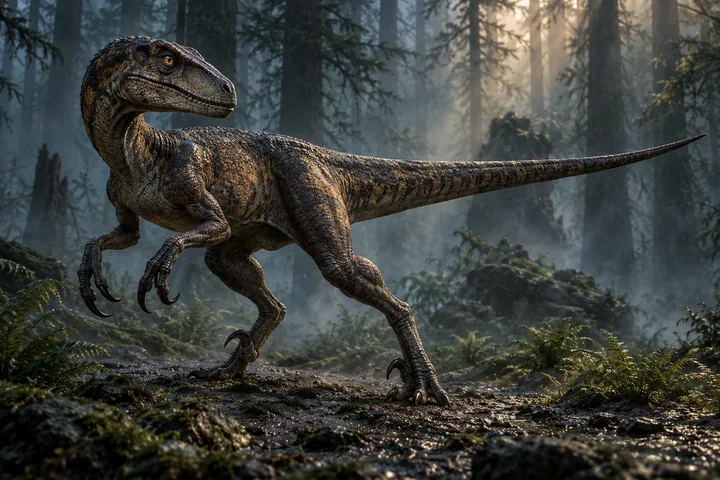
Velociraptor mongoliensis
Velociraptor mongoliensis was a lightly built meat-eater from Late Cretaceous Mongolia. Its long limbs, teeth and enlarged foot claws made it distinctive, while the Fighting Dinosaurs specimen records a remarkable interaction with a horned dinosaur.
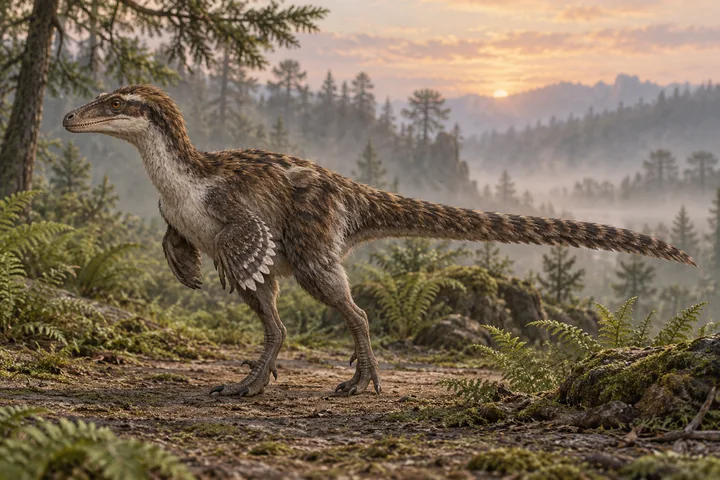
Adasaurus mongoliensis
Adasaurus is distinguished by a reduced claw on its second toe.
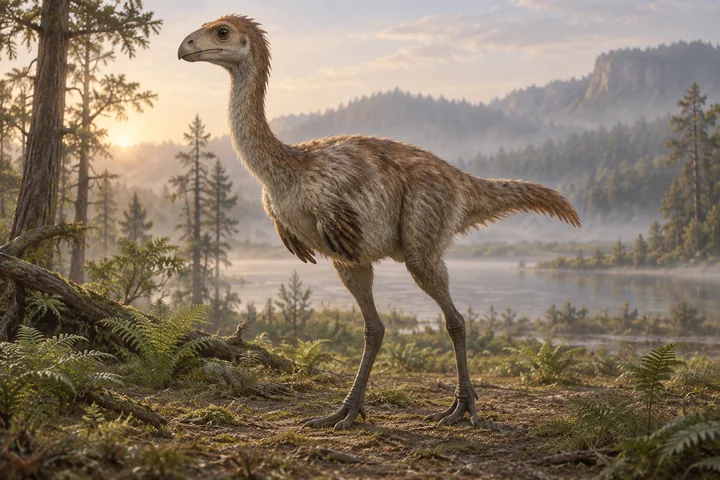
Avimimus portentosus
Avimimus has a compact head and an unusually informative bonebed.