
Body length
InferredAbout 1.5 m (museum reference)
The educational reference does not state specimen identity or maturity; it is not an adult maximum or a measurement of every bonebed individual. [D1]
TWO WAYS TO PICTURE THE PAST
Compare the evidence with the familiar movie image. The illustrations are not to a shared scale.
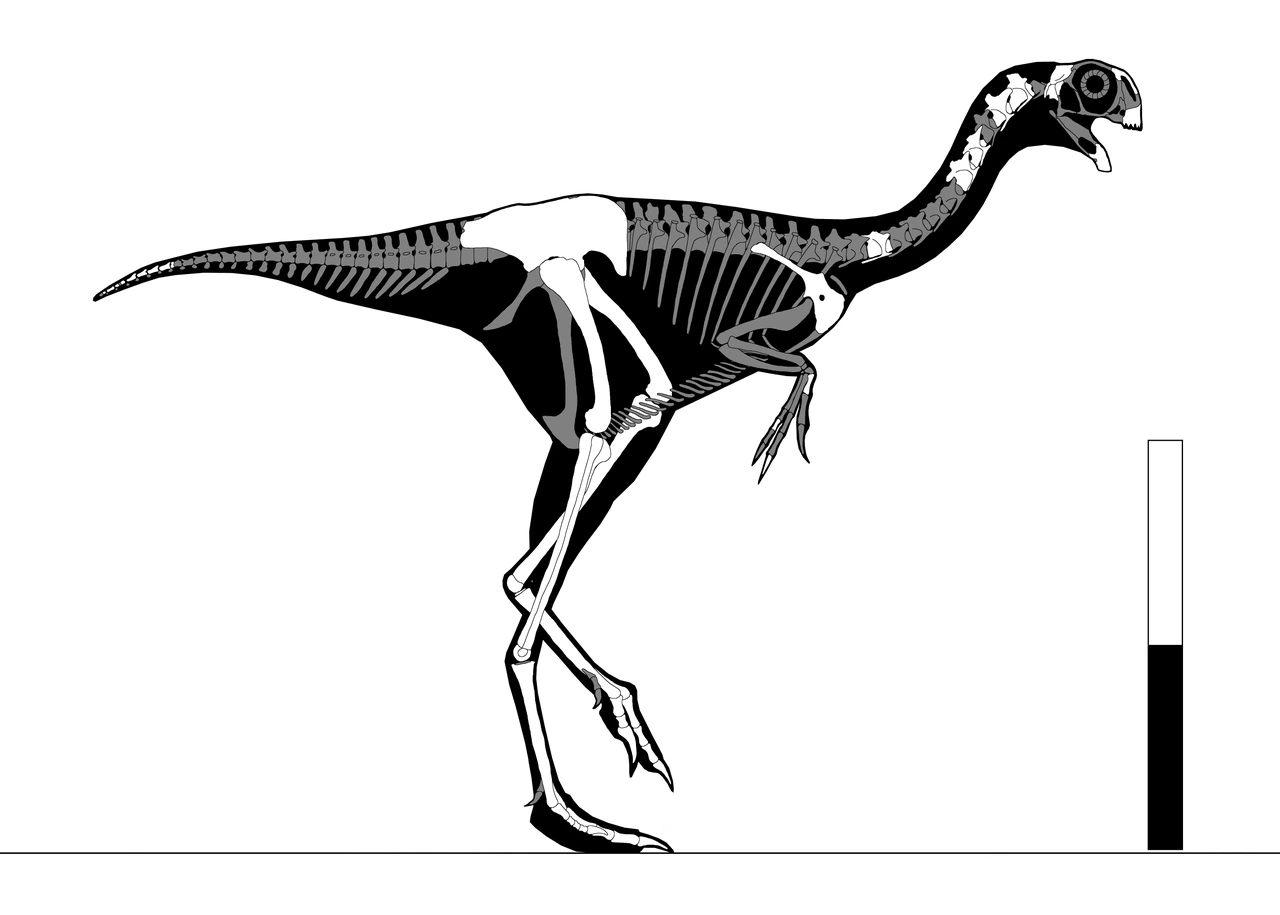
Avimimus nemegtensis skeletal reconstruction by Gunnar Bivens, using the Mongolian bonebed type MPC-D102/81 and referred elements; white indicates the best-known remains. It is a composite scaled to a large tibiotarsus, not one complete individual. This species differs from A. portentosus used as the catalog's naming reference; both belong in this genus exhibit. [5]
Avimimus nemegtensis skeletal.png · Gunnar Bivens. CC BY 3.0. Current Commons image converted to WebP and proportionally resized; no cropping, mirroring, anatomical edits or compositing. Original annotations retained. The source license applies to these versions.
Skeletal mounts and drawings may restore missing parts; the caption identifies the displayed material.
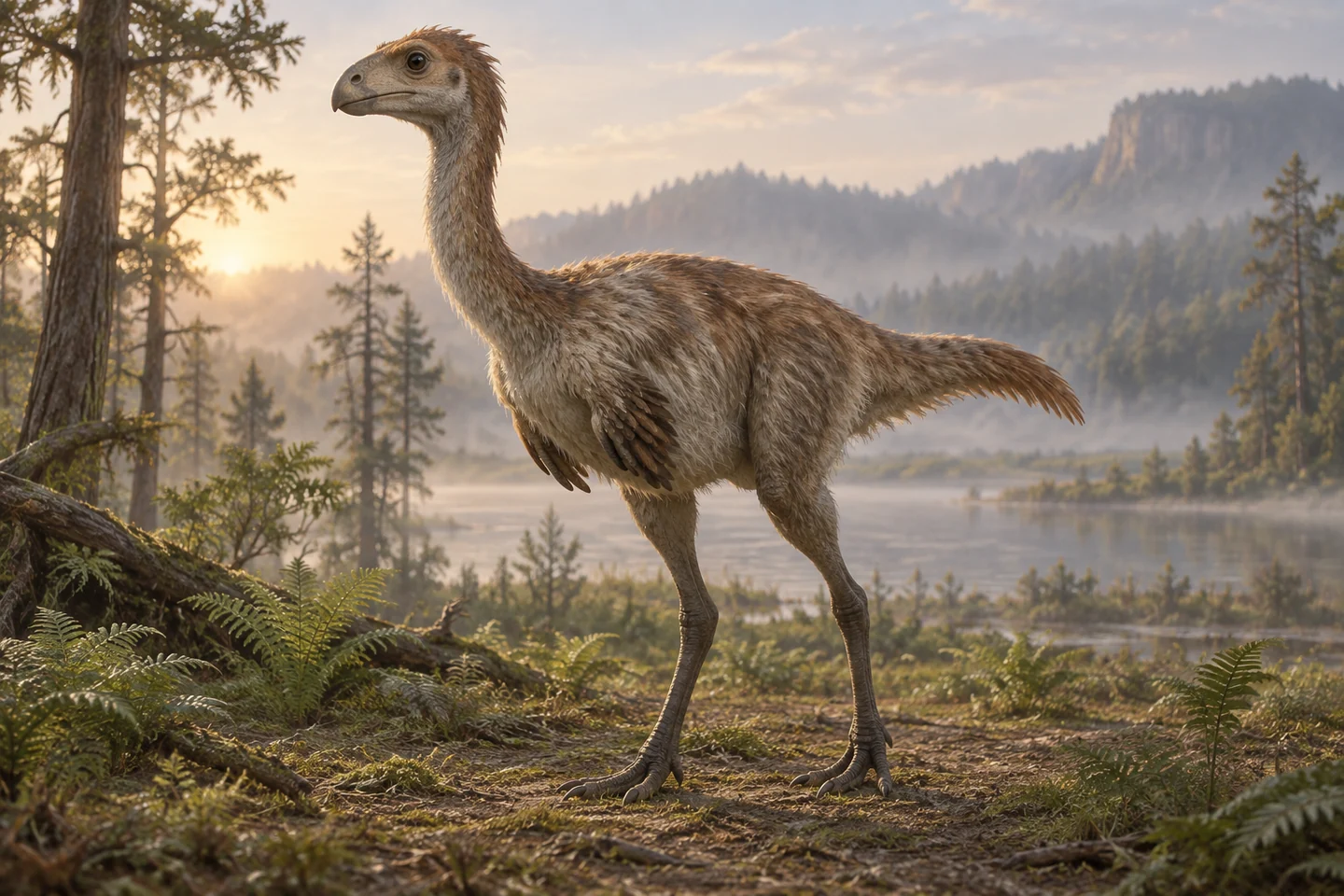
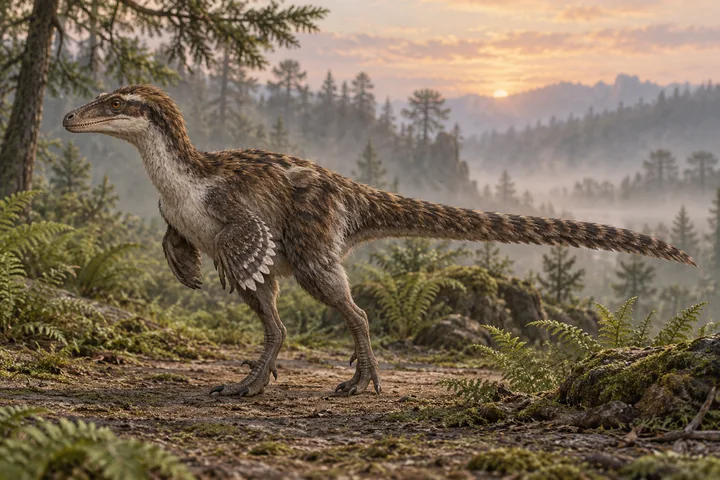
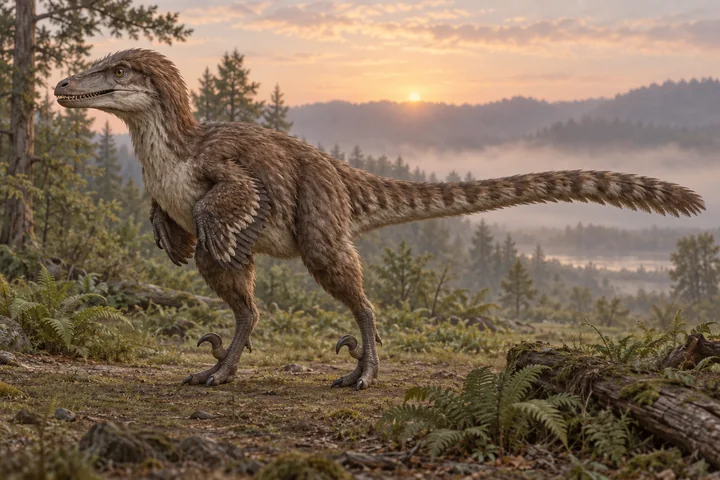
Original cinematic interpretation of Avimimus. Colors, soft tissues, scenery and missing anatomy are reconstructed artistic choices; this is not a directly observed individual or behavior. Feathering and missing anatomical details are comparative interpretations, rather than preserved plumage. Lighting, coloration and scenery are artistic choices. This image does not document a fossil locality or behavior.
Original artwork · artistic interpretation.
Scientific view: source-informed reconstruction, credited paleoart or specimen-based imagery. Movie-style view: Original artistic interpretation. Reconstructions involve uncertainty.
MEET THE ANIMAL
Avimimus was a small dinosaur whose museum reference gives a length of about 1.5 metres. That figure does not identify every individual's size or a confirmed adult maximum. Omnivory, a diet containing plants and animals, has been proposed. It remains an ecological interpretation rather than a directly preserved meal or a measured balance of plant and animal foods. [D1]
New skull material has corrected earlier reconstructions. Nasal and cheek bones differ from some of the extremely bird-like shapes previously inferred, while the tips of the lower jaw were fused. The evidence gives a firmer head outline without directly documenting plumage. A complete illustration may make the dinosaur look familiar, but the preserved cranial pieces establish which details can actually be checked. [D5]
Growth studies also warn against using skeletal fusion as a simple shortcut to adulthood. A separate avimimid sample showed bones joining before growth was complete. Those Chinese fossils were not securely assigned to Avimimus itself. The comparison can test a maturity assumption without turning a wider-family sample into this genus's geographic record or a complete account of its breeding age. [D4]
PREHISTORIC ANIMAL DOSSIER
The animal, the evidence, and the questions still open.
Mongolian bonebed material later named A. nemegtensis provides evidence relevant to grouping; skull studies refine older birdlike restorations. [D3] [D5]
Profile scope: Genus — Avimimus; A. portentosus and A. nemegtensis are distinguished. [D3]
Source supported identifies a description documented by the cited source. Inferred marks a reconstruction or functional estimate. Debated marks competing interpretations. Not established means the sources reviewed for this dossier do not support a firm conclusion; it does not mean a behavior never occurred.
A size reference is an estimate, not a population range. Nesting evidence does not by itself establish courtship, mate choice, or lifelong pairing.
About 1.5 m (museum reference)
The educational reference does not state specimen identity or maturity; it is not an adult maximum or a measurement of every bonebed individual. [D1]
About 11.1 kg (limb-scaling model)
A. portentosus PIN3907/1, from measured femoral circumference; adult maturity is unestablished. [D6]
Omnivory proposed
The museum classifies Avimimus as an omnivore. This is an ecological interpretation, not a directly preserved genus-specific meal or a quantified plant-to-animal ratio. [D1]
Mongolian Nemegt Basin deposits
The A. nemegtensis bonebed occurs in a river-influenced sedimentary setting. The fossils establish an occurrence, not an exclusive preference for that habitat. [D3]
Two-legged terrestrial reconstruction
The hindlimb-dominated skeleton supports walking on two legs; the bonebed analysis does not measure running speed or demonstrate flight. [D2]
Revised short skull and fused lower-jaw tips
New cranial material corrects older restorations. Preserved nasal and cheek bones differ from the highly birdlike shapes originally inferred; plumage is not directly documented by this skull study. [D5]
Not established here
A later avimimid growth study shows extensive fusion can precede completed growth. Its Chinese material is family-level evidence; it does not document Avimimus egg laying, clutch size or parental care. [D4]
Not established here
Focused searches did not identify a genus-specific courtship sequence, pairing system or confirmed sexual dimorphism. A restored beak or hypothetical feathers do not establish mating behavior.
Gregariousness inferred from a bonebed
At least 18 individuals occur in a monodominant Mongolian accumulation, supporting a grouping hypothesis. Redeposition and burial history prevent treating it as an observed living flock or one witnessed death event. [D2]
Sources and inspection notes for the claims in this profile.
THE STORY IN THE FOSSILS
The concentration of Avimimus bones offers stronger evidence for grouping than a single skeleton. Its taphonomic history still matters: scattered, transported bones do not preserve a photograph of a living social unit. [2]
Fusion once helped classify the bonebed animals as adults or subadults. A separate avimimid sample showed that this shortcut can be misleading, so skeletal fusion is kept separate from demonstrated reproductive adulthood. [4]
The dossier identifies the scope of each reference estimate. A mount, an individual fossil and a species-wide adult range are different measurements. Comparison metrics remain unavailable where adult scope has not been established. Unknown does not mean zero.
Sources support the stated claims and scopes. Refer to the evidence notes for uncertainty.
KEEP EXPLORING
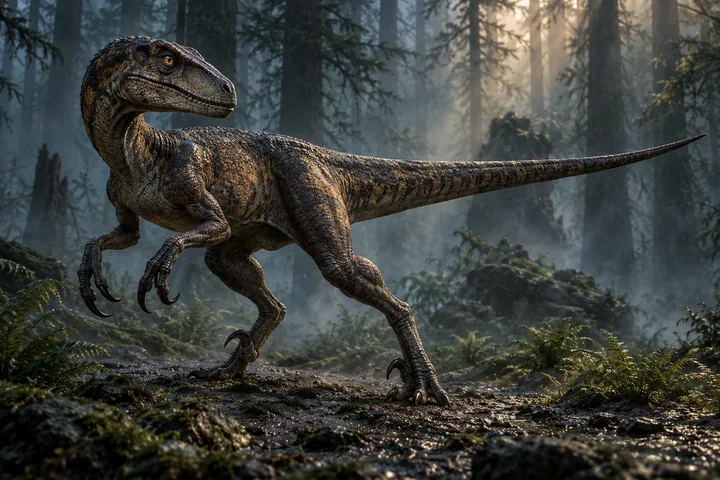
Velociraptor mongoliensis
Velociraptor mongoliensis was a lightly built meat-eater from Late Cretaceous Mongolia. Its long limbs, teeth and enlarged foot claws made it distinctive, while the Fighting Dinosaurs specimen records a remarkable interaction with a horned dinosaur.
Adasaurus mongoliensis
Adasaurus is distinguished by a reduced claw on its second toe.
Achillobator giganticus
Achillobator had distinctive limb and pelvic proportions.