
Size reference
Source supported14.5 mm body length
Adult male type measurement; the amber block dimensions and mass describe its container, not the insect. [D1]
EXHIBIT 244
Alienopterus
Prehistoric insect
Alienopterus combined short forewings, long hindwings and walking legs in a Cretaceous insect related to the roach–mantis lineage. [2]
TWO WAYS TO PICTURE THE PAST
Compare the evidence with the familiar movie image. The illustrations are not to a shared scale.
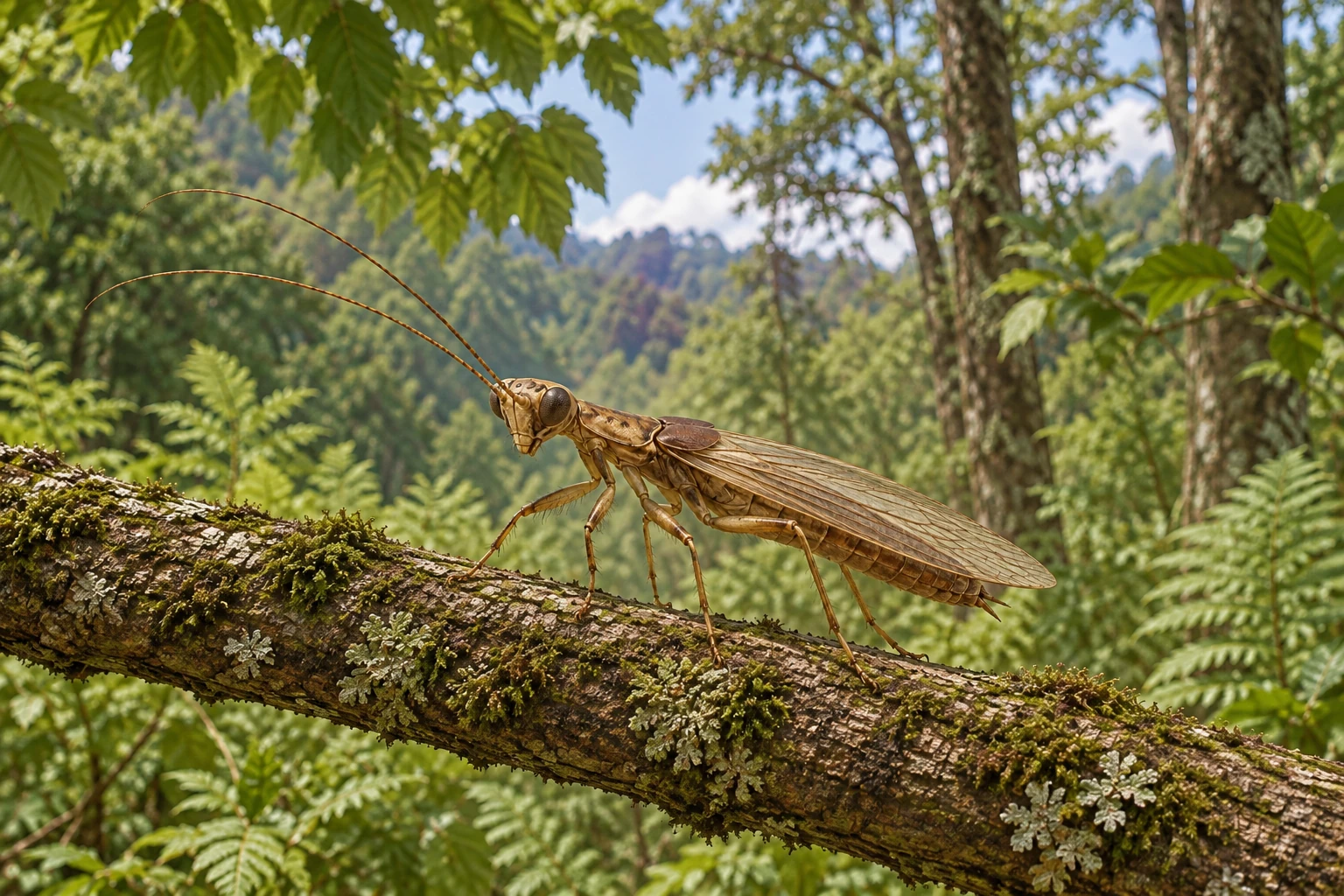
An illustrative reconstruction. Compare its anatomy with the evidence and limitations in the dossier. [2]
Source-informed reconstruction. Appearance evidence [2]. Original illustration; missing anatomy, coloration and scenery include interpretation.
Fossils constrain this life reconstruction. Missing anatomy, coloration and the environmental scene include interpretation; the dossier explains the evidence limits.
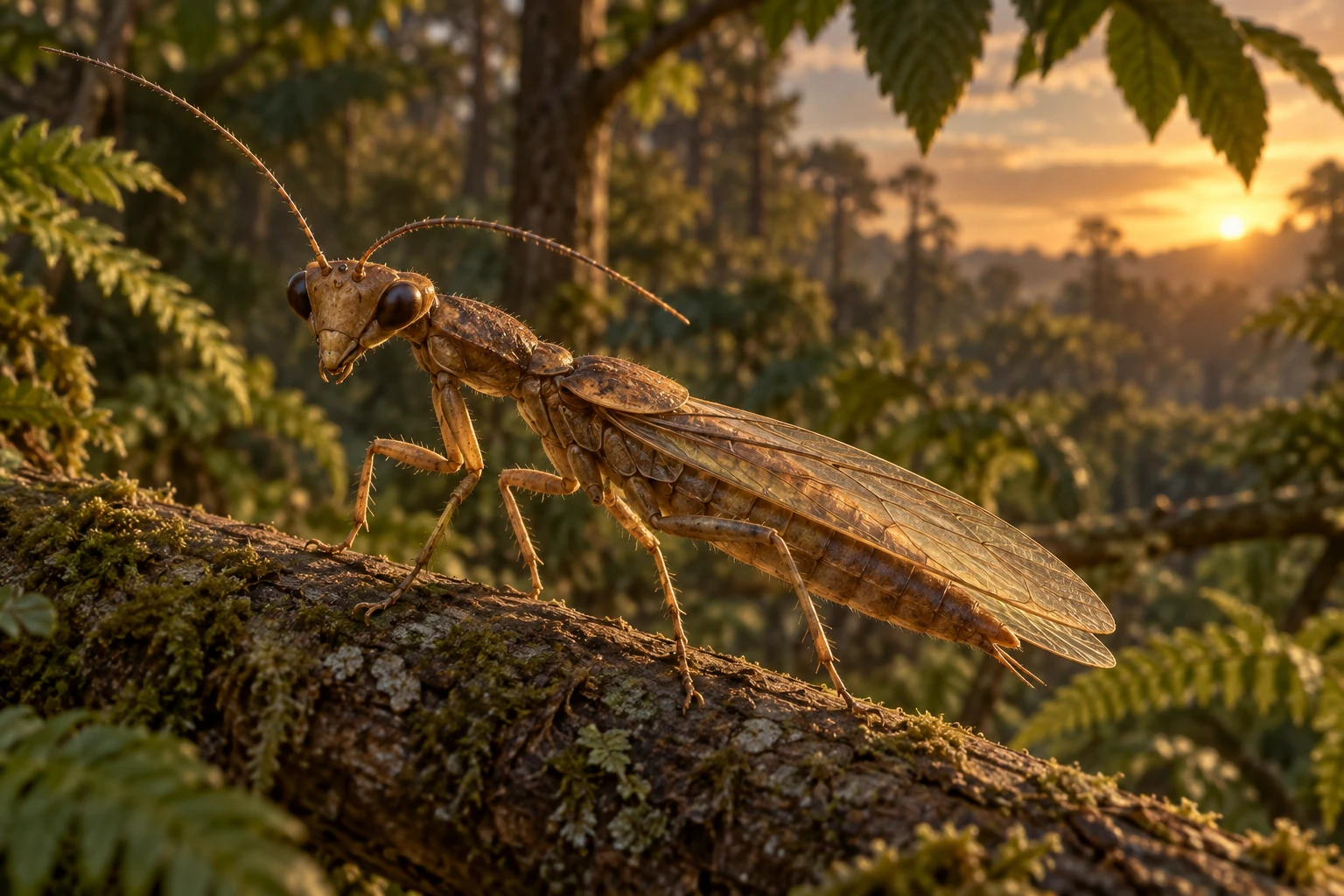
An illustrative reconstruction. Compare its anatomy with the evidence and limitations in the dossier. Lighting, coloration and scenery are artistic choices. This image does not document a fossil locality or behavior.
Original artwork · artistic interpretation.
Scientific view: source-informed reconstruction, credited paleoart or specimen-based imagery. Movie-style view: Original artistic interpretation. Reconstructions involve uncertainty.
MEET THE ANIMAL
Alienopterus was an insect from the Cretaceous, with a combination of features that interested scientists studying the relatives of cockroaches and mantises. A preserved adult male from Myanmar, A. brachyelytrus, had a 14.5-millimeter body. Its short forewings lay above longer hindwings. Six legs supported walking, and pads on its feet suggested climbing on vegetation. A predatory diet is inferred from its anatomy, rather than proved by a recognizable meal. [D1]
Its front legs were not simply miniature versions of a modern mantis’s prey traps. A later comparative study emphasized that they lacked the specialized shape and spines of those traps. The same study raised a taxonomic question: another named fossil, Aethiocarenus, might be an immature Alienopterus. It requested further investigation. That suggestion is a reason to avoid counting a possible overlap twice, rather than proof that the two names are settled synonyms. [D2]
Alienopterus is also known beyond the original amber discovery. A 2025 monograph describes A. imposter from a rock fossil in South Korea. Such additions broaden the genus’s geographical scope. They also show why a genus exhibit must distinguish its chosen reconstruction from all other species: the Myanmar adult supplies this gallery’s reference anatomy, while the Korean material contributes separate evidence about where the genus occurred. [D4]
PREHISTORIC ANIMAL DOSSIER
The animal, the evidence, and the questions still open.
Its front legs differ from the enlarged, spiny prey traps of modern mantises; relationship and rank have been debated. [D2]
Profile scope: Genus — Alienopterus; galleries use A. brachyelytrus, adult male holotype BU-001057 from Myanmar amber. Korean material extends the genus scope. [D1] [D4]
Source supported identifies a description documented by the cited source. Inferred marks a reconstruction or functional estimate. Debated marks competing interpretations. Not established means the sources reviewed for this dossier do not support a firm conclusion; it does not mean a behavior never occurred.
A size reference is an estimate, not a population range. Nesting evidence does not by itself establish courtship, mate choice, or lifelong pairing.
14.5 mm body length
Adult male type measurement; the amber block dimensions and mass describe its container, not the insect. [D1]
Not established here
No insect body-mass estimate is reported. [D1]
Small-animal feeding inferred
Leg brushes, mouthparts and vision motivated a predatory interpretation; no specific meal is identified. [D6]
Tree or shrub foliage inferred
Attachment pads support climbing; resin burial does not identify its exact host plant. [D6]
Walking and flight inferred
Similar walking legs and developed hindwings support these capabilities. [D1]
Walking forelegs, rather than mantis traps
The front femora lack the specialized shape and spination of mantis raptorial legs. [D2]
Not established here
The male type does not identify eggs or egg cases. [D1]
Not established here
Male genital structures do not establish a courtship sequence or mate choice. [D1]
Not established here
The reviewed description does not establish colonies, packs or cooperative hunting. [D1]
Sources and inspection notes for the claims in this profile.
THE STORY IN THE FOSSILS
The Jinju monograph describes A. imposter from Korean compression fossils. Genus-wide geography therefore extends beyond the Myanmar adult used in this reconstruction. [4]
The dossier identifies the scope of each reference estimate. A mount, an individual fossil and a species-wide adult range are different measurements. Comparison metrics remain unavailable where adult scope has not been established. Unknown does not mean zero.
Sources support the stated claims and scopes. Refer to the evidence notes for uncertainty.
KEEP EXPLORING
Caputoraptor
Prehistoric insect
Caputoraptor was a Cretaceous insect with a scissor-like device between its head and thorax; the device’s purpose remains debated.
Cretophengodes
Prehistoric insect
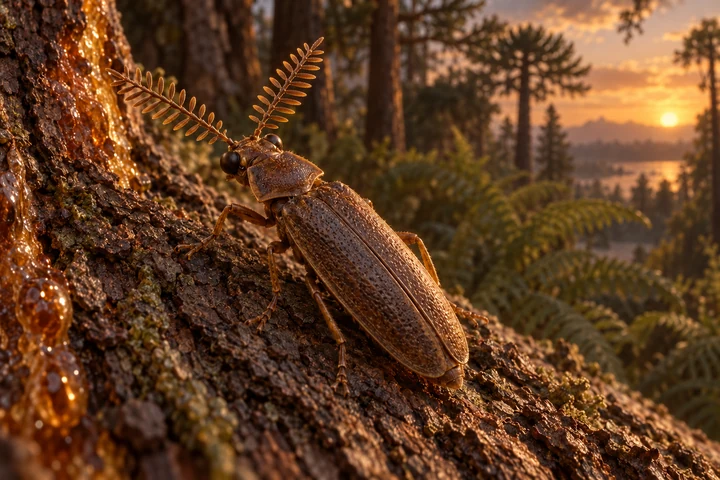
Cretophengodes was a Cretaceous beetle whose preserved abdominal organ supports ancient light production.
Angimordella
Prehistoric insect
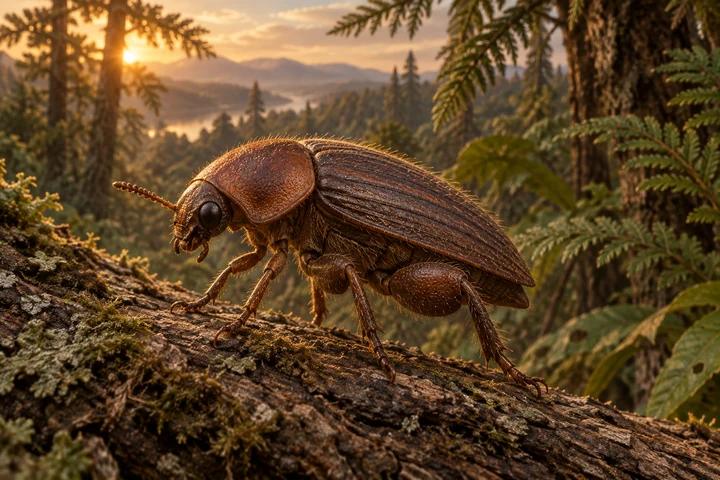
Angimordella was a Cretaceous beetle preserved with pollen; its specialized pollinator role remains uncertain after reassessment.