
Size reference
Source supported4.25 mm body length
Reported for the adult holotype; not a genus range. [D1]
EXHIBIT 243
Angimordella
Prehistoric insect
Angimordella was a Cretaceous beetle preserved with pollen; its specialized pollinator role remains uncertain after reassessment. [2]
TWO WAYS TO PICTURE THE PAST
Compare the evidence with the familiar movie image. The illustrations are not to a shared scale.
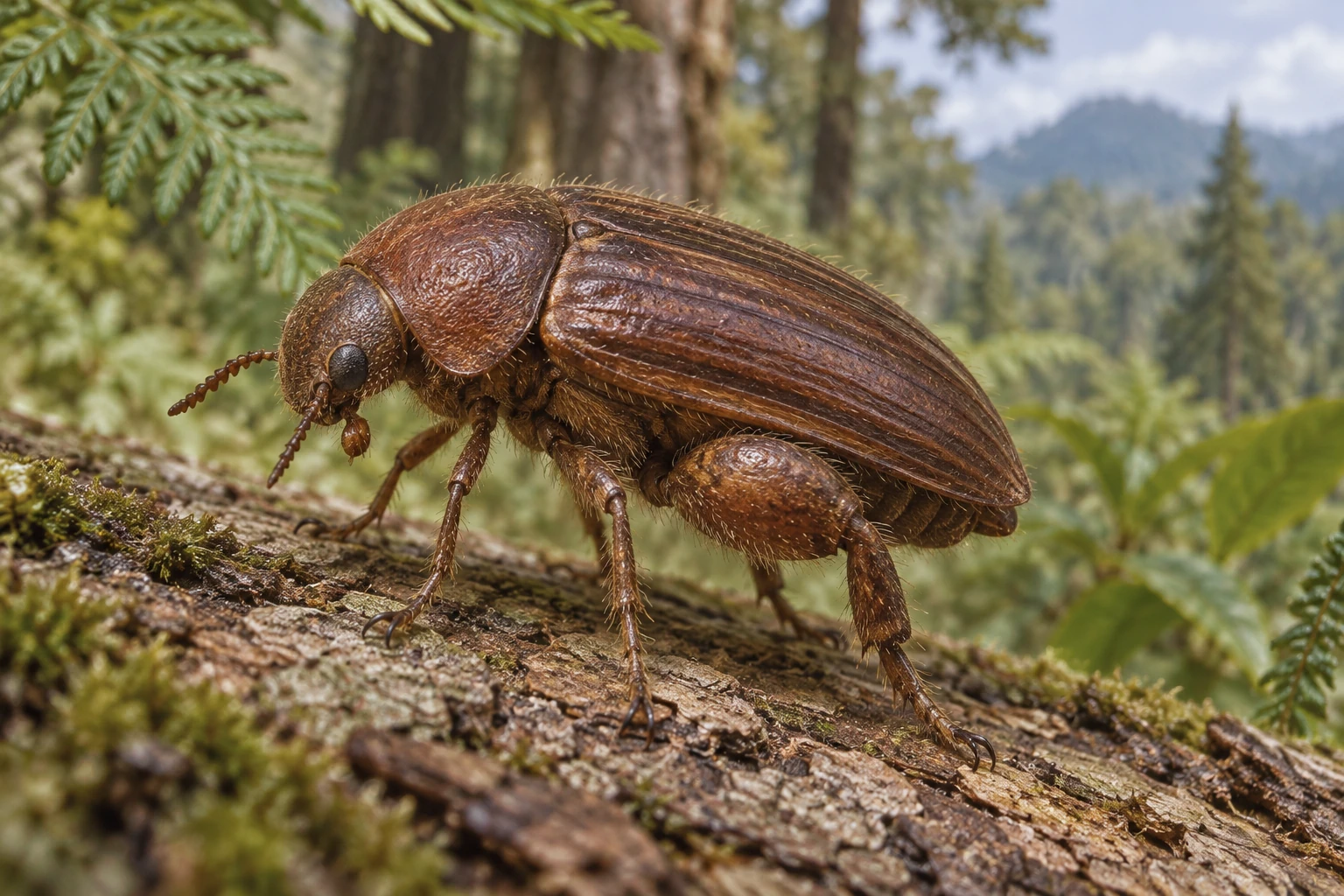
An illustrative reconstruction. Compare its anatomy with the evidence and limitations in the dossier. [1]
Source-informed reconstruction. Appearance evidence [1]. Original illustration; missing anatomy, coloration and scenery include interpretation.
Fossils constrain this life reconstruction. Missing anatomy, coloration and the environmental scene include interpretation; the dossier explains the evidence limits.
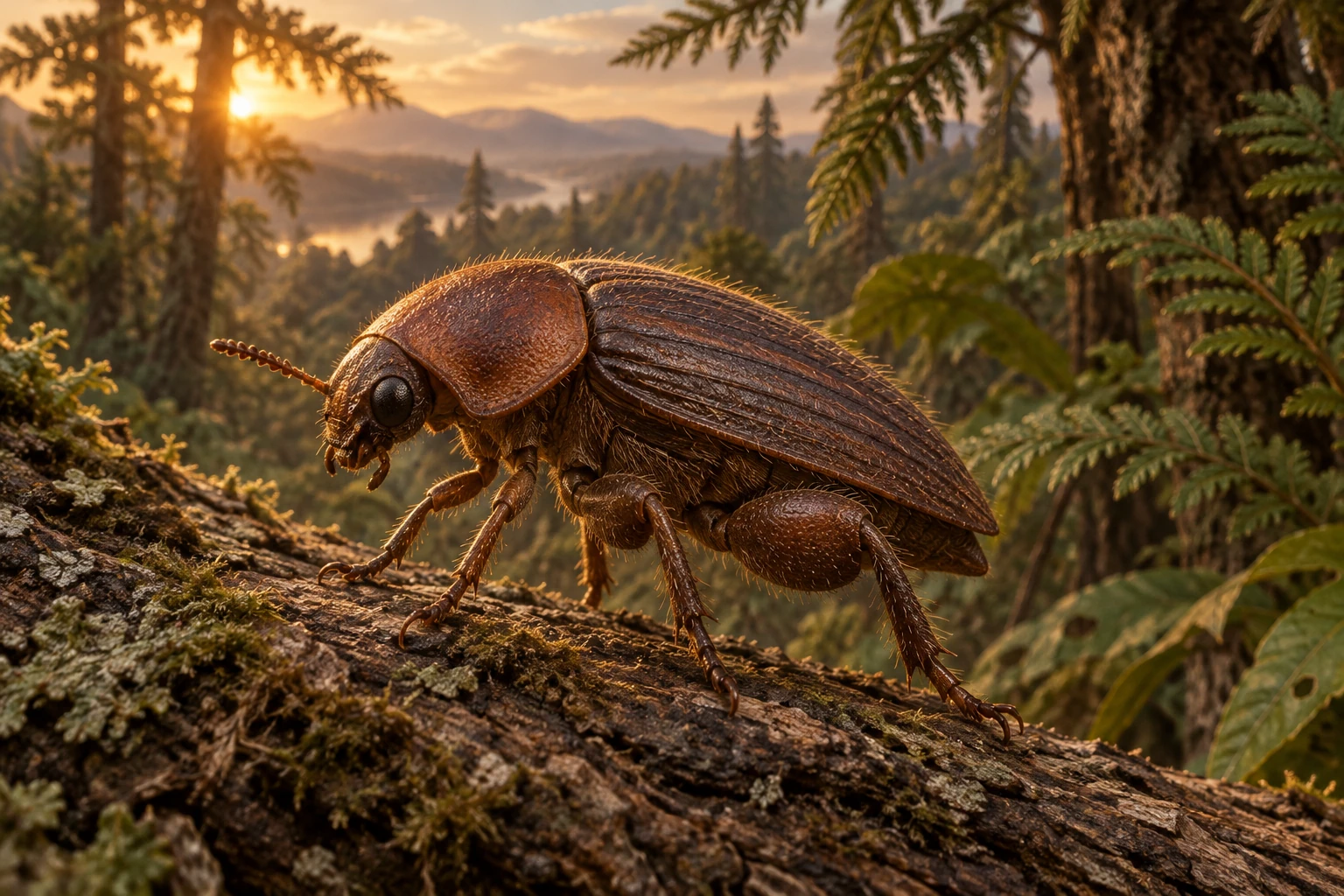
An illustrative reconstruction. Compare its anatomy with the evidence and limitations in the dossier. Lighting, coloration and scenery are artistic choices. This image does not document a fossil locality or behavior.
Original artwork · artistic interpretation.
Scientific view: source-informed reconstruction, credited paleoart or specimen-based imagery. Movie-style view: Original artistic interpretation. Reconstructions involve uncertainty.
MEET THE ANIMAL
Angimordella was a tiny beetle preserved in amber from northern Myanmar. Researchers named its species A. burmitina and measured the adult fossil at 4.25 millimeters long. Its body was strongly curved, with a head bent downward and sturdy hind legs. This measurement belongs to one fossil, rather than a size range for the whole genus. Amber protected small details that would often be lost in rock fossils. [D1]
A Nanjing research-team account describes a closer look at pollen near the beetle. Scientists used confocal microscopy to reveal grains that were difficult to see among its body hairs. Studying these small structures made the specimen an important clue in investigations of Cretaceous plant–insect relationships. Finding pollen touching an insect is useful evidence, but explaining what that insect was doing requires more than simply recognizing the grains. [D3]
The interpretation changed when researchers examined the specimen again in 2026. They supported placing Angimordella in an extinct stem branch of the mordellid beetles. Its mouthparts do not clearly demonstrate the specialized pollen-feeding adaptations proposed earlier. It may have contacted plants in a more general way. The specimen therefore preserves a real pollen association, while its exact feeding role and degree of pollination specialization remain uncertain. [D2]
PREHISTORIC ANIMAL DOSSIER
The animal, the evidence, and the questions still open.
New imaging supports a stem-mordellid placement rather than direct comparison with living specialized pollen-feeding beetles. [D2]
Profile scope: Genus — Angimordella; gallery anchored to A. burmitina holotype NIGP171315 from Kachin amber, Myanmar. [D1]
Source supported identifies a description documented by the cited source. Inferred marks a reconstruction or functional estimate. Debated marks competing interpretations. Not established means the sources reviewed for this dossier do not support a firm conclusion; it does not mean a behavior never occurred.
A size reference is an estimate, not a population range. Nesting evidence does not by itself establish courtship, mate choice, or lifelong pairing.
4.25 mm body length
Reported for the adult holotype; not a genus range. [D1]
Not established here
No body-mass estimate is reported for the type. [D1]
Not established here
Pollen contact is preserved, but the reassessment finds no unequivocal specialized pollen-feeding adaptation. [D2]
Resin-producing woodland inferred
Kachin amber gives burial context; exact living perch and host plant remain uncertain. [D3]
Walking and flight inferred
Legs and beetle wings support these capabilities; speeds and characteristic escape movements are unmeasured. [D1]
Convex body and stout hind legs
The adult has serrate antennae, a strongly declined head and a very short pygidium. [D1]
Not established here
The reviewed original describes an adult, without attributable eggs or young. [D1]
Not established here
No mating sequence or mate-choice evidence is supplied in the reviewed description. [D1]
Not established here
A pollen-associated amber inclusion does not establish colonies or cooperation. [D3]
Sources and inspection notes for the claims in this profile.
THE STORY IN THE FOSSILS
The institutional discovery account explains how confocal microscopy revealed pollen among body hairs. That close association is a fossil observation; its ecological meaning needs separate interpretation. [3]
The dossier identifies the scope of each reference estimate. A mount, an individual fossil and a species-wide adult range are different measurements. Comparison metrics remain unavailable where adult scope has not been established. Unknown does not mean zero.
Sources support the stated claims and scopes. Refer to the evidence notes for uncertainty.
KEEP EXPLORING
Cretophengodes
Prehistoric insect
Cretophengodes was a Cretaceous beetle whose preserved abdominal organ supports ancient light production.
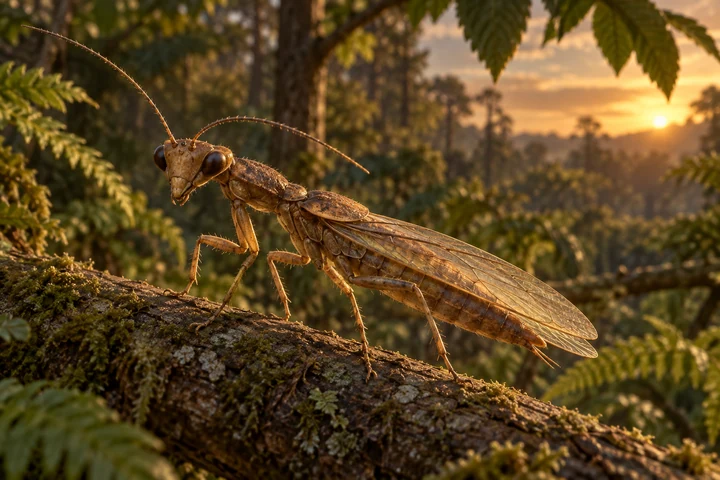
Alienopterus
Prehistoric insect
Alienopterus combined short forewings, long hindwings and walking legs in a Cretaceous insect related to the roach–mantis lineage.
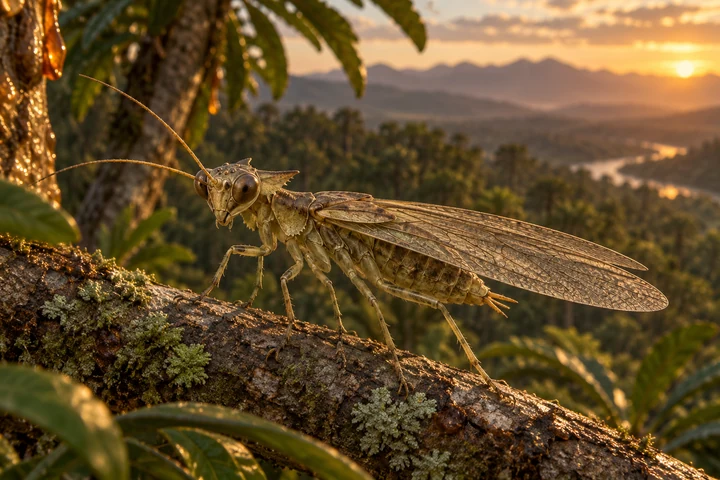
Caputoraptor
Prehistoric insect
Caputoraptor was a Cretaceous insect with a scissor-like device between its head and thorax; the device’s purpose remains debated.