
Size reference
Source supportedAbout 7.3 mm body length
Approximate length reported for the adult male holotype, not a genus range. [D1]
EXHIBIT 242
Cretophengodes
Prehistoric insect
Cretophengodes was a Cretaceous beetle whose preserved abdominal organ supports ancient light production. [2]
TWO WAYS TO PICTURE THE PAST
Compare the evidence with the familiar movie image. The illustrations are not to a shared scale.
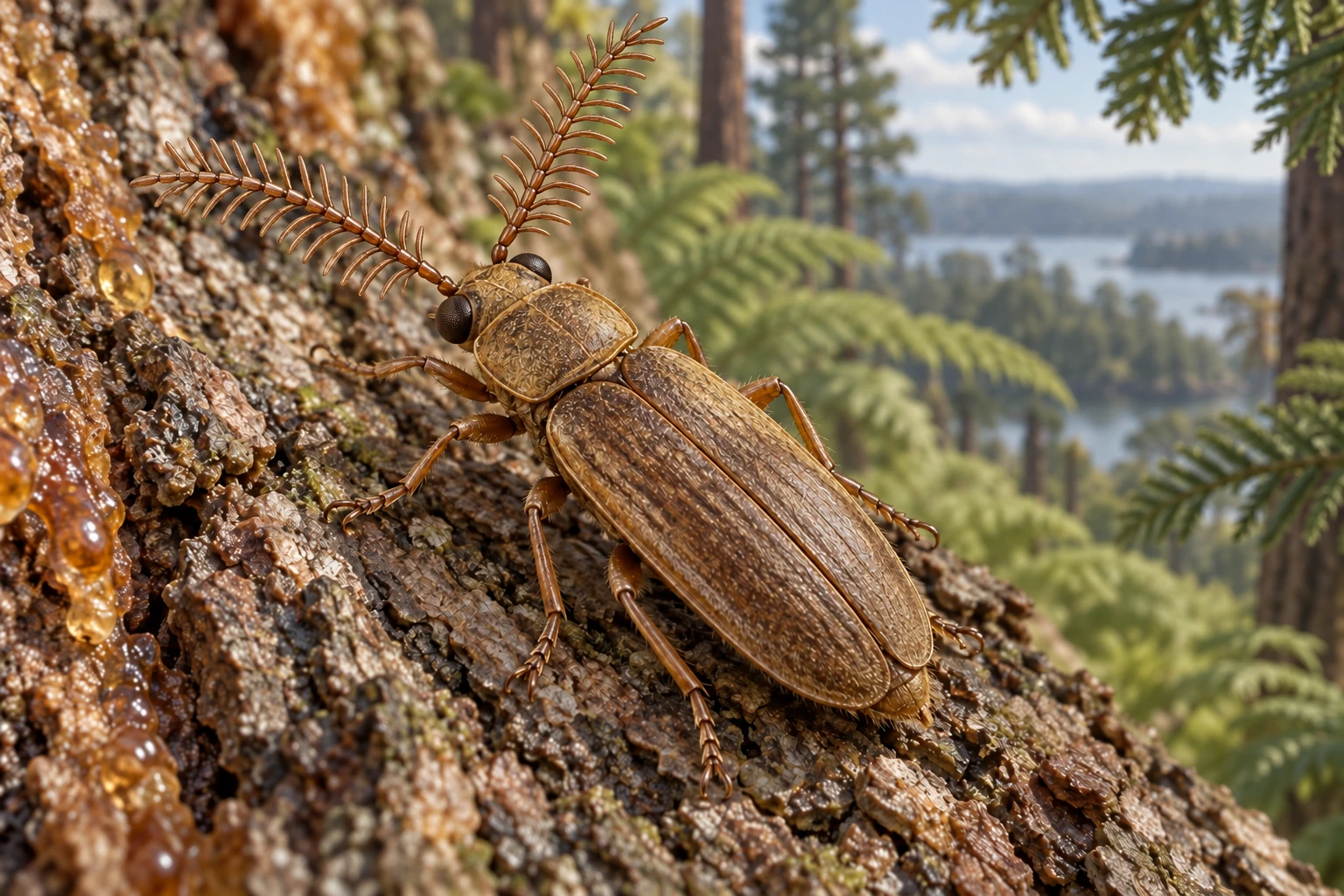
An illustrative reconstruction. Compare its anatomy with the evidence and limitations in the dossier. [1]
Source-informed reconstruction. Appearance evidence [1]. Original illustration; missing anatomy, coloration and scenery include interpretation.
Fossils constrain this life reconstruction. Missing anatomy, coloration and the environmental scene include interpretation; the dossier explains the evidence limits.
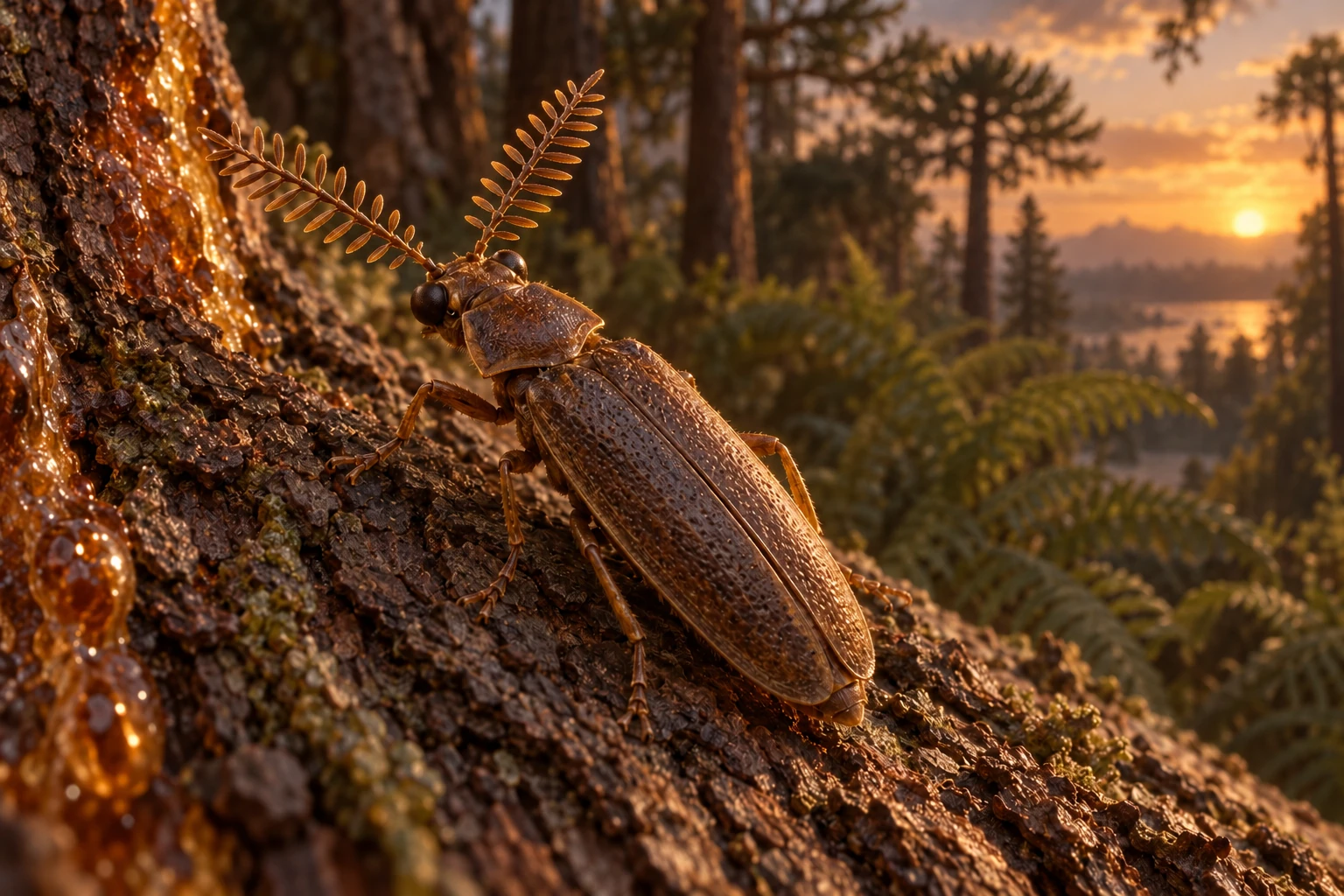
An illustrative reconstruction. Compare its anatomy with the evidence and limitations in the dossier. Lighting, coloration and scenery are artistic choices. This image does not document a fossil locality or behavior.
Original artwork · artistic interpretation.
Scientific view: source-informed reconstruction, credited paleoart or specimen-based imagery. Movie-style view: Original artistic interpretation. Reconstructions involve uncertainty.
MEET THE ANIMAL
Cretophengodes was a small beetle living in the Cretaceous. The described adult male, C. azari, was about 7.3 millimeters long. Its antennae had branches on both sides, rather like tiny combs. Researchers also identified a possible light-producing organ under the front part of its abdomen. These structures belong to the preserved male; they are not measurements or anatomy established for an entire fossil population. [D1]
The University of Bristol reported that this fossil helped connect the evolutionary story of several light-producing beetle families. Light can serve different purposes in living beetles, including defense and finding mates. The researchers proposed that defensive light production may have appeared first in vulnerable young stages of the broader group. That evolutionary idea does not show how this particular beetle flashed, whom it attracted, or whether its light had a single purpose. [D2]
The female remains an important gap. A Palacký University report explains that females in some living relatives retain an unusual, larva-like form. This makes them easy to overlook, and encourages scientists to search for additional fossils. It does not prove that an unidentified amber insect is a Cretophengodes female. More specimens could help explain its life cycle, but the reviewed discovery does not supply attributable eggs or young. [D3]
PREHISTORIC ANIMAL DOSSIER
The animal, the evidence, and the questions still open.
The light organ helps investigate beetle evolution; its exact signaling purpose and the female body remain uncertain. [D2]
Profile scope: Genus — Cretophengodes; gallery anchored to the male C. azari holotype NIGP173775 from Kachin amber. [D1]
Source supported identifies a description documented by the cited source. Inferred marks a reconstruction or functional estimate. Debated marks competing interpretations. Not established means the sources reviewed for this dossier do not support a firm conclusion; it does not mean a behavior never occurred.
A size reference is an estimate, not a population range. Nesting evidence does not by itself establish courtship, mate choice, or lifelong pairing.
About 7.3 mm body length
Approximate length reported for the adult male holotype, not a genus range. [D1]
Not established here
No body-mass estimate is supplied for the male fossil. [D1]
Not established here
The reviewed type description does not identify a preserved meal or establish its diet. [D1]
Cretaceous resin-producing woodland
Northern Myanmar amber preserves the fossil; exact perch and host plant are unknown. [D2]
Walking and flight inferred
Six legs and developed wings support these capabilities; performance is unmeasured. [D1]
Comb-branched antennae and light organ
The male has 12 antennal segments, nearly abdomen-covering elytra and a putative light organ on the basal three ventral abdominal segments. [D1]
Not established here
The reviewed discovery identifies a male, without attributable eggs, larvae or a female series. [D3]
Not established here
The researchers discuss mate location as a possible later use of light, not a known Cretophengodes courtship ritual. [D2]
Not established here
Comparisons with living luminous beetles do not establish colonies or cooperative behavior. [D3]
Sources and inspection notes for the claims in this profile.
THE STORY IN THE FOSSILS
The Palacký report emphasizes how different females can be in living relatives. Such comparisons motivate searches; they do not identify a fossil Cretophengodes female. [3]
The dossier identifies the scope of each reference estimate. A mount, an individual fossil and a species-wide adult range are different measurements. Comparison metrics remain unavailable where adult scope has not been established. Unknown does not mean zero.
Sources support the stated claims and scopes. Refer to the evidence notes for uncertainty.
KEEP EXPLORING
Angimordella
Prehistoric insect
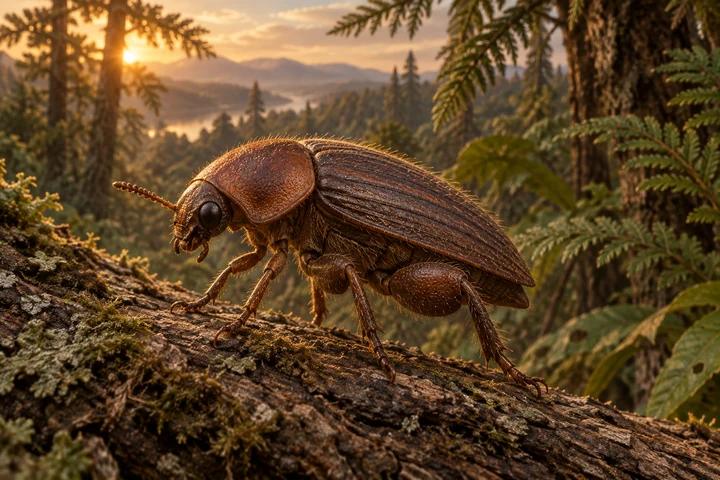
Angimordella was a Cretaceous beetle preserved with pollen; its specialized pollinator role remains uncertain after reassessment.
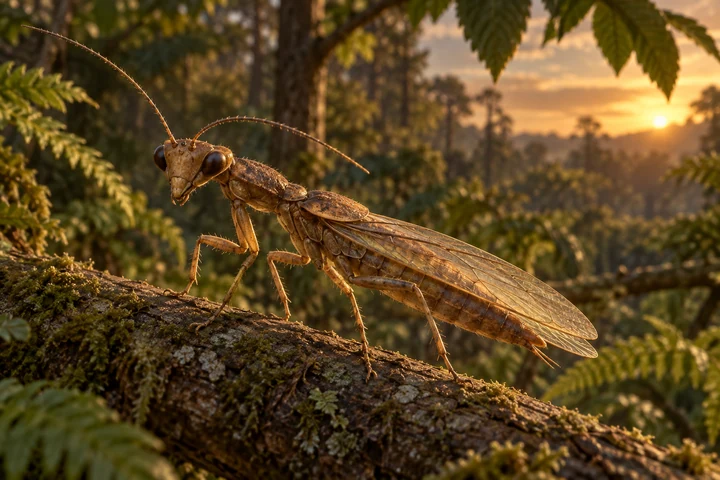
Alienopterus
Prehistoric insect
Alienopterus combined short forewings, long hindwings and walking legs in a Cretaceous insect related to the roach–mantis lineage.
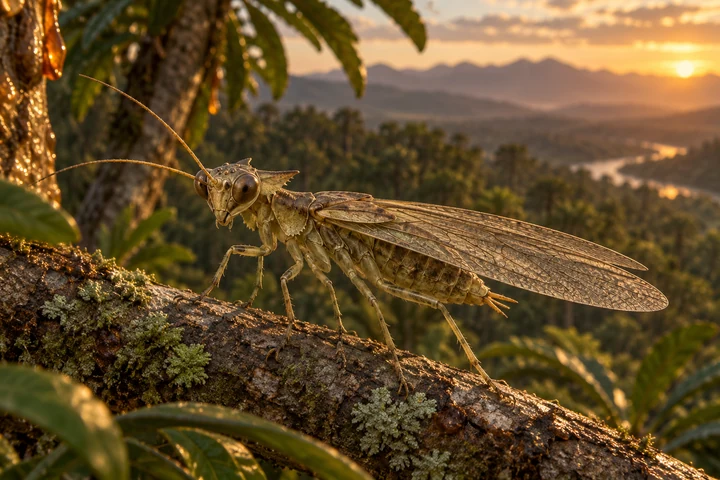
Caputoraptor
Prehistoric insect
Caputoraptor was a Cretaceous insect with a scissor-like device between its head and thorax; the device’s purpose remains debated.