
Size reference
Source supported13.2–14.1 mm adult-female bodies
Range of described C. elegans adults in the original sample; not the genus or juvenile range. [D1]
EXHIBIT 245
Caputoraptor
Prehistoric insect
Caputoraptor was a Cretaceous insect with a scissor-like device between its head and thorax; the device’s purpose remains debated. [2]
TWO WAYS TO PICTURE THE PAST
Compare the evidence with the familiar movie image. The illustrations are not to a shared scale.
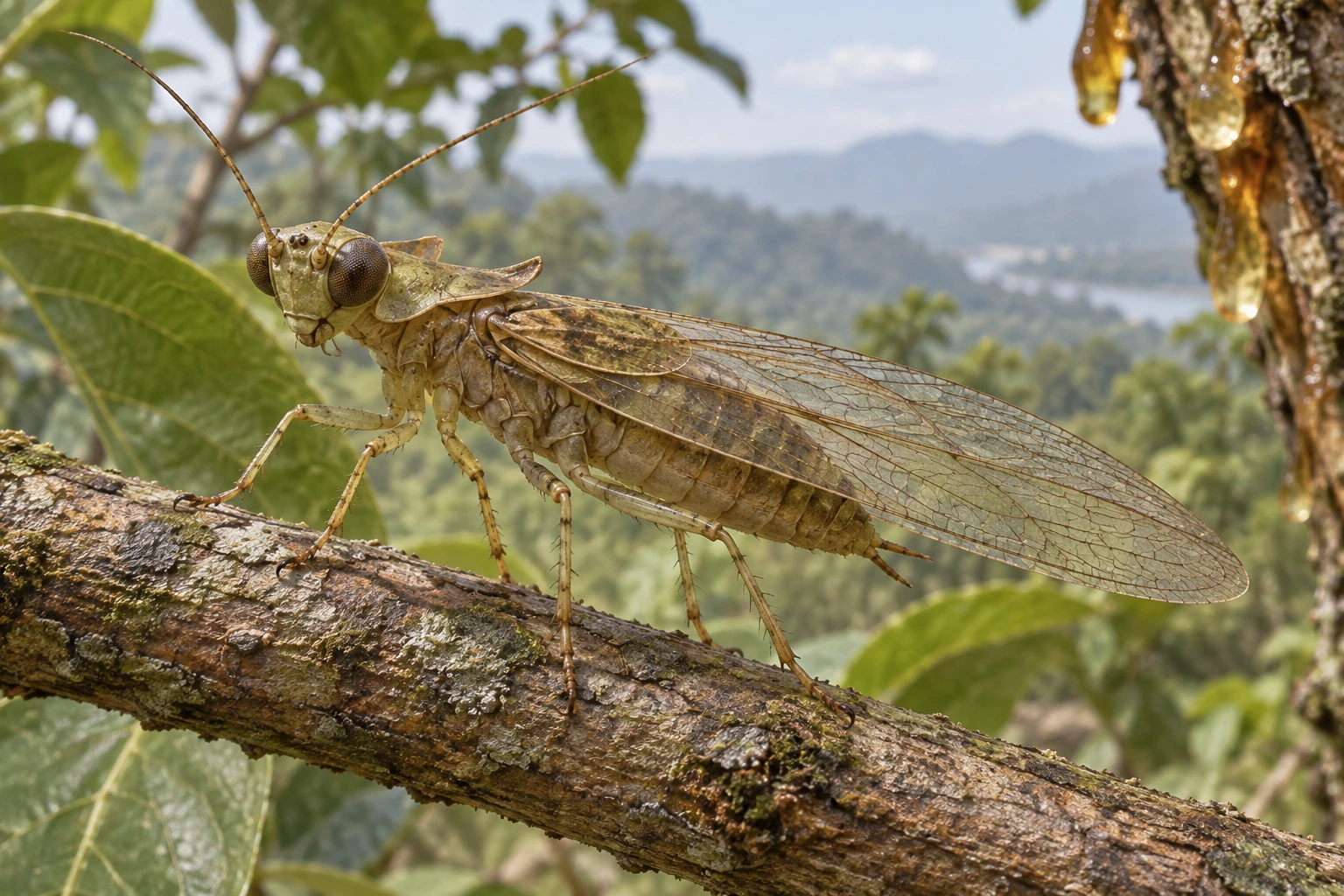
An illustrative reconstruction. Compare its anatomy with the evidence and limitations in the dossier. [1]
Source-informed reconstruction. Appearance evidence [1]. Original illustration; missing anatomy, coloration and scenery include interpretation.
Fossils constrain this life reconstruction. Missing anatomy, coloration and the environmental scene include interpretation; the dossier explains the evidence limits.
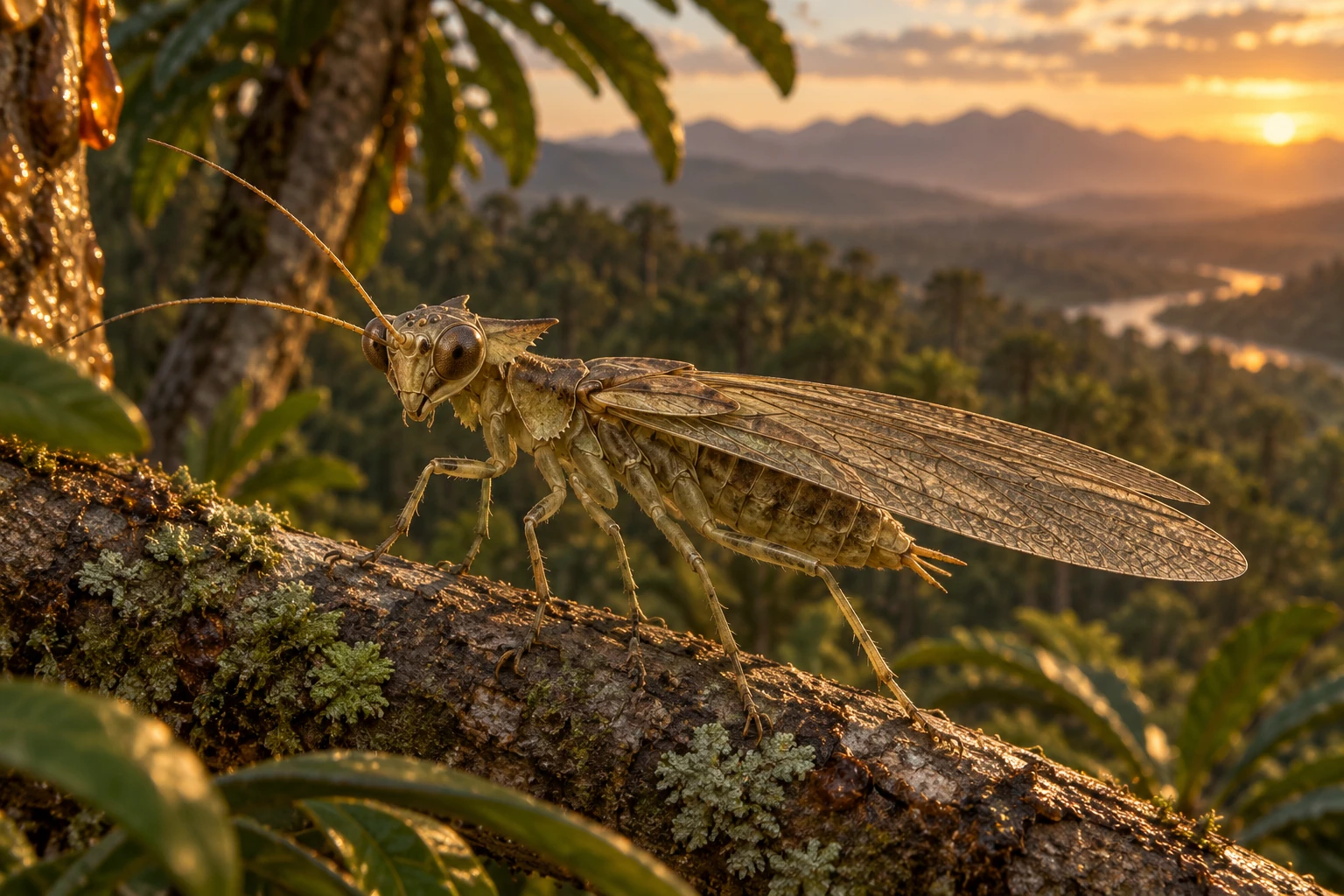
An illustrative reconstruction. Compare its anatomy with the evidence and limitations in the dossier. Lighting, coloration and scenery are artistic choices. This image does not document a fossil locality or behavior.
Original artwork · artistic interpretation.
Scientific view: source-informed reconstruction, credited paleoart or specimen-based imagery. Movie-style view: Original artistic interpretation. Reconstructions involve uncertainty.
MEET THE ANIMAL
Caputoraptor had an unusual device where its head met its thorax. Sharp extensions behind the head faced toothed ridges on the thorax, forming a scissor-like arrangement. A Chinese Academy of Sciences report explains that researchers examined nine bodies in eight amber pieces, including three adults and six nymphs. These fossils let them compare more than one life stage, although the sample itself does not prove that the insects lived in groups. [D3]
The scientists first proposed that females might use the device to hold a male during mating. That explanation was a hypothesis, rather than a preserved mating event. A later researcher described a male nymph with a similar apparatus and argued against a female-only mating role. He suggested that the device might instead squeeze prey. The exact use therefore remains uncertain: a structure can be preserved clearly even when its behavior is difficult to reconstruct. [D2]
The original C. elegans adults measured 13.2 to 14.1 millimeters in body length. Their feet and eyes suggested an animal climbing through tree or shrub foliage. Their leg pairs were similar walking limbs, not the huge grasping forelegs of a modern mantis. Adults had developed wings, whereas the nymphs lacked them. These clues help reconstruct its appearance and possible movement without turning a disputed behavioral explanation into a fact. [D1]
PREHISTORIC ANIMAL DOSSIER
The animal, the evidence, and the questions still open.
Adult females and nymphs preserve a distinctive head–thorax mechanism. A proposed mating function was challenged by a later male nymph. [D2]
Profile scope: Genus — Caputoraptor; galleries use C. elegans adult-female anatomy from Myanmar amber, while other species include Korean material. [D1] [D4]
Source supported identifies a description documented by the cited source. Inferred marks a reconstruction or functional estimate. Debated marks competing interpretations. Not established means the sources reviewed for this dossier do not support a firm conclusion; it does not mean a behavior never occurred.
A size reference is an estimate, not a population range. Nesting evidence does not by itself establish courtship, mate choice, or lifelong pairing.
13.2–14.1 mm adult-female bodies
Range of described C. elegans adults in the original sample; not the genus or juvenile range. [D1]
Not established here
The reviewed male-nymph correspondence supplies no body-mass estimate. [D2]
Animal feeding inferred
Head and visual anatomy prompted predation hypotheses; exact prey and feeding method remain uncertain. [D1]
Tree or shrub foliage inferred
Foot pads and movable head support a climbing foliage-dweller rather than an aquatic animal. [D1]
Walking and flight inferred
Similar leg pairs and developed adult hindwings support these capabilities; nymphs were wingless. [D1]
Head–thorax scissor apparatus
Rear head edges oppose toothed pronotal ridges. Legs are similar walking limbs, rather than giant mantis arms. [D1]
Nymphs and adult females documented
These life stages are preserved; reviewed sources do not establish attributable eggs or nesting. [D3]
Not established here
The original mating-clamp hypothesis was challenged after a male nymph showed the apparatus; prey squeezing is also a hypothesis. [D2]
Not established here
Multiple bodies in the research sample do not demonstrate a colony or cooperative behavior. [D3]
Sources and inspection notes for the claims in this profile.
THE STORY IN THE FOSSILS
Kočárek’s male nymph supplied a way to test the earlier female-clamp proposal. Its matching apparatus challenged that explanation without directly proving the alternative feeding function. [2]
The dossier identifies the scope of each reference estimate. A mount, an individual fossil and a species-wide adult range are different measurements. Comparison metrics remain unavailable where adult scope has not been established. Unknown does not mean zero.
Sources support the stated claims and scopes. Refer to the evidence notes for uncertainty.
KEEP EXPLORING
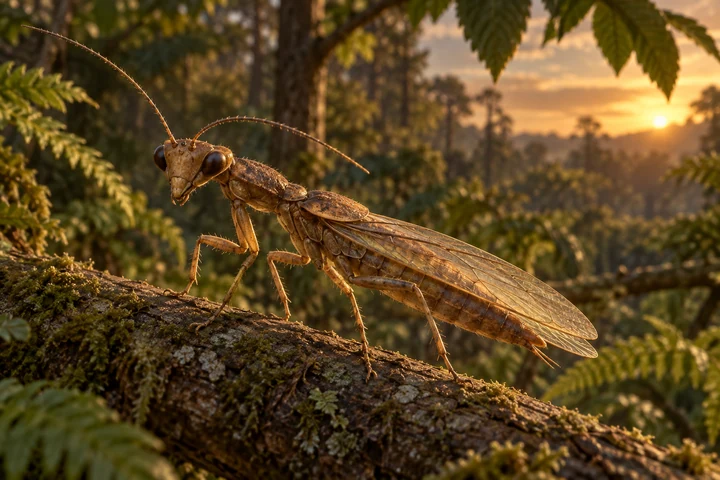
Alienopterus
Prehistoric insect
Alienopterus combined short forewings, long hindwings and walking legs in a Cretaceous insect related to the roach–mantis lineage.
Cretophengodes
Prehistoric insect
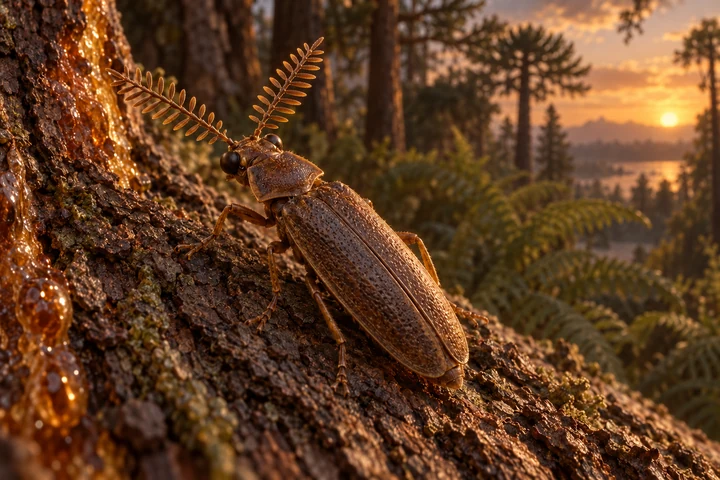
Cretophengodes was a Cretaceous beetle whose preserved abdominal organ supports ancient light production.
Angimordella
Prehistoric insect
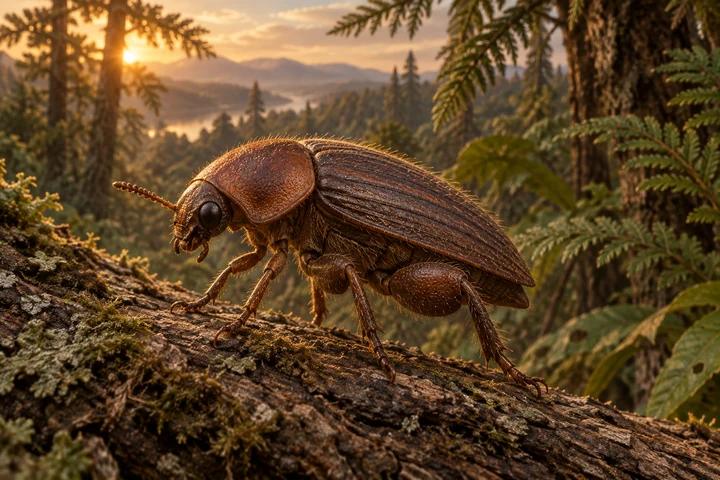
Angimordella was a Cretaceous beetle preserved with pollen; its specialized pollinator role remains uncertain after reassessment.