
Body length
InferredAbout 1.72 m (body model)
The 2025 Alvarezsaurus reconstruction is based on incomplete material; the type is interpreted as subadult. It is not a complete adult measurement. [D3]
EXHIBIT 142
Alvarezsaurus calvoi
Alvarezsaurus is known chiefly from incomplete postcranial fossils. [1]
TWO WAYS TO PICTURE THE PAST
Compare the evidence with the familiar movie image. The illustrations are not to a shared scale.
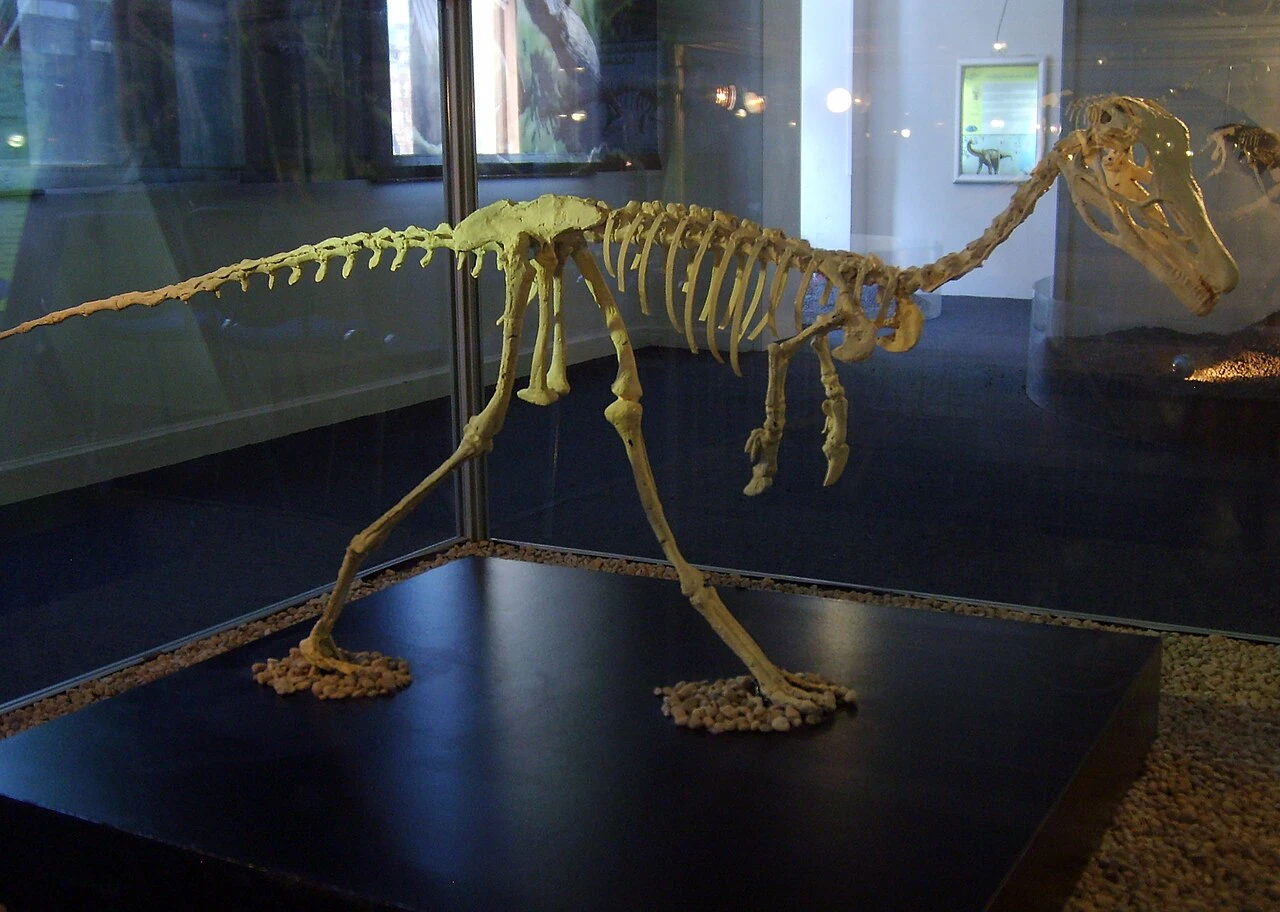
Copenhagen skeletal restoration identified as Alvarezsaurus, photographed by FunkMonk. The Commons record supplies no specimen number or element-by-element authenticity key. It is a restored display: the incomplete type lacks a skull and much of the forelimb, so the mount’s head and hand cannot establish their true anatomy, maturity or adult size. [1]
Alvarezsaurus.jpg · FunkMonk. CC BY 3.0. Current Commons 1280 px preview converted to WebP with proportional thumbnail reduction. No cropping, mirroring, anatomical edits or compositing. CC BY 3.0 chosen from the source’s offered licenses and applies to these versions.
Skeletal mounts and drawings may restore missing parts; the caption identifies the displayed material.
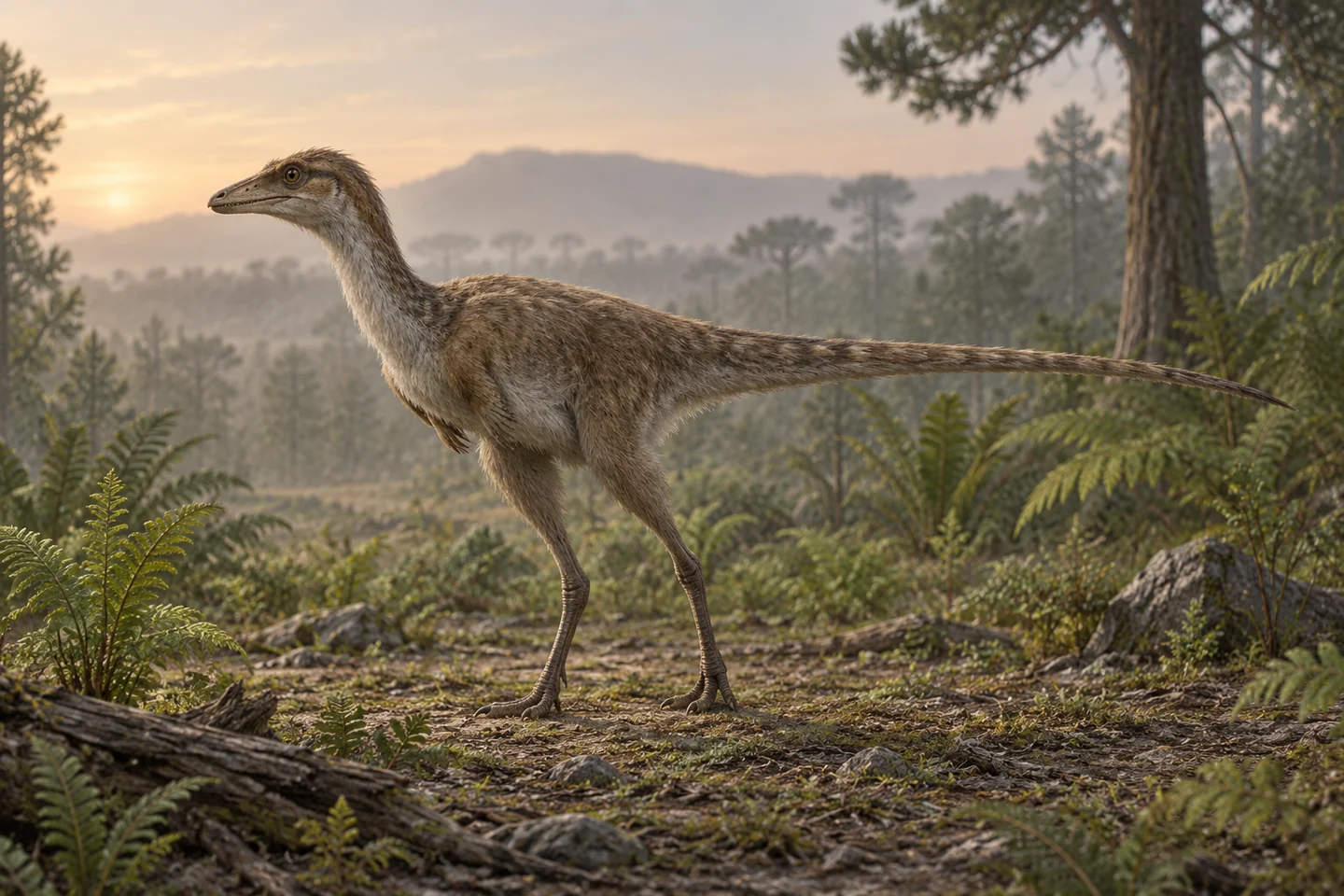
Original cinematic interpretation of Alvarezsaurus. Colors, soft tissues, scenery and missing anatomy are reconstructed artistic choices; this is not a directly observed individual or behavior. The unpreserved head and incompletely known forelimbs are restored comparatively; the view does not establish a complete hand anatomy or adult size. Lighting, coloration and scenery are artistic choices. This image does not document a fossil locality or behavior.
Original artwork · artistic interpretation.
Scientific view: source-informed reconstruction, credited paleoart or specimen-based imagery. Movie-style view: Original artistic interpretation. Reconstructions involve uncertainty.
MEET THE ANIMAL
Alvarezsaurus was a small dinosaur from Late Cretaceous Argentina. The museum describes possible feathering, which should be distinguished from plumage directly preserved on this animal. It classifies Alvarezsaurus as a meat eater, but that broad label does not identify an actual meal. In particular, a specialized termite diet should not be assumed simply because of ideas about its relatives. [D2]
A more recently reported specimen adds evidence about the forelimbs, including parts of a third finger. This matters because a simplified drawing can make a complicated hand look as though it had only one finger. The finding was reported in a conference abstract, so the expanded picture should be distinguished from a complete, fully described new skeleton. [D4]
Researchers have interpreted the original animal as still growing. Studies that adjust its size toward an imagined adult must therefore add assumptions beyond the preserved bones. Growing bones provide information about development, but do not tell us when Alvarezsaurus first bred or how it nested. A young fossil and a reconstructed adult are different kinds of evidence, not the endpoints of a measured species range. [D5]
PREHISTORIC ANIMAL DOSSIER
The animal, the evidence, and the questions still open.
Reconstructed body size depends on model and maturity assumptions; the fossil record does not justify a complete adult profile. [D3] [D5]
Profile scope: Genus — Alvarezsaurus; A. calvoi is the reference. Achillesaurus overlap is unresolved. [D3] [D6]
Source supported identifies a description documented by the cited source. Inferred marks a reconstruction or functional estimate. Debated marks competing interpretations. Not established means the sources reviewed for this dossier do not support a firm conclusion; it does not mean a behavior never occurred.
A size reference is an estimate, not a population range. Nesting evidence does not by itself establish courtship, mate choice, or lifelong pairing.
About 1.72 m (body model)
The 2025 Alvarezsaurus reconstruction is based on incomplete material; the type is interpreted as subadult. It is not a complete adult measurement. [D3]
About 4.3 kg (body model)
The 2025 reconstruction estimates 4.34 kg. Alternate merged Achillesaurus analysis and growth-corrected adult estimates are separate assumptions, not a species range. [D3]
Animal prey hypothesized
The museum labels it a meat eater, but the known type lacks a skull or confirmed meal. Specialized termite feeding is not established for this genus. [D1] [D2]
Bajo de la Carpa setting
Santonian Neuquén, Argentina; incomplete postcranial fossils do not independently establish a habitat preference. [D1] [D3]
Two-legged terrestrial reconstruction
Preserved hindlimb bones support a bipedal body; exact speed, gait cycle and endurance remain unmeasured. [D1]
Incomplete skeleton; hand evidence expanding
The type is mostly postcranial. A 2022 conference report identifies additional finger III elements in referred MUCPv 1601; a fully one-fingered hand should not be assumed. [D1] [D4]
Not established here
The type has been interpreted as juvenile or subadult in different studies. Neither interpretation establishes breeding maturity, eggs or nesting behavior. [D3] [D5]
Not established here
Reviewed material does not identify sex-specific ornaments or a courtship sequence; hypothetical feathers cannot establish a display. [D1] [D2]
Not established here
The 2022 report describes one associated referred individual; it supplies no documented herd, pack or breeding aggregation. [D4]
Sources and inspection notes for the claims in this profile.
THE STORY IN THE FOSSILS
A newly reported specimen preserves more forelimb material, including parts of the third finger. The conference report improves the anatomical picture while leaving a full published description outstanding. [4]
A museum mount completes missing regions. Its restored head and hand should not be mistaken for bones preserved in the type. [1]
The dossier identifies the scope of each reference estimate. A mount, an individual fossil and a species-wide adult range are different measurements. Comparison metrics remain unavailable where adult scope has not been established. Unknown does not mean zero.
Sources support the stated claims and scopes. Refer to the evidence notes for uncertainty.
KEEP EXPLORING
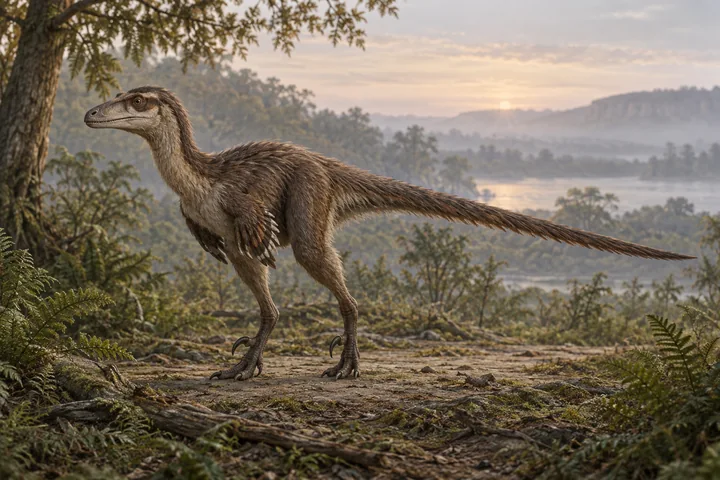
Unenlagia comahuensis
Unenlagia combines bird-like shoulder features with a flightless body.
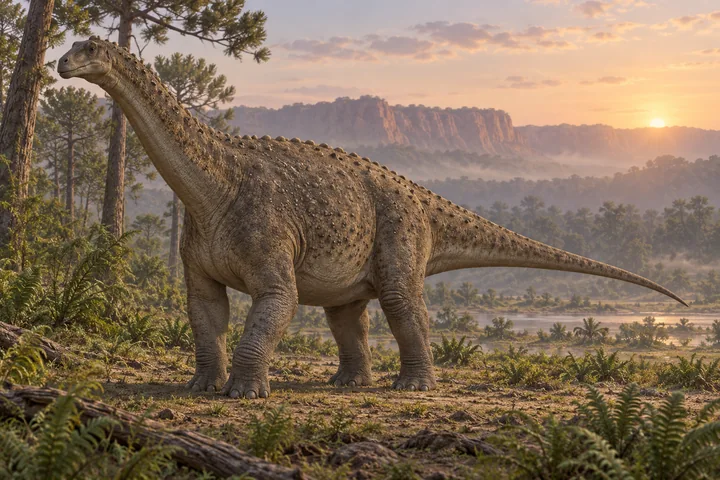
Saltasaurus loricatus
Saltasaurus was an Argentine titanosaur whose fossils preserve bony plates and tiny skin ossicles.
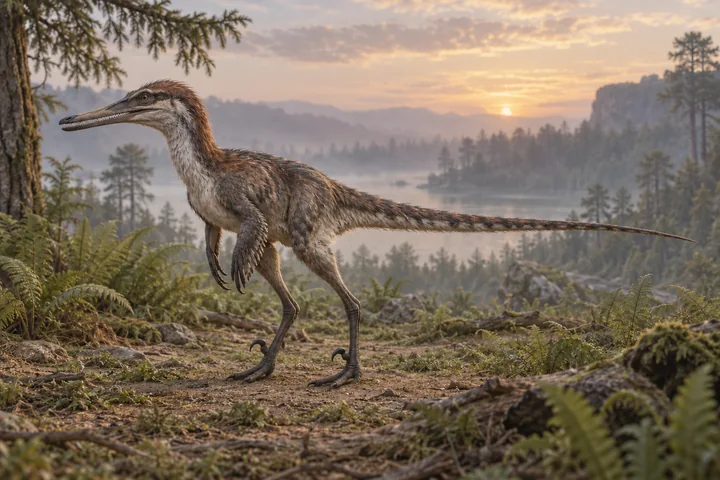
Buitreraptor gonzalezorum
Buitreraptor had a long, low snout and numerous tiny teeth.