
Body length
InferredAbout 1.3 m (museum reference)
Educational reference without specimen or maturity; not an adult maximum. [D5]
EXHIBIT 137
Buitreraptor gonzalezorum
Buitreraptor had a long, low snout and numerous tiny teeth. [3]
TWO WAYS TO PICTURE THE PAST
Compare the evidence with the familiar movie image. The illustrations are not to a shared scale.
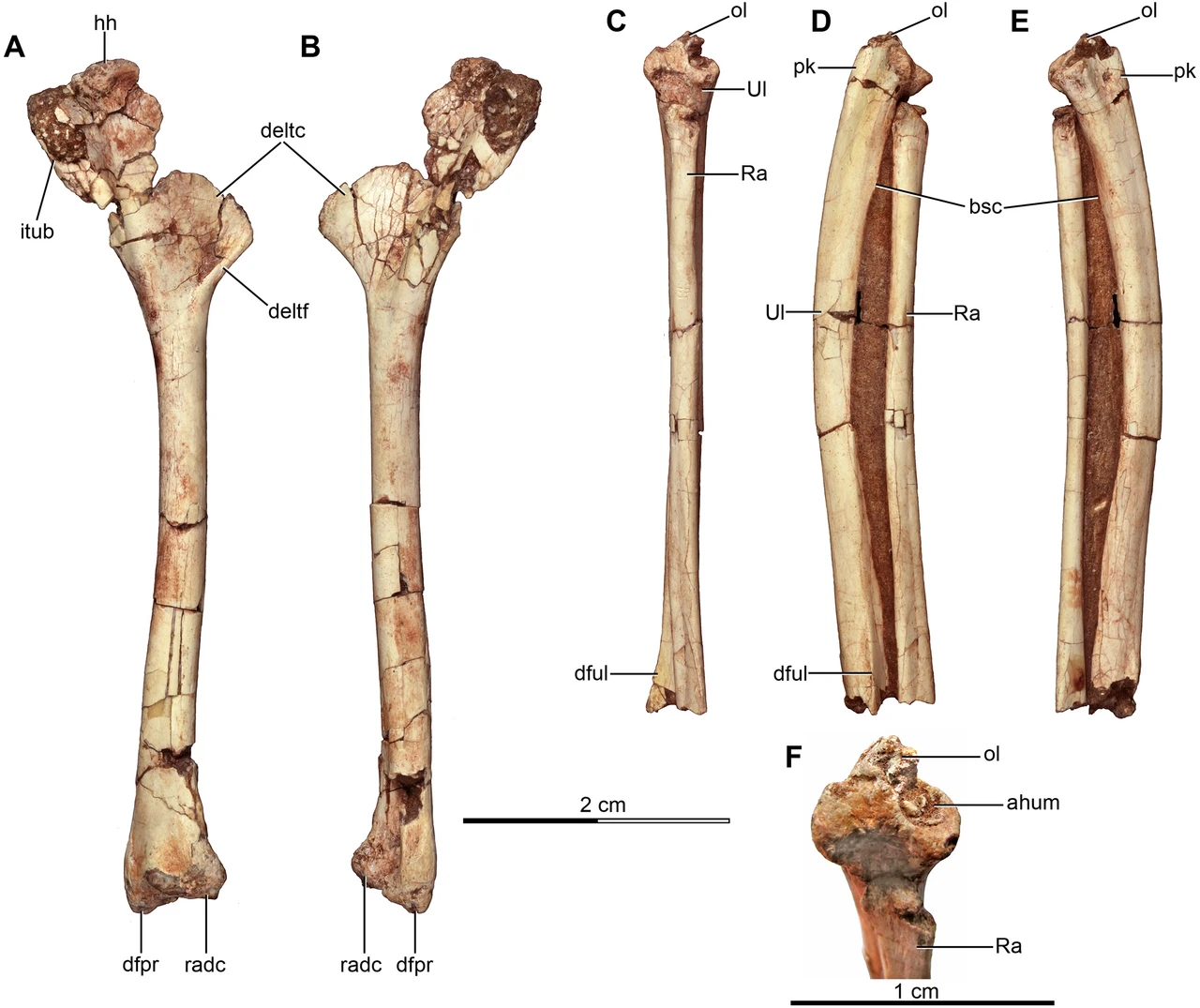
Preserved forelimb bones of Buitreraptor gonzalezorum holotype MPCA 245, from Gianechini and colleagues’ 2018 anatomical study. Panels A–B show the humerus; C–E show radius and ulna; F details the ulna. Scale bars are 2 cm for A–E and 1 cm for F. These are fossil bones, without restored feathers or skin. [3]
Buitreraptor forelimb (MPCA 245).png · Federico A. Gianechini, Peter J. Makovicky, Sebastián Apesteguía and Ignacio Cerda. CC BY 4.0. Current Commons 1280 px preview converted to WebP, with a proportionally reduced thumbnail; original labels and scale bars retained. No cropping, mirroring, anatomical edits or compositing. Source license applies to these versions.
The photograph or figure shows the credited fossil material; displayed mounts and labels can include interpretation.
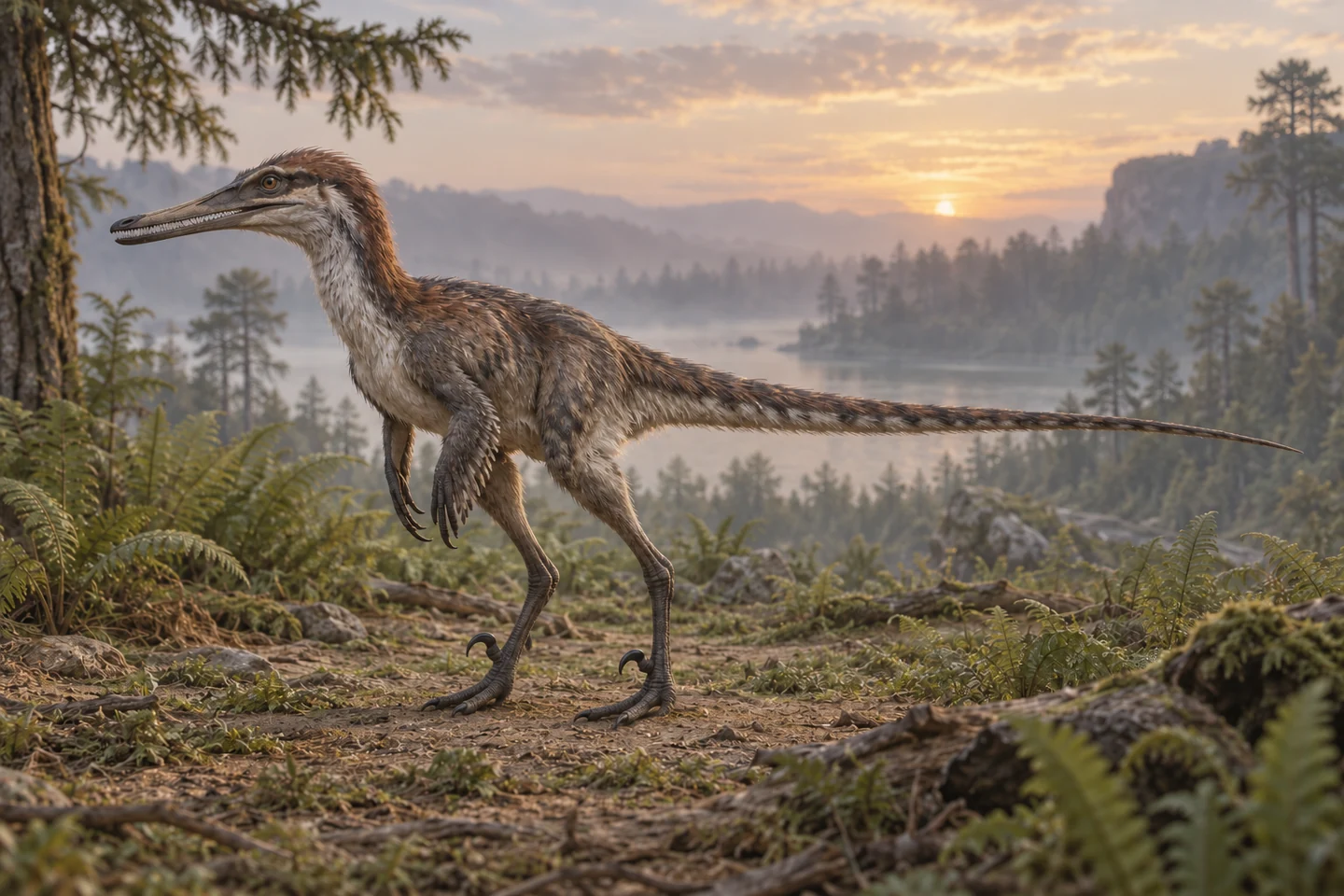
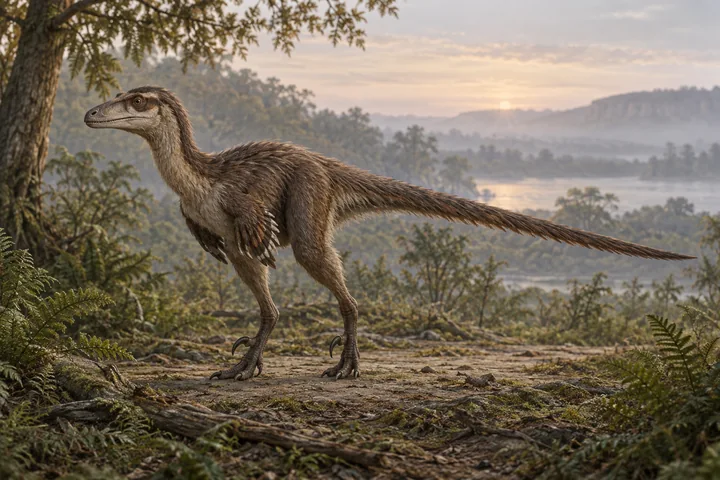
Original cinematic interpretation of Buitreraptor. Colors, soft tissues, scenery and missing anatomy are reconstructed artistic choices; this is not a directly observed individual or behavior. Its very long low snout anchors the view; complete plumage and missing soft tissues are comparative rather than directly preserved. Lighting, coloration and scenery are artistic choices. This image does not document a fossil locality or behavior.
Original artwork · artistic interpretation.
Scientific view: source-informed reconstruction, credited paleoart or specimen-based imagery. Movie-style view: Original artistic interpretation. Reconstructions involve uncertainty.
MEET THE ANIMAL
Buitreraptor was a small carnivorous dinosaur from Late Cretaceous Argentina. The Natural History Museum gives an approximate length of 1.3 metres. This is an educational reconstruction, with no particular fossil or growth stage specified. It helps show the animal's general scale, but cannot tell us the largest size a fully grown Buitreraptor could reach. [D5]
Its long snout carried numerous tiny teeth. They were flattened from side to side and had grooves, but lacked the obvious sawlike edges seen in many other predatory dinosaurs. That unusual combination gives Buitreraptor a distinctive feeding profile. Teeth reveal the tools an animal had; they do not, by themselves, identify the species it actually ate. [D3]
Long lower legs and foot bones have led researchers to propose that Buitreraptor could run after small prey. This explanation comes from comparing limb proportions and how they might function. It is a hypothesis about movement and hunting, rather than a measured running speed or a preserved chase. Its exact prey and capture techniques remain uncertain. [D4]
PREHISTORIC ANIMAL DOSSIER
The animal, the evidence, and the questions still open.
Its distinctive dentition and long lower legs inform prey-capture hypotheses; published phylogenetic placement remains debated. [D4] [D7]
Profile scope: Genus — Buitreraptor; profile centered on B. gonzalezorum. [D1]
Source supported identifies a description documented by the cited source. Inferred marks a reconstruction or functional estimate. Debated marks competing interpretations. Not established means the sources reviewed for this dossier do not support a firm conclusion; it does not mean a behavior never occurred.
A size reference is an estimate, not a population range. Nesting evidence does not by itself establish courtship, mate choice, or lifelong pairing.
About 1.3 m (museum reference)
Educational reference without specimen or maturity; not an adult maximum. [D5]
About 3.3 kg (limb model)
MPCA 245; measured femoral circumference. Growing individual. [D6]
Small animal prey inferred
Small, unserrated teeth and limb modeling favor capture of small prey; particular prey species are unverified. [D3] [D4]
Candeleros dune-field setting
Cenomanian remains from La Buitrera, Río Negro, Argentina. Sediments indicate a paleodesert with intermittently wet areas. [D2]
Two-legged, relatively cursorial
Long lower legs and metatarsi support running adaptations; fossil speed and endurance are unmeasured. [D4]
Long snout; many tiny, grooved teeth
Teeth lack the conspicuous serrations of many northern dromaeosaurids. [D3]
Not established here
Histology identifies growing subadults. A larger specimen was interpreted as sexually mature through growth slowing, not nesting evidence; breeding age and parental care remain unverified. [D2]
Not established here
Reviewed skeletal and functional studies establish no sex-specific display or mating sequence; proposed relationships with birds cannot supply one. [D4] [D7]
Not established here
Multiple referred skeletons document individuals; the reviewed material does not demonstrate coordinated hunting or a social group. [D2]
Sources and inspection notes for the claims in this profile.
THE STORY IN THE FOSSILS
Long jaws carried unusually small teeth without denticles. These preserved structures offer stronger evidence than an imagined menu. [3]
Growth marks reveal that the main studied skeletons were still growing. Their sizes cannot define a mature population range. [2]
The dossier identifies the scope of each reference estimate. A mount, an individual fossil and a species-wide adult range are different measurements. Comparison metrics remain unavailable where adult scope has not been established. Unknown does not mean zero.
Sources support the stated claims and scopes. Refer to the evidence notes for uncertainty.
KEEP EXPLORING
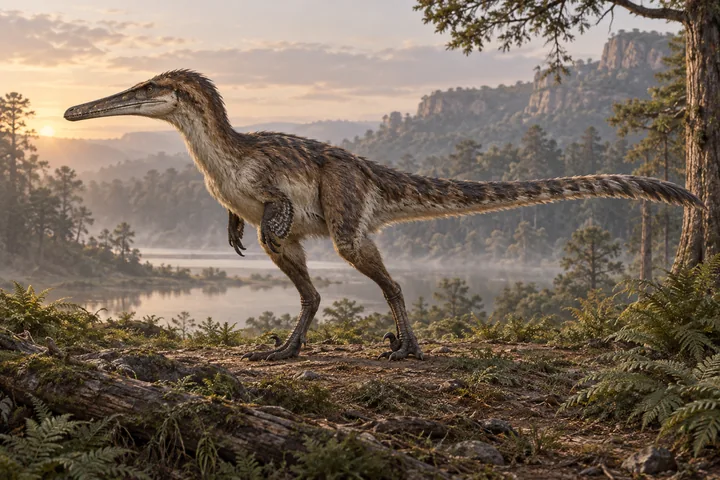
Austroraptor cabazai
Austroraptor was a large Patagonian theropod with a long low skull, small teeth and unusually short arms.
Unenlagia comahuensis
Unenlagia combines bird-like shoulder features with a flightless body.
Saltasaurus loricatus
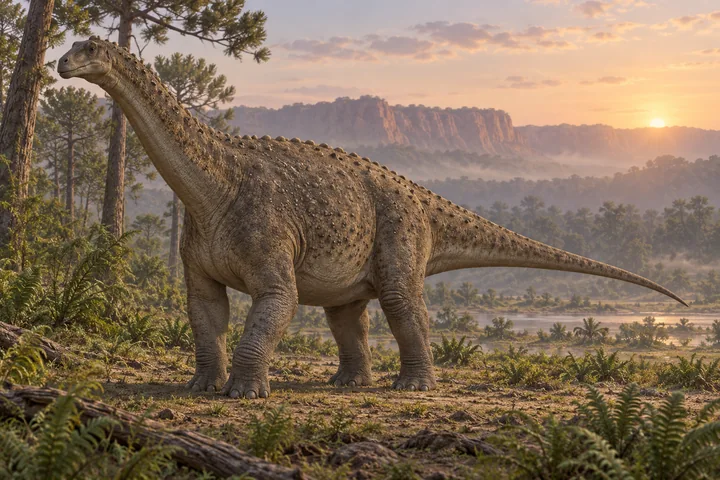
Saltasaurus was an Argentine titanosaur whose fossils preserve bony plates and tiny skin ossicles.