
Body length
InferredAbout 12 m; museum reference
The directory does not identify a measured individual, maturity assessment or estimation method. This is not an adult species interval. [D1]
EXHIBIT 85
Saltasaurus loricatus
Saltasaurus was an Argentine titanosaur whose fossils preserve bony plates and tiny skin ossicles.
TWO WAYS TO PICTURE THE PAST
Compare the evidence with the familiar movie image. The illustrations are not to a shared scale.
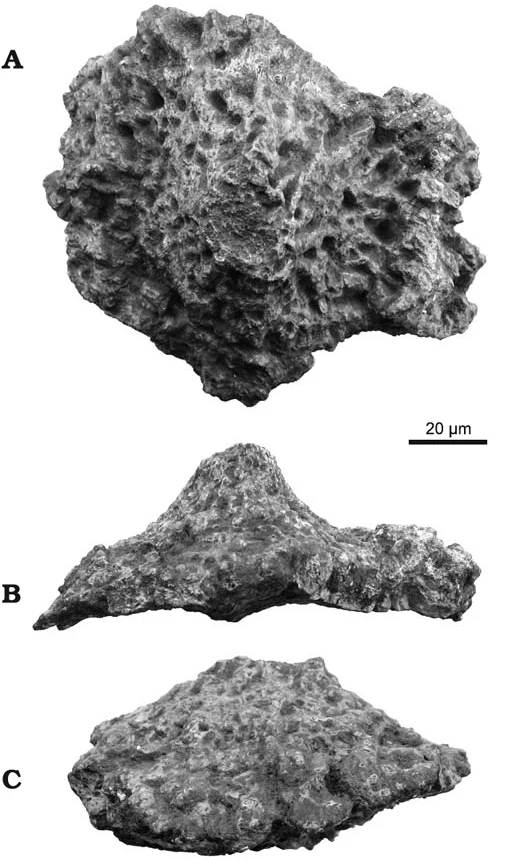
Saltasaurus loricatus osteoderm PVL 4017-113 from El Brete, Salta, illustrated by Cerda and Powell (2010). This is fossil armour, not a whole-animal reconstruction; the original 20 mm scale is retained. [2]
Saltasaurus.jpg · Ignacio A. Cerda; Jaime E. Powell. CC BY 2.0. Resized proportionally and converted to WebP; no anatomical edits. Same source license applies.
The photograph or figure shows the credited fossil material; displayed mounts and labels can include interpretation.
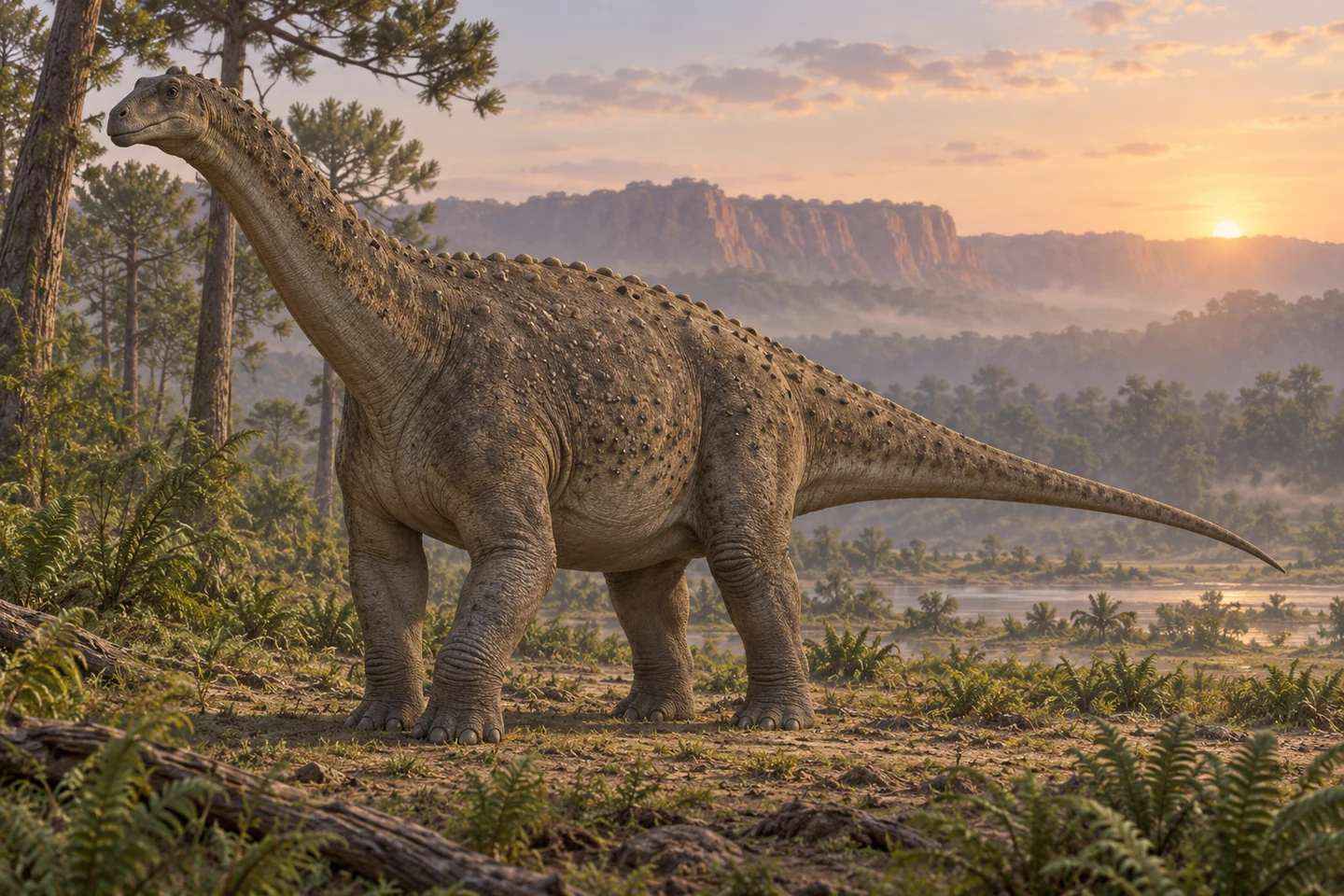
Original cinematic interpretation of Saltasaurus loricatus. Coloration, soft tissues and scenery are artistic choices; reconstructed proportions do not establish a measured individual. Lighting, coloration and scenery are artistic choices. This image does not document a fossil locality or behavior.
Original artwork · artistic interpretation.
Scientific view: source-informed reconstruction, credited paleoart or specimen-based imagery. Movie-style view: Original artistic interpretation. Reconstructions involve uncertainty.
MEET THE ANIMAL
Saltasaurus loricatus was a plant-eating sauropod from Late Cretaceous Argentina. A museum reference of about twelve metres provides an approximate sense of scale, without identifying a complete measured adult. Like other sauropods, it is familiar for a long-necked body plan, but its fossils also preserve something that makes its skin especially interesting. [D1]
At El Brete in Salta, bones were associated with bony plates and much smaller skin bones called ossicles. Studies distinguish their internal structures. The armor was not one uniform layer: large pieces and tiny elements supplied different parts of the covering. [D2]
Famous embryo-bearing eggs at Auca Mahuevo show that sauropods laid eggs, but their original description did not identify Saltasaurus loricatus. They therefore cannot supply this species with a nest layout or a parental-care story. A fossil may give strong evidence for a wider dinosaur group while leaving a particular member's habits unresolved. [D4]
Other bone tissues in saltasaurine dinosaurs have been discussed in connection with reproduction. Their origin is uncertain and may also involve disease. Such tissue does not independently identify reproductive activity. Saltasaurus is better understood by keeping each clue within the question it can actually answer. [D3]
PREHISTORIC ANIMAL DOSSIER
The animal, the evidence, and the questions still open.
Its armour provides direct evidence of a sauropod’s bony skin structures.
Profile scope: Genus profile centered on Saltasaurus loricatus; museum size is an unspecified reference.
Source supported identifies a description documented by the cited source. Inferred marks a reconstruction or functional estimate. Debated marks competing interpretations. Not established means the sources reviewed for this dossier do not support a firm conclusion; it does not mean a behavior never occurred.
A size reference is an estimate, not a population range. Nesting evidence does not by itself establish courtship, mate choice, or lifelong pairing.
About 12 m; museum reference
The directory does not identify a measured individual, maturity assessment or estimation method. This is not an adult species interval. [D1]
About 2.5 tonnes; model of PVL 4017-79
Paul’s model appendix estimates 2,480 kg using reconstructed volume, density assumptions and limb scaling. Maturity is unspecified; this is not a species range. [D5]
Plant-eater
The museum identifies herbivory; these sources do not demonstrate a specific plant menu. [D1]
Lecho Formation, northwestern Argentina
The studied armour comes from El Brete, Salta, in sediments assigned ?late Campanian–Maastrichtian, within the Late Cretaceous. [D2]
Four-legged terrestrial walker
Quadrupedal support by massive limbs follows the reviewed sauropod body plan; species-specific speed remains unestablished. [D6]
Bony plates and tiny dermal ossicles
Associated fossils and thin sections distinguish larger osteoderms from small ossicles arranged in a mosaic. [D2]
Egg-laying inferred; species nests unresolved
Auca Mahuevo embryos support sauropod egg-laying, not Saltasaurus identification. Saltasaurine endosteal tissue also has an uncertain reproductive versus pathological origin. [D4] [D3]
Not established here
The reviewed studies do not establish sexual display, mating posture or mate selection; ambiguous reproductive tissue cannot reconstruct courtship.
Not established here
Disarticulated animals occurred together at El Brete; that association alone does not establish herd structure or coordinated behavior. [D2]
Sources and inspection notes for the claims in this profile.
THE STORY IN THE FOSSILS
Saltasaurus changed understanding of sauropod skin: osteoderms were found associated with its bones. Studied plates and much smaller ossicles preserve different internal tissue structures. [2]
Auca Mahuevo’s embryo-bearing eggs provide strong sauropod reproductive evidence. Their original description did not identify Saltasaurus loricatus, so this profile leaves its particular nesting behavior unresolved. [4]
The dossier identifies the scope of each reference estimate. A mount, an individual fossil and a species-wide adult range are different measurements. Comparison metrics remain unavailable where adult scope has not been established. Unknown does not mean zero.
Sources support the stated claims and scopes. Refer to the evidence notes for uncertainty.
KEEP EXPLORING
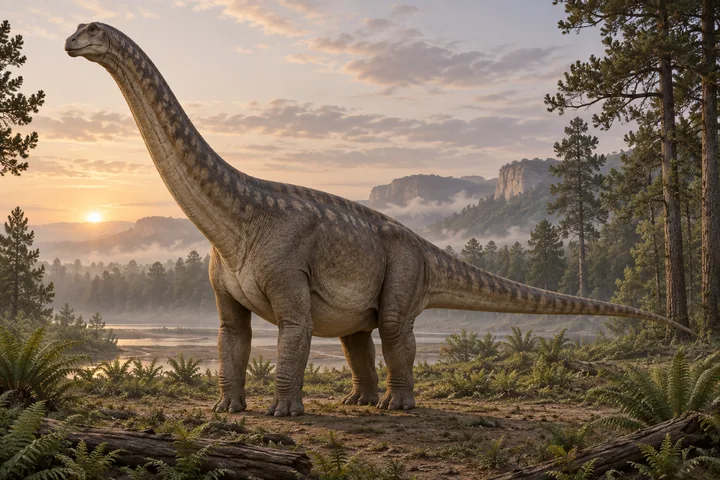
Alamosaurus sanjuanensis
Alamosaurus is a New Mexican titanosaur with fossil assignments reconsidered in 2025.
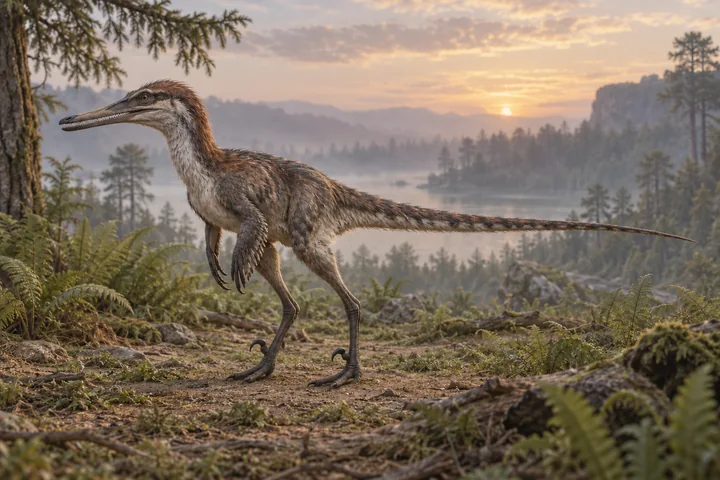
Buitreraptor gonzalezorum
Buitreraptor had a long, low snout and numerous tiny teeth.
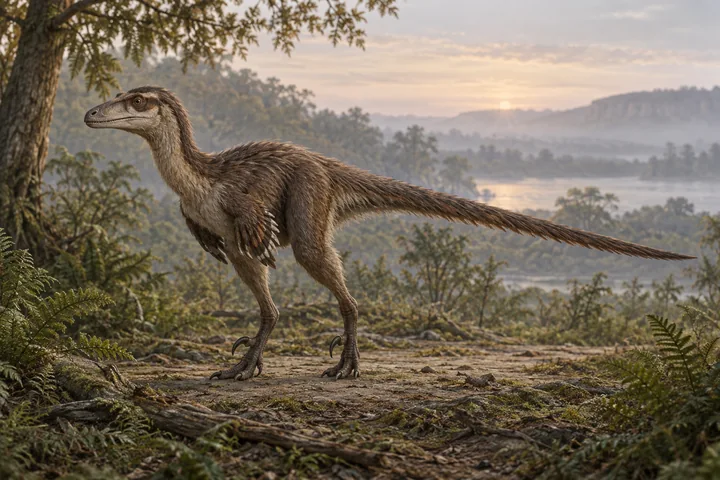
Unenlagia comahuensis
Unenlagia combines bird-like shoulder features with a flightless body.