EXPLORE PREHISTORY 220 prehistoric animal profiles · Scientific & movie-style image galleries

EXHIBIT 188

Alxasaurus

Alxasaurus elesitaiensis

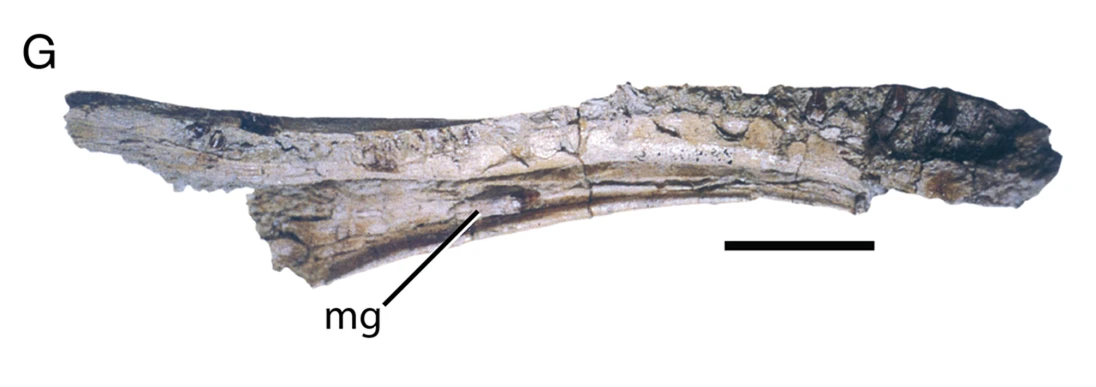
Alxasaurus linked therizinosaurs with other theropods through its skeleton. A preserved jaw and specialized wrist give separate clues to feeding and movement. [1] [4]

Evidence profile
PERIODEarly Cretaceous[1]
DIETPlant feeding (inferred)Evidence and uncertainty in the dossier
TOTAL LENGTHSee the dossierEstimate scope matters
FOSSILS FOUNDChina[1]
CompareRead the dossierView the sources

MEET THE ANIMAL

Meet Alxasaurus

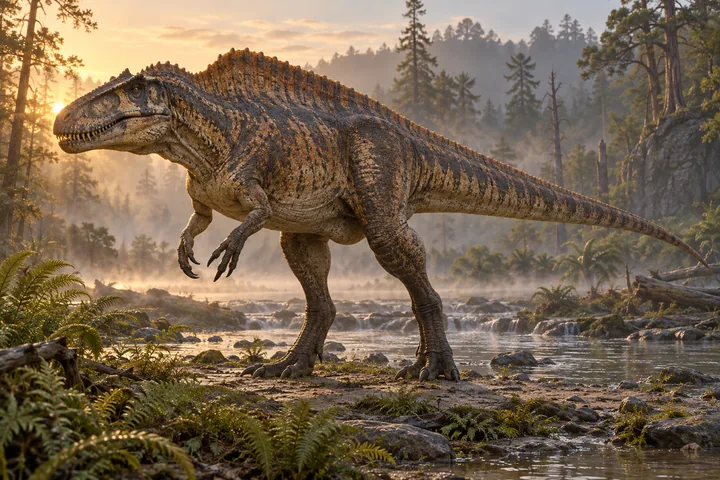
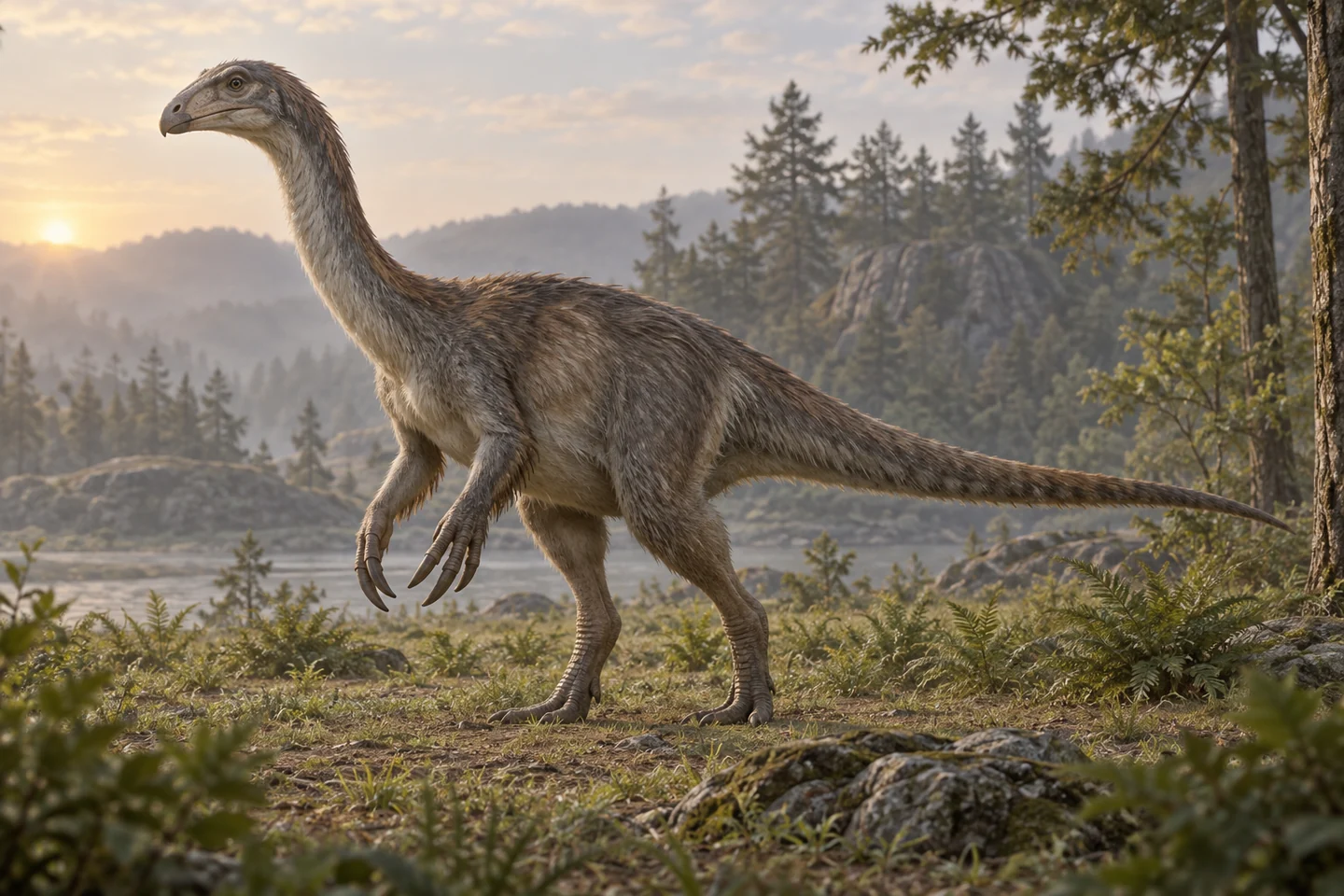
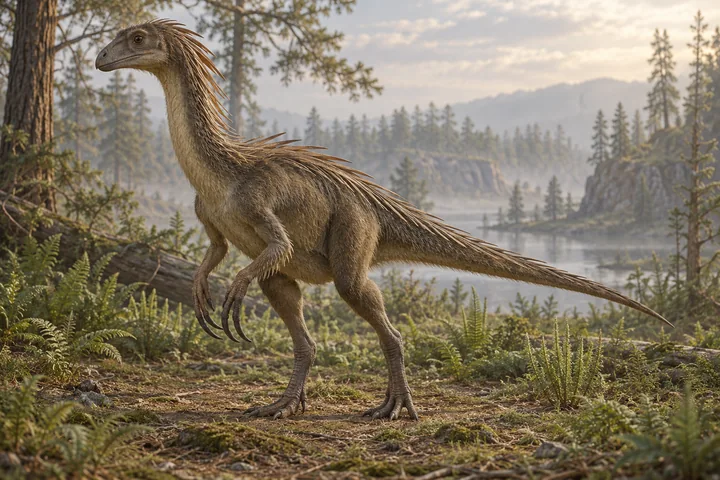
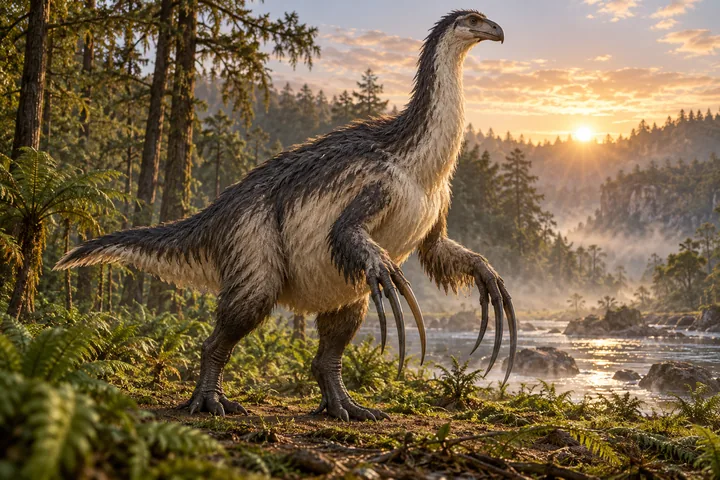
Alxasaurus came from Early Cretaceous lake deposits in Inner Mongolia. Its skeleton describes a two-legged dinosaur with long arms and a relatively short tail. Those features help connect the unusual therizinosaurs with other theropods, rather than treating their body plan as an unrelated dinosaur experiment. [D1]

Its lower jaw helps researchers trace changes in feeding within the group. Comparisons support plant feeding, but teeth and jaws do not provide a complete menu. They cannot tell us which plants it preferred or prove that animal food was always excluded. [D5]

The wrist provides another useful clue. A curved wrist bone helped allow the hand to fold, a movement also discussed in the evolution of bird-like wrists. Sharing part of that mechanical arrangement does not mean Alxasaurus flew. The important connection is a change in joint structure: related animals can use similar inherited features for very different activities. [D4]

The fossil inventory contains material from differently sized individuals, including an immature hindlimb specimen. A reconstructed animal must therefore distinguish which bones belong together. Combining the largest pieces would not automatically produce a real, complete adult that once lived. [D2]

PREHISTORIC ANIMAL DOSSIER

A life in profile.

The animal, the evidence, and the questions still open.

Its anatomical inventory is not one complete adult skeleton. The original abstract describes a biped with long arms and a short tail, while later work examines the unusual wrist directly. [D1]

Profile scope: Genus profile centered on A. elesitaiensis. IVPP 88402 includes material attributed to larger and smaller individuals; other referred material includes an immature hindlimb specimen. [D2]

Time
Early Cretaceous
Fossil locations in this exhibit
China
How to read the evidence

Source supported identifies a description documented by the cited source. Inferred marks a reconstruction or functional estimate. Debated marks competing interpretations. Not established means the sources reviewed for this dossier do not support a firm conclusion; it does not mean a behavior never occurred.

A size reference is an estimate, not a population range. Nesting evidence does not by itself establish courtship, mate choice, or lifelong pairing.

Body length

Not established

Not established here

Focused size searches found repeated secondary body lengths, but the original full description was inaccessible. The inspected abstract and revision do not provide a verified whole-body calculation to adopt here. [D1]
Body mass

Inferred

About 380 kg; historical limb-based model

The 2012 study reports Russell and Dong’s 380 kg femoral-circumference estimate. The inspected passage does not identify which referred individual supplied it; it is not a verified adult maximum. [D3]

Diet

Inferred

Plant feeding inferred from jaw morphology

The comparative study illustrates the dentary and places its features within therizinosaurian feeding evolution. Anatomical resemblance supports a plant-feeding interpretation, without identifying a preserved meal or exclusive diet. [D5]

Habitat & fossil setting

Source supported

Albian lacustrine deposits, Inner Mongolia

The original abstract places the fossils in lake deposits of the Alxa Desert. Burial in lake sediments does not establish habitual swimming or an exclusively aquatic lifestyle. [D1]

Movement

Inferred

Bipedal; asymmetric wrist mobility

The original account describes a two-legged body. IVPP RV93001 has a 39-degree radiale angle and a convex semilunate joint; inferred hand folding does not imply flight. [D1] [D4]

Distinctive anatomy

Source supported

Semilunate wrist formed from two ossifications

The inspected carpus preserves a strongly convex, pulley-like semilunate. This is fossil joint anatomy; the animal’s exact hand use remains a functional interpretation. [D4]

Reproduction & life together

Reproduction & nesting

Not established

Not established here

Focused searches did not establish securely assigned eggs, embryos, nests, clutch size, incubation or parental care. Broader theropod evidence cannot identify this genus’s reproductive habits.

Courtship & mating

Not established

Not established here

Focused searches did not establish sexes, mate choice, mating seasons or a particular courtship display. Restored colors and feather arrangements are artistic interpretations.

Social behavior

Not established

Not established here

The revised inventory distinguishes larger, smaller and immature material. Multiple fossil individuals do not establish a living herd, family structure or reproductive aggregation. [D2]

Dossier research & sources

Sources and inspection notes for the claims in this profile.

  1. The affinities of a new theropod from the Alxa Desert, Inner Mongolia, People’s Republic of ChinaCanadian Journal of Earth Sciences; Russell & Dong (1993) · Accessed 2026-10-02Original article abstract inspected through institutional NII record: Albian lacustrine deposits, bipedal skeleton, long arms and short tail. Full 21-page article unavailable; no uninspected body-length figure adopted. · Inspected: abstract
  2. A taxonomic and phylogenetic re-evaluation of Therizinosauria (Dinosauria: Maniraptora)Journal of Systematic Palaeontology; Zanno (2010) · Accessed 2026-10-02Original author full text indexed through ResearchGate inspected in systematic passages: type/referral inventory, diagnosis and distinct genus identities. Local PDF not obtained. · Inspected: excerpt
  3. The Endocranial Anatomy of Therizinosauria and Its Implications for Sensory and Cognitive FunctionPLOS ONE; Lautenschlager and colleagues (2012) · Accessed 2026-10-02Original PDF inspected: methods p.2 and Table 2, femoral-length mass models, inferred Erlikosaurus femur from humerus, historical Alxasaurus estimate, CT-based sensory interpretations. · Inspected: page
  4. The asymmetry of the carpal joint and the evolution of wing folding in maniraptoran theropod dinosaursProceedings of the Royal Society B; Sullivan and colleagues (2010) · Accessed 2026-10-02Original full text inspected: Alxasaurus IVPP RV93001 left carpus, composite semilunate and measured 39-degree radiale angle; comparative wrist mobility, not flight evidence. · Inspected: page
  5. Specializations of the mandibular anatomy and dentition of Segnosaurus galbinensis (Theropoda: Therizinosauria)PeerJ; Zanno, Tsogtbaatar, Chinzorig & Gates (2016) · Accessed 2026-10-02Original full PDF inspected: comparative Alxasaurus dentary IVPP 88402 and feeding morphology. Laterality differs between original inventory wording and figure caption; no side is asserted here. · Inspected: page

THE STORY IN THE FOSSILS

Meet Alxasaurus.

Not all available pieces were recoverable for the later taxonomic study. The profile retains the revised inventory’s individual distinctions instead of treating every referred bone as one mature animal. [2]

A note on scale and time

The dossier identifies the scope of each reference estimate. A mount, an individual fossil and a species-wide adult range are different measurements. Comparison metrics remain unavailable where adult scope has not been established. Unknown does not mean zero.

Sources & editorial notes

Sources support the stated claims and scopes. Refer to the evidence notes for uncertainty.

  1. The affinities of a new theropod from the Alxa Desert, Inner Mongolia, People’s Republic of ChinaCanadian Journal of Earth Sciences; Russell & Dong (1993) · Accessed 2026-10-02Original article abstract inspected through institutional NII record: Albian lacustrine deposits, bipedal skeleton, long arms and short tail. Full 21-page article unavailable; no uninspected body-length figure adopted. · Inspected: abstract
  2. A taxonomic and phylogenetic re-evaluation of Therizinosauria (Dinosauria: Maniraptora)Journal of Systematic Palaeontology; Zanno (2010) · Accessed 2026-10-02Original author full text indexed through ResearchGate inspected in systematic passages: type/referral inventory, diagnosis and distinct genus identities. Local PDF not obtained. · Inspected: excerpt
  3. The Endocranial Anatomy of Therizinosauria and Its Implications for Sensory and Cognitive FunctionPLOS ONE; Lautenschlager and colleagues (2012) · Accessed 2026-10-02Original PDF inspected: methods p.2 and Table 2, femoral-length mass models, inferred Erlikosaurus femur from humerus, historical Alxasaurus estimate, CT-based sensory interpretations. · Inspected: page
  4. The asymmetry of the carpal joint and the evolution of wing folding in maniraptoran theropod dinosaursProceedings of the Royal Society B; Sullivan and colleagues (2010) · Accessed 2026-10-02Original full text inspected: Alxasaurus IVPP RV93001 left carpus, composite semilunate and measured 39-degree radiale angle; comparative wrist mobility, not flight evidence. · Inspected: page
  5. Specializations of the mandibular anatomy and dentition of Segnosaurus galbinensis (Theropoda: Therizinosauria)PeerJ; Zanno, Tsogtbaatar, Chinzorig & Gates (2016) · Accessed 2026-10-02Original full PDF inspected: comparative Alxasaurus dentary IVPP 88402 and feeding morphology. Laterality differs between original inventory wording and figure caption; no side is asserted here. · Inspected: page

FOLLOW YOUR CURIOSITY

Who will you meet next?

KEEP EXPLORING

More from the collection