
Body length
InferredAbout 10 m; reconstructed museum reference
NHM gives 10 m but emphasizes the incomplete skeleton and reconstruction from relatives. This is not a measured complete skeleton. [D1]
EXHIBIT 30
Therizinosaurus
Enormous hand claws on a plant-eating theropod.
TWO WAYS TO PICTURE THE PAST
Compare the evidence with the familiar movie image. The illustrations are not to a shared scale.

The artist identifies this reconstruction as Therizinosaurus cheloniformis. This view illustrates one form within the genus, rather than every species or individual. Fossil-informed anatomy: Large bipedal therizinosaur; three immense narrow hand claws. Heavy torso, long neck and feather covering are comparative reconstructions. Arms and claws based on PIN 551-483 and IGM 100/15, 100/16, 100/17; much of the body and head is inferred from relatives. Feathering and coloration are speculative. [1] [2]
Therizinosaurus Restoration.png — PaleoNeolitic. CC BY 4.0. Remote source artwork displayed without additional cropping; Wikimedia supplies any display-size derivative.
Scientific picture served by Wikimedia · internet connection required.
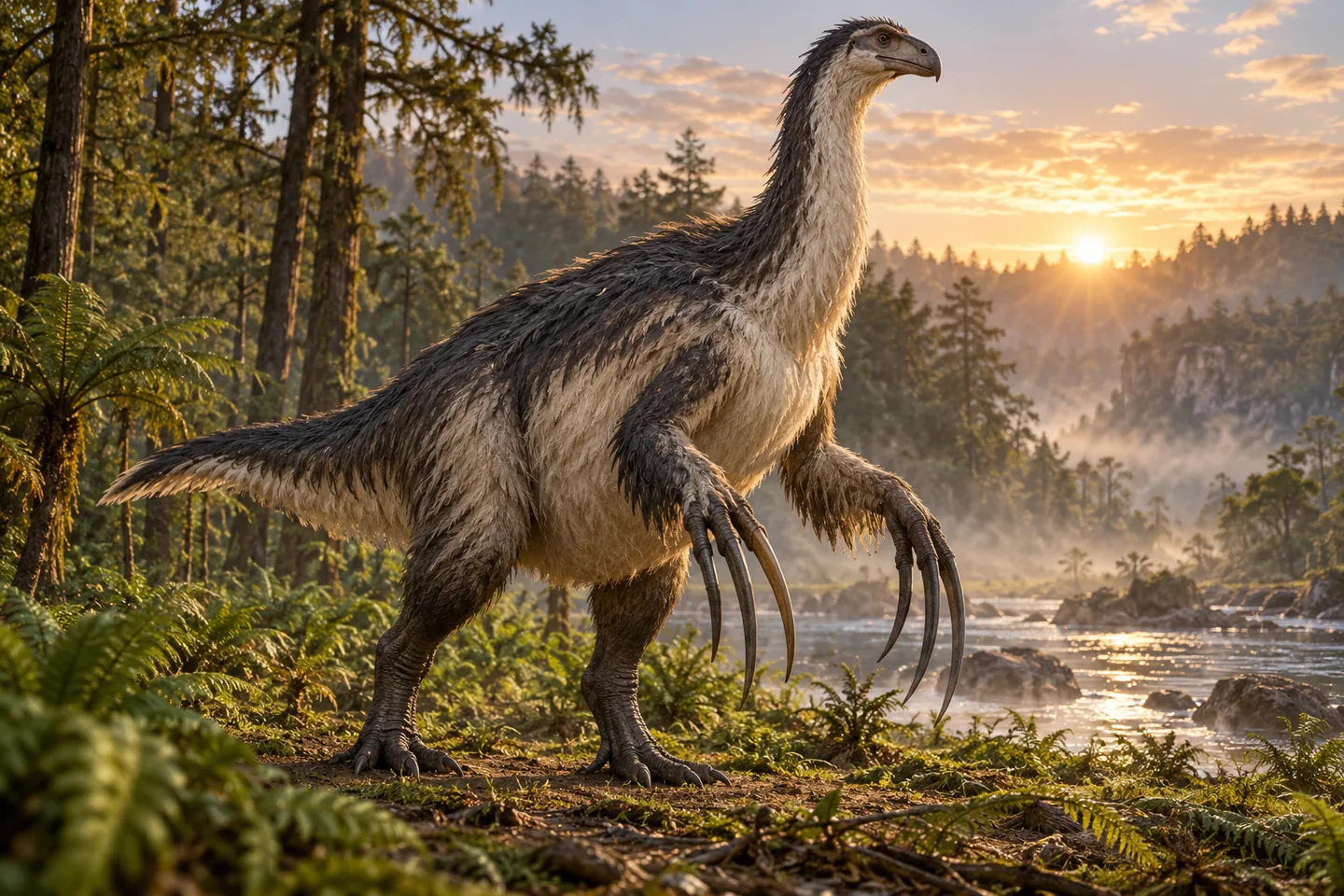
Cinematic Therizinosaurus, massive reconstructed torso, long neck, plausible feather coat and three narrow scythe claws on each hand; calm looming forest silhouette. Dramatic lighting, surface detail and scenery are artistic choices. This is an original cinema-inspired picture, rather than a frame from a film or a documented fossil locality.
Original artwork · artistic interpretation.
Scientific view: credited paleoart interpreting fossil evidence, served online by Wikimedia. Movie-style view: Original artistic interpretation. Colors, soft tissues and settings involve reconstruction.
MEET THE ANIMAL
Therizinosaurus was a giant Late Cretaceous dinosaur with extraordinary, long, narrow claws on its hands. It belonged to the therizinosaurs, a branch of theropod dinosaurs generally interpreted as plant eaters. Their body plan differed sharply from the familiar image of a toothy meat eater: long necks and relatively small heads accompanied large bodies and unusual forelimbs. [S1]
Long claws can look like obvious weapons, but appearance alone does not settle their job. In a 2023 study, researchers built digital claw models and tested the stresses caused by piercing, pulling and digging. The Therizinosaurus claw performed poorly at bearing these loads compared with the other claws studied. Its extreme length and narrow shape made it a particularly unusual case. [S1]
The authors therefore proposed that the claws may have served in display or intimidation, where they would not need to withstand heavy forces. That remains a hypothesis; the models do not show a courtship dance or identify differences between males and females. Therizinosaurus is a useful reminder that a dramatic body feature can create a scientific question rather than supply an immediate answer. [S1]
PREHISTORIC ANIMAL DOSSIER
The animal, the evidence, and the questions still open.
Therizinosaurus was a large Mongolian theropod with exceptionally elongated hand claws. Because only parts of its skeleton are known, its full-body appearance and feeding ecology depend substantially on comparison with better-known relatives.
Profile scope: Genus: Therizinosaurus; reviewed functional work concerns T. cheloniformis.
Source supported identifies a description documented by the cited source. Inferred marks a reconstruction or functional estimate. Debated marks competing interpretations. Not established means the sources reviewed for this dossier do not support a firm conclusion; it does not mean a behavior never occurred.
A size reference is an estimate, not a population range. Nesting evidence does not by itself establish courtship, mate choice, or lifelong pairing.
About 10 m; reconstructed museum reference
NHM gives 10 m but emphasizes the incomplete skeleton and reconstruction from relatives. This is not a measured complete skeleton. [D1]
Not established here
The reviewed sources do not establish a numerical body-mass estimate for this record.
Herbivory inferred from relatives
NHM identifies plant eating, while noting reconstruction depends on related therizinosaurs. No taxon-specific gut contents are established here. [D1]
Late Cretaceous Mongolia
The museum locates the fossils in Mongolia. A narrower ecological preference is not established by this reference. [D1]
Walked on two legs
NHM identifies bipedal movement. Detailed speed, stance and body proportions require reconstruction of missing parts. [D1]
Exceptionally long, narrow hand claws
Known forelimb material establishes elongated claws. Computer models suggest they were poorly suited to high mechanical stress; dramatic stabbing behavior is not fossil evidence. [D1] [D2]
Not established here
The reviewed sources do not establish taxon-specific nest structure, clutch size or parental care.
Claw display proposed; ritual unknown
The biomechanics researchers propose a display role, potentially including sexual selection. This is a functional hypothesis, not observation of a mating ritual. [D2]
Not established here
The reviewed sources do not establish a taxon-specific group structure or social hierarchy.
Sources and inspection notes for the claims in this profile.
THE STORY IN THE FOSSILS
Therizinosaurus carried enormous claws on three-fingered hands. Although it belonged to the theropod lineage, museum reconstructions identify it as a plant eater. Only limited arm, leg and rib material is known, so the familiar heavy body and long neck rely heavily on comparison with relatives. [1]
Researchers modeled therizinosaur claws using CT scans and engineering methods. Their analysis found the especially long, narrow Therizinosaurus claws poorly suited to high-stress combat. They proposed a role in display, illustrating how imposing anatomy can have functions that differ from its appearance in films. [2]
We have not established a comparable adult total-length estimate for this taxon in this draft. Specimen measurements in the text describe those individuals. The cited dates are approximately 70 million years ago. Approximate museum catalogue reference age; equal endpoints do not establish a full temporal range. Unknown does not mean zero.
Sources and evidence notes for this exhibit.
KEEP EXPLORING
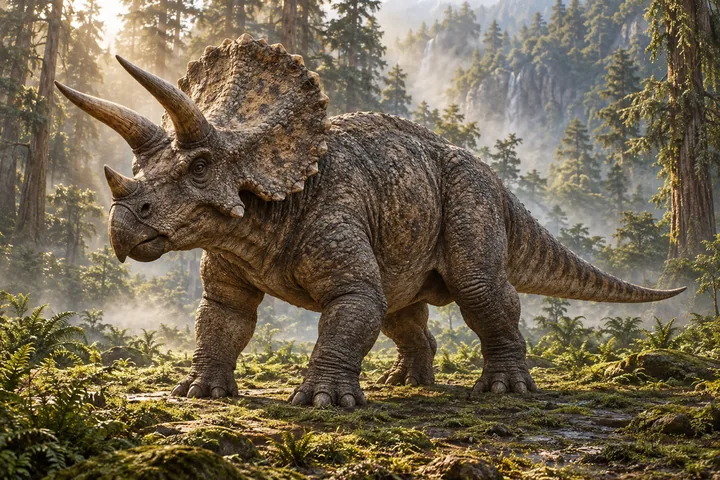
Triceratops horridus
Three horns, a broad frill, and a plant-eater beneath the formidable silhouette.
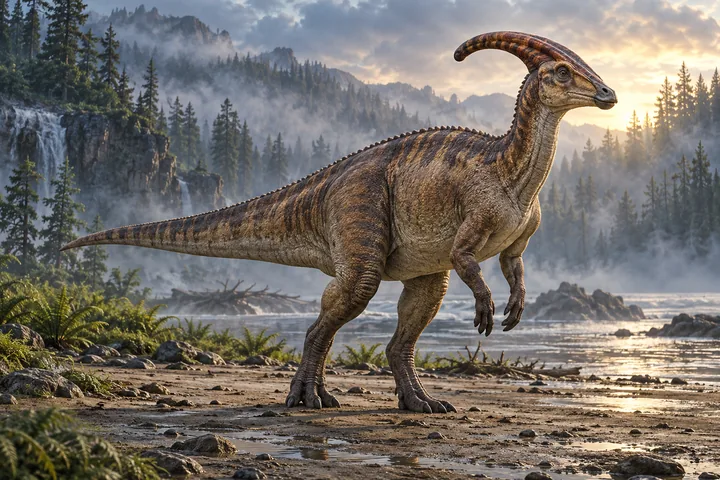
Parasaurolophus walkeri
A hollow crest and a skeleton that records an injured animal's life.
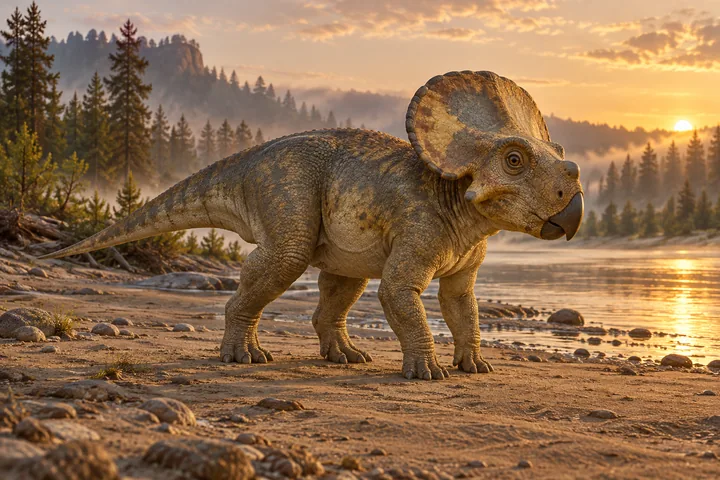
Protoceratops
A beaked herbivore preserved in a struggle with Velociraptor.