THE STORY IN THE FOSSILS
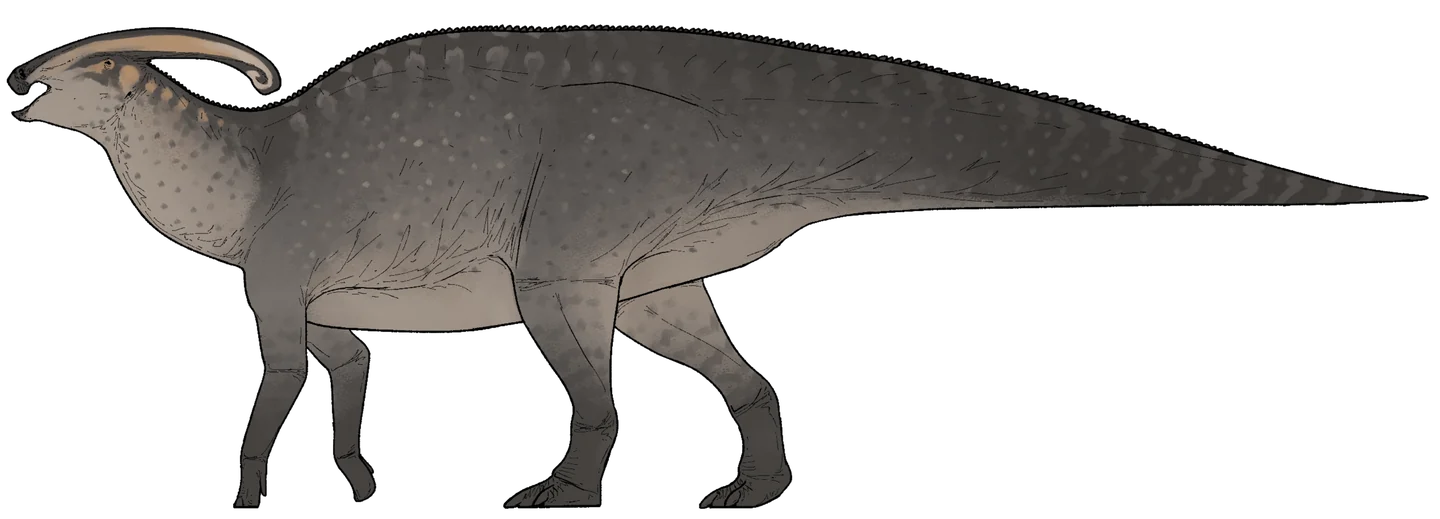
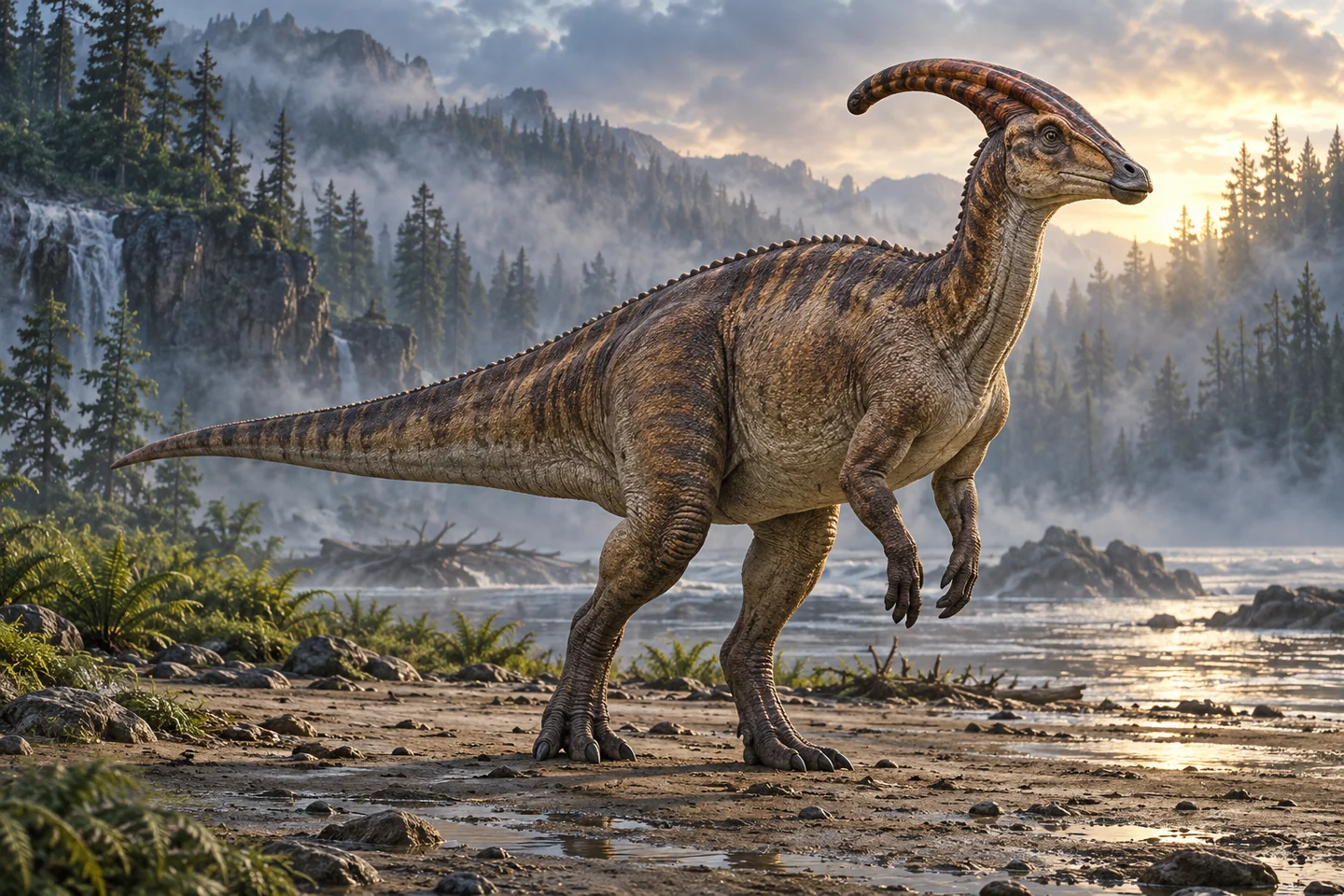
Meet Parasaurolophus.
Parasaurolophus walkeri’s type specimen, ROM 768, was discovered in Alberta in 1920 and described by William Parks in 1922. Most of its tail and hindlimbs are missing; the left femur is preserved. Parks reported tuberculated skin impressions but cautioned that these samples could not establish the skin pattern over the entire animal. [1] [3]
The backward-projecting crest contains looping nasal passages. Acoustic models have been published for ROM 768, but they estimate resonance rather than recover P. walkeri’s actual call. Visual display is also a proposed crest function. Alberta Parks lists P. walkeri as a herbivore; its precise food choices remain inferred. [6] [3] [4]
A modern study of ROM 768 documented healed rib fractures, abnormal growth around backbones and a dental lesion. Researchers interpreted much of the damage as trauma. The gap between two back spines is interpreted as injury-related, rather than a standard notch for receiving the crest. [3]