
Body length
Source supported5.6 m (Sophie mount)
The museum reports a mounted length of 560 cm. Sophie was a young adult still growing, so this is not the species' adult maximum. [D1] [D4]
EXHIBIT 03
Stegosaurus stenops
A small head, a skyline of plates, and four spikes at the tail.
TWO WAYS TO PICTURE THE PAST
Compare the evidence with the familiar movie image. The illustrations are not to a shared scale.
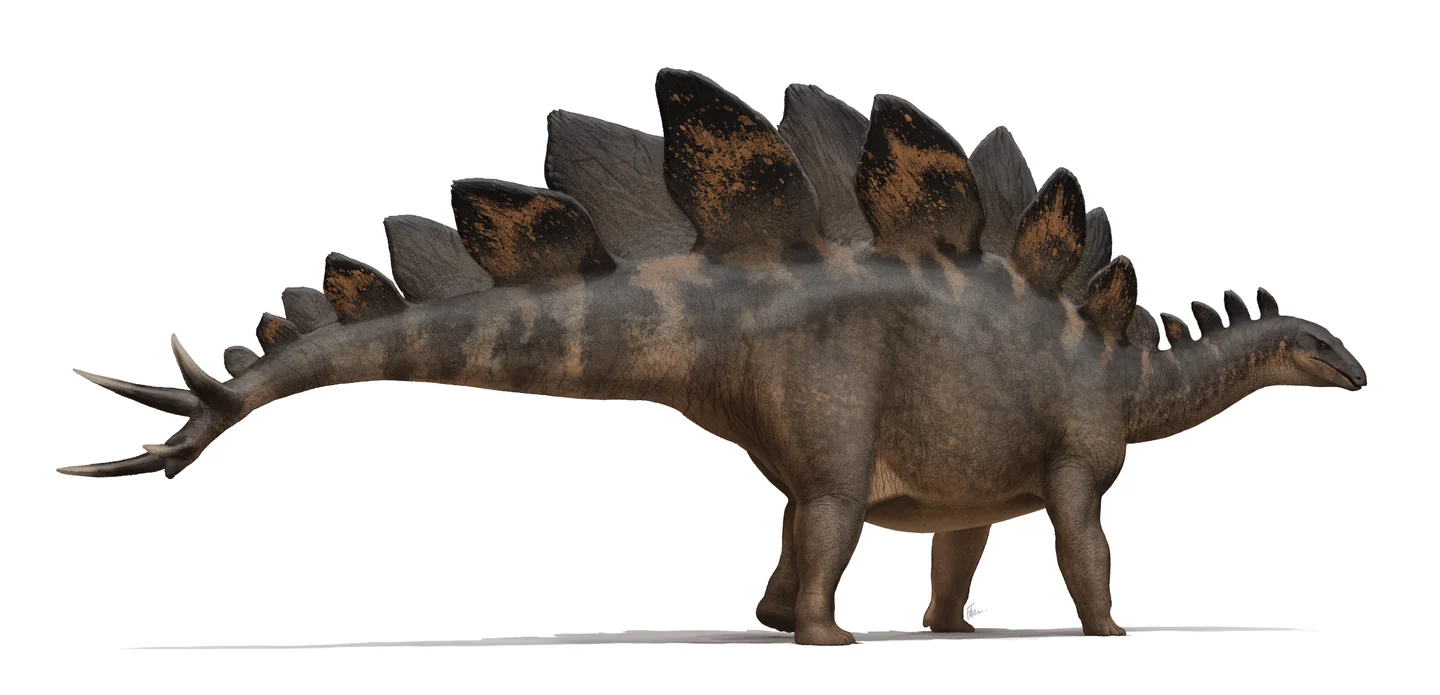
The artist based this reconstruction on Sophie, a young adult that was still growing. Eighteen plates and four tail spikes were recovered; researchers infer a nineteenth plate. The staggered plates, small head and unequal limb lengths follow skeletal evidence. Plate markings, color and the precise soft-tissue outline remain interpretations. [4] [1] [2]
Stegosaurus stenops Life Reconstruction — Fred Wierum. CC BY-SA 4.0. Resized and converted to WebP; complete composition retained.
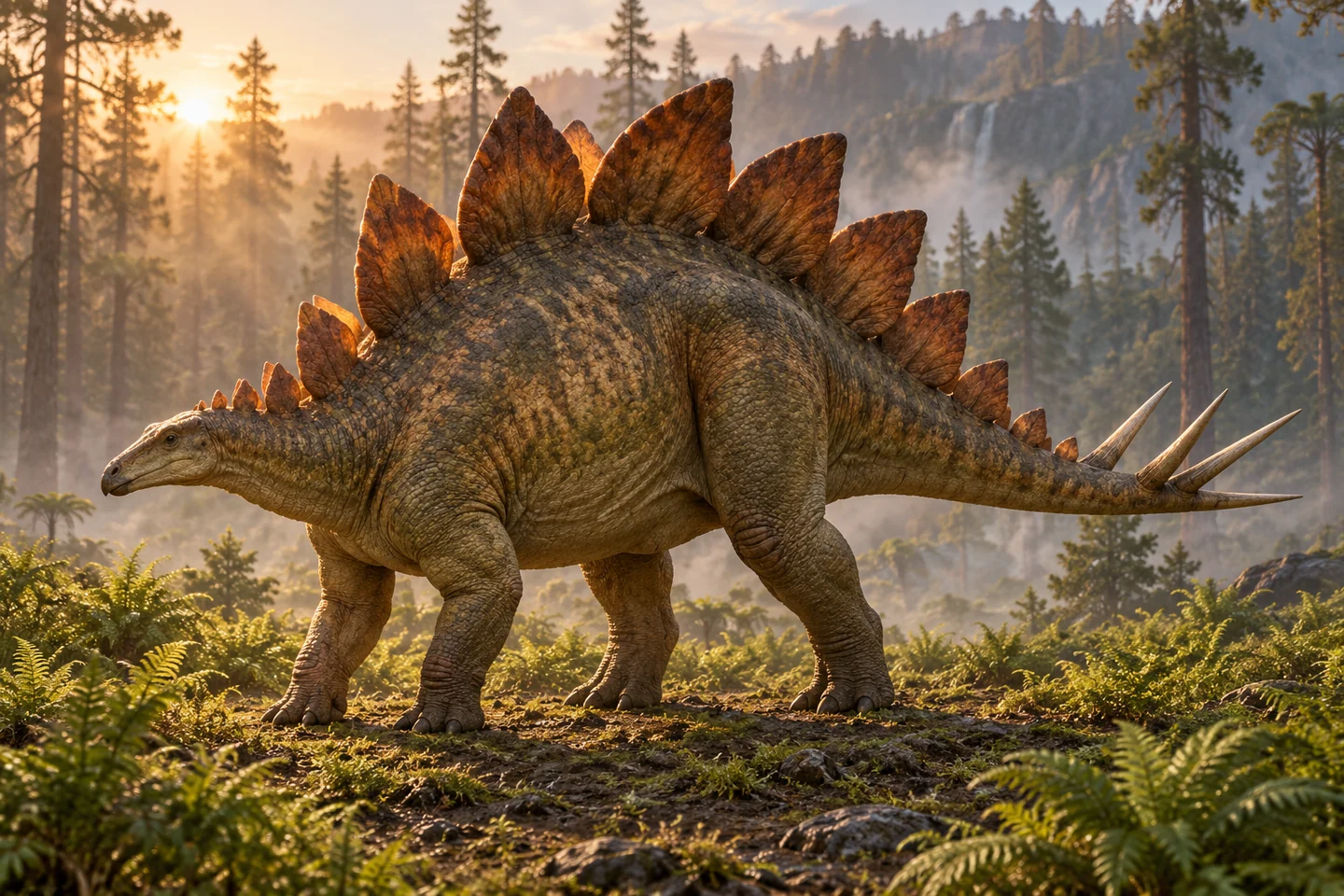
A dramatic forest encounter keeps the recognizable plates and four tail spikes. The difference here is mostly presentation: textured skin, glowing plate colors, lighting and a poised defensive stance. Those details are not established by the fossils. [1] [2]
Original artwork · artistic interpretation.
Scientific view: credited paleoart interpreting fossil evidence. Movie-style view: Original artwork. Colors and many soft tissues are uncertain.
MEET THE ANIMAL
Stegosaurus stenops was a plated plant eater of the Late Jurassic. Shorter front legs and longer back legs helped create its distinctive body shape. A toothless front of the jaw and small teeth farther back supported plant feeding. The plates along the back and spikes at the tail give the animal a recognizable outline, but feeding and body structure matter as much as its ornaments. [S1]
The unusually complete skeleton nicknamed Sophie allows researchers to test that outline in detail. Photographs from many angles were combined into three-dimensional models of the bones, a technique called photogrammetry. The model helped estimate this individual's mass and compare different methods. Its bones showed that it had not finished growing, making it essential to distinguish a reconstruction of Sophie from a maximum adult size for the species. [S2]
Grooves in the plates show where blood vessels ran, indicating that the plates had a living covering. Display and helping control body temperature are proposed functions. Those ideas do not establish an original color pattern or a courtship ceremony. The sharp tail spikes provide a different anatomical clue, with defense a possible use. Stegosaurus combines directly preserved features with functional questions that can be tested rather than answered by appearance alone. [S3]
PREHISTORIC ANIMAL DOSSIER
The animal, the evidence, and the questions still open.
The unusually complete Stegosaurus stenops specimen Sophie preserves a three-dimensional view of a plated plant eater. Its skeleton and jaw reconstructions constrain feeding and movement while leaving reproductive behaviour largely unreviewed.
Profile scope: Species — Stegosaurus stenops
Source supported identifies a description documented by the cited source. Inferred marks a reconstruction or functional estimate. Debated marks competing interpretations. Not established means the sources reviewed for this dossier do not support a firm conclusion; it does not mean a behavior never occurred.
A size reference is an estimate, not a population range. Nesting evidence does not by itself establish courtship, mate choice, or lifelong pairing.
5.6 m (Sophie mount)
The museum reports a mounted length of 560 cm. Sophie was a young adult still growing, so this is not the species' adult maximum. [D1] [D4]
About 1.6 tonnes (Sophie estimate)
The museum reports a reconstruction near 1,600 kg using volume and growth-corrected limb methods. It concerns this incompletely grown individual. [D2]
Plants, including possible tough vegetation
CT-based jaw-muscle reconstructions indicate effective plant processing. Ferns and cycads are proposed foods, rather than a preserved last meal. [D3]
Morrison Formation river-and-pond setting
Sophie's burial sediments indicate standing water near a river channel in Wyoming. A burial setting does not prove a species-wide habitat preference. [D4]
Four-legged walking
The skeleton supports quadrupedal movement with shorter forelimbs than hindlimbs. Precise speed is model-dependent. [D3]
Back plates and four tail spikes
Sophie's anatomical study documents plates and four tail spikes. Plate functions remain debated. [D4]
Not established here
Reviewed sources do not establish S. stenops nest architecture, clutch size or parental care.
Plate display is a hypothesis
Display is one proposed explanation for the plates. This does not establish a mating ceremony or distinguish male from female plates. [D3]
Not established here
Reviewed sources do not establish whether S. stenops usually lived alone or in groups.
Sources and inspection notes for the claims in this profile.
THE STORY IN THE FOSSILS
The S. stenops skeleton Sophie came from Wyoming’s Morrison Formation. NHM gives its mounted length as 5.6 metres and its age as about 150 million years. The anatomical study reports eighteen recovered plates, infers a nineteenth and describes four tail spikes. Its bones identify a young adult that had not finished growing. [2] [1]
Researchers scanned Sophie’s skull and reconstructed its jaw muscles. NHM reports an efficient bite comparable with a cow’s or sheep’s, suggesting this individual could process tough plants. Ferns and cycads are possible foods, inferred from the reconstruction rather than a preserved last meal. [3]
The 2015 anatomical study identifies Sophie as S. stenops from diagnostic jaw and neck features. It lists referred fossils from the western USA and Portugal. As genus context, the functions of Stegosaurus plates remain debated: display, heat exchange or several roles are possible. [1] [3]
We have not established a comparable adult total-length estimate for this taxon in this draft. Specimen measurements in the text describe those individuals. A numerical age interval has not been reviewed here. Unknown does not mean zero.
Sources and evidence notes for this exhibit.
KEEP EXPLORING
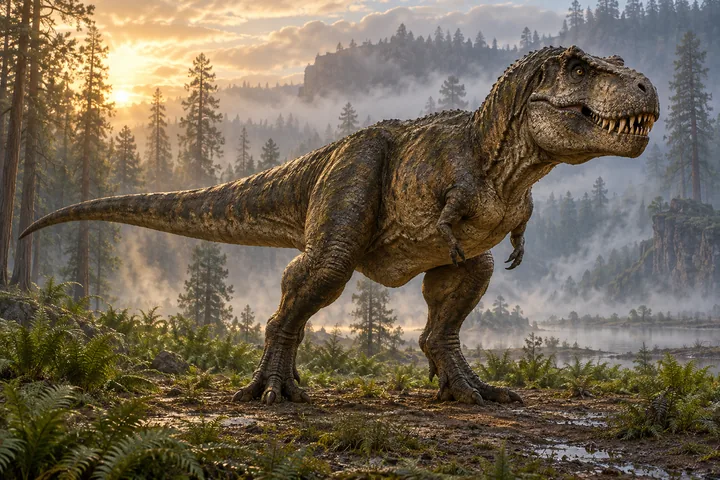
Tyrannosaurus rex
Bone-crushing jaws left traces of meals in the fossil record.
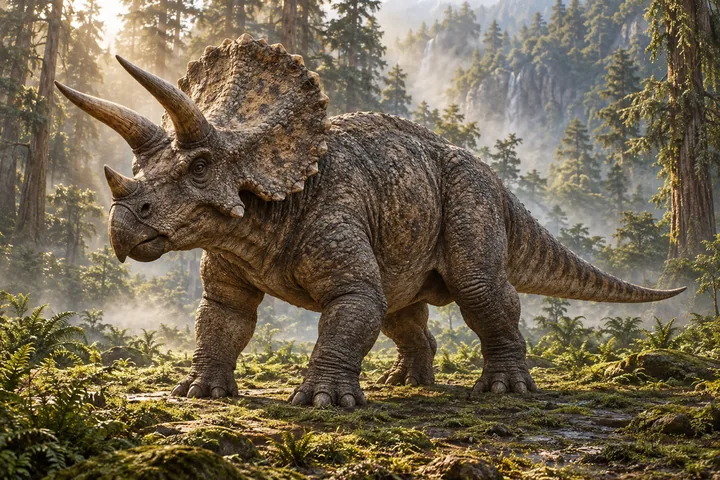
Triceratops horridus
Three horns, a broad frill, and a plant-eater beneath the formidable silhouette.
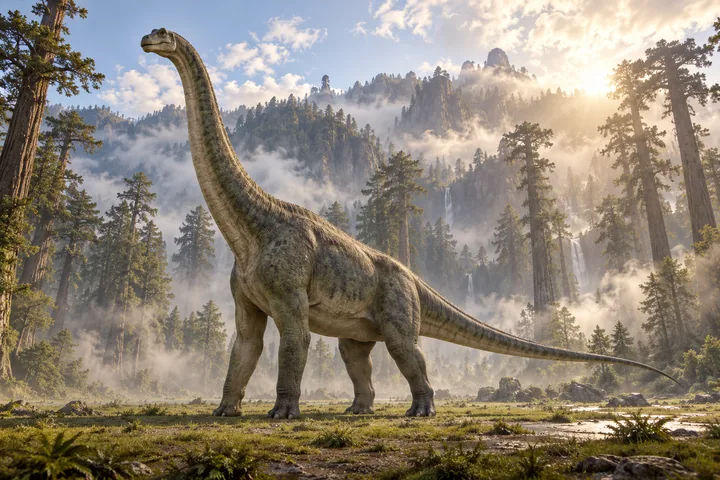
Brachiosaurus altithorax
Air-filled ribs, towering shoulders, and a fossil record with big gaps.