
Body length
InferredAbout 9 m (adult museum reference)
Redpath gives 9 m as an adult reference for T. horridus. It is an approximate reconstruction, not an observed population average. [D1]
EXHIBIT 02
Triceratops horridus
Three horns, a broad frill, and a plant-eater beneath the formidable silhouette.
TWO WAYS TO PICTURE THE PAST
Compare the evidence with the familiar movie image. The illustrations are not to a shared scale.
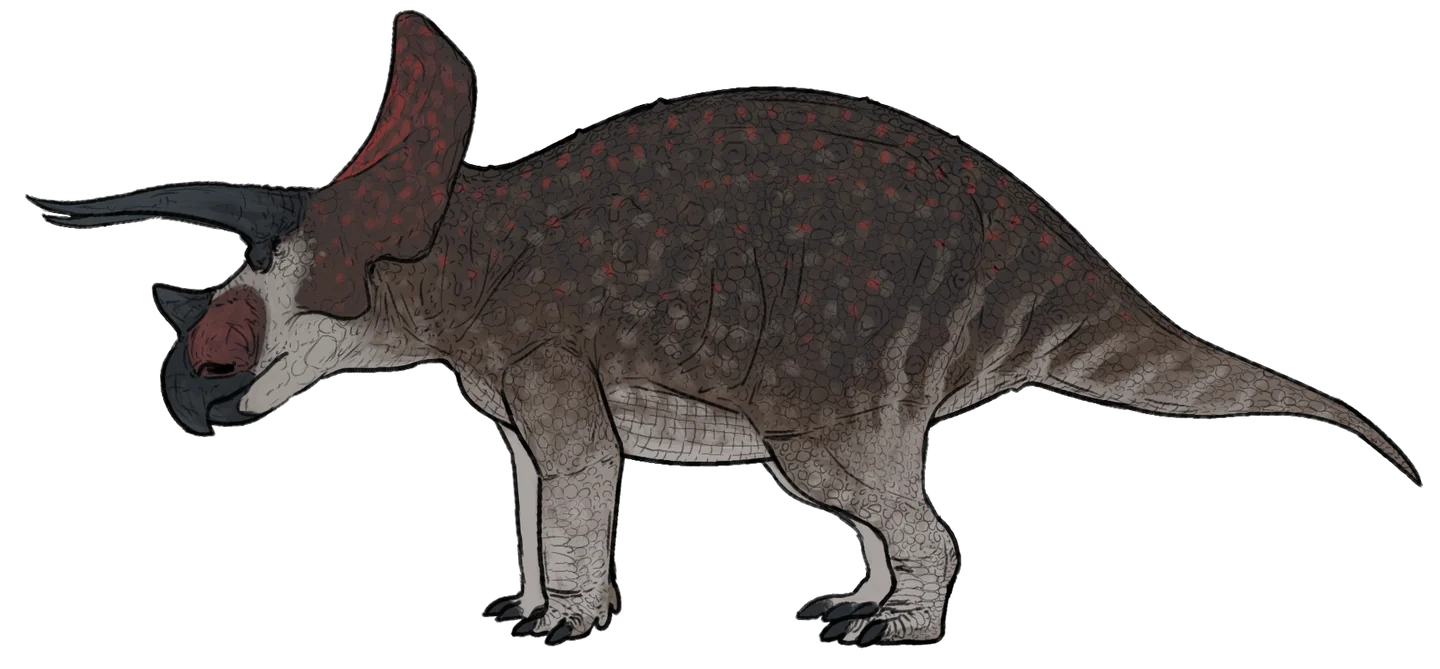
The artist based this reconstruction on Horridus, specimen P 256878. Its skull constrains the beak, frill and three horns. Separately, skin impressions attributed to T. horridus inform the scaly surface. Colors, horn coverings and the exact soft-tissue outline are interpretations; one individual’s horn shape does not define the whole species. [6] [5] [3]
Triceratops horridus — Connor Ashbridge. CC BY-SA 4.0. Resized and converted to WebP; complete composition retained.
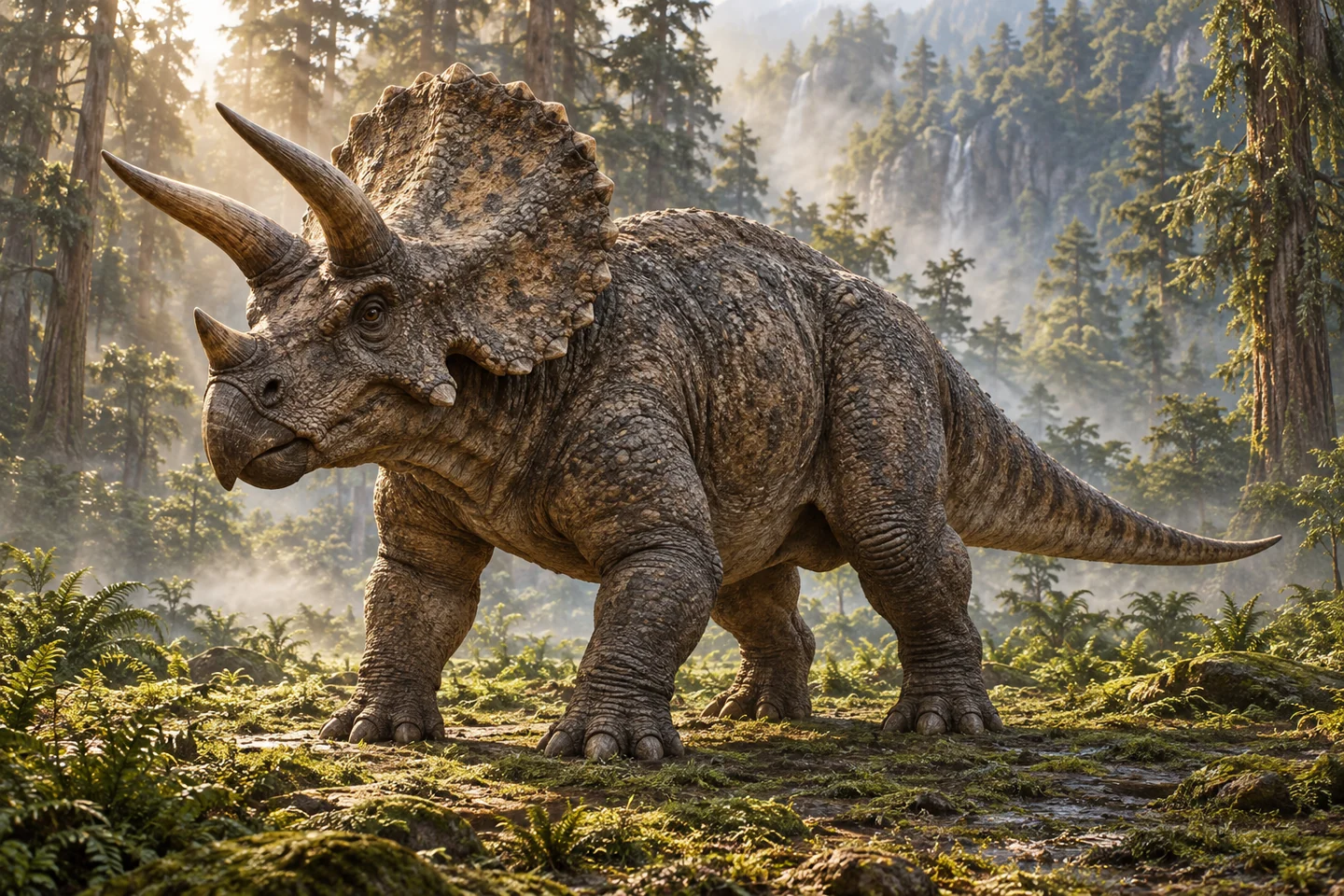
A cinematic three-horned giant with rough armor-like skin and dramatic horn silhouettes. The basic body plan is recognizable, but extra texture, horn proportions, coloring and the forest scene are artistic choices rather than a reconstruction of Horridus. [5] [3]
Original artwork · artistic interpretation.
Scientific view: credited paleoart interpreting fossil evidence. Movie-style view: Original artwork. Colors and many soft tissues are uncertain.
MEET THE ANIMAL
Triceratops horridus was a plant-eating dinosaur from Late Cretaceous North America. Three horns and a broad frill behind its head make its skull easy to recognize. Beneath those dramatic features, a sharp beak cropped vegetation and rows of teeth processed it. Its sturdy limbs carried it on four legs, so the body tells a useful story beyond the famous head. [S1]
The specimen nicknamed Horridus came from Montana and provides one individual example of this species. Its reconstruction is not an average of every Triceratops. A individual can show which bones and body features are preserved, while missing parts still require restoration. Knowing which animal a description concerns keeps a comparison from becoming a claim about an entire species. [D2]
The broader genus also provides a growth series. Researchers compared baby, juvenile, subadult and adult skulls and documented changing horns and frill edges. They proposed that these changes could help animals recognize age and maturity. This is an explanation of a visible pattern, not a recorded mating ceremony. A young skull should therefore not be interpreted as a miniature adult head with every feature already fully developed. [S2]
PREHISTORIC ANIMAL DOSSIER
The animal, the evidence, and the questions still open.
Triceratops horridus combined a large horned skull with a plant-processing beak and jaws. Its fossil anatomy is much better constrained than mating rituals or the size of social groups.
Profile scope: Species — Triceratops horridus
Source supported identifies a description documented by the cited source. Inferred marks a reconstruction or functional estimate. Debated marks competing interpretations. Not established means the sources reviewed for this dossier do not support a firm conclusion; it does not mean a behavior never occurred.
A size reference is an estimate, not a population range. Nesting evidence does not by itself establish courtship, mate choice, or lifelong pairing.
About 9 m (adult museum reference)
Redpath gives 9 m as an adult reference for T. horridus. It is an approximate reconstruction, not an observed population average. [D1]
About 6–12 tonnes (museum reference)
Redpath provides this broad adult reference interval. It is not an observed distribution of living mass. [D1]
Plant eater
The beak cropped vegetation and powerful jaws processed it. Specific plant choices such as small trees remain interpretations. [D1]
Western North American fossil localities
Fossils occur in western North America; the Horridus specimen came from Montana. Locality and burial setting do not establish a single preferred habitat. [D1] [D2]
Walked on four legs
Its limbs supported quadrupedal movement. This describes posture rather than a verified maximum speed. [D1]
Three horns, frill, beak and jaws
Horns and the frill changed during growth. Their presence is observed; assigning a single function is harder. [D1]
Not established here
Reviewed sources do not establish a T. horridus clutch size, nest arrangement or parental-care pattern.
Horn and frill display proposed
The museum suggests the changing horns and frill could attract mates. That proposal does not establish sex differences or a courtship ritual. [D1]
Not established here
A species-specific social-group size has not been verified in this review; the museum's large-pack claim is not adopted without supporting research.
Sources and inspection notes for the claims in this profile.
THE STORY IN THE FOSSILS
The Montana specimen nicknamed Horridus belongs to Triceratops horridus. Museums Victoria describes this individual as about 67 million years old and seven metres long, and identifies it as a plant-eater. As genus context, Triceratops had a beak and cutting teeth beneath its horns and frill. [1] [2]
Museums Victoria reports skin impressions attributed to T. horridus, including hexagonal scales and larger scales with raised centres. These impressions constrain surface texture. They do not establish the animal’s colour pattern; colours in a reconstruction remain a palaeoartist’s interpretation. [3]
A 2014 study examined more than 50 Triceratops skulls from Montana’s Hell Creek Formation. It found T. horridus lower in the formation and T. prorsus in the upper third, with intermediate forms between them. The authors considered this sequence consistent with a lineage changing over time. [4]
Redpath Museum gives 9 m as an adult reference for Triceratops horridus. This approximate museum estimate is not a measured population average or complete biological size range. A numerical age interval has not been reviewed here. Unknown does not mean zero.
Redpath Museum’s adult reference estimates for Triceratops horridus. This broad museum interval is not an observed species mass distribution. [7]
Sources and evidence notes for this exhibit.
KEEP EXPLORING
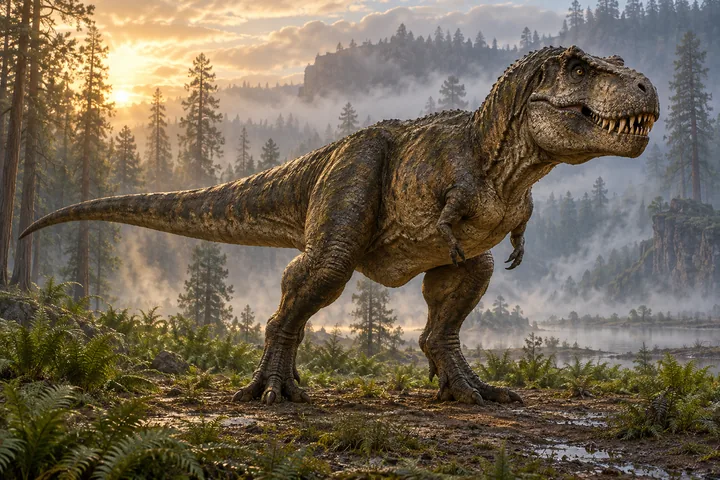
Tyrannosaurus rex
Bone-crushing jaws left traces of meals in the fossil record.
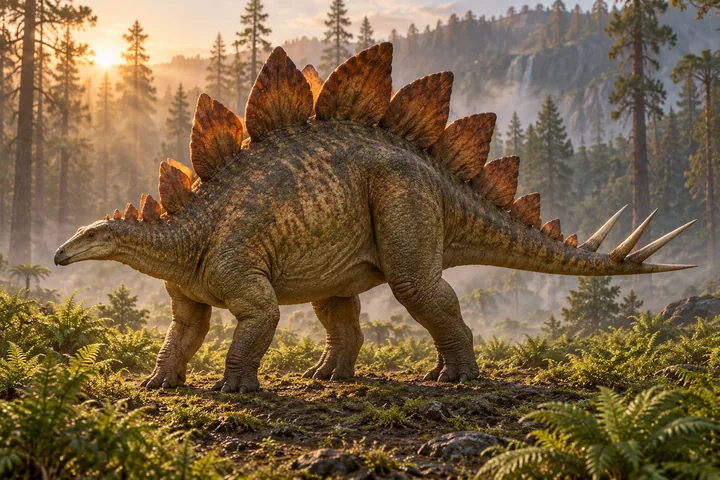
Stegosaurus stenops
A small head, a skyline of plates, and four spikes at the tail.
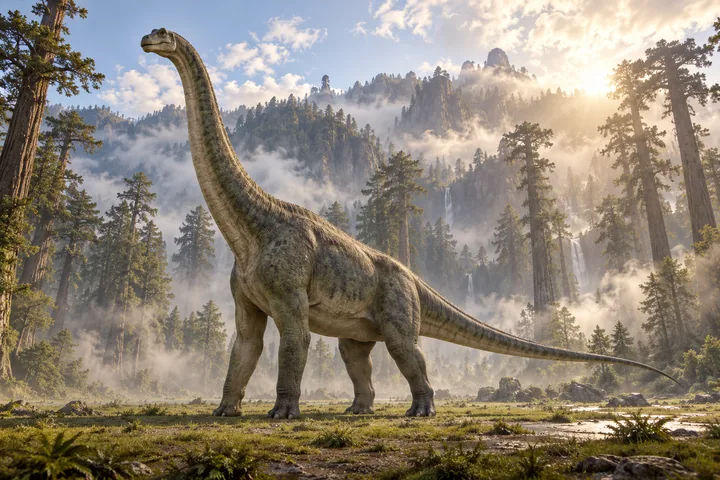
Brachiosaurus altithorax
Air-filled ribs, towering shoulders, and a fossil record with big gaps.