Body length
InferredMuseum reference estimate:7 m.
Reference reconstruction rather than an adult population range. [D3]
EXHIBIT 276
Brachylophosaurus canadensis
Dinosaur
A plant-eating hadrosaur with a low, backward-projecting paddle crest; the famous Leonardo specimen preserves remarkable skin impressions. [2]
TWO WAYS TO PICTURE THE PAST
Compare the evidence with the familiar movie image. The illustrations are not to a shared scale.
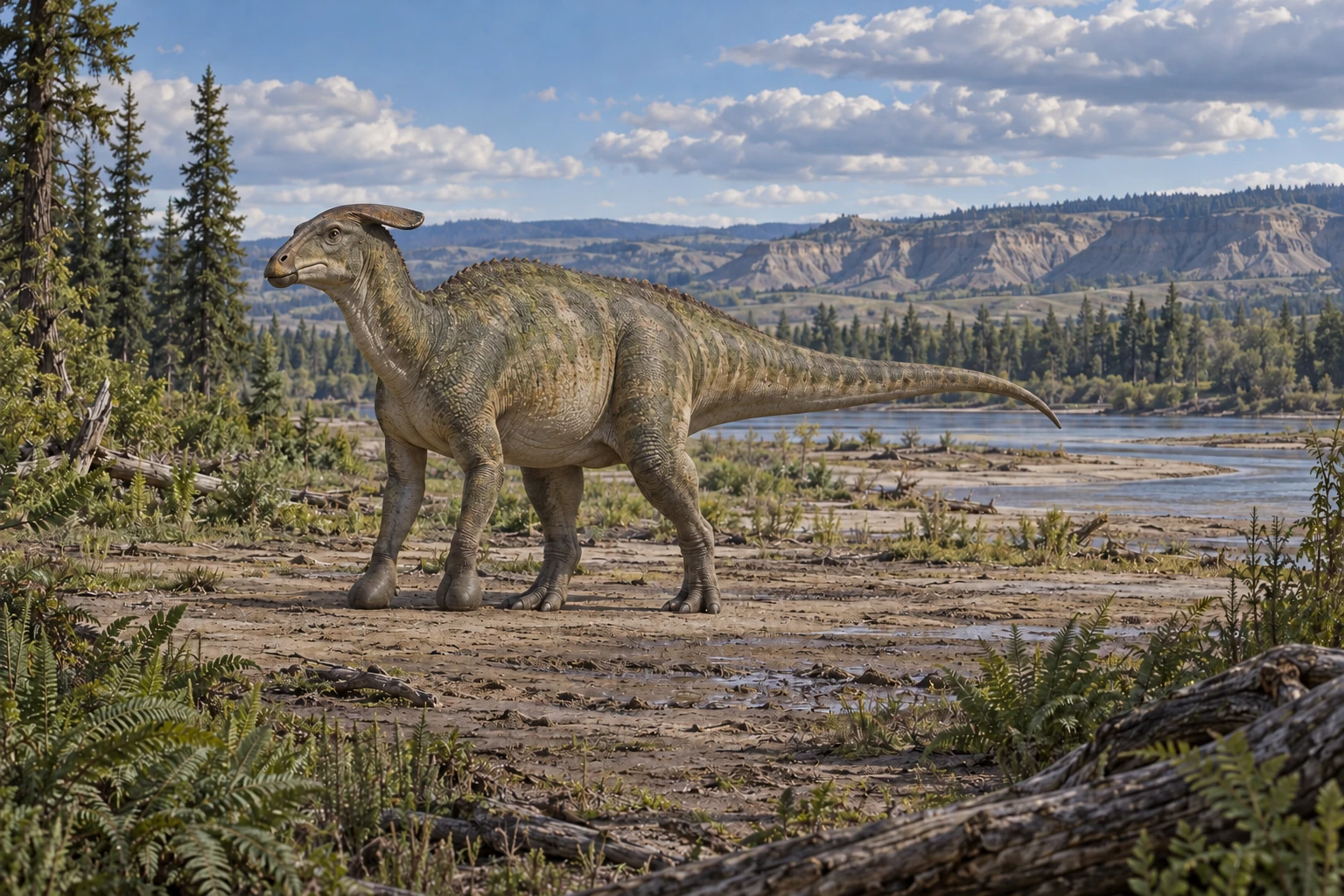
An illustrative reconstruction. Compare its anatomy with the evidence and limitations in the dossier. [2]
Source-informed reconstruction. Appearance evidence [2]. Original illustration; missing anatomy, coloration and scenery include interpretation.
Fossils constrain this life reconstruction. Missing anatomy, coloration and the environmental scene include interpretation; the dossier explains the evidence limits.
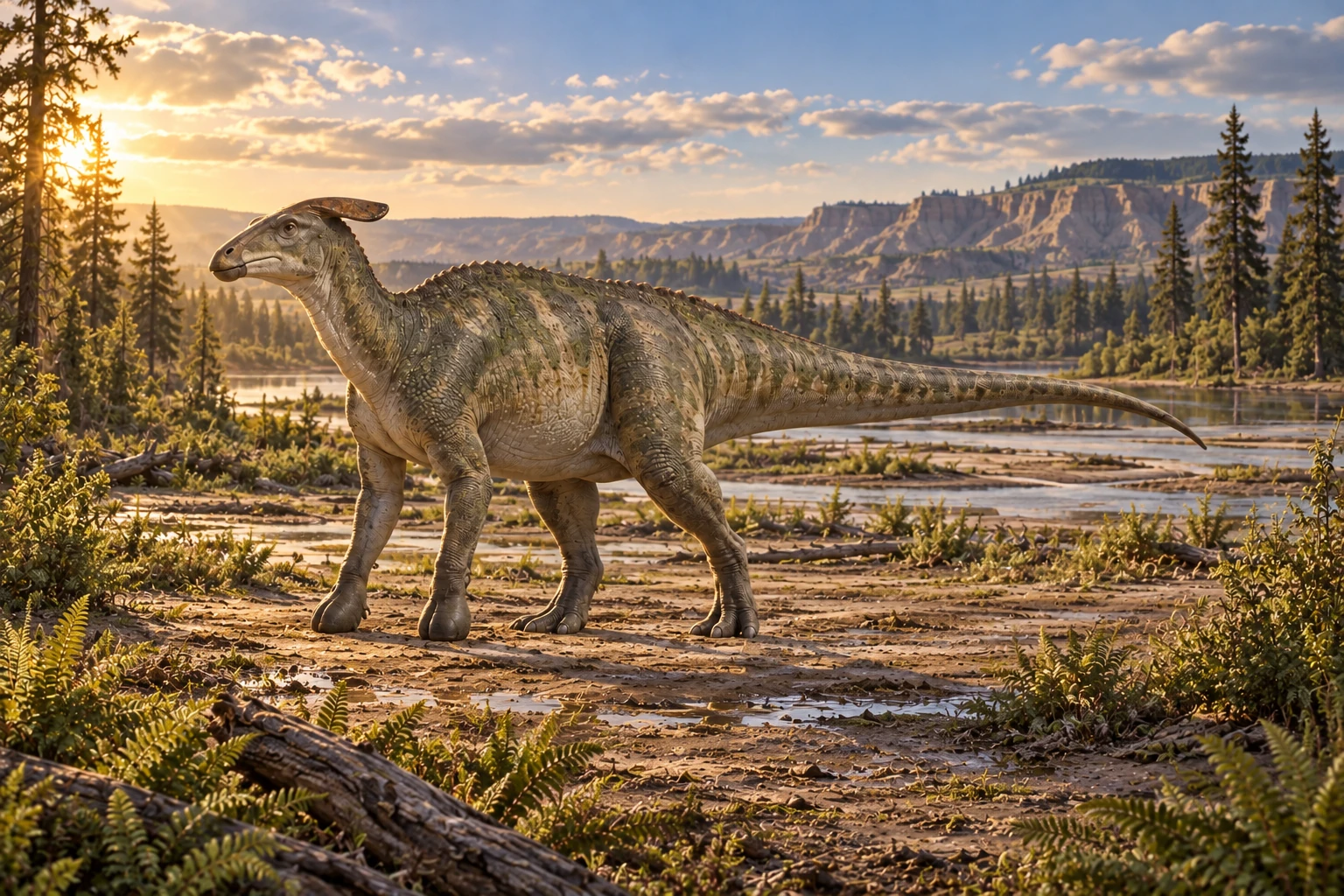
An illustrative reconstruction. Compare its anatomy with the evidence and limitations in the dossier. Lighting, coloration and scenery are artistic choices. This image does not document a fossil locality or behavior.
Original artwork · artistic interpretation.
Scientific view: source-informed reconstruction, credited paleoart or specimen-based imagery. Movie-style view: Original artistic interpretation. Reconstructions involve uncertainty.
MEET THE ANIMAL
Brachylophosaurus was a plant-eating duck-billed dinosaur. A broad beak and a low paddle-shaped crest make its head recognizable. Unlike a tall hollow crest, this ornament extended backward over the skull roof. Researchers studying related hadrosaurs compared both bone shapes and maturity, showing why young animals should not automatically receive different names from adults. [D1]
One especially famous specimen is nicknamed Leonardo. Fossilized impressions preserve much of its skin, including small polygonal scales. The museum account also describes a fuller, muscular neck and fingers wrapped together in a mitten-like covering. These details help artists move beyond bare bones. Even so, preserved skin outlines do not reveal a reliable living color pattern. [D2]
Growth studies provide another kind of information. Researchers compared developing skeletons from Brachylophosaurus and other plant-eating dinosaurs. The Brachylophosaurus specimens in that study came from bonebeds, while some other animals were represented in nesting horizons. That difference matters: young bones collected together are useful evidence about growth, but they do not automatically prove an assigned nest, parental care or a particular family structure. [D4]
PREHISTORIC ANIMAL DOSSIER
The animal, the evidence, and the questions still open.
The Leonardo specimen provides unusually informative skin and soft-tissue outlines alongside skeletal anatomy. [D2]
Profile scope: This exhibit centers on Brachylophosaurus canadensis; uncertain B.goodwini material is excluded. [D1]
Source supported identifies a description documented by the cited source. Inferred marks a reconstruction or functional estimate. Debated marks competing interpretations. Not established means the sources reviewed for this dossier do not support a firm conclusion; it does not mean a behavior never occurred.
A size reference is an estimate, not a population range. Nesting evidence does not by itself establish courtship, mate choice, or lifelong pairing.
Museum reference estimate:7 m.
Reference reconstruction rather than an adult population range. [D3]
Not established here
The inspected sources do not establish an adopted quantitative mass model. [D4]
Plant-eating hadrosaur.
Herbivory does not establish one universal menu for every individual. [D3]
Campanian terrestrial deposits in Montana and Alberta.
Judith River and Oldman occurrences represent fossil settings, not exclusive habitat preference. [D1]
Terrestrial movement on robust limbs.
Postcranial development is documented; gait and speed are inferred rather than filmed. [D4]
Broad beak, flat paddle crest and scaly skin.
Leonardo preserves mitten-like forehands and a fuller fleshy neck outline. [D2]
Not established here
Reviewed Brachylophosaurus growth specimens came from bonebeds, not assigned nesting horizons. [D4]
Not established here
Crest growth does not establish sex-specific ornaments or a courtship sequence. [D1]
Not established here
Bonebed association alone does not establish daily herd size or family organization. [D4]
Sources and inspection notes for the claims in this profile.
THE STORY IN THE FOSSILS
The nasal crest changes with growth, making maturity important when comparing hadrosaurs. A smaller crest need not automatically identify a separate species. [1]
Leonardo’s skin preserves details usually missing from a skeleton. Its soft-tissue outline cautions against tracing the living neck tightly along the vertebrae. [2]
The dossier identifies the scope of each reference estimate. A mount, an individual fossil and a species-wide adult range are different measurements. Comparison metrics remain unavailable where adult scope has not been established. Unknown does not mean zero.
Sources support the stated claims and scopes. Refer to the evidence notes for uncertainty.
KEEP EXPLORING
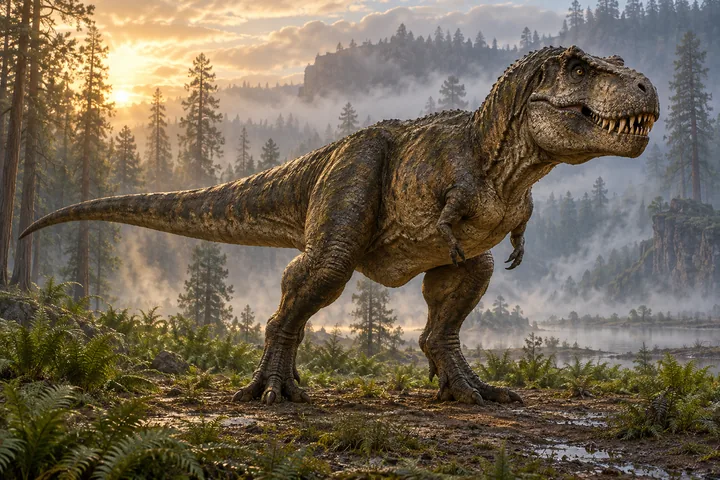
Tyrannosaurus rex
Tyrannosaurus rex was a large meat-eating dinosaur from the final part of the Cretaceous in western North America. Fossil teeth, bite marks and skeletons reveal a powerful animal whose behaviour still invites questions.
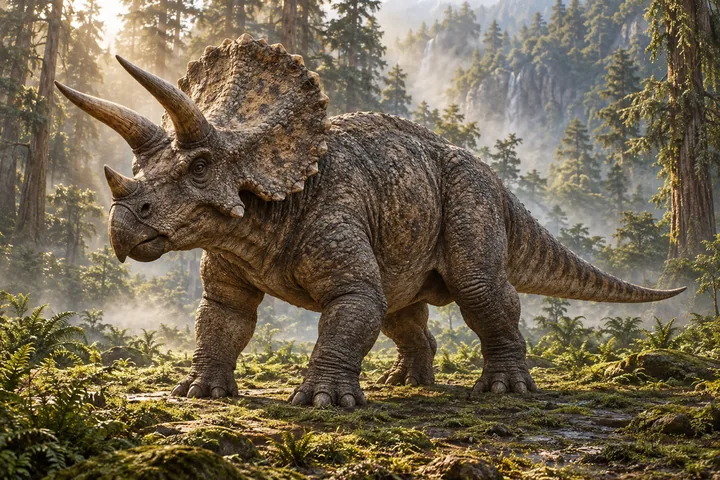
Triceratops horridus
Triceratops horridus was a horned dinosaur of the Late Cretaceous. Skin impressions attributed to this species reveal scales, while skulls and their positions in rock layers help researchers distinguish it from the later Triceratops prorsus.
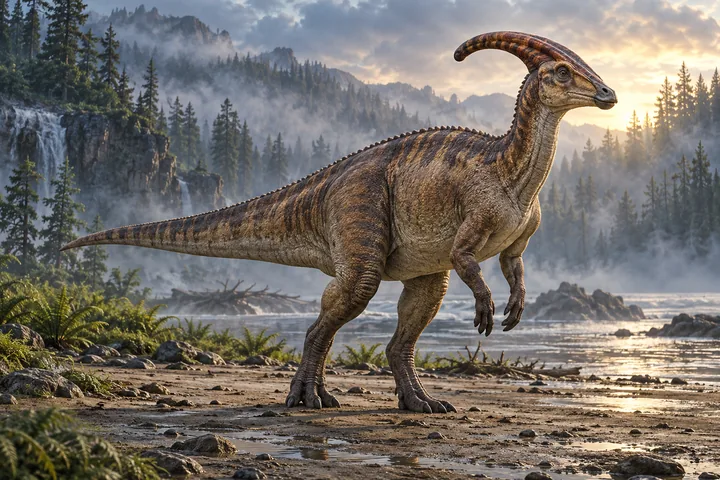
Parasaurolophus walkeri
Parasaurolophus walkeri was a crested duck-billed dinosaur from Late Cretaceous Alberta. Its famous Royal Ontario Museum skeleton preserves both an elongated tubular crest and healed injuries.