
Body length
InferredApproximately 2–3 m reference length.
Museum educational estimate; not a demonstrated adult range or a measurement of every growth stage. [D4]
EXHIBIT 256
Chilesaurus diegosuarezi
Dinosaur
A plant-eating dinosaur with an unusual mixture of skeletal features and an unsettled family-tree position. [4]
TWO WAYS TO PICTURE THE PAST
Compare the evidence with the familiar movie image. The illustrations are not to a shared scale.
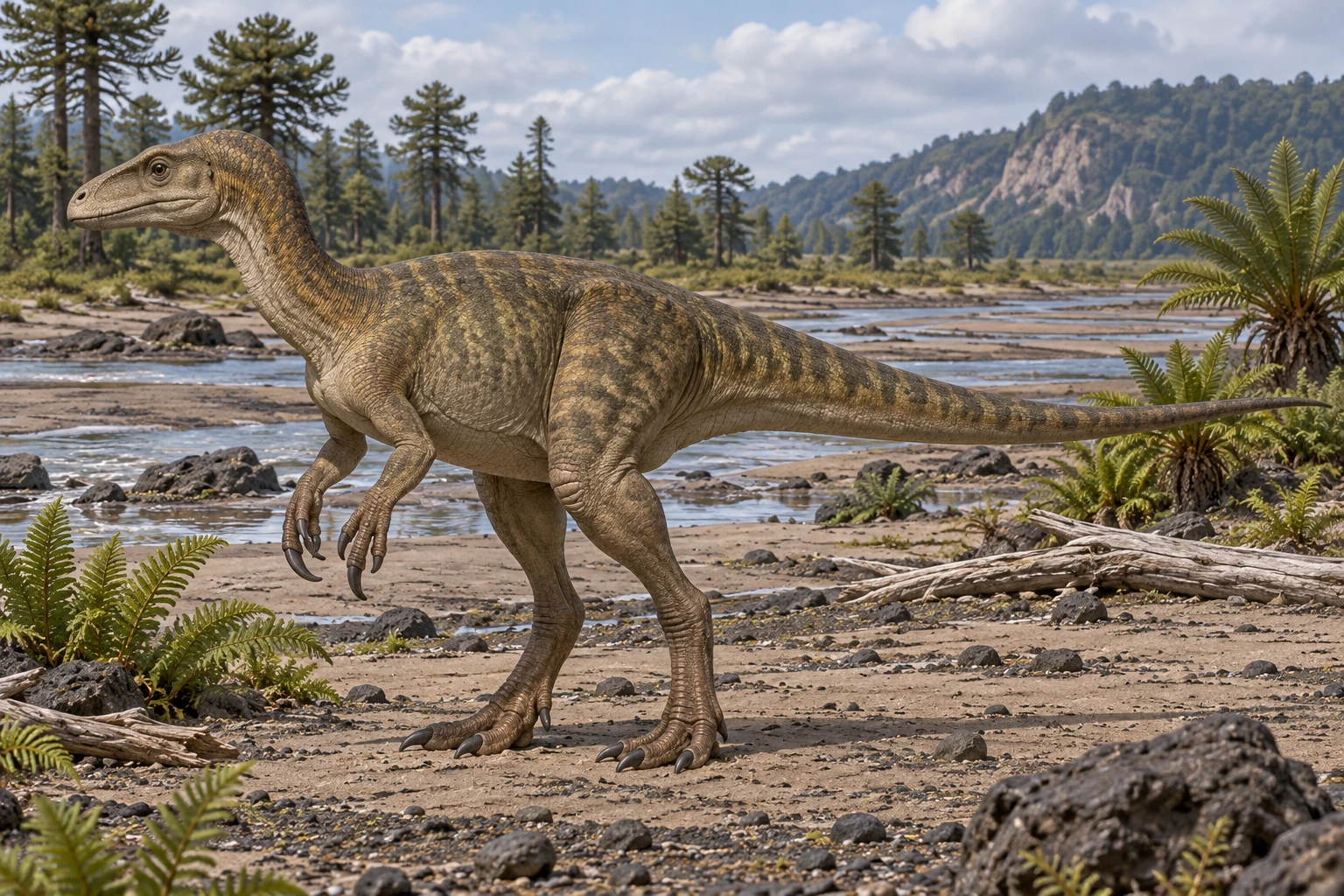
An illustrative reconstruction. Compare its anatomy with the evidence and limitations in the dossier. [2]
Source-informed reconstruction. Appearance evidence [2]. Original illustration; missing anatomy, coloration and scenery include interpretation.
Fossils constrain this life reconstruction. Missing anatomy, coloration and the environmental scene include interpretation; the dossier explains the evidence limits.
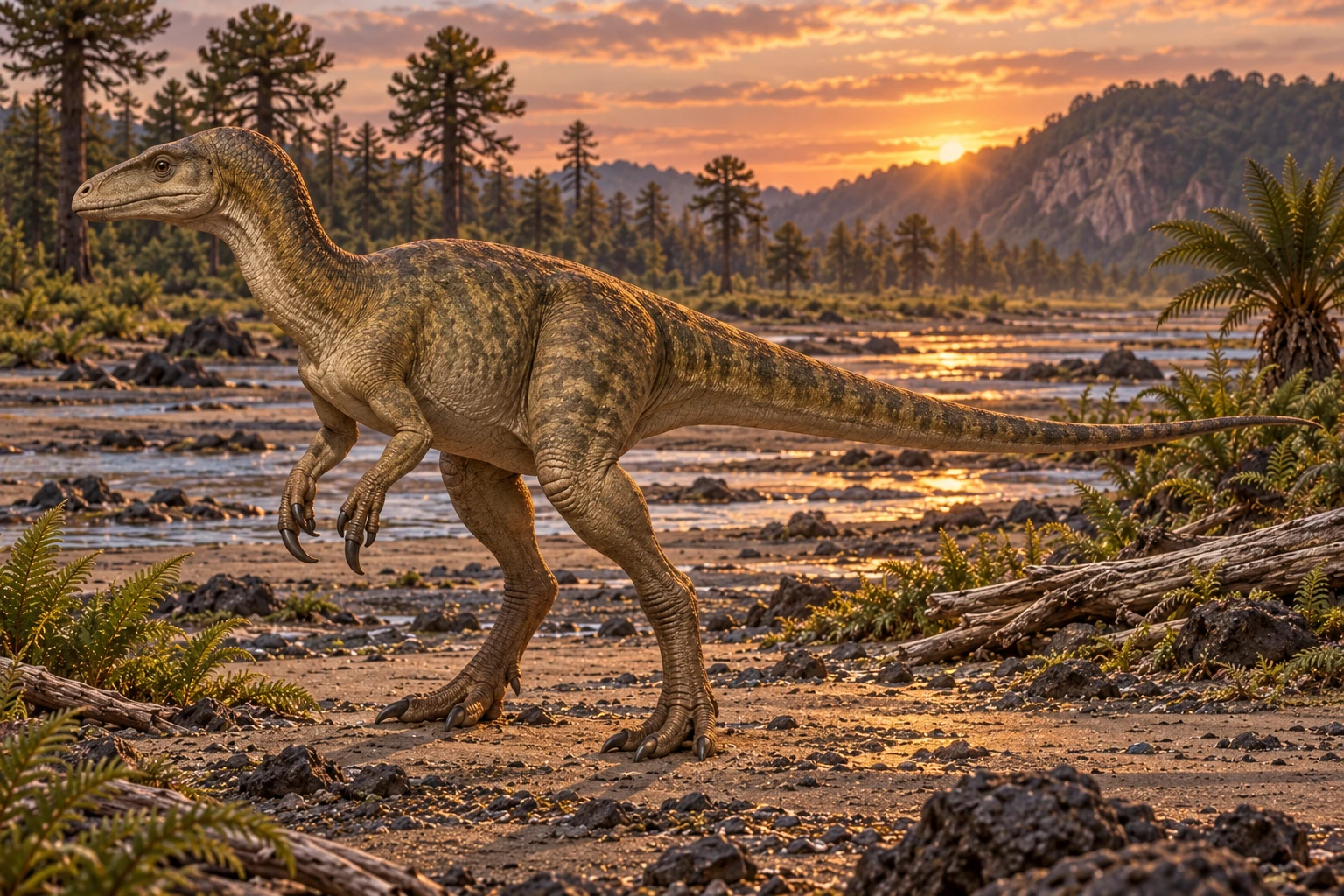
An illustrative reconstruction. Compare its anatomy with the evidence and limitations in the dossier. Lighting, coloration and scenery are artistic choices. This image does not document a fossil locality or behavior.
Original artwork · artistic interpretation.
Scientific view: source-informed reconstruction, credited paleoart or specimen-based imagery. Movie-style view: Original artistic interpretation. Reconstructions involve uncertainty.
MEET THE ANIMAL
Chilesaurus lived in Chile during the Late Jurassic. It walked on its hind legs and used a long tail for balance. Although parts of its body resemble those of meat-eating dinosaurs, its jaws and teeth fit plant feeding. Several skeletons give researchers a useful view of its unusual combination of features, rather than leaving them with just one mysterious bone. [D4]
That unusual combination makes its family-tree position difficult to establish. A 2017 analysis placed it near the beginning of the bird-hipped dinosaur group. Its backward-pointing pubis and straightened cheek teeth helped support that result. Even so, sharing a feature does not automatically make an animal a direct ancestor, and some important bird-hipped jaw features are absent. [D2]
A later study tested how the choice of comparison animals affects the answer. Adding different outgroups changed the position recovered for Chilesaurus. Researchers therefore continue to debate whether it belongs among theropods or ornithischians. Its story shows how a new fossil can challenge an old classification, and how careful testing can reveal uncertainty instead of immediately removing it. [D5]
PREHISTORIC ANIMAL DOSSIER
The animal, the evidence, and the questions still open.
Later phylogenetic tests recover different placements depending on comparison taxa and character selection; a precise relationship remains unresolved. [D5]
Profile scope: The exhibit concerns Chilesaurus diegosuarezi from the Toqui Formation of southern Chile. [D1]
Source supported identifies a description documented by the cited source. Inferred marks a reconstruction or functional estimate. Debated marks competing interpretations. Not established means the sources reviewed for this dossier do not support a firm conclusion; it does not mean a behavior never occurred.
A size reference is an estimate, not a population range. Nesting evidence does not by itself establish courtship, mate choice, or lifelong pairing.
Approximately 2–3 m reference length.
Museum educational estimate; not a demonstrated adult range or a measurement of every growth stage. [D4]
Not established here
No mass estimate adopted. The inspected sources do not provide a specimen-bound body-mass estimate suitable for this comparison. [D1]
Herbivory inferred from jaws and teeth.
Straightened leaf-cutting teeth support plant feeding; neither an exact menu nor a preserved meal is identified here. [D2]
Late Jurassic terrestrial Toqui Formation.
Associated terrestrial vertebrates locate the fossil setting; burial alongside other animals does not establish a social group. [D1]
Bipedal movement with a balancing tail.
The museum describes two-legged posture; no fossil-supported speed is adopted. [D4]
Bird-like pelvis combined with other unusual skeletal traits.
A toothless front upper-jaw region and non-recurved cheek teeth occur without the typical ornithischian predentary bone. [D2]
Not established here
Egg and nest assignment unresolved. Neither the original description nor inspected posture study establishes Chilesaurus reproductive remains. [D3]
Not established here
No supported mating display reconstructed. The reviewed articulated skeletons preserve anatomy and arm position, rather than a courtship sequence. [D3]
Not established here
Several individuals do not prove herd living. Rapid burial and similar folded-arm positions permit behavioral interpretations, but everyday group organization remains unknown. [D3]
Sources and inspection notes for the claims in this profile.
THE STORY IN THE FOSSILS
The unusual skeleton initially appeared to combine traits associated with different dinosaur groups. Articulated specimens show that those features really belonged together, rather than representing an accidental collection of unrelated bones. [1]
Changing the outgroup used in a family-tree analysis can move Chilesaurus. This is evidence that the comparison method matters, rather than proof that one placement has finally ended the debate. [5]
The dossier identifies the scope of each reference estimate. A mount, an individual fossil and a species-wide adult range are different measurements. Comparison metrics remain unavailable where adult scope has not been established. Unknown does not mean zero.
Sources support the stated claims and scopes. Refer to the evidence notes for uncertainty.
KEEP EXPLORING
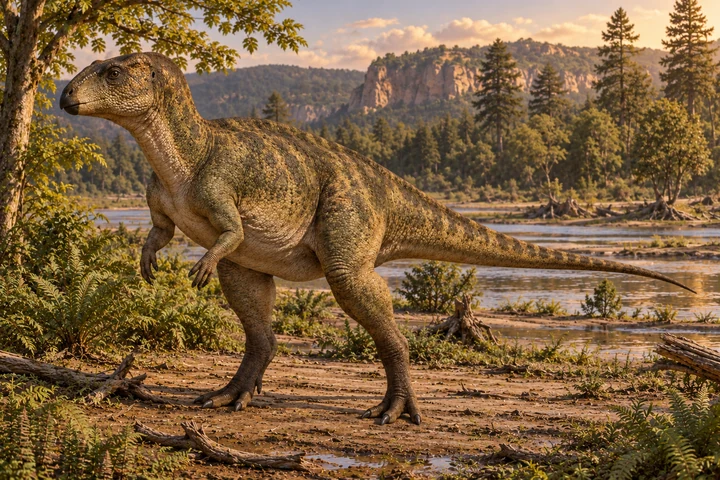
Zalmoxes robustus
Dinosaur
A stocky Romanian plant eater whose broader relationships remain unsettled after new 2026 analyses.
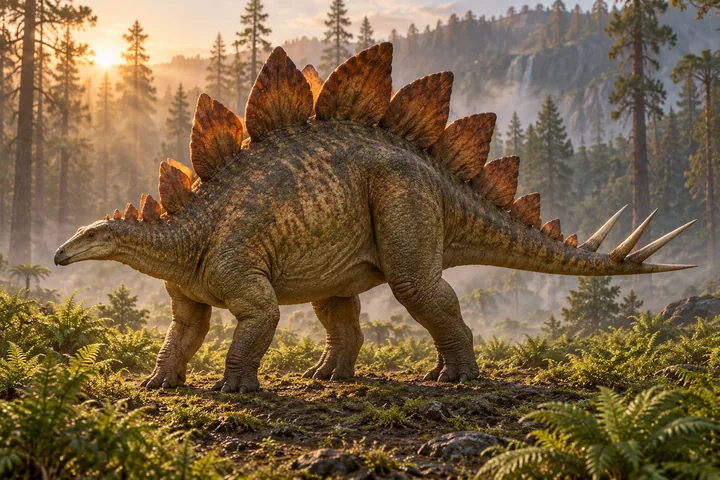
Stegosaurus stenops
Stegosaurus stenops was a plated, plant-eating dinosaur of the Late Jurassic. The remarkably complete specimen Sophie lets researchers examine its skeleton in three dimensions and reconstruct how its jaws processed vegetation.
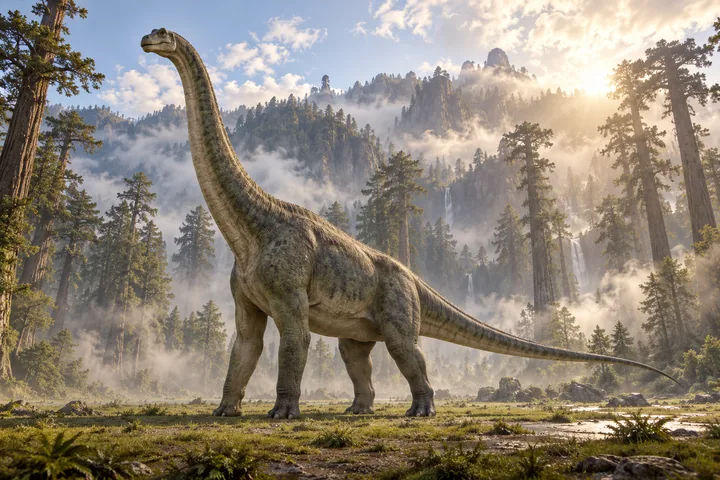
Brachiosaurus altithorax
Brachiosaurus altithorax was a giant sauropod from Late Jurassic North America. Its name-bearing skeleton is incomplete, and many familiar reconstructions borrow details from the separate African dinosaur Giraffatitan.