
Body length
InferredApproximately 2.4 m for a sampled subadult.
The 2012 histological study distinguishes robustus individuals of different sizes and growth stages; this reference is not a mature adult range. [D6]
EXHIBIT 260
Zalmoxes robustus
Dinosaur
A stocky Romanian plant eater whose broader relationships remain unsettled after new 2026 analyses. [4]
TWO WAYS TO PICTURE THE PAST
Compare the evidence with the familiar movie image. The illustrations are not to a shared scale.
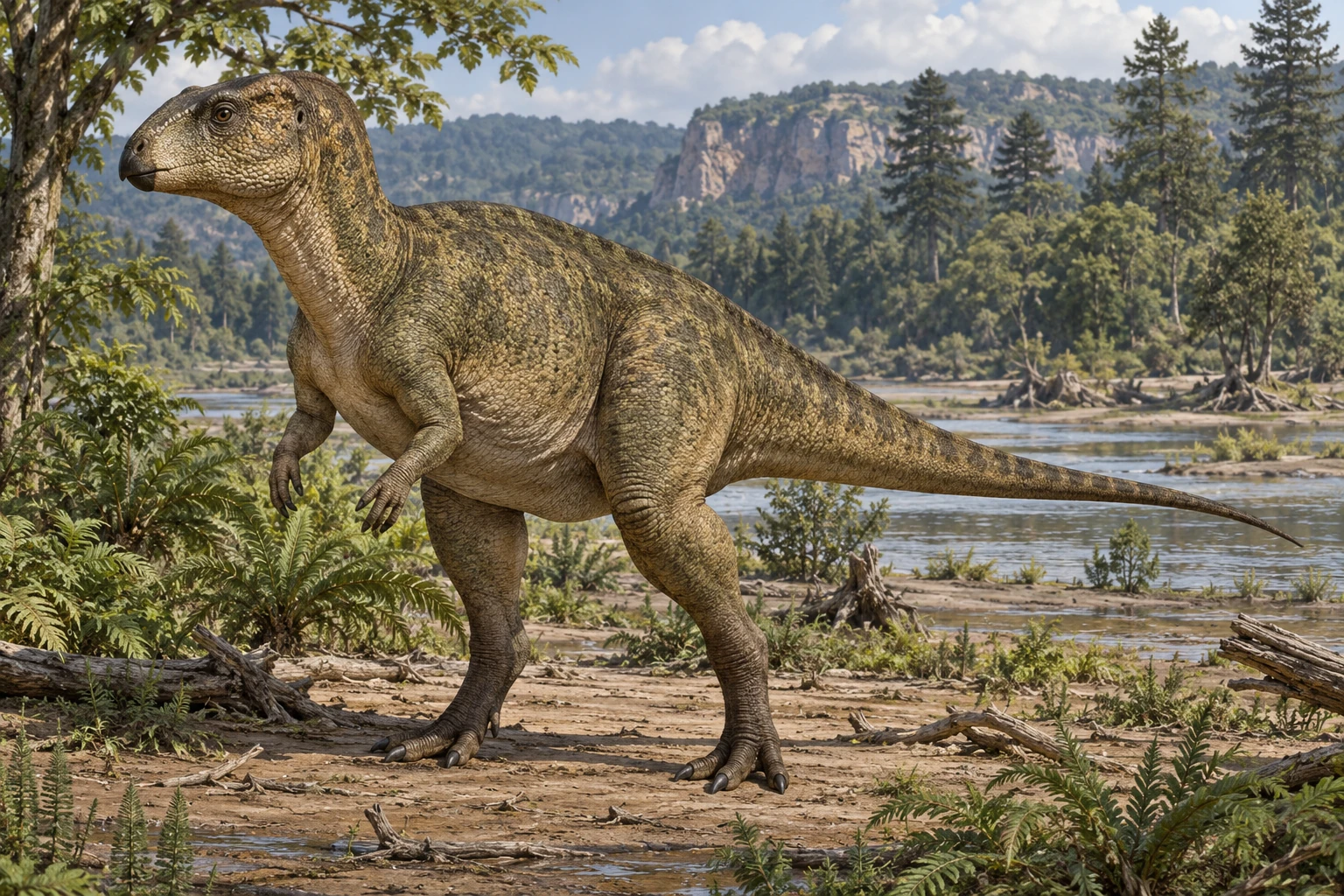
An illustrative reconstruction. Compare its anatomy with the evidence and limitations in the dossier. [1]
Source-informed reconstruction. Appearance evidence [1]. Original illustration; missing anatomy, coloration and scenery include interpretation.
Fossils constrain this life reconstruction. Missing anatomy, coloration and the environmental scene include interpretation; the dossier explains the evidence limits.
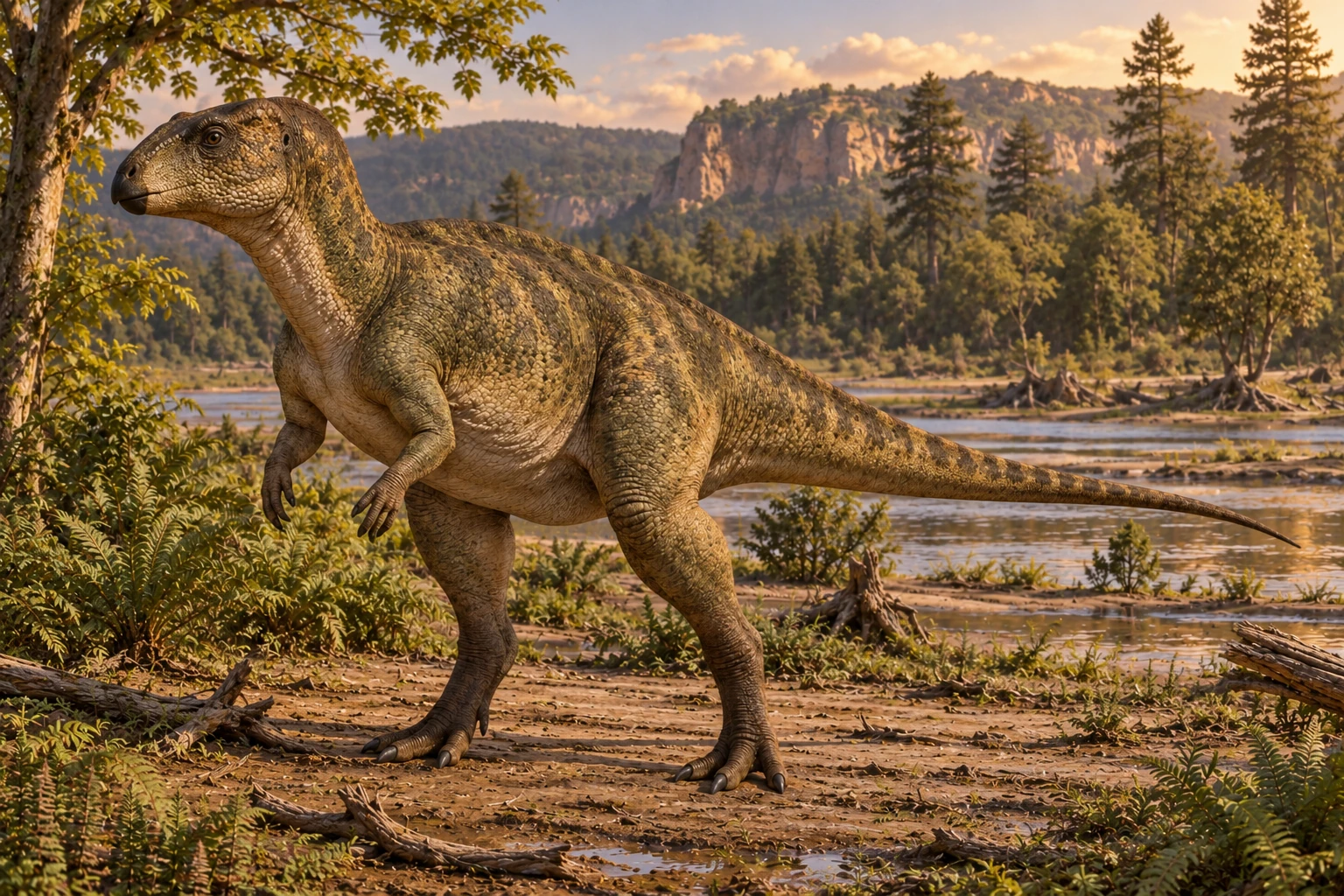
An illustrative reconstruction. Compare its anatomy with the evidence and limitations in the dossier. Lighting, coloration and scenery are artistic choices. This image does not document a fossil locality or behavior.
Original artwork · artistic interpretation.
Scientific view: source-informed reconstruction, credited paleoart or specimen-based imagery. Movie-style view: Original artistic interpretation. Reconstructions involve uncertainty.
MEET THE ANIMAL
Zalmoxes robustus was a stocky plant-eating dinosaur from Late Cretaceous Romania. Museum descriptions identify it as an herbivore, but an exact menu remains uncertain. When using information about this animal, its species name matters. A fact describing the old genus as a whole may refer to a different species and may no longer fit the animal shown here. [D5] [D1]
A study of bone growth compared separately identified robustus individuals. One was a late juvenile, while two others were subadults. The largest sampled subadult was reconstructed at about 2.4 meters long. That provides a useful idea of scale, but it does not tell us the full size range of mature adults. Different growth stages and uncertain species assignments must stay separate. [D6]
In 2026, researchers reassessed animals previously grouped together in this part of the dinosaur family tree. The former Zalmoxes shqiperorum received the new genus name Ferenceratops. Zalmoxes robustus kept its name, but different analyses placed it among different bird-hipped groups. Keeping those two species separate prevents old measurements and anatomical features from being transferred to the wrong dinosaur. [D4]
PREHISTORIC ANIMAL DOSSIER
The animal, the evidence, and the questions still open.
New analyses move Zalmoxes robustus between ceratopsian and iguanodontian positions; its name remains unchanged and its affinity remains uncertain. [D4]
Profile scope: This exhibit is strictly Zalmoxes robustus; it excludes the former Z. shqiperorum, renamed Ferenceratops shqiperorum in 2026. [D4]
Source supported identifies a description documented by the cited source. Inferred marks a reconstruction or functional estimate. Debated marks competing interpretations. Not established means the sources reviewed for this dossier do not support a firm conclusion; it does not mean a behavior never occurred.
A size reference is an estimate, not a population range. Nesting evidence does not by itself establish courtship, mate choice, or lifelong pairing.
Approximately 2.4 m for a sampled subadult.
The 2012 histological study distinguishes robustus individuals of different sizes and growth stages; this reference is not a mature adult range. [D6]
Not established here
The inspected osteology does not establish a robustus-specific body mass. [D1]
Plant eating inferred.
Museum classification is herbivorous; exact preferred plants and species-specific feeding mechanics remain uncertain. [D5]
Late Cretaceous Romanian terrestrial settings.
The reviewed record is from Transylvania; a reconstructed floodplain setting does not establish an exclusive habitat preference. [D1]
Restored bipedal stance; exact gait uncertain.
Robust limb anatomy supports a stocky restoration; incomplete feet and skeletons limit a complete gait reconstruction. [D1]
Beaked jaw tips and robust tooth-bearing jaws.
The robustus skull reconstruction has no elaborate frill; Ferenceratops anatomy is excluded. [D1]
Not established here
No assigned reproductive remains established here. The reviewed relationship study does not assign eggs or nests to robustus. [D3]
Not established here
No supported robustus courtship sequence. Changing its family-tree placement does not establish display anatomy, sexual dimorphism or mating rituals. [D4]
Not established here
Species-specific grouping unresolved. The review describes multiple Zalmoxes individuals together; their association does not establish robustus herd living. [D2]
Sources and inspection notes for the claims in this profile.
THE STORY IN THE FOSSILS
The 2003 revision made robustus the type species of Zalmoxes. Its original two-species grouping has since changed, requiring species-specific comparisons. [1]
The 2026 study illustrates how new skull evidence can change a long-used family tree. The uncertainty for robustus remains part of the result, so a familiar old family label should not be presented as settled. [4]
The dossier identifies the scope of each reference estimate. A mount, an individual fossil and a species-wide adult range are different measurements. Comparison metrics remain unavailable where adult scope has not been established. Unknown does not mean zero.
Sources support the stated claims and scopes. Refer to the evidence notes for uncertainty.
KEEP EXPLORING
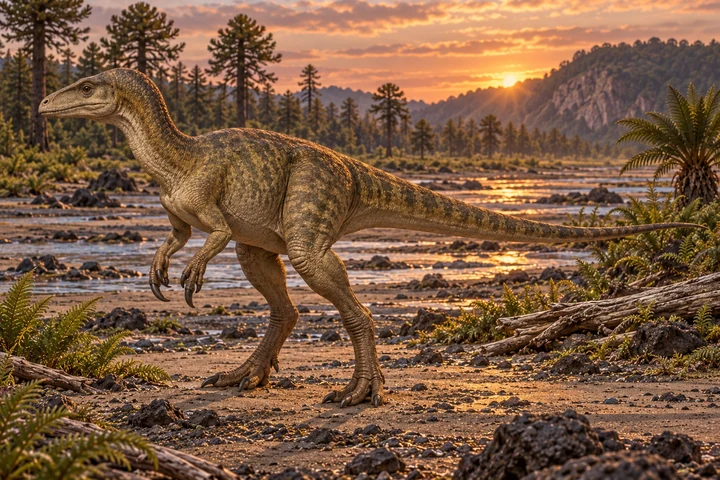
Chilesaurus diegosuarezi
Dinosaur
A plant-eating dinosaur with an unusual mixture of skeletal features and an unsettled family-tree position.
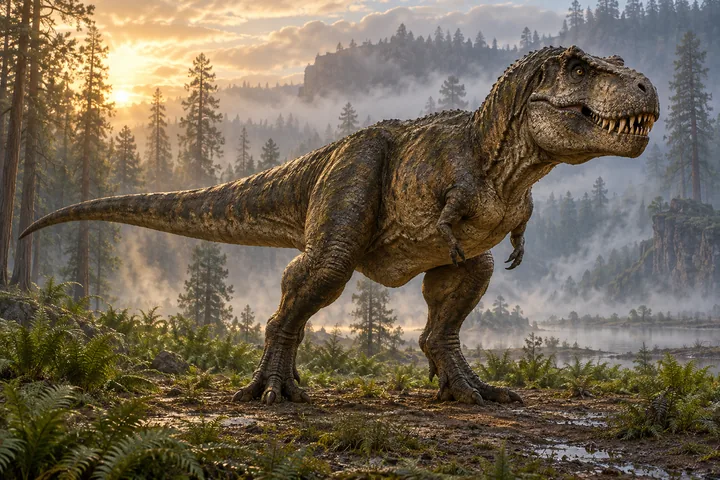
Tyrannosaurus rex
Tyrannosaurus rex was a large meat-eating dinosaur from the final part of the Cretaceous in western North America. Fossil teeth, bite marks and skeletons reveal a powerful animal whose behaviour still invites questions.
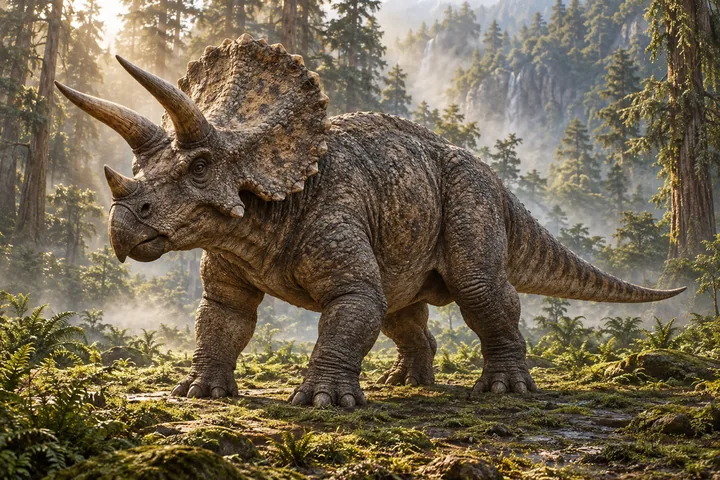
Triceratops horridus
Triceratops horridus was a horned dinosaur of the Late Cretaceous. Skin impressions attributed to this species reveal scales, while skulls and their positions in rock layers help researchers distinguish it from the later Triceratops prorsus.