
Length
Inferred6.4–7.0 m (individual estimate)
The 2006 caudal skeleton is scaled to body length; this is one fossil-individual estimate, not an adult species range. [D1]
EXHIBIT 250
Cretoxyrhina mantelli
Prehistoric fish
A large Cretaceous lamniform shark whose tail skeleton supports an active swimming reconstruction. [1]
TWO WAYS TO PICTURE THE PAST
Compare the evidence with the familiar movie image. The illustrations are not to a shared scale.
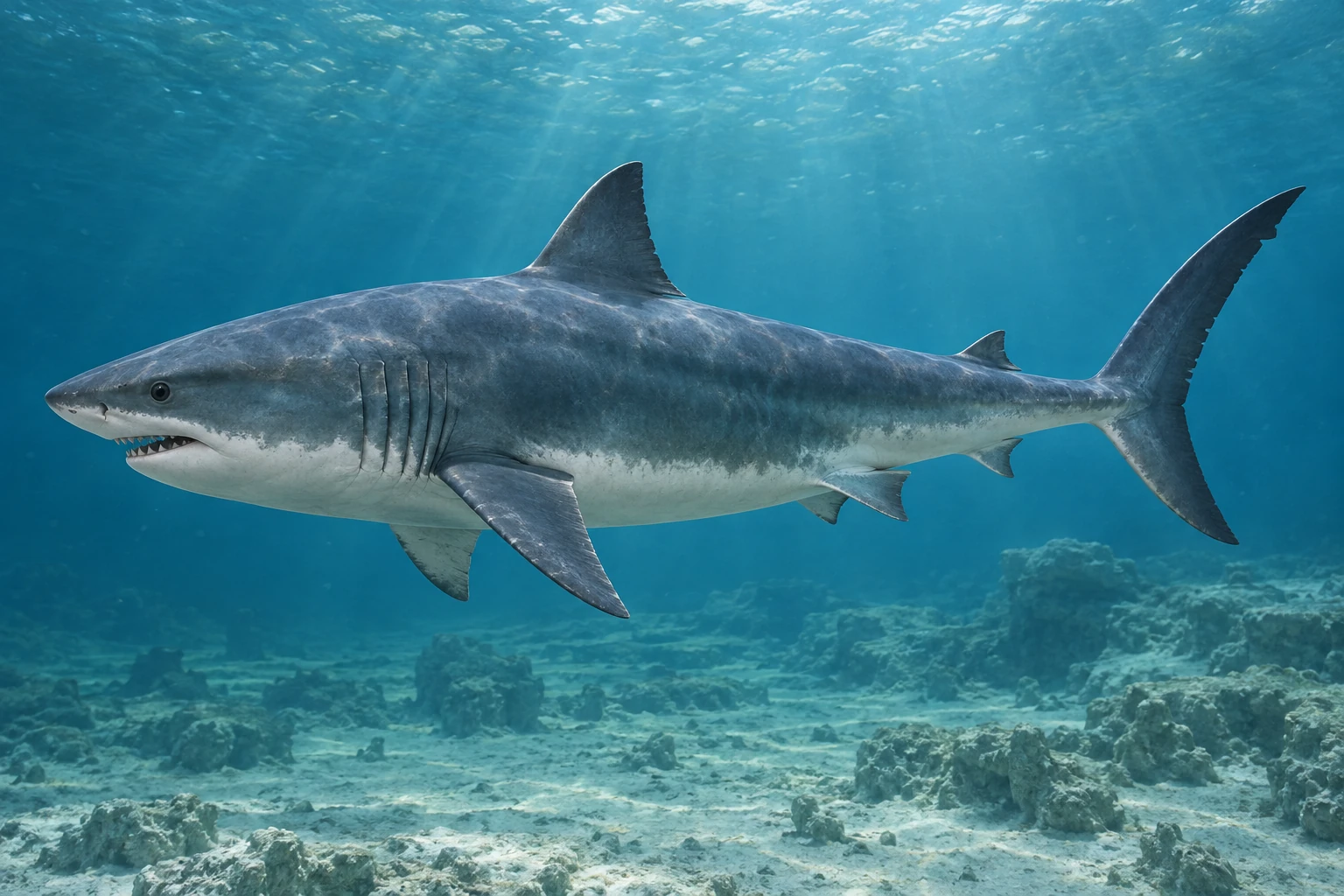
An illustrative reconstruction. Compare its anatomy with the evidence and limitations in the dossier. [6]
Source-informed reconstruction. Appearance evidence [6]. Original illustration; missing anatomy, coloration and scenery include interpretation.
Fossils constrain this life reconstruction. Missing anatomy, coloration and the environmental scene include interpretation; the dossier explains the evidence limits.
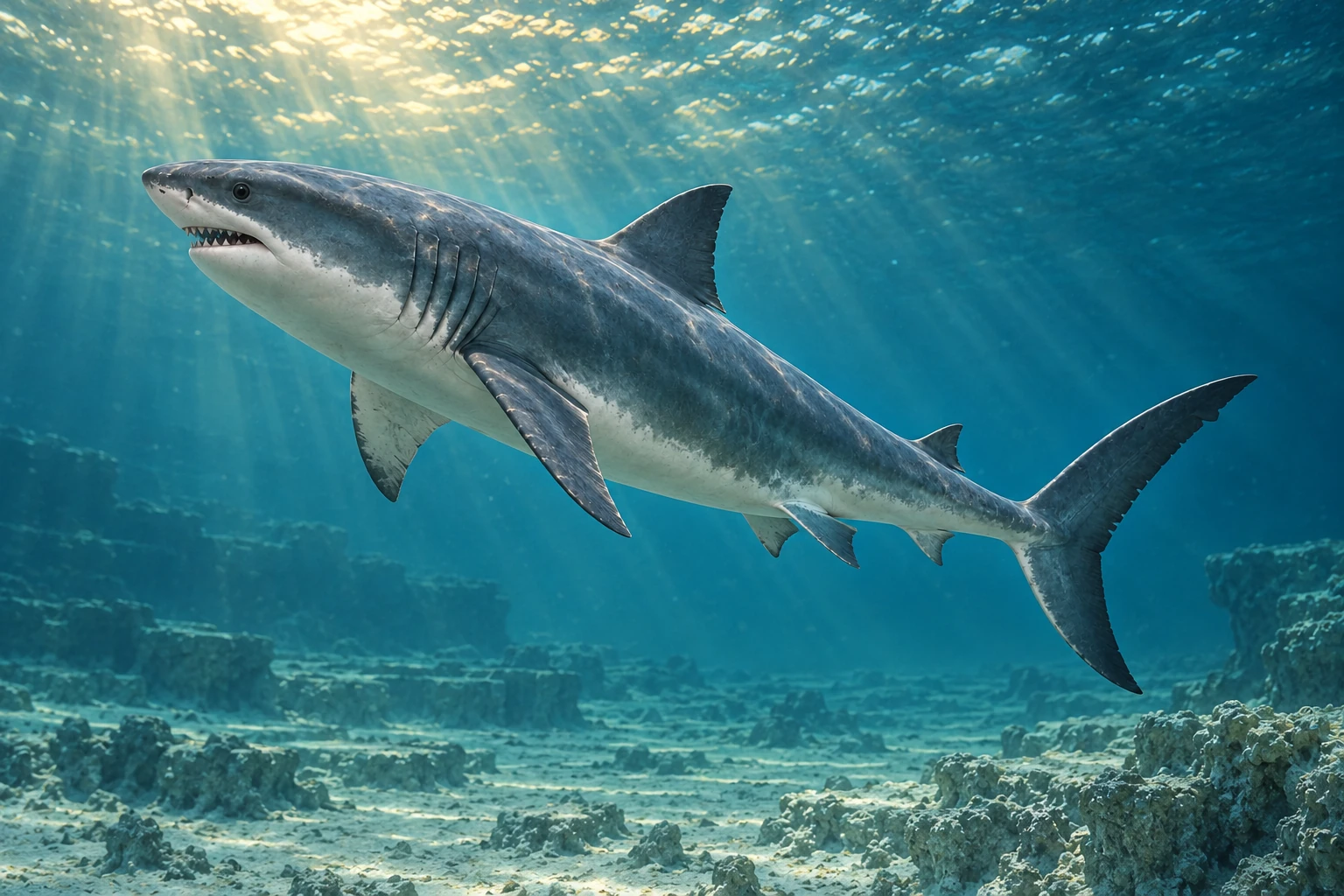
An illustrative reconstruction. Compare its anatomy with the evidence and limitations in the dossier. Lighting, coloration and scenery are artistic choices. This image does not document a fossil locality or behavior.
Original artwork · artistic interpretation.
Scientific view: source-informed reconstruction, credited paleoart or specimen-based imagery. Movie-style view: Original artistic interpretation. Reconstructions involve uncertainty.
MEET THE ANIMAL
Cretoxyrhina was a large prehistoric shark that lived in Cretaceous seas. Fossils from Kansas preserve parts of its backbone and tail skeleton. Those pieces support a strong, nearly crescent-shaped tail that could drive active swimming. Researchers estimated one individual at 6.4–7.0 meters long; that is a model for that fossil, not a measurement of every adult. [D1]
Its food included other marine vertebrates. An ecological study used fossil evidence to support feeding on bony fishes and mosasaurs, with plesiosaurs also possible. Feeding evidence does not automatically tell us whether the shark caught a living animal or ate something already dead. [D4]
The name has a history too. A museum tooth from the English Chalk has been recorded under older combinations such as Isurus mantelli. Keeping track of those labels helps researchers recognize the same animal instead of counting it as several different discoveries. [D2]
A later study used tooth chemistry to investigate body temperature and possible migration. That is an indirect way to explore how extinct animals lived. It does not tell us whether sharks traveled together, and the sources reviewed here leave their courtship and social life uncertain. [D5]
PREHISTORIC ANIMAL DOSSIER
The animal, the evidence, and the questions still open.
Dental fossils, caudal anatomy and tooth chemistry address different questions about an extinct marine predator. [D6] [D1] [D5]
Profile scope: Genus-wide exhibit represented by C. mantelli; catalog period and region follow Kansas material. Its caudal length model estimates one individual, not a species range. [D1]
Source supported identifies a description documented by the cited source. Inferred marks a reconstruction or functional estimate. Debated marks competing interpretations. Not established means the sources reviewed for this dossier do not support a firm conclusion; it does not mean a behavior never occurred.
A size reference is an estimate, not a population range. Nesting evidence does not by itself establish courtship, mate choice, or lifelong pairing.
6.4–7.0 m (individual estimate)
The 2006 caudal skeleton is scaled to body length; this is one fossil-individual estimate, not an adult species range. [D1]
Not established here
The reviewed tail study does not establish a reliable mass range. [D1]
Marine vertebrates
The original ecological abstract supports feeding on bony fishes and mosasaurs, possibly plesiosaurs; it does not prove every encounter was hunting. [D4]
Late Cretaceous marine waters
Kansas fossils occur in Niobrara marine deposits. Burial setting does not specify exact preferred depth. [D1]
Fast swimming supported by tail shape
Caudal skeletal elements support a lunate tail and narrow peduncle; speed is not measured. [D1]
A large lamniform shark
Sharp cusps and position-dependent tooth shapes occur in Montana material; this dental sample is not a whole-body skeleton. [D6]
Not established here
Focused searches and reviewed dental studies yield no direct pregnancy, egg or birth fossil for this exhibit. [D6]
Not established here
The reviewed isotope study cannot establish mating displays, and focused searches found no direct evidence. [D5]
Not established here
Isotope-based possible migration does not establish group travel, schooling or pair bonds. [D5]
Sources and inspection notes for the claims in this profile.
THE STORY IN THE FOSSILS
A tooth in a museum can anchor identity even when its labels have changed. The Natural History Museum retains a syntype from the English Chalk at Lewes, recording both the current Cretoxyrhina name and historical combinations. The specimen is a tooth, so that record is an identity reference rather than a complete-body measurement. [2]
Chemical evidence asks a different question. A 2025 study compared oxygen isotopes in Alabama shark teeth and other fishes. Cretoxyrhina values were interpreted in terms of elevated body temperature and possible migration. These conclusions depend on comparisons and environmental assumptions; they do not reveal an individual travel route or prove social migration. [5]
The dossier identifies the scope of each reference estimate. A mount, an individual fossil and a species-wide adult range are different measurements. Comparison metrics remain unavailable where adult scope has not been established. Unknown does not mean zero.
Sources support the stated claims and scopes. Refer to the evidence notes for uncertainty.
KEEP EXPLORING
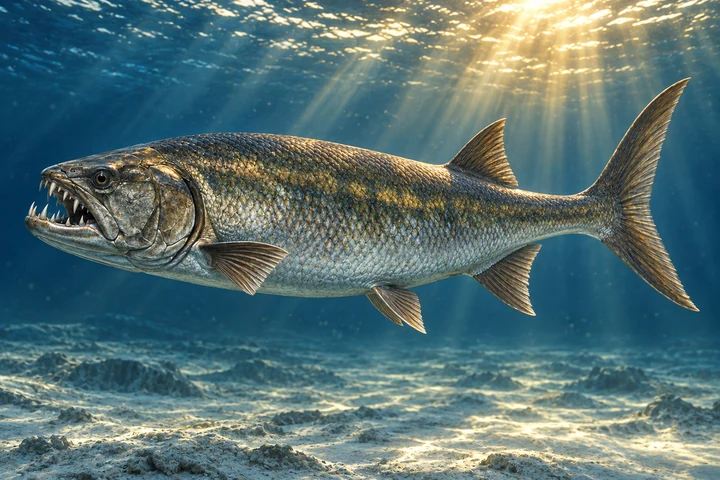
Xiphactinus audax
Prehistoric fish
A large toothed ray-finned fish, with a famous fossil preserving another fish inside it.
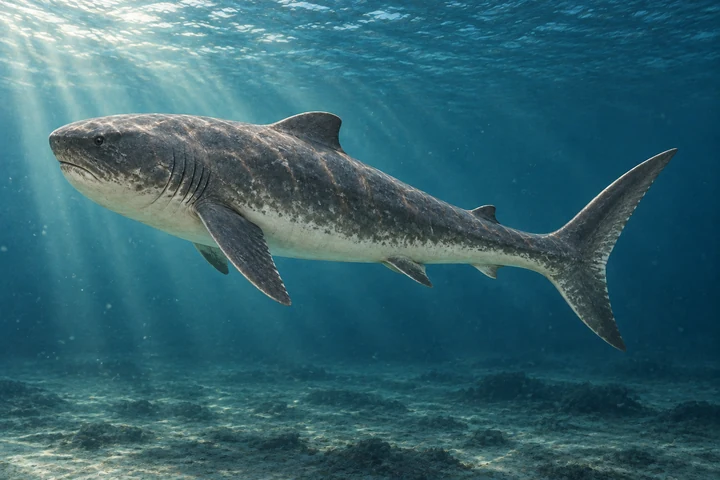
Ptychodus
Prehistoric fish
An extinct crushing-toothed shark whose articulated Mexican fossils reveal a streamlined swimming body.
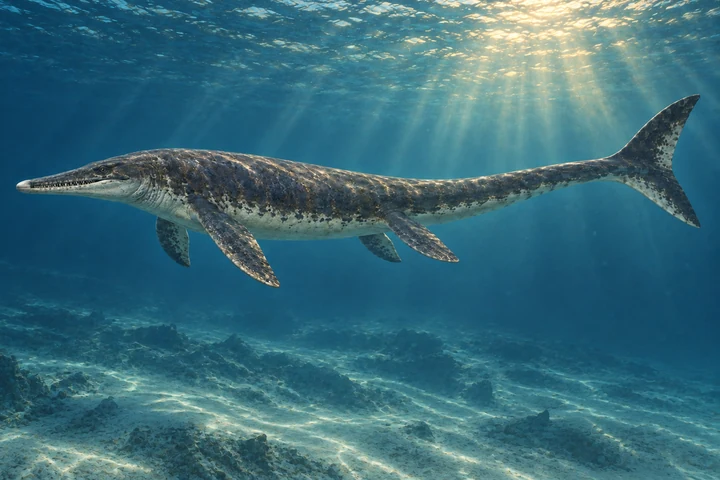
Tylosaurus proriger
Marine reptile
A marine lizard with an elongated adult snout tip, whose fossil identities are still being revised.