
Length
InferredUp to 9.7 m (genus model)
Italian P. latissimus teeth scaled using Mexican body proportions; not a measured individual or species range. [D1]
EXHIBIT 247
Ptychodus
Prehistoric fish
An extinct crushing-toothed shark whose articulated Mexican fossils reveal a streamlined swimming body. [1]
TWO WAYS TO PICTURE THE PAST
Compare the evidence with the familiar movie image. The illustrations are not to a shared scale.
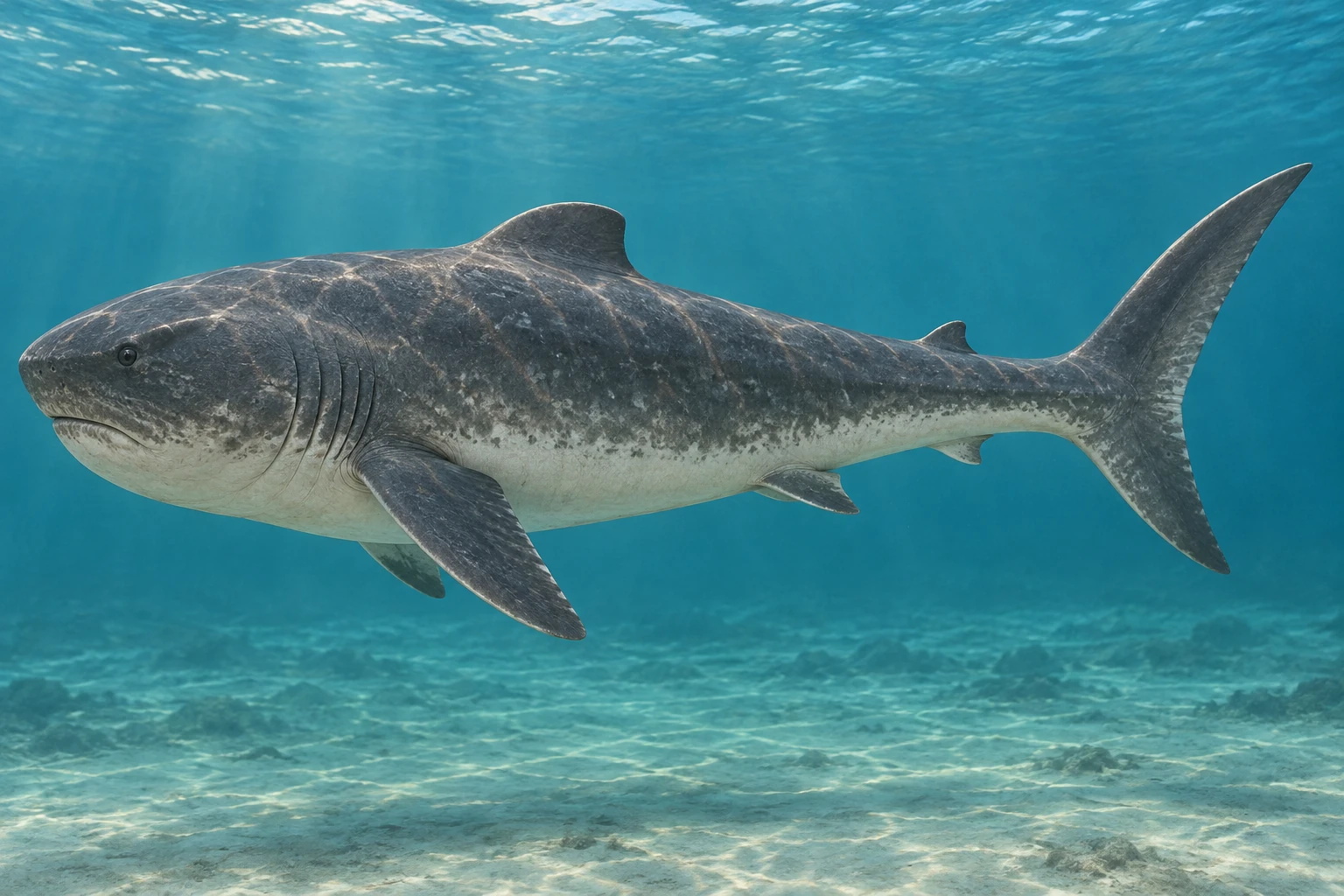
An illustrative reconstruction. Compare its anatomy with the evidence and limitations in the dossier. [1]
Source-informed reconstruction. Appearance evidence [1]. Original illustration; missing anatomy, coloration and scenery include interpretation.
Fossils constrain this life reconstruction. Missing anatomy, coloration and the environmental scene include interpretation; the dossier explains the evidence limits.
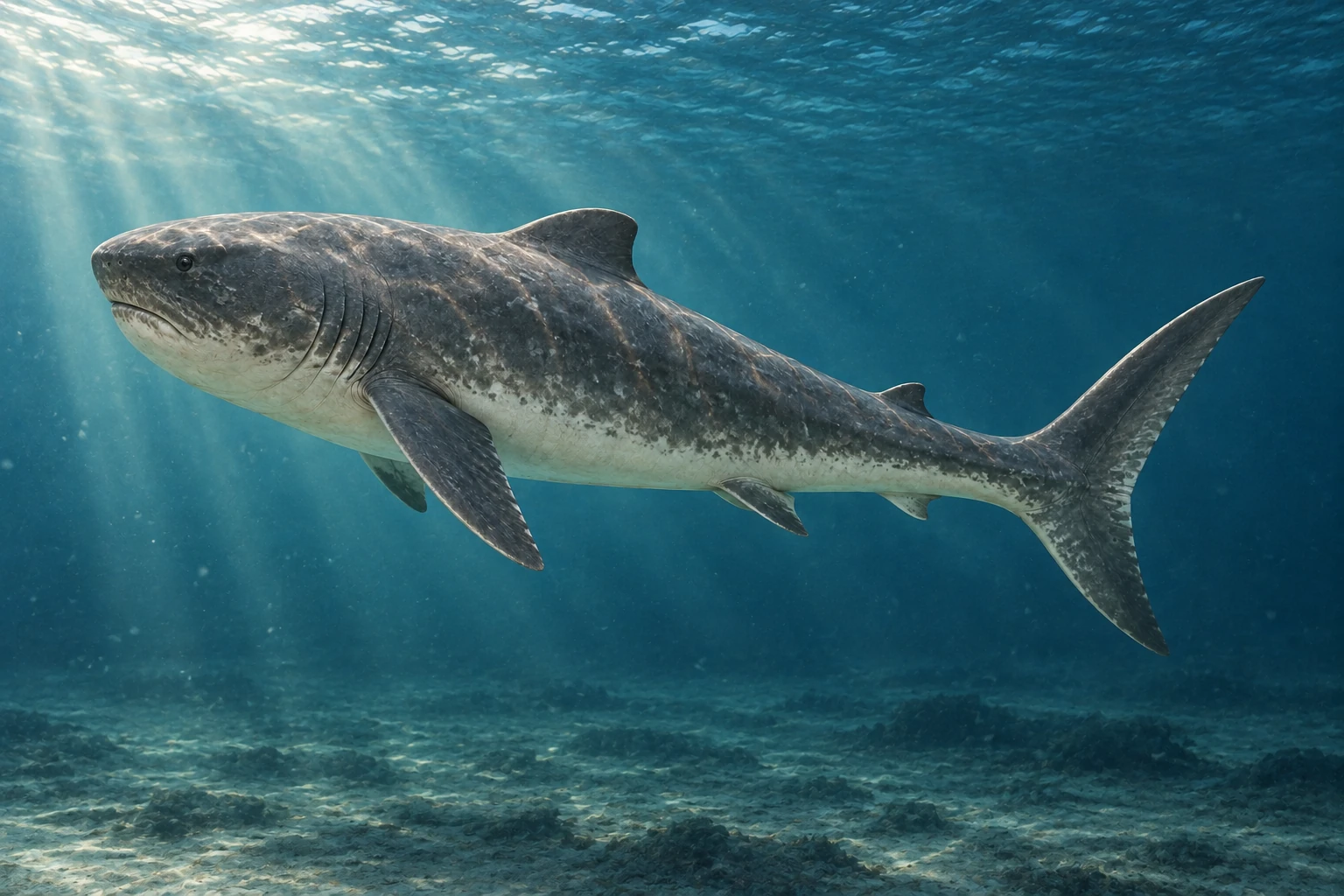
An illustrative reconstruction. Compare its anatomy with the evidence and limitations in the dossier. Lighting, coloration and scenery are artistic choices. This image does not document a fossil locality or behavior.
Original artwork · artistic interpretation.
Scientific view: source-informed reconstruction, credited paleoart or specimen-based imagery. Movie-style view: Original artistic interpretation. Reconstructions involve uncertainty.
MEET THE ANIMAL
Ptychodus was a prehistoric shark, not a dinosaur. Its unusual teeth formed a ridged crushing surface instead of rows of cutting fangs. Mexican fossils show a strong swimming body with long front fins and a powerful tail. [D1]
For many years, teeth were the main clues. Some had already reached a Bohemian museum in the 1820s. Researchers later traced old drawings and names to discover which labels belonged to the same species. That careful historical work helps keep one animal from appearing several times under different names. [D3]
Backbones provide a different kind of evidence. A Spanish study examined growth bands in fossil vertebrae and compared them with living sharks. The researchers inferred slow growth, late maturity and possible live-bearing. These are conclusions from a model, not a preserved scene of a shark giving birth. [D2]
We still cannot describe its courtship or decide whether it formed social groups from those remains. Fossils can answer one question while leaving another open. Separating observations from estimates lets us learn about this animal without turning a plausible idea into a certainty. [D2]
PREHISTORIC ANIMAL DOSSIER
The animal, the evidence, and the questions still open.
The 2024 skeletons resolve body anatomy; missing reproductive and behavioral evidence requires separate, cautious life-history interpretation. [D1] [D2]
Profile scope: Genus-wide exhibit; catalog period and region follow Mexican Ptychodus sp. bodies. The largest length model instead scales P. latissimus teeth. [D1]
Source supported identifies a description documented by the cited source. Inferred marks a reconstruction or functional estimate. Debated marks competing interpretations. Not established means the sources reviewed for this dossier do not support a firm conclusion; it does not mean a behavior never occurred.
A size reference is an estimate, not a population range. Nesting evidence does not by itself establish courtship, mate choice, or lifelong pairing.
Up to 9.7 m (genus model)
Italian P. latissimus teeth scaled using Mexican body proportions; not a measured individual or species range. [D1]
Not established here
Reviewed vertebral growth models do not establish a reliable body-mass range. [D2]
Hard animal foods
Crushing pavement teeth support durophagy; proposed ammonite and turtle prey are interpretations. [D1]
Marine; fossils from shelf deposits
Mexican articulated fossils occur in open-marine Vallecillo deposits; exact preferred depth remains unknown. [D1]
Active swimming
Streamlined proportions and tail shape support pelagic swimming; no measured speed. [D1]
Crushing teeth and streamlined fins
Rounded ridged tooth pavement; long pectorals, small pelvics, two spine-less dorsals and a nearly lunate tail. [D1]
Possible live-bearing
The 2020 growth study infers live-bearing from life-history comparisons, without a fossil pregnancy. Birth size and litter size remain unestablished. [D2]
Not established here
Focused searches and the reviewed life-history study yield no direct courtship or mating evidence. [D2]
Not established here
The reviewed remains do not establish schooling, pair bonds, parental care or group behavior. [D2]
Sources and inspection notes for the claims in this profile.
THE STORY IN THE FOSSILS
Names can preserve the history of an argument. Bohemian teeth were reported in the 1820s, then examined by Louis Agassiz during a museum visit in 1833. The 2015 nomenclatural review traced early publications and illustrations, showing that several older names referred to already familiar species. Applying rules that preserve long-used names maintained Ptychodus latissimus and P. mammillaris. An older label therefore does not automatically identify another animal. [3]
Articulated Mexican skeletons finally connected the familiar crushing teeth with a distinctive streamlined body. [1]
The dossier identifies the scope of each reference estimate. A mount, an individual fossil and a species-wide adult range are different measurements. Comparison metrics remain unavailable where adult scope has not been established. Unknown does not mean zero.
Sources support the stated claims and scopes. Refer to the evidence notes for uncertainty.
KEEP EXPLORING
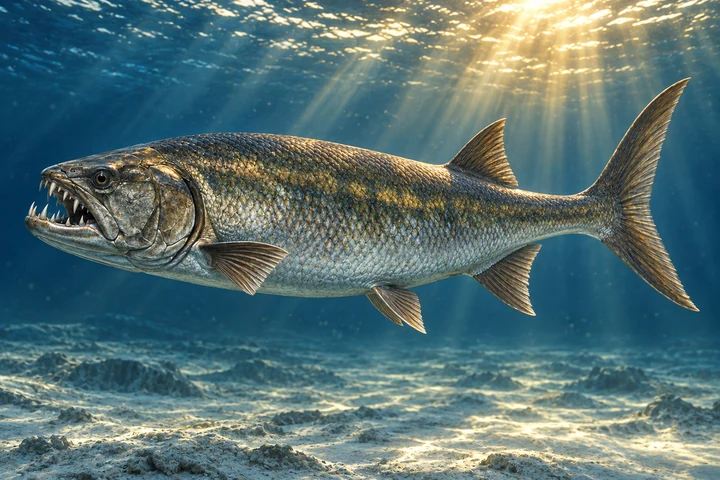
Xiphactinus audax
Prehistoric fish
A large toothed ray-finned fish, with a famous fossil preserving another fish inside it.
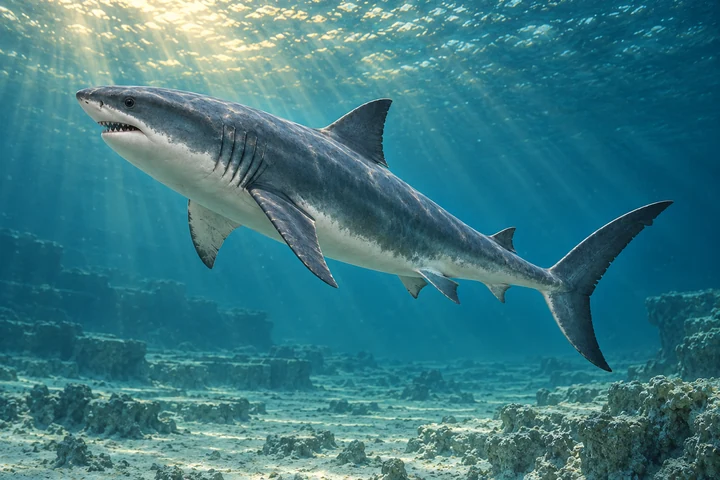
Cretoxyrhina mantelli
Prehistoric fish
A large Cretaceous lamniform shark whose tail skeleton supports an active swimming reconstruction.
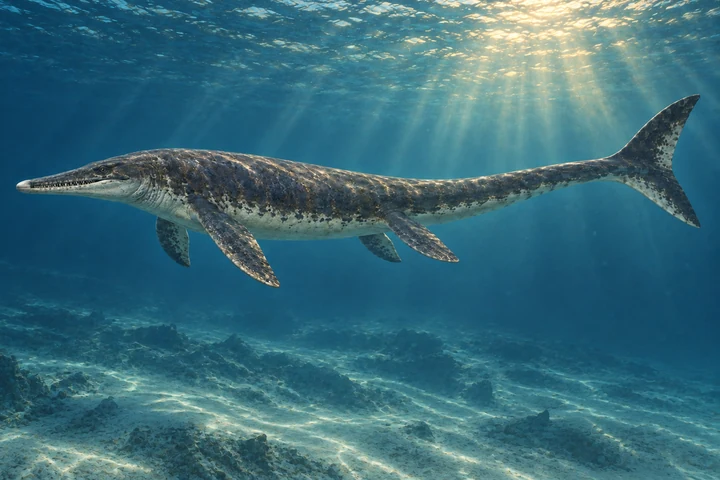
Tylosaurus proriger
Marine reptile
A marine lizard with an elongated adult snout tip, whose fossil identities are still being revised.