
Length
Inferred8.24 m holotype estimate
Corrected Table 2 estimates MCZ VPRA4374 from jaw proportions. This individual model is not an adult species range or direct whole-skeleton measurement. [D1]
EXHIBIT 227
Tylosaurus proriger
Marine reptile
A marine lizard with an elongated adult snout tip, whose fossil identities are still being revised. [2]
TWO WAYS TO PICTURE THE PAST
Compare the evidence with the familiar movie image. The illustrations are not to a shared scale.
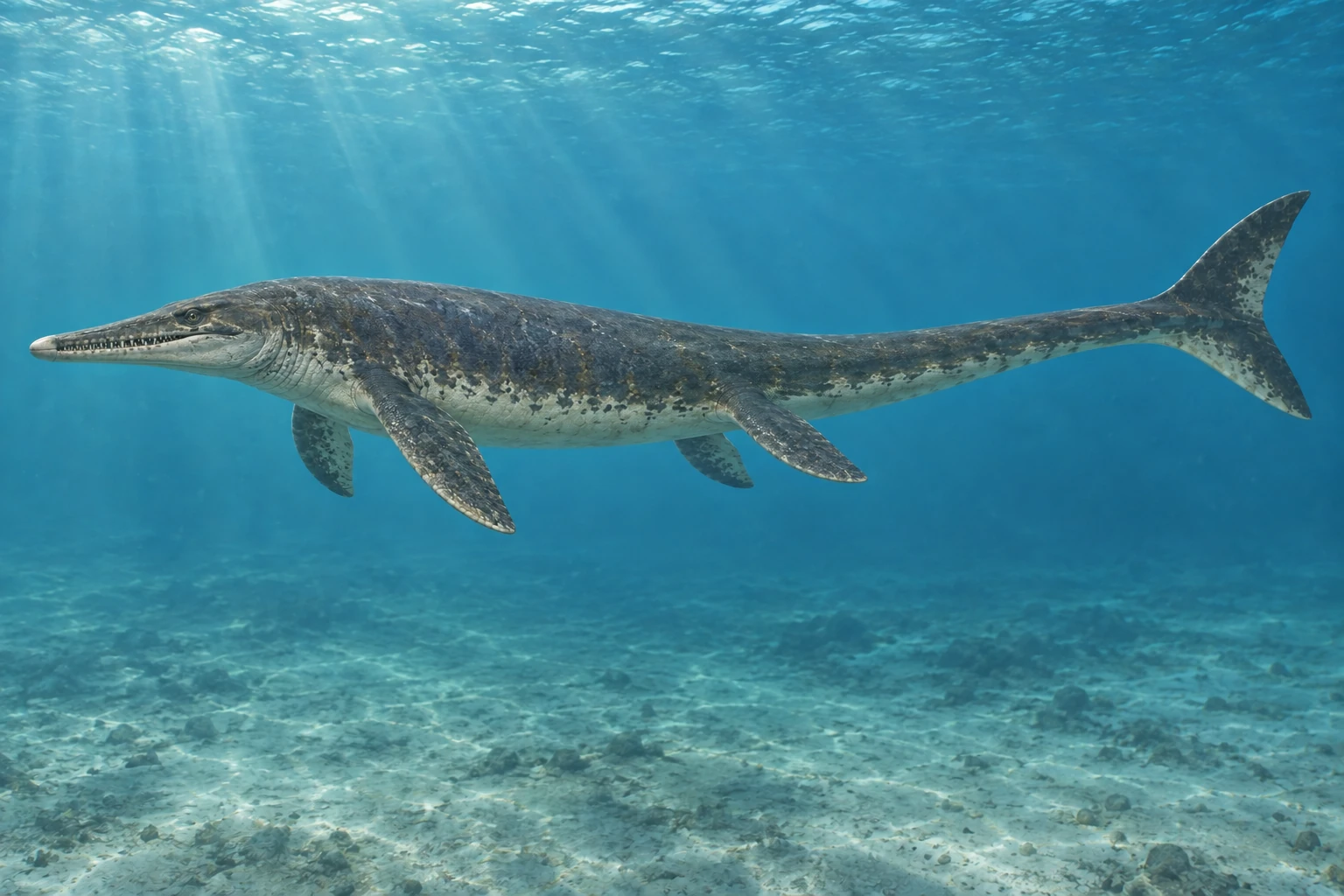
An illustrative reconstruction. Compare its anatomy with the evidence and limitations in the dossier. [2]
Source-informed reconstruction. Appearance evidence [2]. Original illustration; missing anatomy, coloration and scenery include interpretation.
Fossils constrain this life reconstruction. Missing anatomy, coloration and the environmental scene include interpretation; the dossier explains the evidence limits.
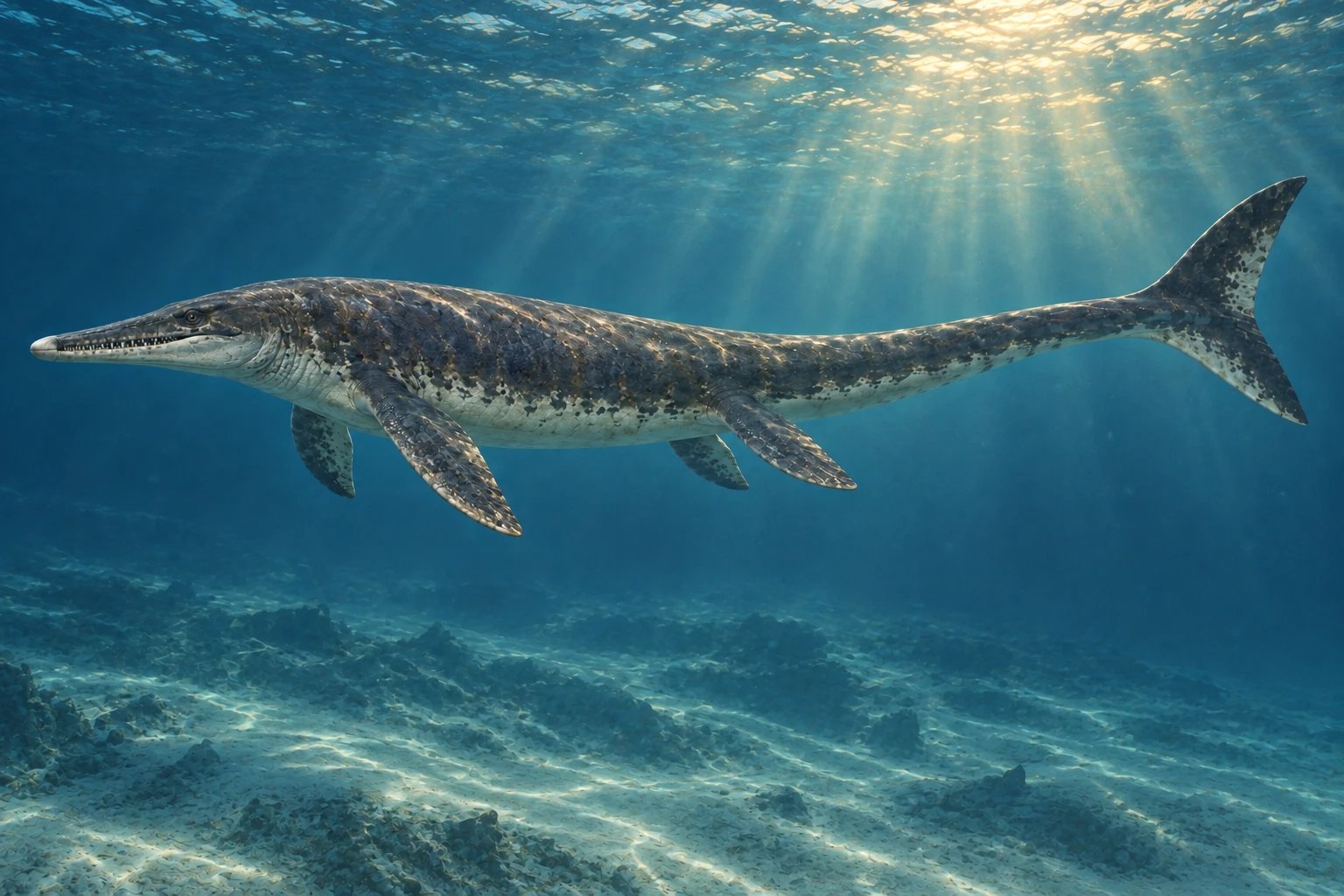
An illustrative reconstruction. Compare its anatomy with the evidence and limitations in the dossier. Lighting, coloration and scenery are artistic choices. This image does not document a fossil locality or behavior.
Original artwork · artistic interpretation.
Scientific view: source-informed reconstruction, credited paleoart or specimen-based imagery. Movie-style view: Original artistic interpretation. Reconstructions involve uncertainty.
MEET THE ANIMAL
Tylosaurus was a mosasaur: a marine lizard, rather than a dinosaur or a fish. The T. proriger type specimen includes parts of a toothed skull and jaw. Scientists use that specimen as a reference when deciding whether another fossil belongs to the same species. [D1]
Its toothless adult snout tip is an important feature, but growth changes matter. A much smaller specimen, FHSM VP14845, has a short, rounded snout. It was interpreted as newborn-sized and identified only as Tylosaurus, so it cannot tell us the appearance of every T. proriger baby. [D3]
Names can change even for well-known museum fossils. In2026, researchers placed Bunker and Sophie in a newly named species, Tylosaurus rex. This means their size claims should stay with those particular fossils and their revised identification, rather than being silently transferred to the species shown here. [D4]
Research on growing skulls can separate age differences from species differences. One analysis did not recover skeletal differences attributable to sex. That does not reveal a courtship dance, a mating season or the colors of living animals; those details remain beyond the reviewed evidence. [D2]
PREHISTORIC ANIMAL DOSSIER
The animal, the evidence, and the questions still open.
Historical museum material remains valuable. A rediscovered type specimen supplies a reference for testing names attached to other fossils. [D6]
Profile scope: Genus exhibit represented by T. proriger from the Niobrara Formation; the holotype MCZ VPRA4374 anchors species identification. [D1]
Source supported identifies a description documented by the cited source. Inferred marks a reconstruction or functional estimate. Debated marks competing interpretations. Not established means the sources reviewed for this dossier do not support a firm conclusion; it does not mean a behavior never occurred.
A size reference is an estimate, not a population range. Nesting evidence does not by itself establish courtship, mate choice, or lifelong pairing.
8.24 m holotype estimate
Corrected Table 2 estimates MCZ VPRA4374 from jaw proportions. This individual model is not an adult species range or direct whole-skeleton measurement. [D1]
Not established here
The inspected holotype study models length, not a comparable body-mass estimate; no kilogram value is adopted. [D1]
Animal feeding inferred
Large teeth and predatory anatomy support animal feeding; a specific hunting sequence is not directly observed. [D6]
Niobrara marine waters
T. proriger type material is attributed to western Kansas Niobrara deposits; its exact original collecting site is uncertain. [D1]
Aquatic swimmer
Flippers and a propulsive tail characterize restored Tylosaurus; swimming speed and stroke details are not measured here. [D6]
Elongated adult snout tip
The adult skull has a toothless premaxillary extension; newborn proportions differ and should not be copied from adults. [D2]
Live birth inferred comparatively
Clidastes neonates support broader mosasaur viviparity; they are not Tylosaurus embryos or a measured T. proriger litter. [D7]
Not established here
The growth analysis found no recovered skeletal sexual dimorphism. That result establishes neither mating displays nor their absence. [D2]
Not established here
Injury and swallowed prey do not establish stable groups, solitary routines or fighting specifically over mates. [D6]
Sources and inspection notes for the claims in this profile.
THE STORY IN THE FOSSILS
The type specimen MCZ VPRA4374 was never actually lost from its museum. Re-examination reconnects the species name with bones that can be checked, instead of relying on assumptions about other famous skeletons. [6]
Bunker and Sophie were reassigned to Tylosaurus rex in 2026. Their measurements and injuries therefore cannot automatically describe T. proriger. A familiar museum label can change when scientists compare the underlying anatomy. [4]
The dossier identifies the scope of each reference estimate. A mount, an individual fossil and a species-wide adult range are different measurements. Comparison metrics remain unavailable where adult scope has not been established. Unknown does not mean zero.
Sources support the stated claims and scopes. Refer to the evidence notes for uncertainty.
KEEP EXPLORING
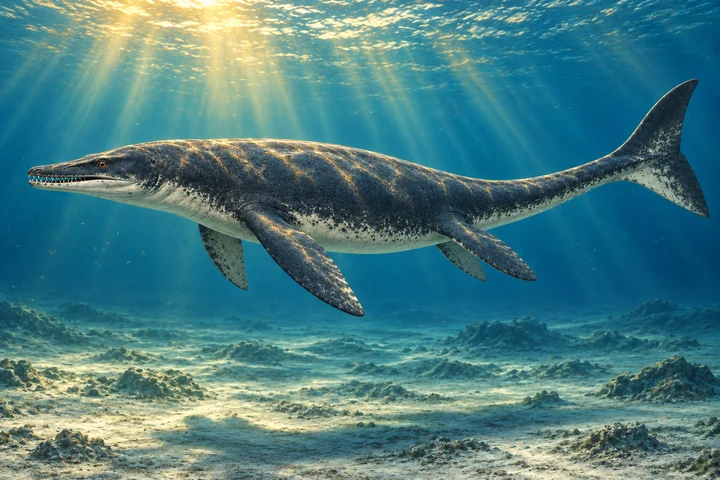
Platecarpus tympaniticus
Marine reptile
A streamlined mosasaur known from an exceptional fossil preserving skin traces and digested fish.
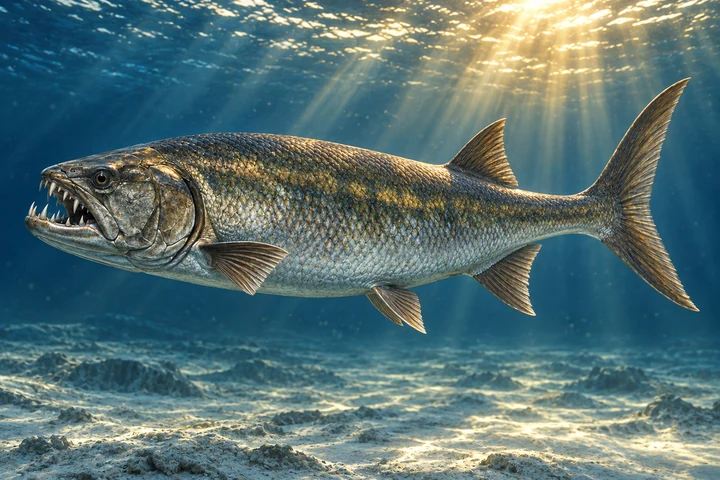
Xiphactinus audax
Prehistoric fish
A large toothed ray-finned fish, with a famous fossil preserving another fish inside it.
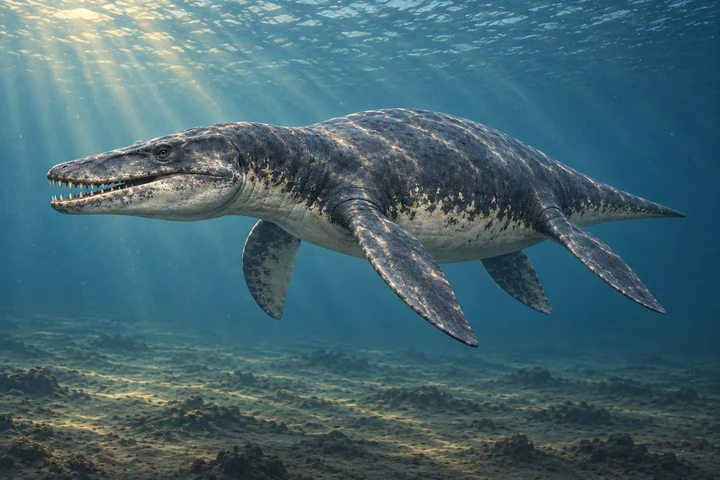
Pliosaurus kevani
Marine reptile
A large-skulled pliosaur whose Dorset holotype provides a detailed view of a Jurassic marine predator.