
Length
Inferred5.074 m (individual model)
YPM1125 reconstructed length; not an adult range. [D1]
EXHIBIT 267
Polycotylus latipinnis
Marine reptile
A short-necked plesiosaur whose pregnant fossil provides direct evidence of live birth. [3]
TWO WAYS TO PICTURE THE PAST
Compare the evidence with the familiar movie image. The illustrations are not to a shared scale.
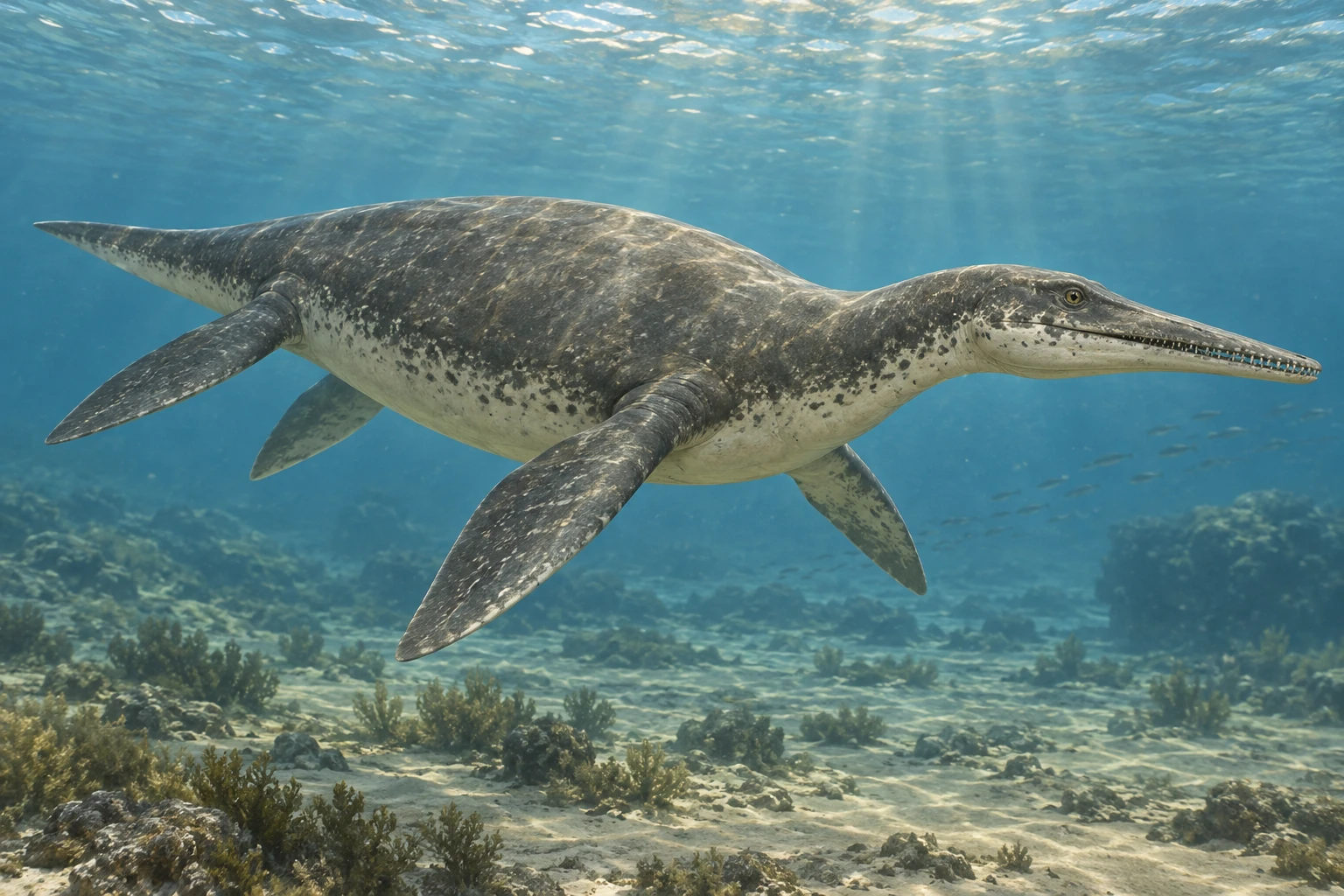
An illustrative reconstruction. Compare its anatomy with the evidence and limitations in the dossier. [2]
Source-informed reconstruction. Appearance evidence [2]. Original illustration; missing anatomy, coloration and scenery include interpretation.
Fossils constrain this life reconstruction. Missing anatomy, coloration and the environmental scene include interpretation; the dossier explains the evidence limits.
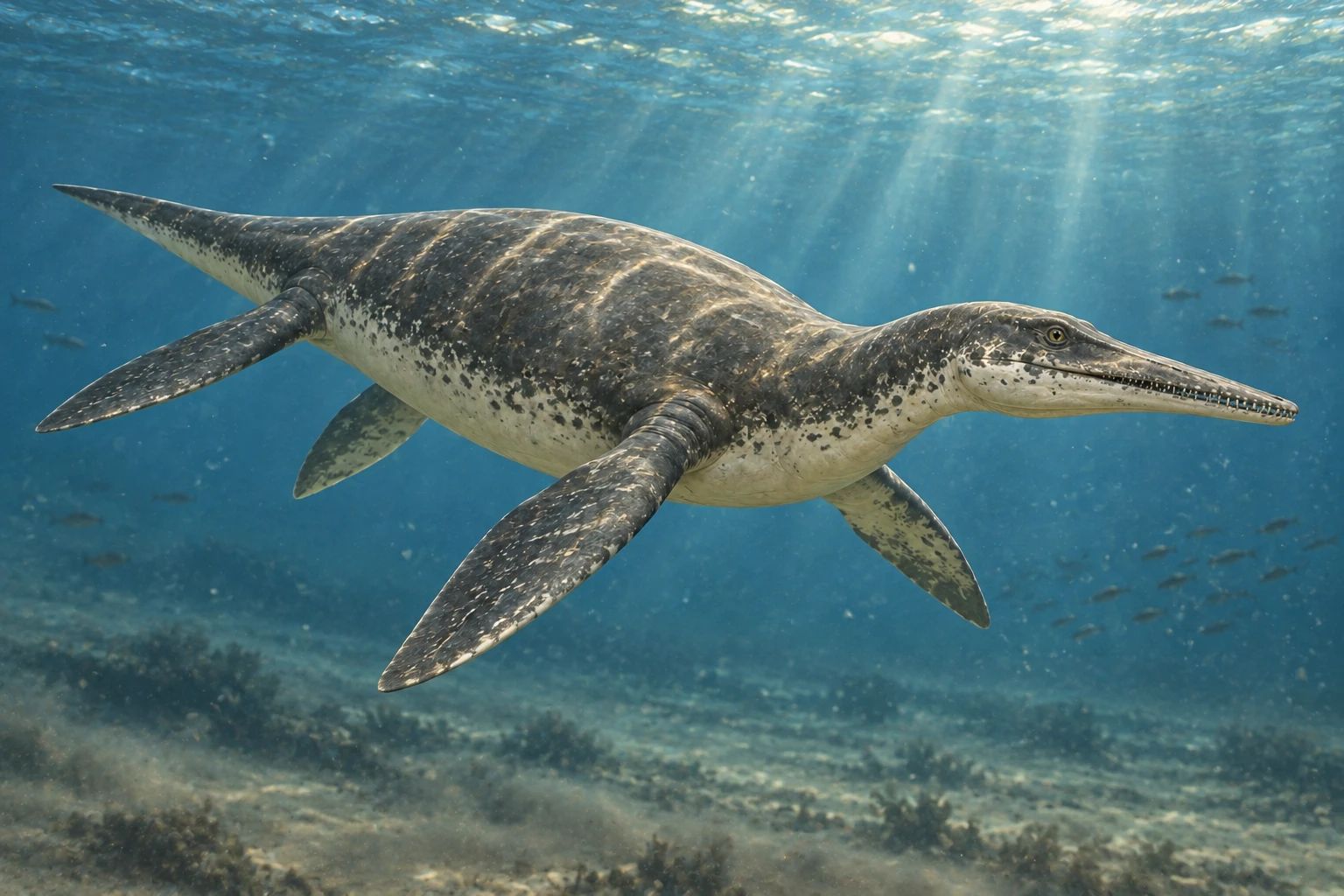
An illustrative reconstruction. Compare its anatomy with the evidence and limitations in the dossier. Lighting, coloration and scenery are artistic choices. This image does not document a fossil locality or behavior.
Original artwork · artistic interpretation.
Scientific view: source-informed reconstruction, credited paleoart or specimen-based imagery. Movie-style view: Original artistic interpretation. Reconstructions involve uncertainty.
MEET THE ANIMAL
Polycotylus was a marine reptile with long jaws, a relatively short neck and four swimming flippers. It belonged to the plesiosaurs. Comparing its skull and neck bones with other polycotylids helps researchers distinguish similar-looking animals instead of giving them all the same name. [D2]
One remarkable Kansas fossil preserves a mother and her developing young. The region was part of an ancient sea during the Late Cretaceous. This pregnancy provides direct evidence that this animal gave birth to live young rather than relying on a guessed nest. [D5]
Researchers also looked inside fossil bones. Microscopic tissue records rapid growth before birth. By comparing bones at different stages, they estimated how large the youngster might have been when born. An estimated newborn size is different from simply measuring the fetus preserved beside its mother. [D3]
That research inspired the idea that a mother may have protected a vulnerable youngster. The museum explains that the young animal’s fast-growing bones may have made swimming difficult. It is an interesting possibility, but the fossil does not show a family traveling together or a parent caring for its baby. [D4]
PREHISTORIC ANIMAL DOSSIER
The animal, the evidence, and the questions still open.
The preserved mother and fetus support live birth. Bone tissue adds growth evidence; proposed parental care remains an interpretation. [D3]
Profile scope: One genus exhibit anchored to P. latipinnis; pregnancy refers to LACM129639, while size uses a separate YPM1125 reconstruction. [D3] [D1]
Source supported identifies a description documented by the cited source. Inferred marks a reconstruction or functional estimate. Debated marks competing interpretations. Not established means the sources reviewed for this dossier do not support a firm conclusion; it does not mean a behavior never occurred.
A size reference is an estimate, not a population range. Nesting evidence does not by itself establish courtship, mate choice, or lifelong pairing.
5.074 m (individual model)
YPM1125 reconstructed length; not an adult range. [D1]
1,039 kg (individual model)
YPM1125 volumetric estimate; not measured body weight. [D1]
Animal prey
Elongate jaws and pointed teeth support predation; a complete menu is not established here. [D2]
Western Interior Seaway
The museum pregnancy fossil comes from Late Cretaceous Kansas, then covered by a sea; exact preferred depth is unknown. [D5]
Four-flipper swimming
Plesiosaur limb anatomy supports swimming; fetal bone-strength estimates do not measure swimming speed. [D4]
Long jaws, short neck and four flippers
Polycotylid comparisons distinguish its neck and skull proportions from Dolichorhynchops; the animals are not interchangeable. [D2]
Live birth
LACM129639 preserves a mother and one fetus. Estimated birth size comes from a growth comparison, not a measured newborn. [D3]
Not established here
The reviewed pregnancy and histology study supplies no observed mating display or courtship sequence. [D3]
Parental care proposed
Large offspring and fetal bone growth prompted a care hypothesis. The fossils do not directly show nursing, bonds or group living. [D4]
Sources and inspection notes for the claims in this profile.
THE STORY IN THE FOSSILS
A preserved fetus and a reconstructed birth-size estimate are different evidence. The pregnancy directly supports live-bearing; histological comparisons estimate growth and the probable size at birth. [3]
The museum’s reconstructed skeleton also required anatomical judgment. Fossil bones guide the shape, while an artist must supply contours that were not preserved. [6]
The dossier identifies the scope of each reference estimate. A mount, an individual fossil and a species-wide adult range are different measurements. Comparison metrics remain unavailable where adult scope has not been established. Unknown does not mean zero.
Sources support the stated claims and scopes. Refer to the evidence notes for uncertainty.
KEEP EXPLORING
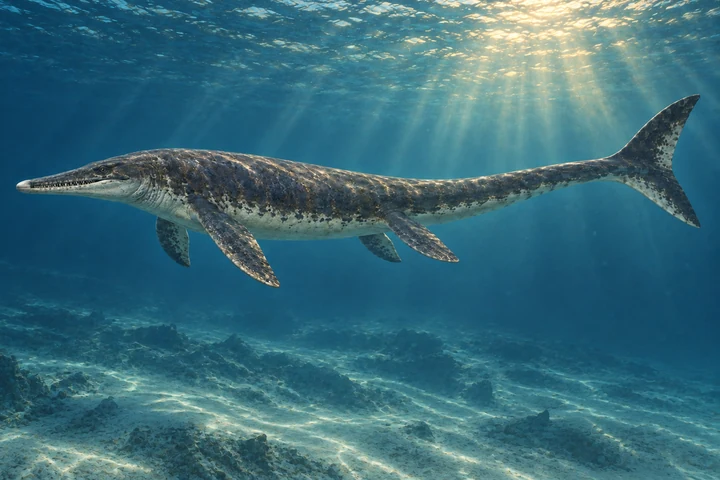
Tylosaurus proriger
Marine reptile
A marine lizard with an elongated adult snout tip, whose fossil identities are still being revised.
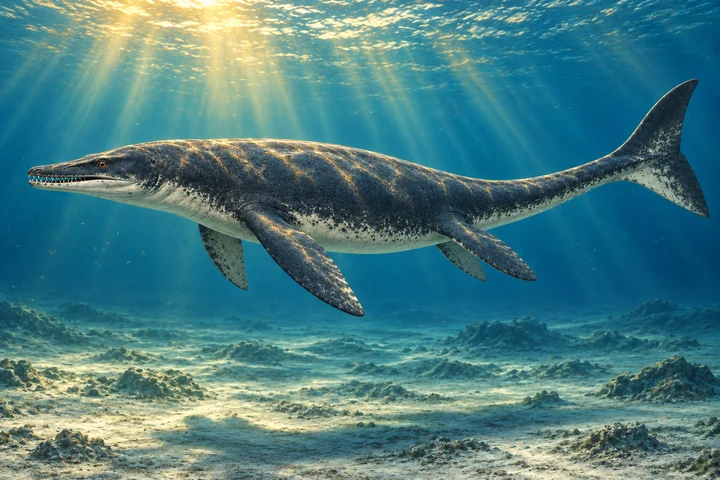
Platecarpus tympaniticus
Marine reptile
A streamlined mosasaur known from an exceptional fossil preserving skin traces and digested fish.
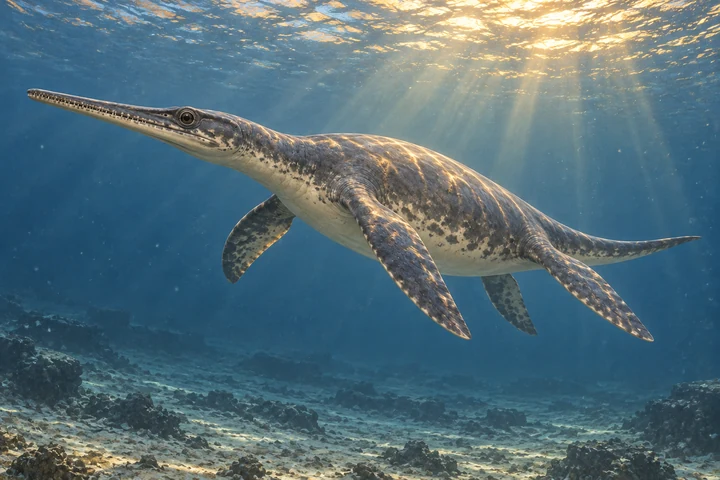
Dolichorhynchops osborni
Marine reptile
A long-snouted, short-necked plesiosaur known from Kansas marine skeletons.