
Length
Inferred3.542 m (individual model)
NHMUKPV R2860 reconstruction; not an adult range. [D1]
EXHIBIT 269
Cryptoclidus eurymerus
Marine reptile
A small-headed, long-necked plesiosaur whose flippers have been studied through detailed muscle reconstructions. [2]
TWO WAYS TO PICTURE THE PAST
Compare the evidence with the familiar movie image. The illustrations are not to a shared scale.
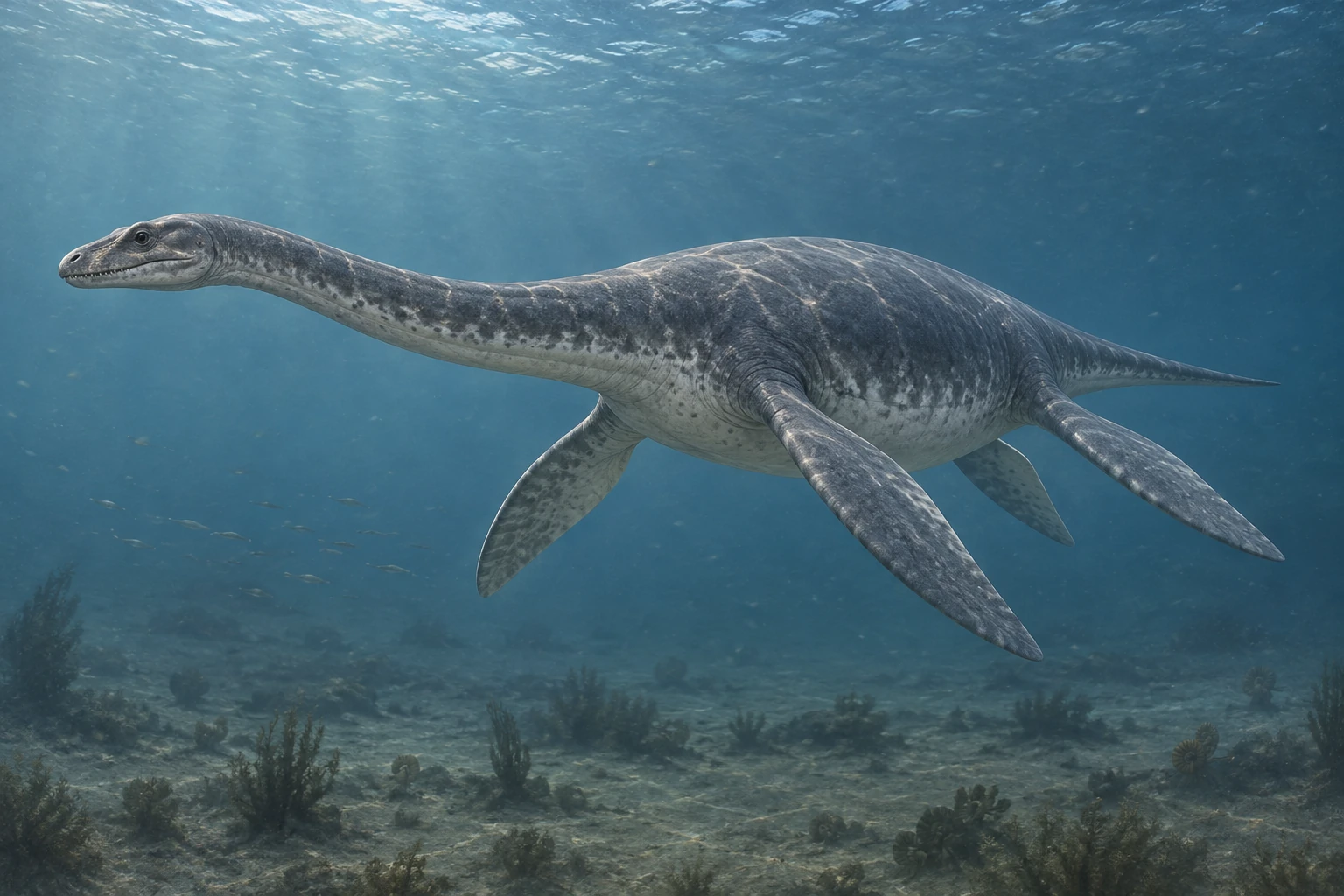
An illustrative reconstruction. Compare its anatomy with the evidence and limitations in the dossier. [3]
Source-informed reconstruction. Appearance evidence [3]. Original illustration; missing anatomy, coloration and scenery include interpretation.
Fossils constrain this life reconstruction. Missing anatomy, coloration and the environmental scene include interpretation; the dossier explains the evidence limits.
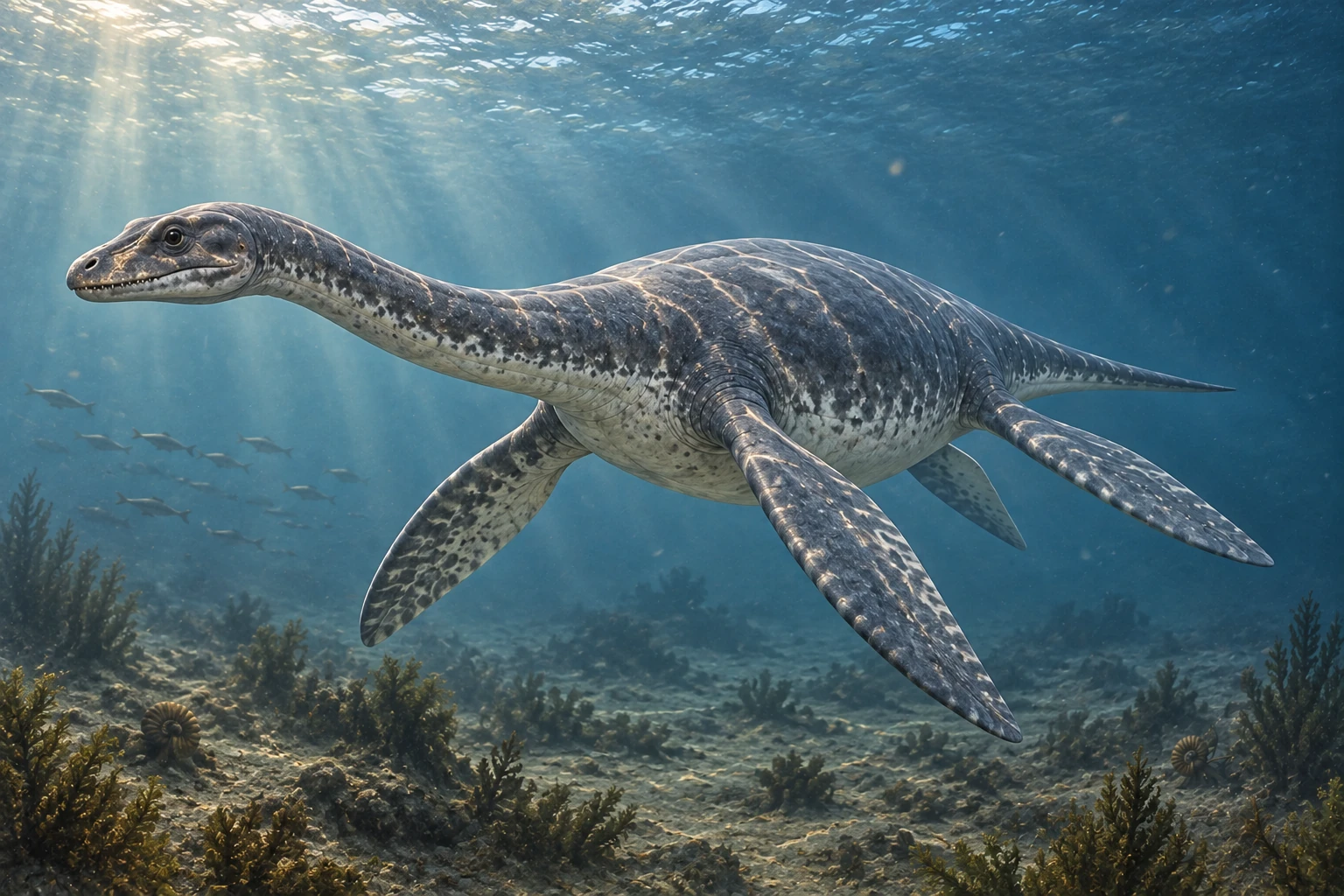
An illustrative reconstruction. Compare its anatomy with the evidence and limitations in the dossier. Lighting, coloration and scenery are artistic choices. This image does not document a fossil locality or behavior.
Original artwork · artistic interpretation.
Scientific view: source-informed reconstruction, credited paleoart or specimen-based imagery. Movie-style view: Original artistic interpretation. Reconstructions involve uncertainty.
MEET THE ANIMAL
Cryptoclidus was a plesiosaur with a small head, long neck and four flippers. Scientists have studied how muscles could move those flippers through the water. The fossils give them the bony framework, while comparisons with living animals help fill in missing muscle arrangements. [D2]
Its slender teeth provide another clue. A comparative study included Cryptoclidus teeth from Middle Jurassic Peterborough in England. Their shapes fit grasping small animal prey. Teeth can suggest a feeding method, but they do not reveal every creature the animal ate or its favorite meal. [D4]
One museum skeleton turned out to contain a surprising mistake: its front and back flipper pairs had been interchanged. Researchers compared the individual bones and traced the history of the mount to identify the problem. A convincing display still needs careful checking against the fossil anatomy. [D3]
The swimming study proposed that twisting the flippers would help them work like underwater wings. That is a model built from anatomy, not a film of the living animal. It helps explain movement while leaving other questions open. The reviewed muscle evidence cannot tell us how Cryptoclidus courted a mate or whether it traveled in social groups. [D2]
PREHISTORIC ANIMAL DOSSIER
The animal, the evidence, and the questions still open.
Bones and comparative muscle anatomy support a four-flipper swimming model. Reproduction and social behavior remain unestablished in the reviewed material. [D2]
Profile scope: One genus exhibit anchored to C. eurymerus; R2860 size, GPIT-PV-30092 mount and R8621 teeth are separate specimens. [D3] [D1] [D4]
Source supported identifies a description documented by the cited source. Inferred marks a reconstruction or functional estimate. Debated marks competing interpretations. Not established means the sources reviewed for this dossier do not support a firm conclusion; it does not mean a behavior never occurred.
A size reference is an estimate, not a population range. Nesting evidence does not by itself establish courtship, mate choice, or lifelong pairing.
3.542 m (individual model)
NHMUKPV R2860 reconstruction; not an adult range. [D1]
360 kg (individual model)
NHMUKPV R2860 volumetric estimate; not measured weight. [D1]
Small animal prey
Slender, broadly similar teeth support grasping prey; the comparative dentition does not establish a complete menu. [D4]
Jurassic English marine setting
Comparative C. eurymerus teeth are from Callovian Peterborough; the paper’s younger Corallian fossils are separate. [D4]
Four-flipper underwater flight
Reconstructed muscles could twist hydrofoil flippers through swimming strokes; speed and exact gait were not observed. [D2]
Small head, long neck, four flippers
The foreflippers and hindflippers differ; a historical museum mount accidentally interchanged these limb pairs. [D3]
Not established here
Focused searches and reviewed anatomical studies do not supply attributable eggs or a Cryptoclidus pregnancy. [D3]
Not established here
The muscle reconstruction cannot establish a courtship ritual or mating display. [D2]
Not established here
The inspected mount and preparation history do not demonstrate grouping, pair bonds or parental care. [D3]
Sources and inspection notes for the claims in this profile.
THE STORY IN THE FOSSILS
Assigning the correct limb matters to a swimming reconstruction. The Tübingen skeleton’s transposed flippers could mislead interpretation until researchers checked the distinctive forelimb and hindlimb bones. [3]
Muscle models use preserved attachment regions and living comparative anatomy. They explain a possible propulsion mechanism rather than recording a fossil swimming performance. [2]
The dossier identifies the scope of each reference estimate. A mount, an individual fossil and a species-wide adult range are different measurements. Comparison metrics remain unavailable where adult scope has not been established. Unknown does not mean zero.
Sources support the stated claims and scopes. Refer to the evidence notes for uncertainty.
KEEP EXPLORING
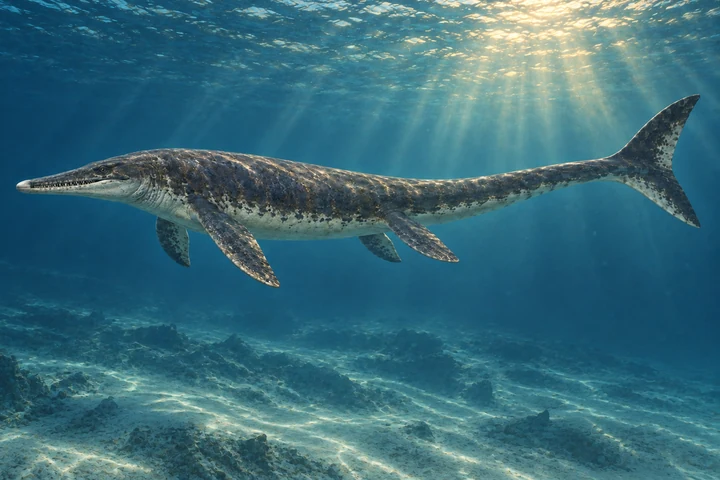
Tylosaurus proriger
Marine reptile
A marine lizard with an elongated adult snout tip, whose fossil identities are still being revised.
Platecarpus tympaniticus
Marine reptile
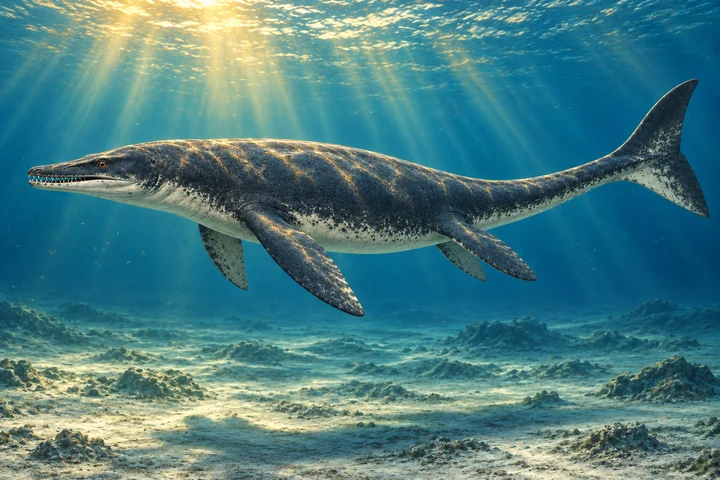
A streamlined mosasaur known from an exceptional fossil preserving skin traces and digested fish.
Pliosaurus kevani
Marine reptile
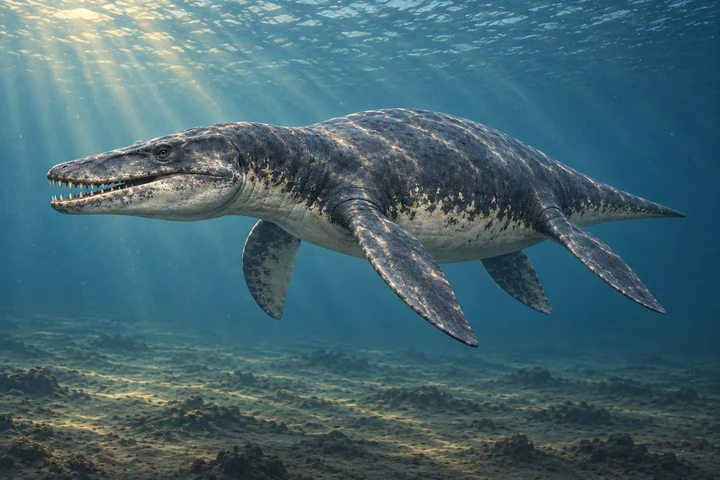
A large-skulled pliosaur whose Dorset holotype provides a detailed view of a Jurassic marine predator.