
Body length
InferredAbout 3.4 m; museum reference
NHM supplies a rounded genus reference. It does not identify a specimen or establish the entire range of body sizes. [D1]
EXHIBIT 24
Deinonychus
The raised sickle claw helped change how scientists saw dinosaurs.
TWO WAYS TO PICTURE THE PAST
Compare the evidence with the familiar movie image. The illustrations are not to a shared scale.

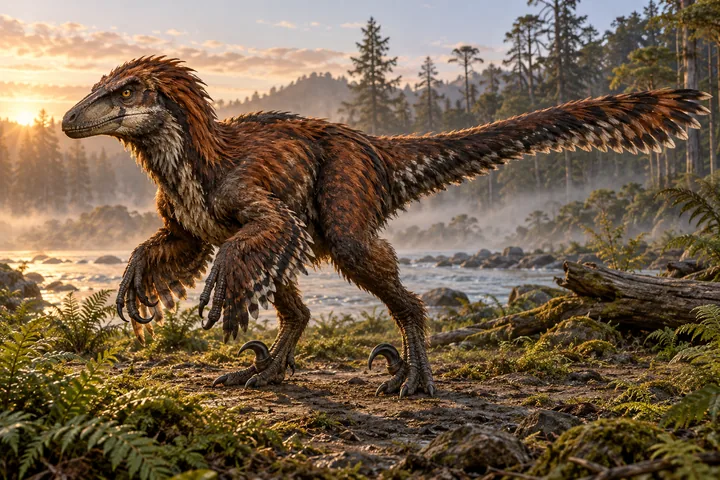
The artist identifies this reconstruction as Deinonychus antirrhopus. This view illustrates one form within the genus, rather than every species or individual. Fossil-informed anatomy: Bipedal dromaeosaur; long stiff tail, recurved teeth, enlarged raised second-toe claw. Feather covering is an inference. Feather covering is inferred from relatives; coloration is speculative. Species reconstruction represents the genus. [1] [2]
Deinonychus Restoration.png — Fred Wierum. CC BY-SA 4.0. Remote source artwork displayed without additional cropping; Wikimedia supplies any display-size derivative.
Scientific picture served by Wikimedia · internet connection required.
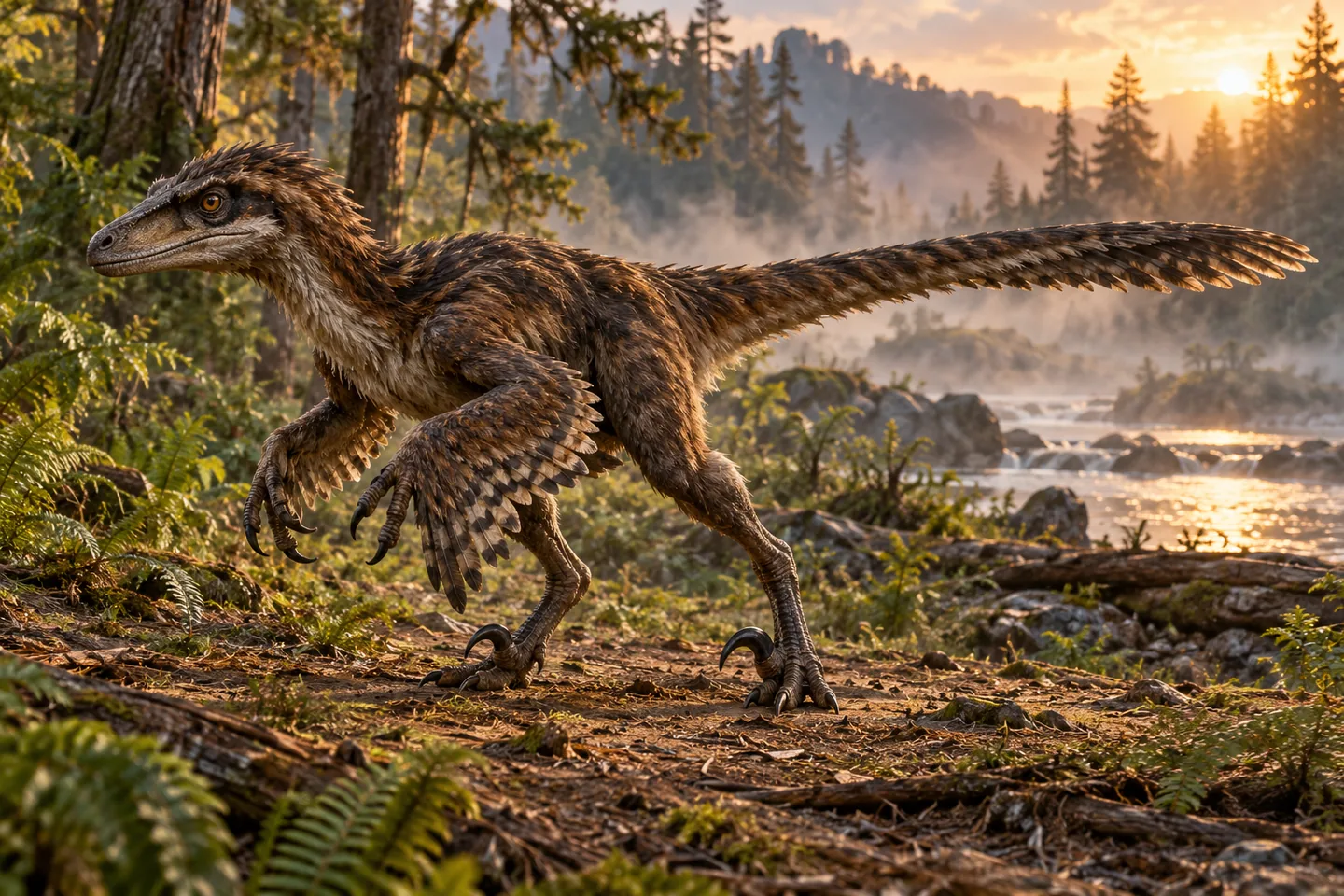
Cinematic Deinonychus with inferred feather coat, horizontal balancing tail and raised sickle toe claws; alert low stance, dramatic forest light. Dramatic lighting, surface detail and scenery are artistic choices. This is an original cinema-inspired picture, rather than a frame from a film or a documented fossil locality.
Original artwork · artistic interpretation.
Scientific view: credited paleoart interpreting fossil evidence, served online by Wikimedia. Movie-style view: Original artistic interpretation. Colors, soft tissues and settings involve reconstruction.
MEET THE ANIMAL
Deinonychus lived during the Early Cretaceous and became an important clue in understanding the connection between dinosaurs and birds. Its hands and feet had sharp claws, and its long legs and hollow bones suggested an active animal. These anatomical observations helped scientists consider a more energetic picture of predatory dinosaurs, although a skeleton alone cannot provide an exact running speed. [S1] [S2]
Feathers add another part of the modern reconstruction. A Yale museum account explains how discoveries of feathered relatives influenced an updated image of Deinonychus. This covering is an inference from related dinosaurs, rather than feathers directly preserved on the Deinonychus fossils reviewed here. The colors chosen for a painting are also artistic decisions informed by comparisons; they should not be treated as recovered original coloration. [S3]
Its social life is less securely understood. Research on Deinonychus antirrhopus compared chemical signals in teeth of different sizes and found evidence for dietary differences as animals grew. The authors used this to challenge a familiar model of parents and young hunting as a coordinated family pack. That result does not directly observe every social interaction. Courtship, nest structure and parental care remain unresolved in the reviewed evidence. [D2] [D3]
PREHISTORIC ANIMAL DOSSIER
The animal, the evidence, and the questions still open.
Deinonychus was a North American dromaeosaur with a large claw on the second toe and a stiff balancing tail. Its athletic anatomy helped change scientific views of dinosaurs, but coordinated pack hunting remains a debated interpretation.
Profile scope: Genus: Deinonychus; behavioral research here concerns D. antirrhopus.
Source supported identifies a description documented by the cited source. Inferred marks a reconstruction or functional estimate. Debated marks competing interpretations. Not established means the sources reviewed for this dossier do not support a firm conclusion; it does not mean a behavior never occurred.
A size reference is an estimate, not a population range. Nesting evidence does not by itself establish courtship, mate choice, or lifelong pairing.
About 3.4 m; museum reference
NHM supplies a rounded genus reference. It does not identify a specimen or establish the entire range of body sizes. [D1]
About 100 kg; museum estimate
This rounded museum figure has no specified specimen, life stage or estimation method. [D1]
Carnivore; vertebrate prey
NHM describes meat-eating anatomy and vertebrate prey. Particular hunting interactions and feeding strategy require additional evidence. [D1]
Early Cretaceous North America
Reviewed accounts place its fossils in North America. A genus-wide habitat preference is not established by this geographic information. [D1]
Bipedal; exact speed uncertain
Two-legged movement is supported by the skeleton. NHM notes disagreement about agility and the function of the large toe claw. [D1]
Enlarged second-toe claw; stiff balancing tail
The long stiff tail and toe claw are documented skeletal traits. Feathers are inferred from close relatives, rather than directly preserved on Deinonychus here. [D1]
Not established here
The reviewed sources do not establish taxon-specific nest structure, clutch size or parental care.
Not established here
The reviewed sources do not establish a mating ritual, pair bond or breeding season for this taxon.
Coordinated pack hunting remains debated
D. antirrhopus associations with possible prey prompted pack-hunting proposals. Age-related dietary differences from isotope research challenge dog-like family packs, without directly observing every social interaction. [D2] [D3]
Sources and inspection notes for the claims in this profile.
THE STORY IN THE FOSSILS
The enlarged claw on each second toe was carried clear of the ground. A long, stiff tail helped counterbalance the animal, while backward-curving teeth suited feeding on other vertebrates. These features made Deinonychus an unusually influential subject for studies of dinosaur activity. [1]
John Ostrom named Deinonychus in 1969 after discoveries in Montana. His anatomical work contributed to the dinosaur renaissance: a shift toward viewing dinosaurs as active animals. The original description places this carnivore in the Early Cretaceous Cloverly Formation of Montana. [1] [2]
We have not established a comparable adult total-length estimate for this taxon in this draft. Specimen measurements in the text describe those individuals. The cited dates are approximately 115–108 million years ago. Approximate museum catalogue reference interval for the genus, not an exact duration for every species. Unknown does not mean zero.
Sources and evidence notes for this exhibit.
KEEP EXPLORING
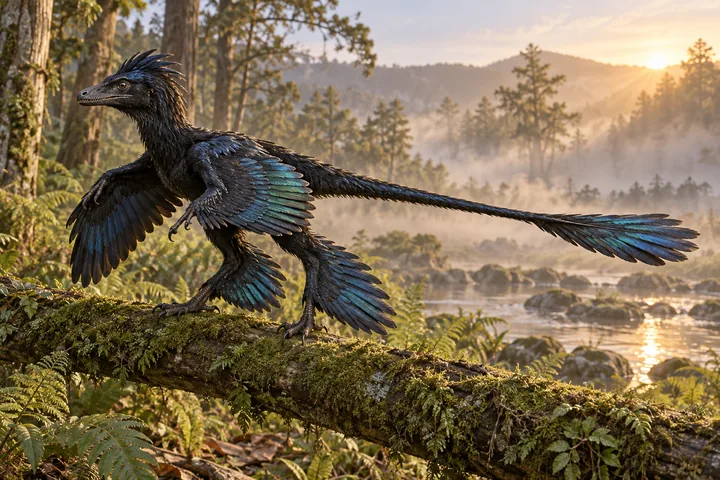
Microraptor
Flight feathers grew on its hind legs as well as its arms.
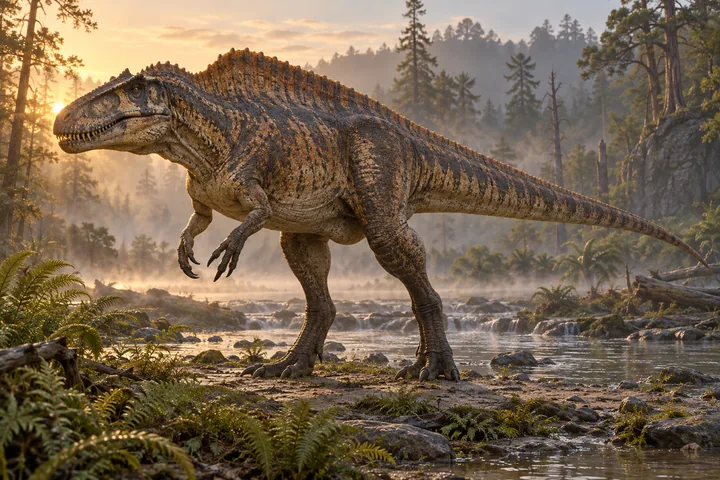
Acrocanthosaurus
Acrocanthosaurus carried unusually tall spines on its back, hip and tail vertebrae.