
Body length
InferredAbout 5.5 m; museum reference
NHM gives this rounded genus reference. The entry does not associate it with one measured specimen or a biological size distribution. [D1]
EXHIBIT 25
Utahraptor
A stocky giant among the sickle-clawed dromaeosaurs.
TWO WAYS TO PICTURE THE PAST
Compare the evidence with the familiar movie image. The illustrations are not to a shared scale.

The source uses the historical spelling Utahraptor ostrommaysorum; the current name used here is Utahraptor ostrommaysi. This reconstruction illustrates the genus. Fossil-informed anatomy: Robust bipedal dromaeosaur with toothed jaws and enlarged second-toe claws; show plausible inferred feathers. Feather covering is inferred from relatives; coloration and some body proportions are interpretive. Species reconstruction represents the genus. [1] [2] [3]
Utahraptor Restoration.png — Fred Wierum. CC BY-SA 4.0. Remote source artwork displayed without additional cropping; Wikimedia supplies any display-size derivative.
Scientific picture served by Wikimedia · internet connection required.
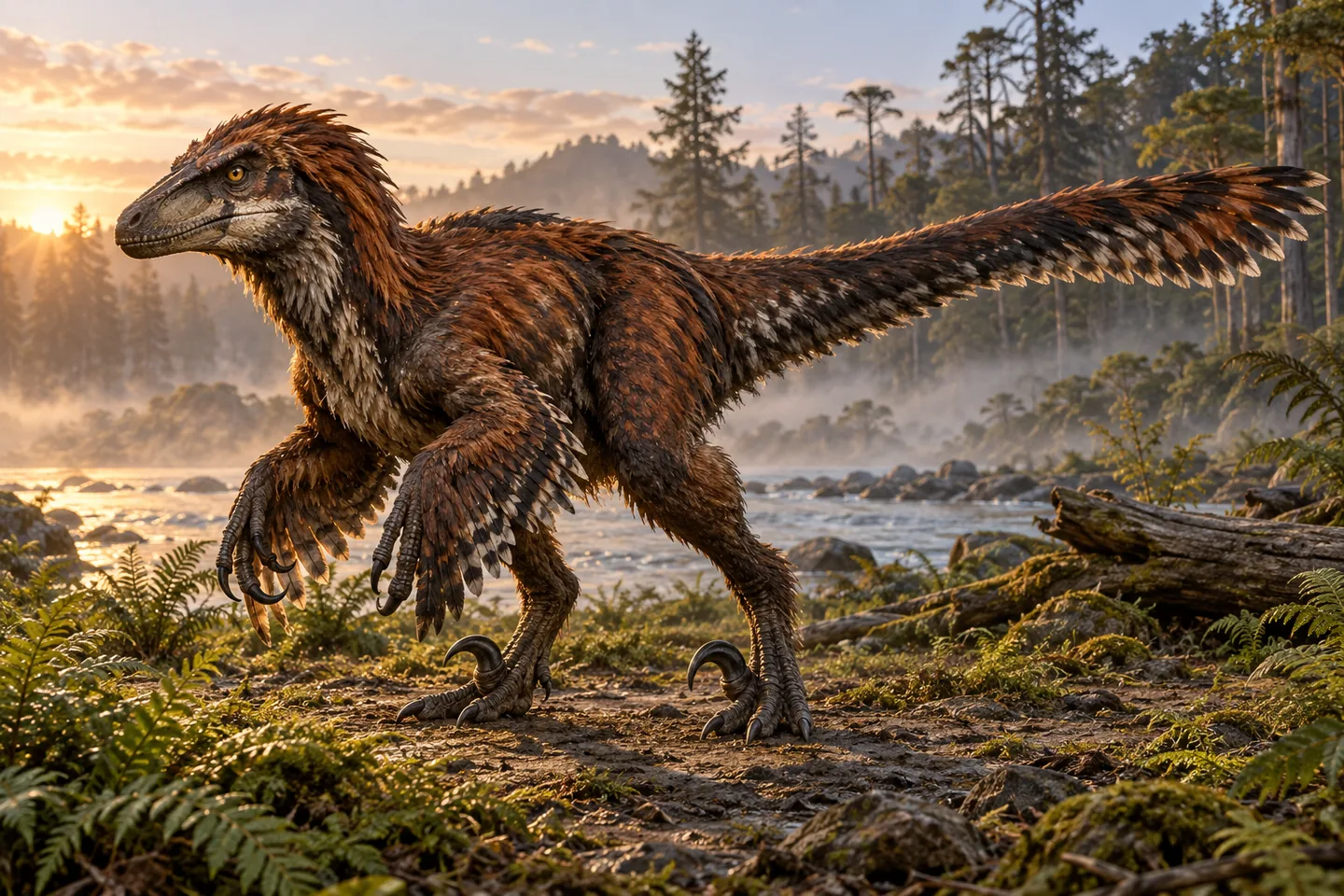
Cinematic stocky Utahraptor, feathered by inference, heavy legs and raised sickle toe claws; solitary imposing silhouette in Early Cretaceous terrain. Dramatic lighting, surface detail and scenery are artistic choices. This is an original cinema-inspired picture, rather than a frame from a film or a documented fossil locality.
Original artwork · artistic interpretation.
Scientific view: credited paleoart interpreting fossil evidence, served online by Wikimedia. Movie-style view: Original artistic interpretation. Colors, soft tissues and settings involve reconstruction.
MEET THE ANIMAL
Utahraptor was a large meat-eating dinosaur from the Early Cretaceous of Utah. Its fossils occur in the Cedar Mountain Formation near Moab. It belonged to the dromaeosaur family, recognized for an enlarged sickle-shaped claw on each foot. Finding such a large and early member broadened researchers' understanding of this group beyond the smaller, later animals that had previously been familiar. [S1]
The fossils come from a place whose environment has changed greatly. A museum account reconstructs ancient Grand County with conifer trees, ferns and braided streams, rather than today's desert landscape. It also describes how a partial skeleton discovered in 1991, together with a new look at older finds, led to naming Utahraptor in 1993. Reexamining earlier material can be as important as finding new bones. [S2]
The foot claw provides strong evidence for a distinctive predatory tool, while its exact use still requires interpretation. Museum references communicate a very large animal for its family, but a reconstruction is not a measured size range for all adults. Claims about a specific attack, coordinated hunting group or parenting routine need additional evidence. Those details, along with courtship and nesting, remain unresolved in the sources reviewed here. [S1]
PREHISTORIC ANIMAL DOSSIER
The animal, the evidence, and the questions still open.
Utahraptor was a large, stocky dromaeosaur from Utah with a distinctive sickle-shaped toe claw. A sandstone megablock preserves individuals of several sizes alongside herbivorous dinosaurs, providing valuable evidence of a trapping event.
Profile scope: Genus: Utahraptor; named species U. ostrommaysi.
Source supported identifies a description documented by the cited source. Inferred marks a reconstruction or functional estimate. Debated marks competing interpretations. Not established means the sources reviewed for this dossier do not support a firm conclusion; it does not mean a behavior never occurred.
A size reference is an estimate, not a population range. Nesting evidence does not by itself establish courtship, mate choice, or lifelong pairing.
About 5.5 m; museum reference
NHM gives this rounded genus reference. The entry does not associate it with one measured specimen or a biological size distribution. [D1]
About 350 kg; NHM reference estimate
NHM supplies 350 kg, while UGS offers a looser estimate of perhaps half a ton. Different educational estimates should not be mistaken for a measured mass range. [D1] [D2]
Carnivore; dinosaur prey possible
Meat-eating anatomy is documented. UGS interprets the Stikes association as Utahraptor approaching trapped iguanodonts, a reconstruction rather than direct observation. [D1] [D2]
Cedar Mountain Formation, Utah
UGS documents fossils from basal Cedar Mountain rocks and a quicksand-like dewatering trap. This depositional setting does not imply all Utahraptor lived in swamps. [D2]
Bipedal; stocky build
NHM describes two-legged movement and a heavy build. It cautions that high speed or powerful jumping cannot simply be assumed from smaller relatives. [D1]
Sickle toe claw; inferred feather covering
The toe claw is documented; NHM explicitly notes the absence of direct feather evidence for Utahraptor. Plumage is inferred from its relatives. [D1] [D2]
Not established here
The reviewed sources do not establish taxon-specific nest structure, clutch size or parental care.
Not established here
The reviewed sources do not establish a mating ritual, pair bond or breeding season for this taxon.
Aggregation; coordinated hunting unproven
UGS reports babies, juveniles and adults together and discusses possible packs. A common death trap can accumulate multiple animals, so shared burial does not settle coordinated hunting. [D2]
Sources and inspection notes for the claims in this profile.
THE STORY IN THE FOSSILS
Utahraptor was heavier in build than many of its slender dromaeosaur relatives. The Natural History Museum of Utah describes adults at around 6.1 metres long. That museum estimate provides useful scale, but it does not establish a measured range across adult animals. [1] [3]
The Utah Geological Survey is preparing a large sandstone block from Stikes Quarry containing baby, juvenile and adult Utahraptor remains. Researchers interpret the site as a quicksand-like trap that also caught plant-eating dinosaurs. Its crowded bones offer information about growth and fossil accumulation. [2]
Approximate adult museum reference, not a biological range. The cited dates are approximately 139–135 million years ago. The NHM catalogue gives approximately 139–135 Ma; the cited NHMU educational page uses an older approximately 125 Ma estimate. Unknown does not mean zero.
Sources and evidence notes for this exhibit.
KEEP EXPLORING
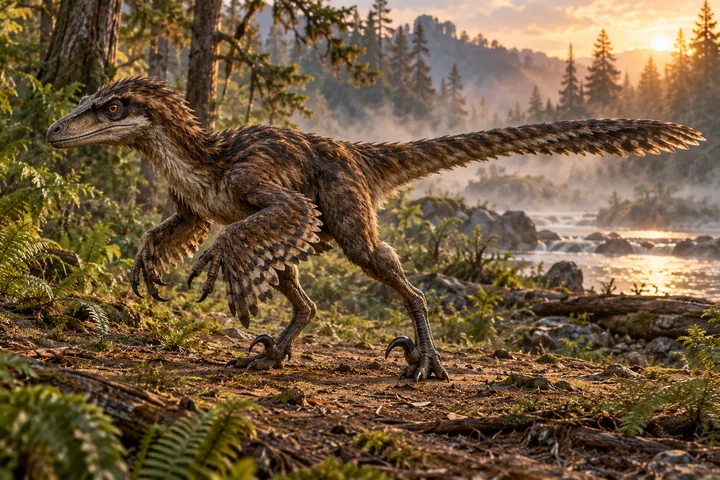
Deinonychus
The raised sickle claw helped change how scientists saw dinosaurs.
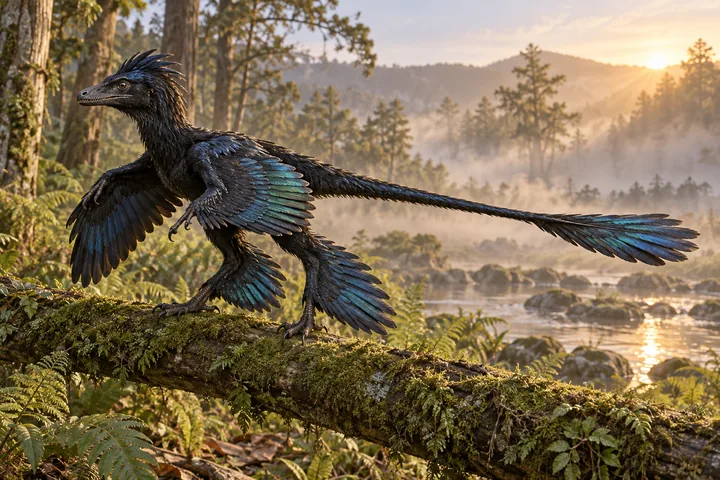
Microraptor
Flight feathers grew on its hind legs as well as its arms.
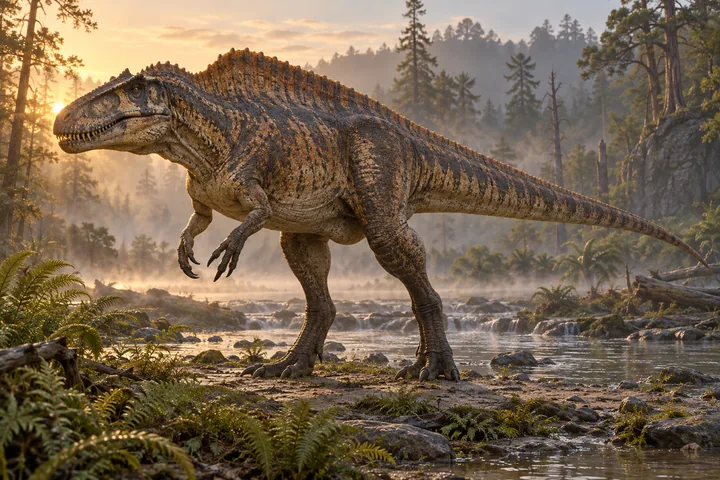
Acrocanthosaurus
Acrocanthosaurus carried unusually tall spines on its back, hip and tail vertebrae.