
Length
InferredCarapace estimated at 2.0 m
Holotype FCG-CBP01 preserves 1.66 m of carapace;2.0 m estimates the complete shell, not head-to-tail length. [D1]
TWO WAYS TO PICTURE THE PAST
Compare the evidence with the familiar movie image. The illustrations are not to a shared scale.
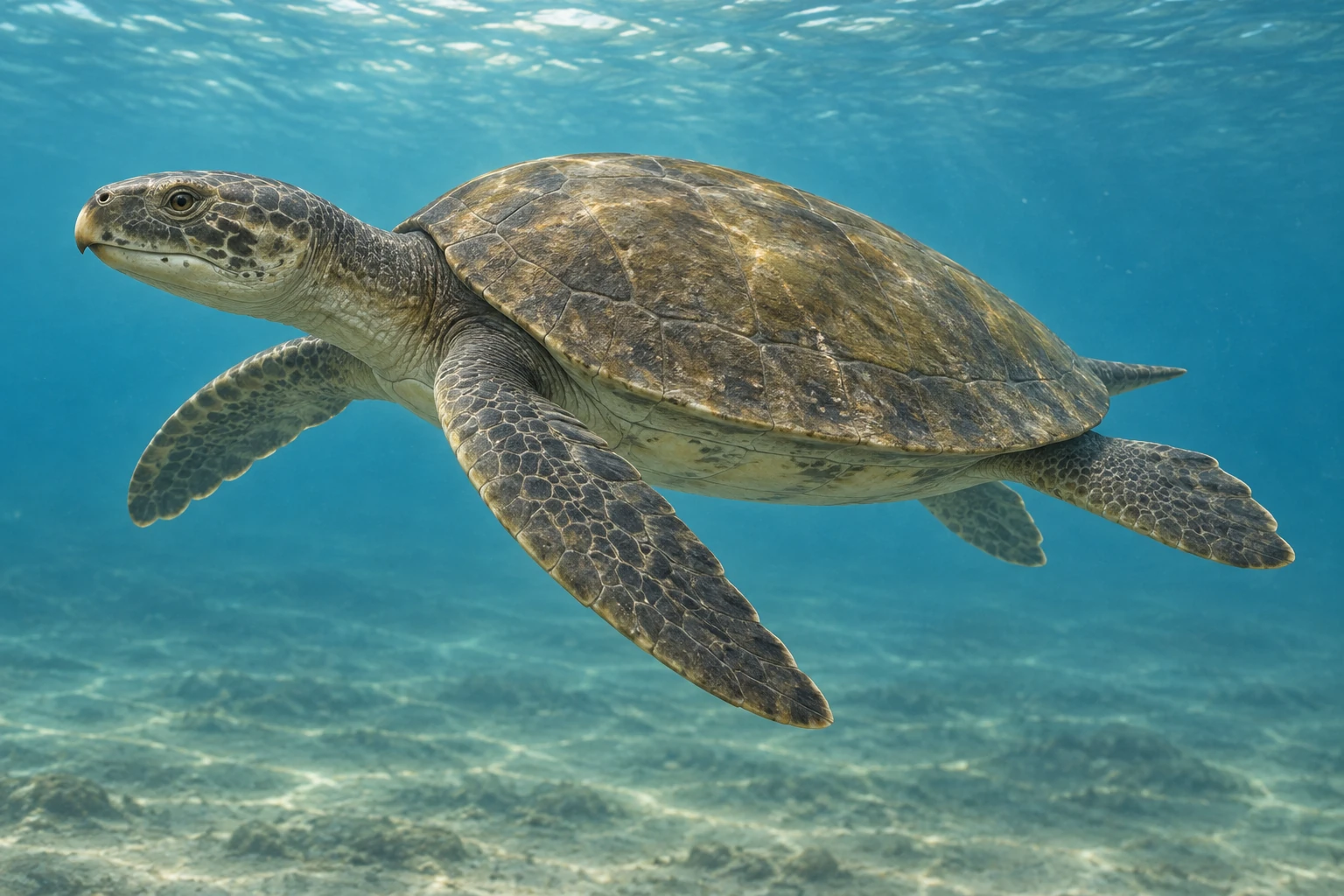
An illustrative reconstruction. Compare its anatomy with the evidence and limitations in the dossier. [1]
Source-informed reconstruction. Appearance evidence [1]. Original illustration; missing anatomy, coloration and scenery include interpretation.
Fossils constrain this life reconstruction. Missing anatomy, coloration and the environmental scene include interpretation; the dossier explains the evidence limits.
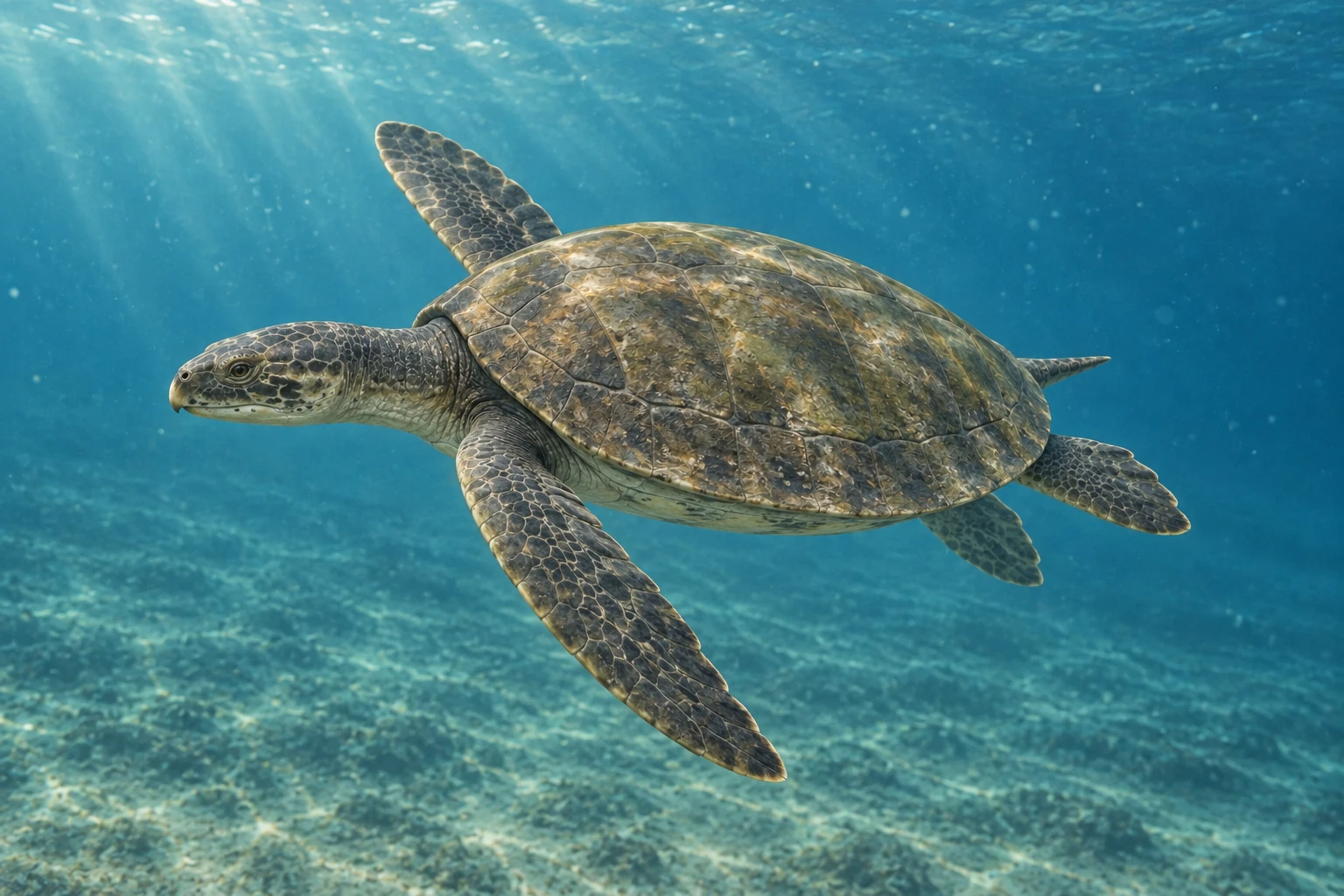
An illustrative reconstruction. Compare its anatomy with the evidence and limitations in the dossier. Lighting, coloration and scenery are artistic choices. This image does not document a fossil locality or behavior.
Original artwork · artistic interpretation.
Scientific view: source-informed reconstruction, credited paleoart or specimen-based imagery. Movie-style view: Original artistic interpretation. Reconstructions involve uncertainty.
MEET THE ANIMAL
Desmatochelys padillai was an Early Cretaceous marine turtle from Colombia. Its large shell and paddle-like front limbs show a body suited to water. The best-known shell preserves 1.66 meters of length, with the complete carapace estimated at 2.0 meters. That number measures the shell, not the whole animal from head to tail. [D1]
An especially useful fossil preserved eggs inside a female. Researchers counted at least 48 spherical eggs and found that their shells were rigid. The fossil directly shows egg production, but it is not a nest. It cannot tell us the exact beach, hatching success or parental behavior. [D2]
Its scientific identity also needs care. Another species, Desmatochelys lowii, lived much later. Researchers compare the two, but uncertain family relationships do not make their evidence interchangeable. A skull feature or size estimate from one species should not automatically become a fact about the other. [D3]
Older museum material helped the 2015 team recognize D. padillai when more complete fossils became available. That shows why collections matter: a bone stored for decades may become informative when researchers find a missing comparison. New discoveries can improve the interpretation of fossils already in a drawer. [D4]
PREHISTORIC ANIMAL DOSSIER
The animal, the evidence, and the questions still open.
The two named species are retained in Desmatochelys, while their relationships and species-specific evidence require careful comparison. [D3]
Profile scope: Genus exhibit represented by D. padillai; catalog period and region refer only to this species, not the full genus. Shell dimensions concern FCG-CBP01 and eggs concern FCG-CBP75. [D1] [D2]
Source supported identifies a description documented by the cited source. Inferred marks a reconstruction or functional estimate. Debated marks competing interpretations. Not established means the sources reviewed for this dossier do not support a firm conclusion; it does not mean a behavior never occurred.
A size reference is an estimate, not a population range. Nesting evidence does not by itself establish courtship, mate choice, or lifelong pairing.
Carapace estimated at 2.0 m
Holotype FCG-CBP01 preserves 1.66 m of carapace;2.0 m estimates the complete shell, not head-to-tail length. [D1]
Not established here
The reviewed comparative study supplies no reliable D. padillai body-mass range. [D3]
Not established here
The reviewed comparisons establish skull identity, not a D. padillai menu. [D3]
Marine; Paja Formation fossils
Colombian material comes from Early Cretaceous marine deposits; exact preferred depth is unestablished. [D1]
Paddle-limb swimming
Preserved front limbs are paddle-like; swimming function follows anatomy, while complete soft outlines remain reconstructed. [D1]
Large shell and robust front paddles
The holotype includes skull, jaw, cervical vertebrae, front-limb bones and nearly complete carapace; most finger bones are missing. [D1]
Direct evidence of eggs
Gravid FCG-CBP75 contains at least 48 spherical, rigid-shelled eggs,32.2–42.8 mm across. This is not a laid nest or observed hatching event. [D2]
Not established here
The gravid fossil establishes egg production, not mate selection or courtship. [D2]
Not established here
Eggs inside one turtle do not establish nesting colonies, parental care or social groups. [D2]
Sources and inspection notes for the claims in this profile.
THE STORY IN THE FOSSILS
Stored specimens can gain new meaning when better fossils arrive. Colombian turtle material collected decades earlier helped researchers recognize the new species after additional finds supplied skulls and shells. The 2015 institutional account emphasizes both old collections and new fieldwork. A species description can therefore connect several discoveries rather than begin with a single spectacular skeleton. [4]
A later specimen answered another question: what eggs did this marine turtle produce? CT scans counted eggs inside the shell, and microscopy showed a rigid eggshell structure. The researchers discussed nesting-environment explanations, but the fossil does not preserve the place where those eggs would have been laid. [2]
The dossier identifies the scope of each reference estimate. A mount, an individual fossil and a species-wide adult range are different measurements. Comparison metrics remain unavailable where adult scope has not been established. Unknown does not mean zero.
Sources support the stated claims and scopes. Refer to the evidence notes for uncertainty.
KEEP EXPLORING
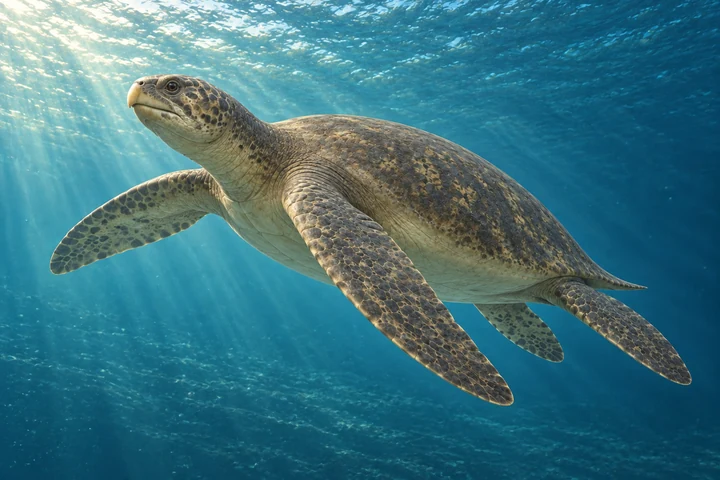
Protostega gigas
Marine turtle
A giant Late Cretaceous marine turtle with large front flippers and a reduced bony shell.
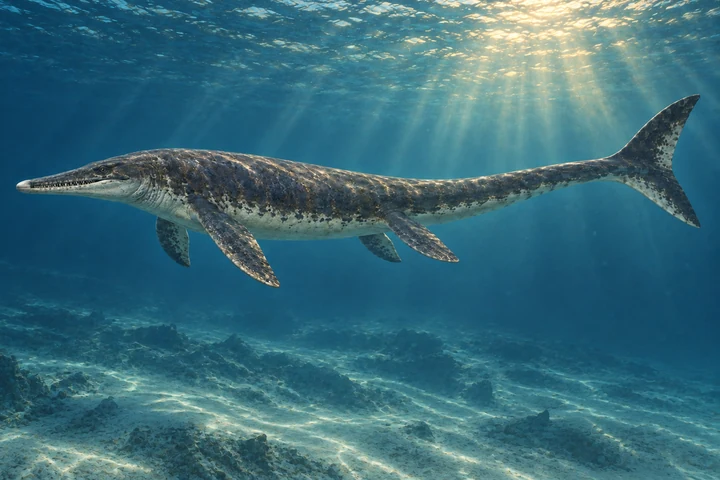
Tylosaurus proriger
Marine reptile
A marine lizard with an elongated adult snout tip, whose fossil identities are still being revised.
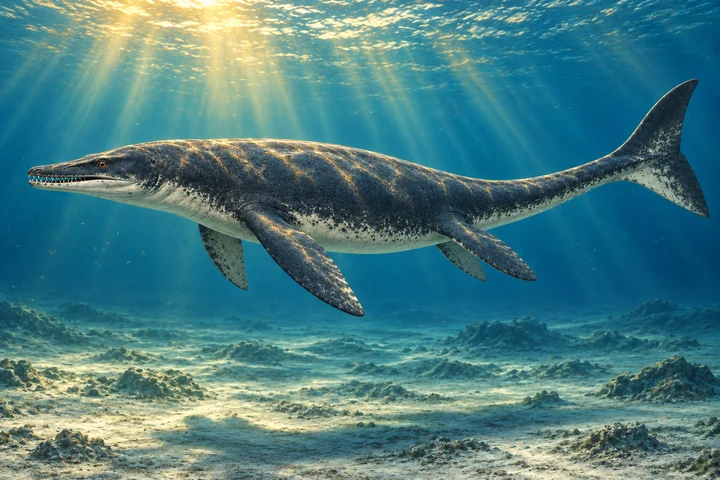
Platecarpus tympaniticus
Marine reptile
A streamlined mosasaur known from an exceptional fossil preserving skin traces and digested fish.