
Length
Inferred3.4 m body; 4.7 m span (reference)
Reconstructed DMNH1999 dimensions cited in 2023; not an adult range or carapace-only length. [D1]
TWO WAYS TO PICTURE THE PAST
Compare the evidence with the familiar movie image. The illustrations are not to a shared scale.
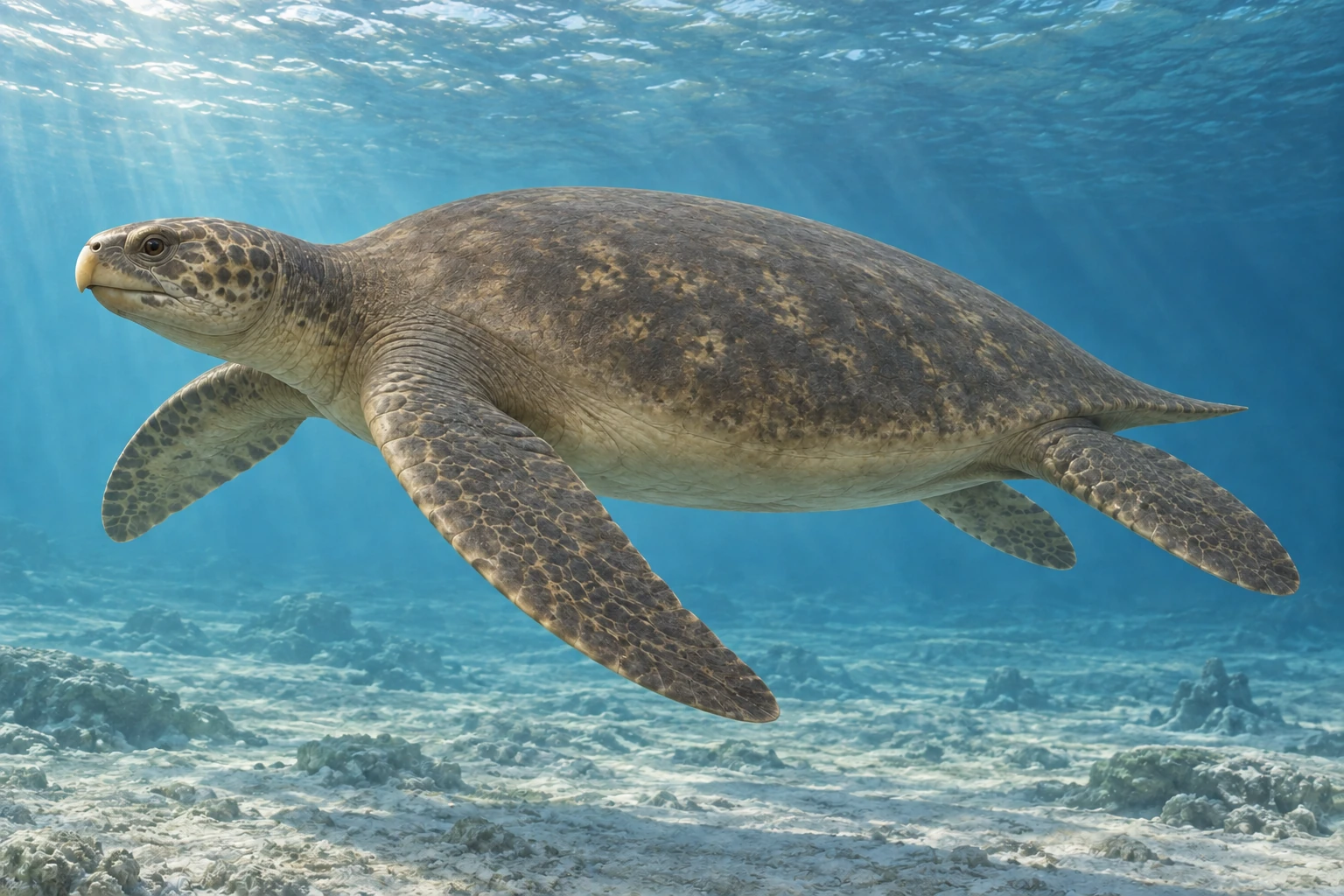
An illustrative reconstruction. Compare its anatomy with the evidence and limitations in the dossier. [2]
Source-informed reconstruction. Appearance evidence [2]. Original illustration; missing anatomy, coloration and scenery include interpretation.
Fossils constrain this life reconstruction. Missing anatomy, coloration and the environmental scene include interpretation; the dossier explains the evidence limits.
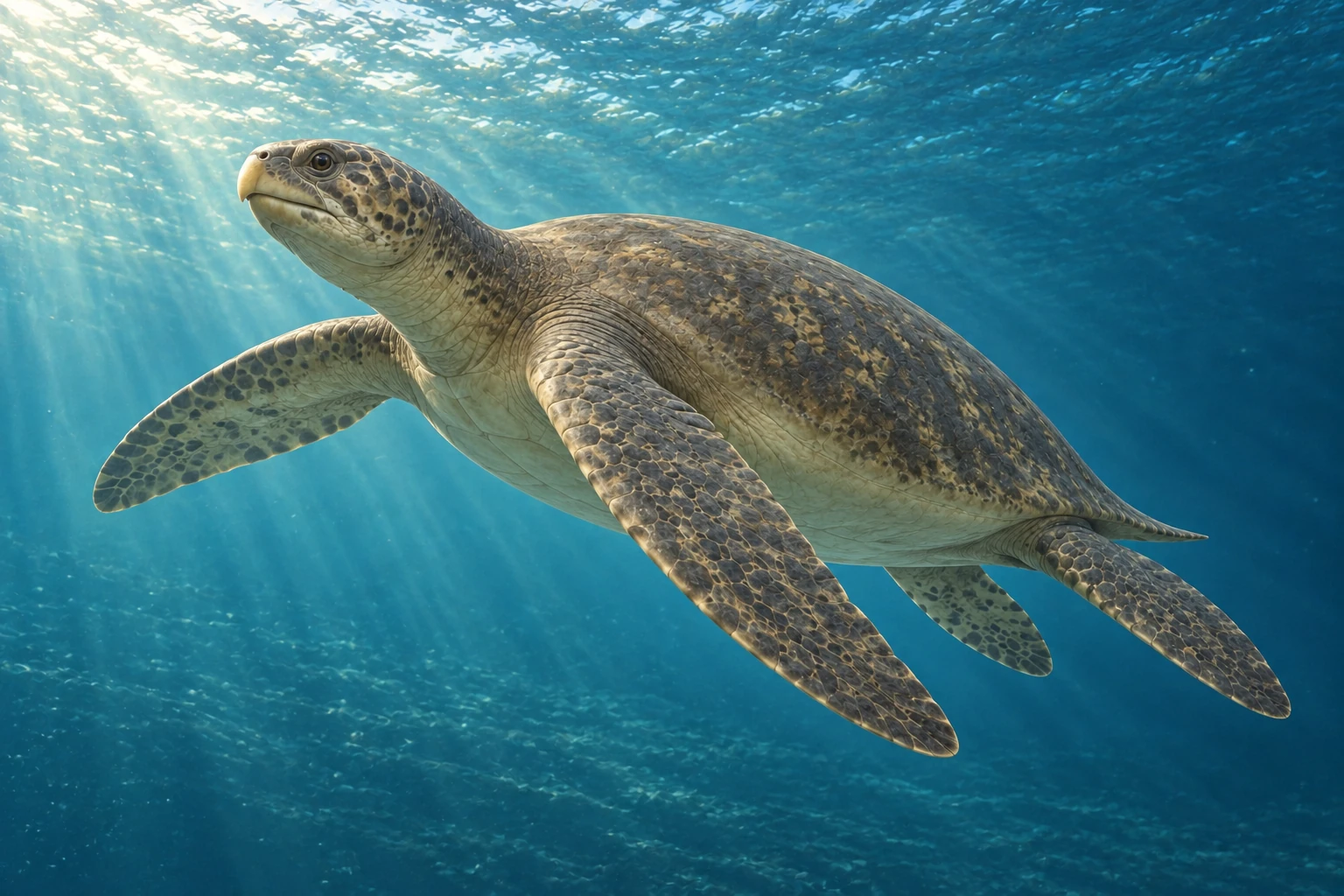
An illustrative reconstruction. Compare its anatomy with the evidence and limitations in the dossier. Lighting, coloration and scenery are artistic choices. This image does not document a fossil locality or behavior.
Original artwork · artistic interpretation.
Scientific view: source-informed reconstruction, credited paleoart or specimen-based imagery. Movie-style view: Original artistic interpretation. Reconstructions involve uncertainty.
MEET THE ANIMAL
Protostega gigas was a giant marine turtle, not a dinosaur. A reference described in a modern study has an estimated body length of 3.4 meters and flipper span of 4.7 meters. Those measurements refer to a particular reconstruction, not the size of every adult. [D1]
Its swimming equipment included long front flippers and smaller rear flippers. Original skeletal descriptions also show a reduced bony shell. Researchers reconstruct the missing soft coverings around that framework. Bones explain much of its shape, but they do not preserve every surface detail or its actual colors. [D2]
Several museums help tell its story. Baylor’s Texas specimen was discovered in 1971, and recovering it took almost two years. McWane displays Protostega among animals of ancient Alabama seas. These records remind us that places now far from the ocean once held marine life. [D3] [D4]
A museum display and a research measurement answer different questions. McWane gives dimensions for its exhibited turtle. A display’s figures should not become a supposed adult range. Keeping the individual and the measurement clear makes a giant animal easier to understand. [D4]
PREHISTORIC ANIMAL DOSSIER
The animal, the evidence, and the questions still open.
Original skeletal descriptions and modern bone histology provide different, complementary views of this marine turtle. [D2] [D1]
Profile scope: Genus represented by P. gigas; DMNH1999 reconstruction differs from growth-study individuals. [D1]
Source supported identifies a description documented by the cited source. Inferred marks a reconstruction or functional estimate. Debated marks competing interpretations. Not established means the sources reviewed for this dossier do not support a firm conclusion; it does not mean a behavior never occurred.
A size reference is an estimate, not a population range. Nesting evidence does not by itself establish courtship, mate choice, or lifelong pairing.
3.4 m body; 4.7 m span (reference)
Reconstructed DMNH1999 dimensions cited in 2023; not an adult range or carapace-only length. [D1]
Not established here
Body mass not estimated. [D1]
Not established here
The inspected skull description establishes a beak, without a direct meal or complete menu. [D2]
Marine North America
Records include the Western Interior Seaway and Atlantic Coastal Plain; preferred depth is unresolved. [D1]
Flipper-powered swimming
Forelimb and hindlimb paddle anatomy supports marine swimming; speed and stroke frequencies are not preserved. [D2]
Reduced shell and four flippers
Large forelimb paddles, shorter hind flippers and reduced bony shell characterize the described remains; soft shell coverings are reconstructed. [D2]
Not established here
No attributed eggs or gravid fossils; turtle nesting comparisons remain unconfirmed. [D1]
Not established here
Growth histology does not reveal mating displays. [D1]
Not established here
The reviewed material does not demonstrate group living, bonds or parental care. [D2]
Sources and inspection notes for the claims in this profile.
THE STORY IN THE FOSSILS
A fossil discovery can become a long excavation. Baylor records that its Texas Protostega was found in 1971 and took almost two years to recover. The museum specimen makes a vanished marine environment tangible, but its story belongs to that particular discovery rather than every member of the genus. [3]
Wieland’s original osteology compared skulls, shells and flipper bones from multiple skeletons. That work preserved anatomical observations that later researchers could revisit. [2]
Modern studies ask another question by examining microscopic bone tissue: how did a giant marine turtle grow? The evidence and the question must stay connected. [1]
The dossier identifies the scope of each reference estimate. A mount, an individual fossil and a species-wide adult range are different measurements. Comparison metrics remain unavailable where adult scope has not been established. Unknown does not mean zero.
Sources support the stated claims and scopes. Refer to the evidence notes for uncertainty.
KEEP EXPLORING
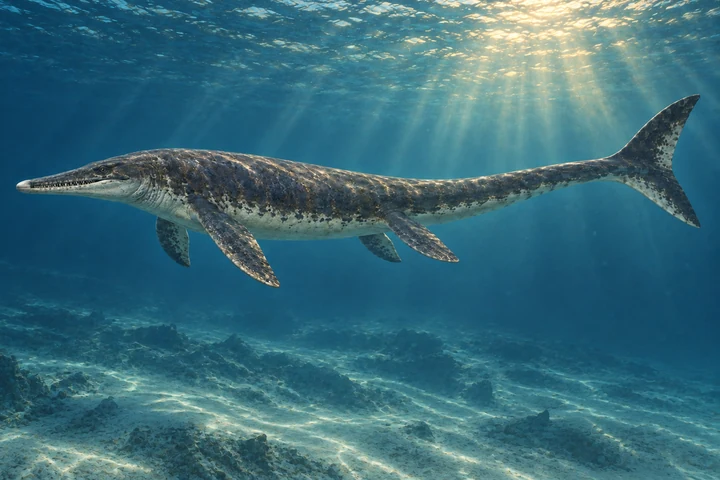
Tylosaurus proriger
Marine reptile
A marine lizard with an elongated adult snout tip, whose fossil identities are still being revised.
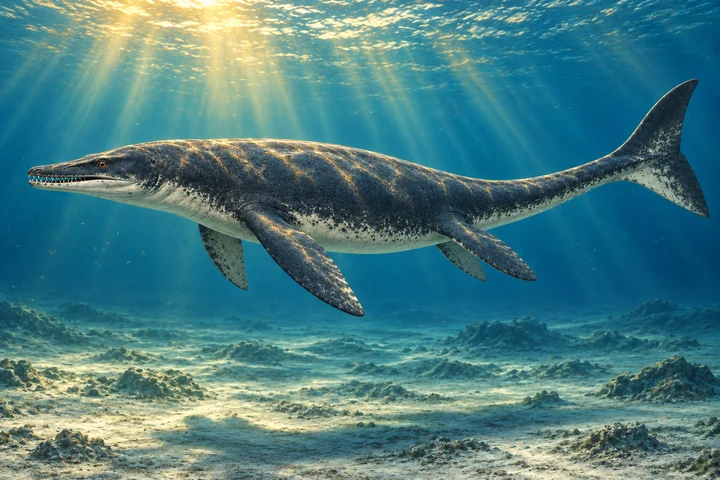
Platecarpus tympaniticus
Marine reptile
A streamlined mosasaur known from an exceptional fossil preserving skin traces and digested fish.
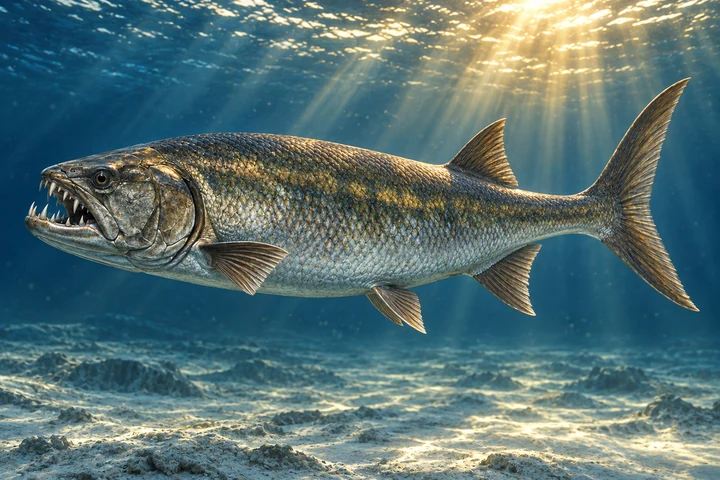
Xiphactinus audax
Prehistoric fish
A large toothed ray-finned fish, with a famous fossil preserving another fish inside it.