
Body length
InferredAbout 1.8 m (museum reference)
The museum gives a rounded educational reference, without a named size model or adult-maturity basis. It is not a verified maximum. [D1]
EXHIBIT 120
Dromaeosaurus albertensis
Dromaeosaurus combines a robust skull with distinctive cutting teeth. [2]
TWO WAYS TO PICTURE THE PAST
Compare the evidence with the familiar movie image. The illustrations are not to a shared scale.
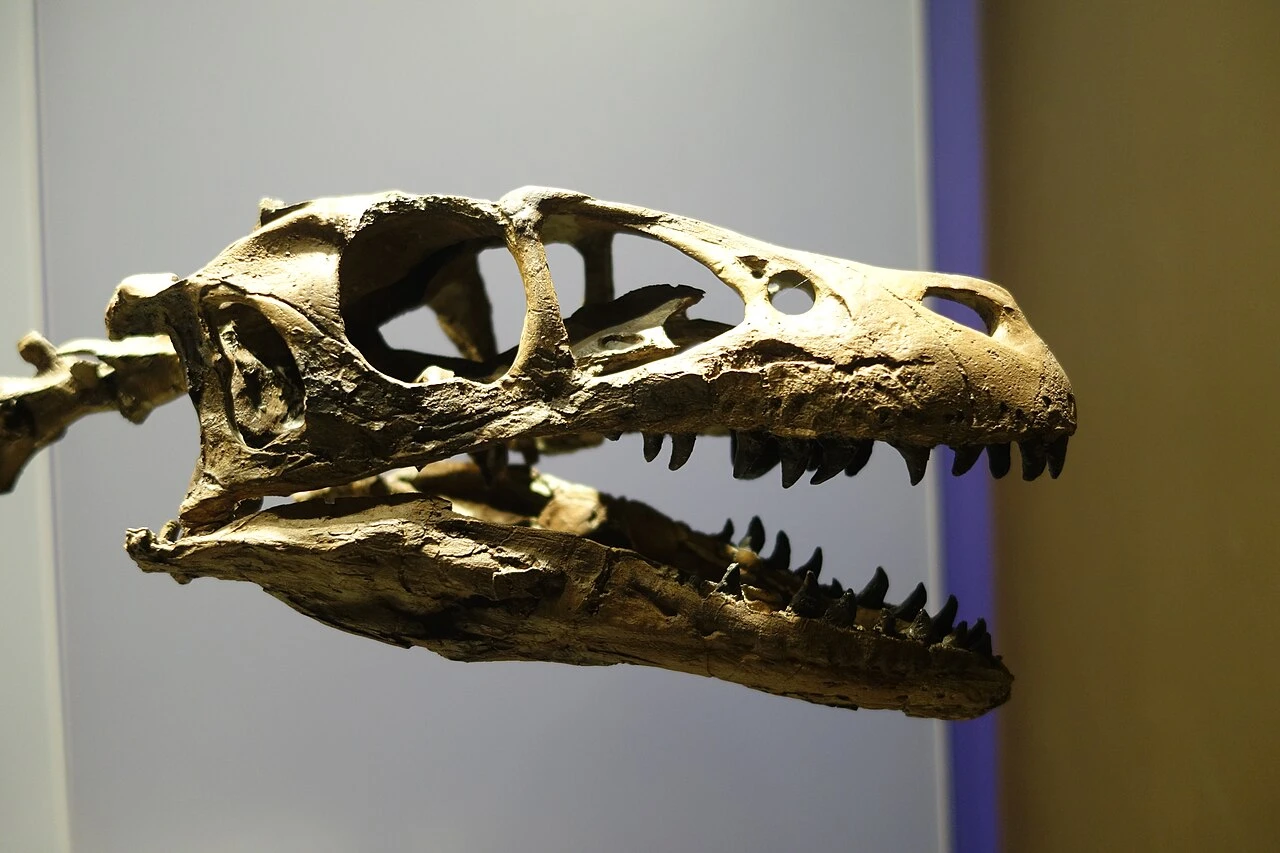
Dromaeosaurus albertensis skull reconstruction at Royal Tyrrell Museum, photographed by Etemenanki3. This is a museum restoration rather than an undistorted complete original skull; the Commons record supplies no individual inventory number. Restored contours and the open-jaw pose are interpretations. [2]
Dromaeosaurus skull detail Royal Tyrrell.jpg · Etemenanki3. CC BY-SA 4.0. Current Commons image converted to WebP and proportionally resized; no cropping, mirroring, anatomical edits or compositing. Original annotations retained. The source license applies to these versions.
Skeletal mounts and drawings may restore missing parts; the caption identifies the displayed material.
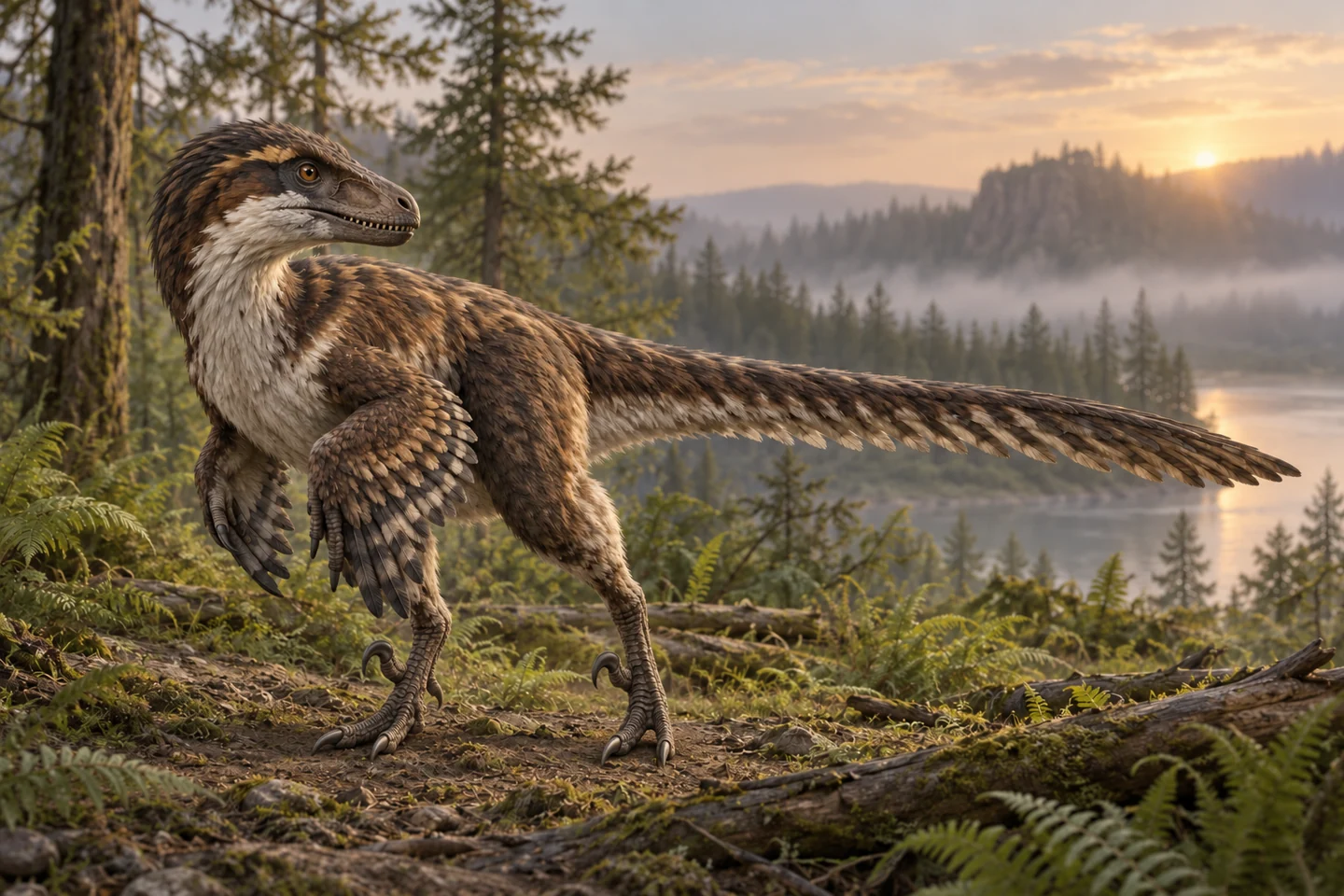
Original cinematic interpretation of Dromaeosaurus albertensis. Colors, soft tissues, scenery and missing anatomy are reconstructed artistic choices; this is not a directly observed individual or behavior. Feathering is reconstructed comparatively; this image does not document directly preserved plumage or pack hunting. Lighting, coloration and scenery are artistic choices. This image does not document a fossil locality or behavior.
Original artwork · artistic interpretation.
Scientific view: source-informed reconstruction, credited paleoart or specimen-based imagery. Movie-style view: Original artistic interpretation. Reconstructions involve uncertainty.
MEET THE ANIMAL
Dromaeosaurus was a meat-eating dinosaur from Late Cretaceous North America. A museum reference of about 1.8 metres introduces its scale without identifying an adult maximum. The familiar restored animal is more complete than the actual preserved material, so its profile needs to distinguish fossil anatomy from the full-body picture assembled around it. [D1]
Researchers have compared tooth wear with computer models of stress during feeding. The results support puncturing and pulling flesh, with teeth able to resist loads from struggling prey. That is a functional interpretation of the feeding equipment, not a confirmed prey list. It also does not demonstrate pack hunting or record one particular attack in action. [D3]
Further preparation of the original specimen refined its skull, including details of the front jaw and braincase. Reexamining known fossils can change the portrait without discovering another dinosaur. A finished mount restores missing anatomy and a pose, while the identified bones remain the anchor for comparisons and feeding interpretations. [D2]
PREHISTORIC ANIMAL DOSSIER
The animal, the evidence, and the questions still open.
The holotype remains the strongest skeletal reference. Isolated similar teeth are kept separate from securely diagnosed specimens. [D2] [D4]
Profile scope: Genus — Dromaeosaurus; the profile focuses on D. albertensis. [D2]
Source supported identifies a description documented by the cited source. Inferred marks a reconstruction or functional estimate. Debated marks competing interpretations. Not established means the sources reviewed for this dossier do not support a firm conclusion; it does not mean a behavior never occurred.
A size reference is an estimate, not a population range. Nesting evidence does not by itself establish courtship, mate choice, or lifelong pairing.
About 1.8 m (museum reference)
The museum gives a rounded educational reference, without a named size model or adult-maturity basis. It is not a verified maximum. [D1]
About 15 kg (museum reference)
No specimen or estimation method accompanies the value; it is a reference estimate, not a measured mass or population average. [D1]
Puncture-and-pull feeding inferred
Tooth microwear and stress modeling support puncturing and pulling flesh, with teeth adapted to resisting struggling prey. This does not identify prey species or demonstrate pack hunting. [D3]
Late Cretaceous North American occurrence
The museum lists Canada and the USA. New Mexican Dromaeosaurus-like isolated teeth remain an informal dromaeosaurid morphotype rather than confirmed genus records. [D1] [D4]
Two-legged reconstruction
Its theropod skeleton is restored on the hindlimbs. Sparse material and reconstructed mounts do not establish a sprint speed or a demonstrated kicking attack. [D2]
Robust skull and revised cranial anatomy
Preparation of AMNH5356 corrected older skull interpretations, including premaxillary form and the braincase. Complete skeletal displays restore portions absent from known material. [D2]
Not established here
Focused searches did not identify an assigned Dromaeosaurus nest, egg clutch, incubation interval or parental-care observation in the inspected sources.
Not established here
No reviewed genus-specific fossil demonstrates mating display, pair bonding or sex-specific ornament. Comparative raptor illustrations are not reproductive evidence.
Not established here
The tooth-mechanics study concerns feeding forces, not social organization. Focused social searches did not establish a Dromaeosaurus hunting group or stable pack. [D3]
Sources and inspection notes for the claims in this profile.
THE STORY IN THE FOSSILS
A New Mexican tooth resembles Dromaeosaurus dentition. Its describers still used an informal morphotype because isolated teeth may not diagnose a genus or species. That distinction keeps the geographic profile from claiming more than the fossils establish. [4]
Re-preparing the type skeleton changed interpretations of its skull. The record illustrates why a complete-looking museum restoration should be read alongside the actual preserved bones. [2]
The dossier identifies the scope of each reference estimate. A mount, an individual fossil and a species-wide adult range are different measurements. Comparison metrics remain unavailable where adult scope has not been established. Unknown does not mean zero.
Sources support the stated claims and scopes. Refer to the evidence notes for uncertainty.
KEEP EXPLORING
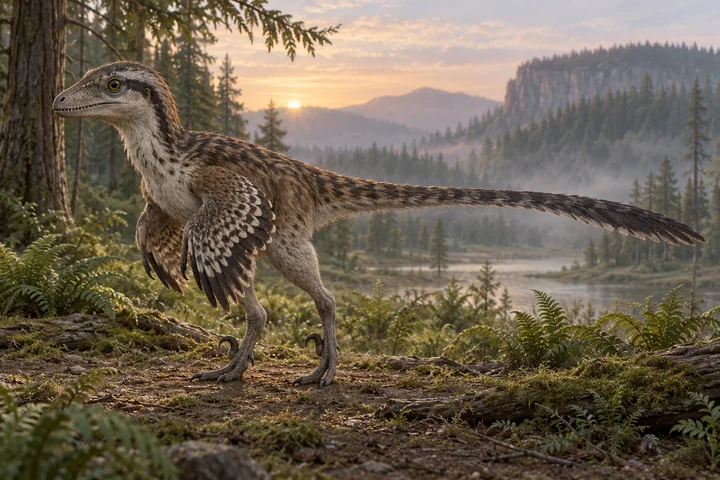
Saurornitholestes langstoni
Saurornitholestes has a shorter, deeper skull than Velociraptor.
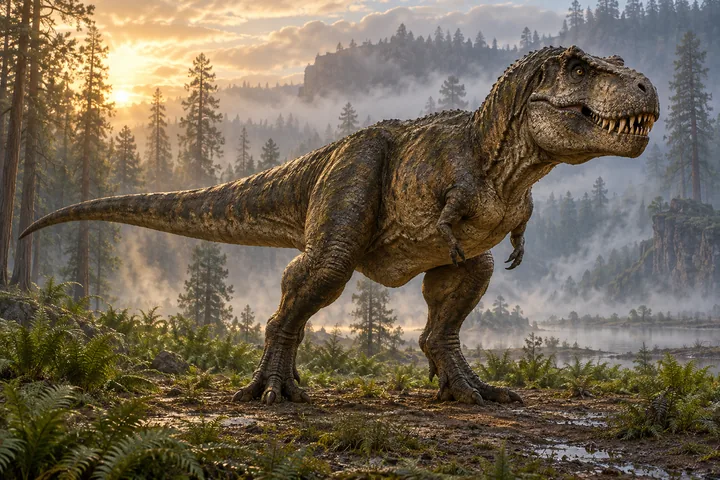
Tyrannosaurus rex
Tyrannosaurus rex was a large meat-eating dinosaur from the final part of the Cretaceous in western North America. Fossil teeth, bite marks and skeletons reveal a powerful animal whose behaviour still invites questions.
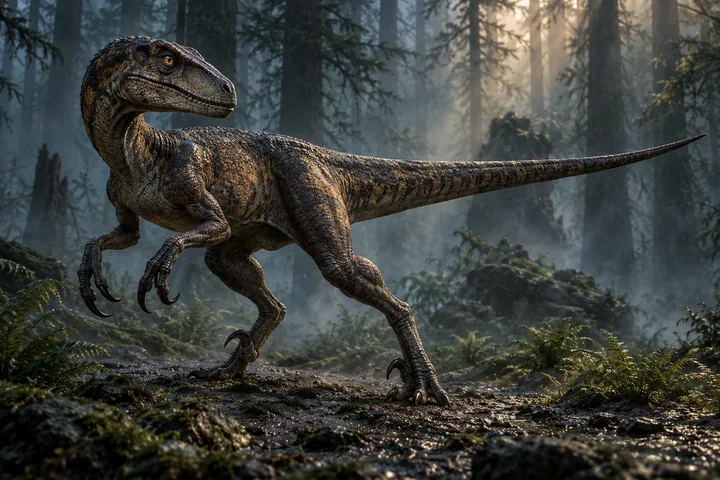
Velociraptor mongoliensis
Velociraptor mongoliensis was a lightly built meat-eater from Late Cretaceous Mongolia. Its long limbs, teeth and enlarged foot claws made it distinctive, while the Fighting Dinosaurs specimen records a remarkable interaction with a horned dinosaur.