Body length
Not establishedNot established here
The inspected sources do not establish a complete adult body-length model. [D2]
EXHIBIT 277
Eolambia caroljonesa
Dinosaur
A plant-eating Utah dinosaur related to duck-billed dinosaurs, known from complementary adult and juvenile fossils. [3]
TWO WAYS TO PICTURE THE PAST
Compare the evidence with the familiar movie image. The illustrations are not to a shared scale.
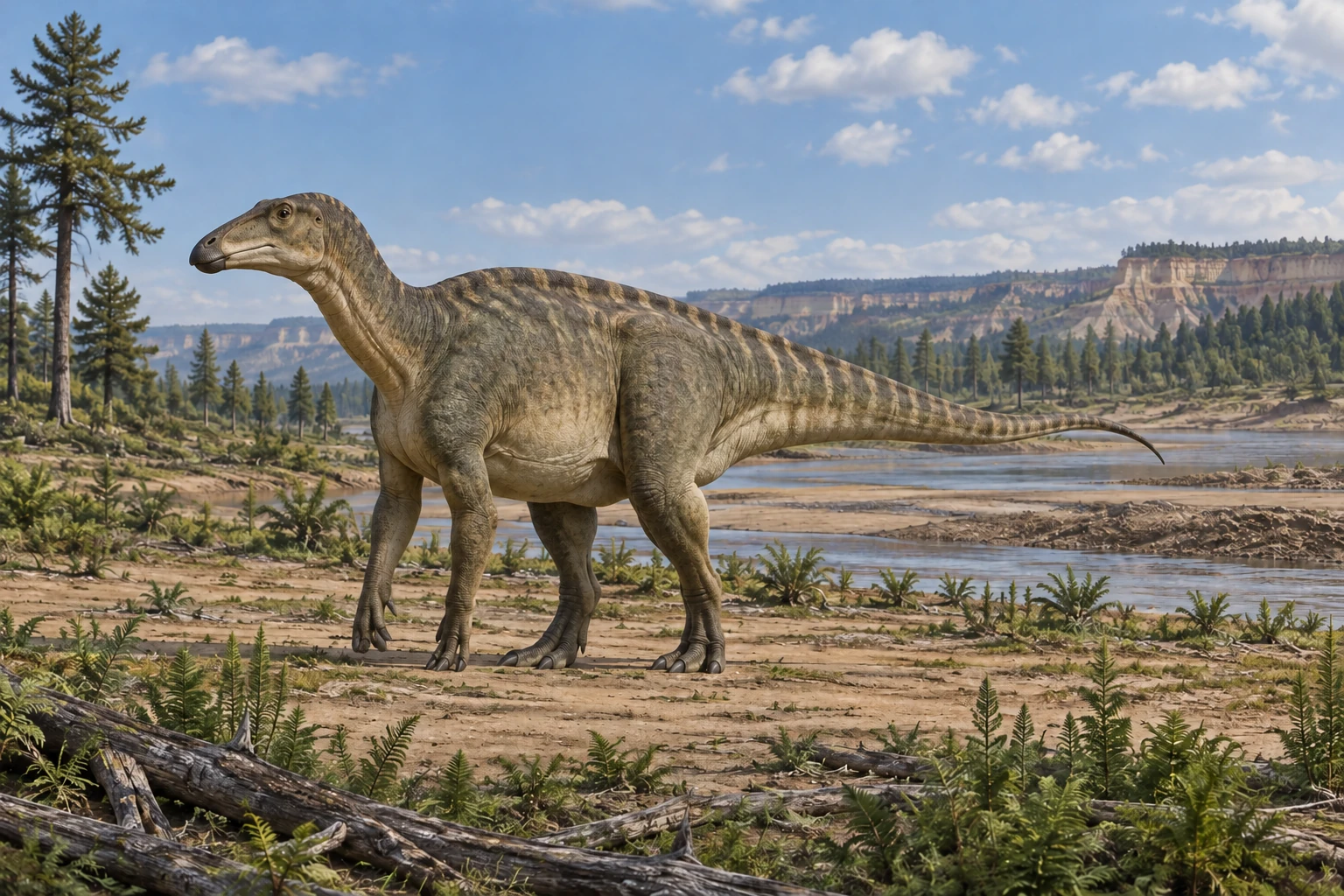
An illustrative reconstruction. Compare its anatomy with the evidence and limitations in the dossier. [1]
Source-informed reconstruction. Appearance evidence [1]. Original illustration; missing anatomy, coloration and scenery include interpretation.
Fossils constrain this life reconstruction. Missing anatomy, coloration and the environmental scene include interpretation; the dossier explains the evidence limits.
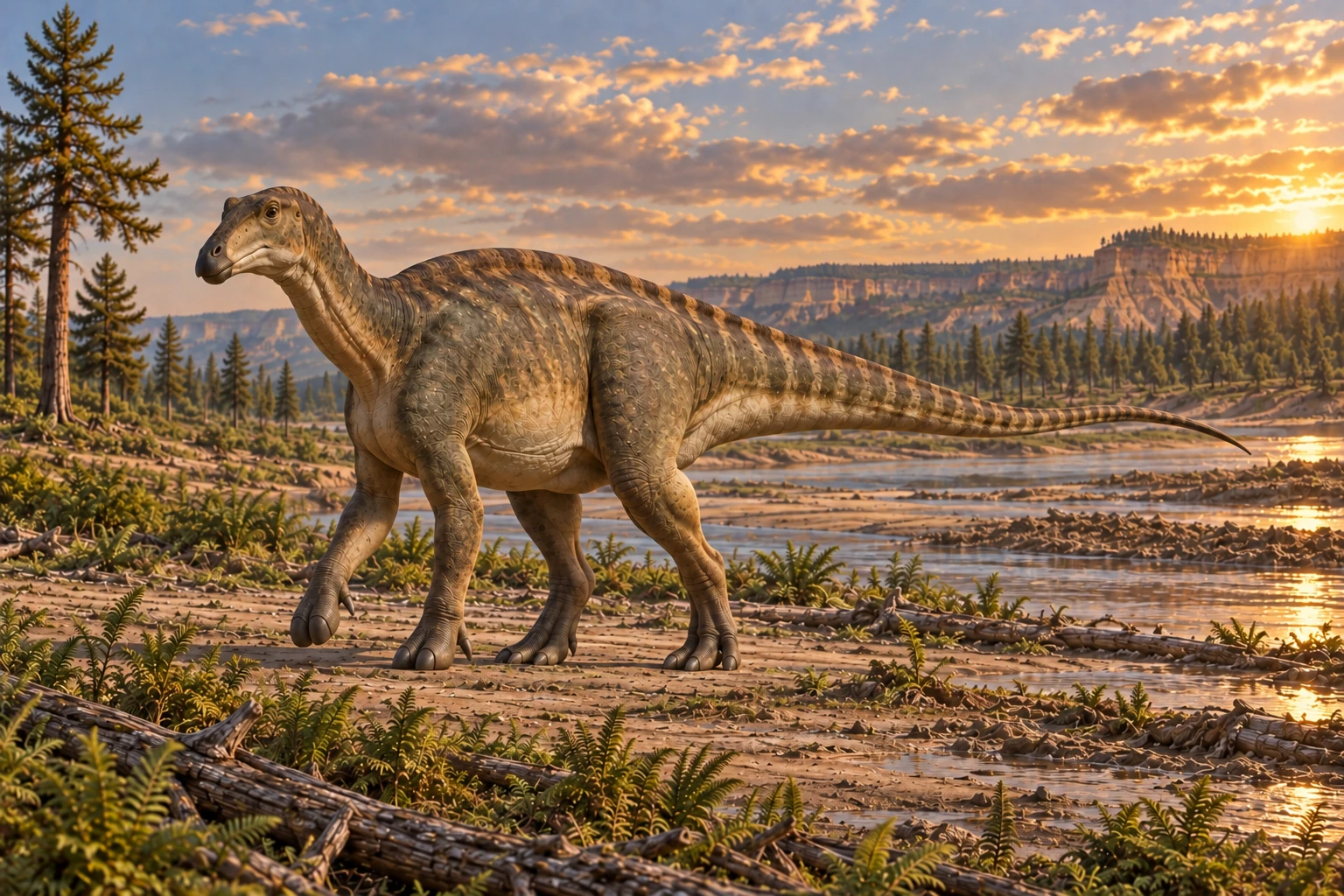
An illustrative reconstruction. Compare its anatomy with the evidence and limitations in the dossier. Lighting, coloration and scenery are artistic choices. This image does not document a fossil locality or behavior.
Original artwork · artistic interpretation.
Scientific view: source-informed reconstruction, credited paleoart or specimen-based imagery. Movie-style view: Original artistic interpretation. Reconstructions involve uncertainty.
MEET THE ANIMAL
Eolambia was a plant-eating dinosaur from Utah. It was related to the dinosaurs that later became familiar as duck-billed hadrosaurs. Museum researchers describe several partial adult and juvenile fossils, rather than one perfect complete skeleton. Combining these discoveries helps explain its body, while leaving room for discoveries that could improve the reconstruction. [D3]
Its head carried a beak and rows of teeth, and its hand included a pointed thumb bone. Scientists studied many skeletal parts to separate Eolambia from other plant-eating dinosaurs. Some published reconstructions combine adult material with enlarged juvenile bones. That is useful when fossils overlap, but it also means the drawing is a scientific model rather than a photograph of one preserved animal. [D1]
A later partial skeleton tells a story about growth and burial. Marks inside a rib suggested that this individual was eight or nine years old and still growing. Sediment showed that floodwater helped bury it on a floodplain. Neither result explains its entire life: the age is not a maximum lifespan, and the deposit does not prove that Eolambia lived in water or raised its young there. [D2]
PREHISTORIC ANIMAL DOSSIER
The animal, the evidence, and the questions still open.
One partial skeleton belonged to a still-growing subadult estimated to be eight or nine years old. [D2]
Profile scope: This exhibit concerns Eolambia caroljonesa from Utah’s lower Cenomanian Mussentuchit Member. [D1]
Source supported identifies a description documented by the cited source. Inferred marks a reconstruction or functional estimate. Debated marks competing interpretations. Not established means the sources reviewed for this dossier do not support a firm conclusion; it does not mean a behavior never occurred.
A size reference is an estimate, not a population range. Nesting evidence does not by itself establish courtship, mate choice, or lifelong pairing.
Not established here
The inspected sources do not establish a complete adult body-length model. [D2]
Not established here
Rib-derived age for one subadult is not an adult body-mass estimate. [D2]
Plant-eating dinosaur.
The museum classifies it as herbivorous; preferred plant species remain unresolved. [D3]
Continental floodplain surroundings.
One skeleton’s crevasse-splay burial records flooding, not a swimming lifestyle. [D2]
Terrestrial movement with functional forelimbs.
Limbs and hoof-like digits permit comparative reconstruction; speed is unresolved. [D1]
Beaked head, tooth rows and a conical thumb ungual.
Skull reconstructions combine incomplete adults and rescaled juvenile elements. [D1]
Not established here
The reviewed adult and juvenile material does not identify an Eolambia nest. [D1]
Not established here
The specimen studies provide no demonstrated mating display or sex-specific ornament. [D2]
Not established here
Juvenile bonebeds do not establish a particular daily herd or family structure. [D1]
Sources and inspection notes for the claims in this profile.
THE STORY IN THE FOSSILS
The 8–9-year estimate concerns one subadult, determined by rib growth marks and estimated missing early growth. It is not the species’ lifespan. [2]
Several incomplete fossils supply a fuller skeletal picture together. An idealized skull therefore needs its composite nature kept visible in the interpretation. [1]
The dossier identifies the scope of each reference estimate. A mount, an individual fossil and a species-wide adult range are different measurements. Comparison metrics remain unavailable where adult scope has not been established. Unknown does not mean zero.
Sources support the stated claims and scopes. Refer to the evidence notes for uncertainty.
KEEP EXPLORING
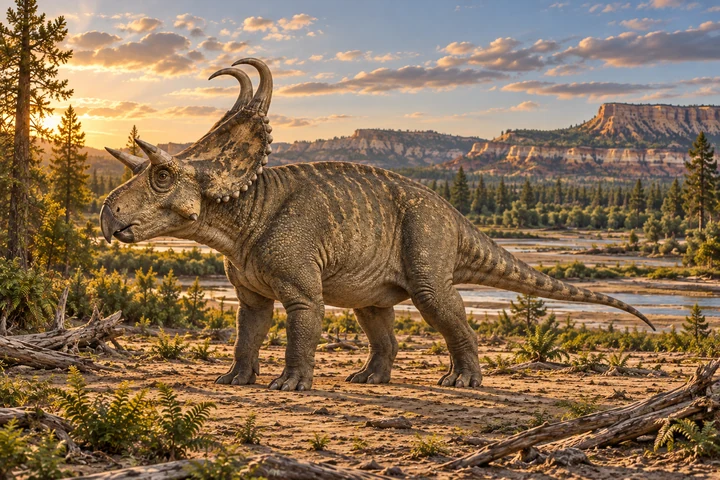
Machairoceratops cronusi
Dinosaur
A Utah horned dinosaur distinguished by two long frill spikes that curve forward; much of its face and body remains unknown.
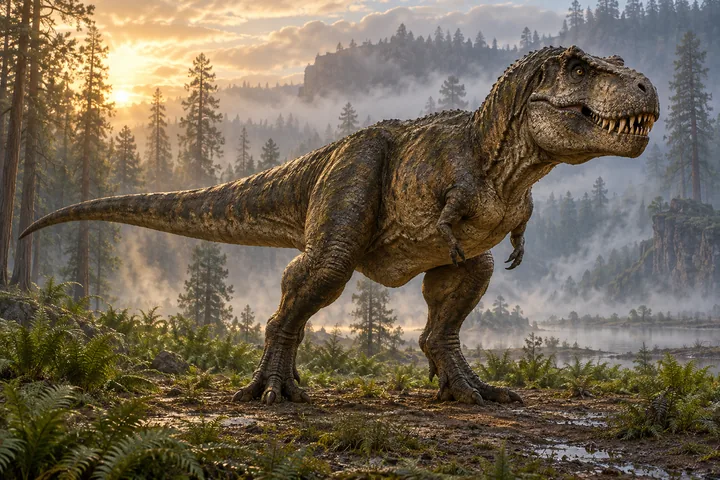
Tyrannosaurus rex
Tyrannosaurus rex was a large meat-eating dinosaur from the final part of the Cretaceous in western North America. Fossil teeth, bite marks and skeletons reveal a powerful animal whose behaviour still invites questions.
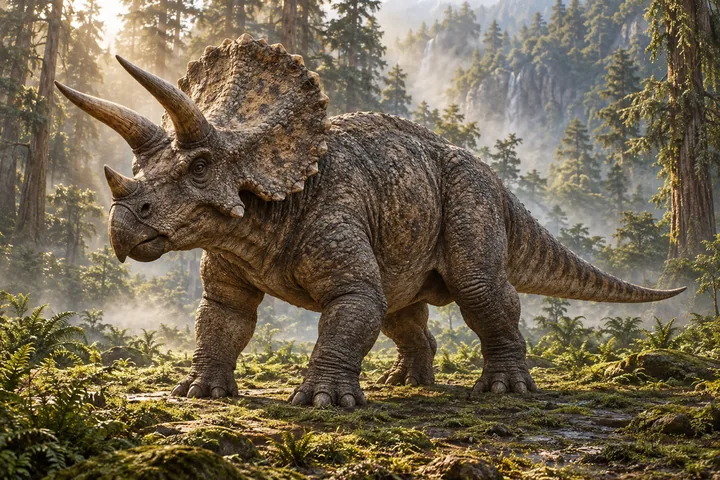
Triceratops horridus
Triceratops horridus was a horned dinosaur of the Late Cretaceous. Skin impressions attributed to this species reveal scales, while skulls and their positions in rock layers help researchers distinguish it from the later Triceratops prorsus.