
Size reference
Source supported63.1 mm including cerci
Measurement of one adult male holotype; not a species or genus size range. [D1]
EXHIBIT 241
Eophyllium
Prehistoric insect
Eophyllium was an Eocene leaf insect whose fossil abdomen preserves an elaborate camouflage outline. [2]
TWO WAYS TO PICTURE THE PAST
Compare the evidence with the familiar movie image. The illustrations are not to a shared scale.
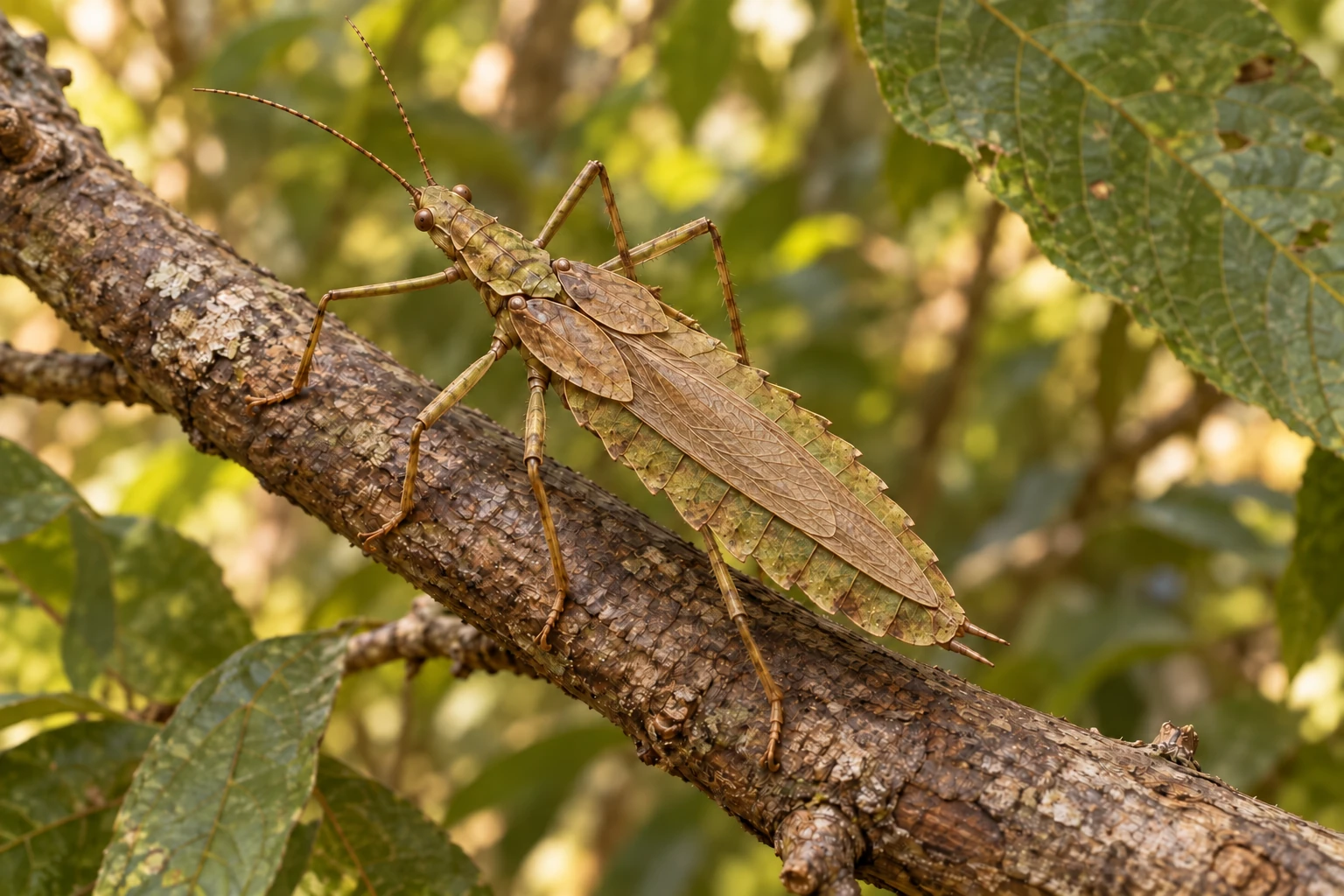
An illustrative reconstruction. Compare its anatomy with the evidence and limitations in the dossier. [1]
Source-informed reconstruction. Appearance evidence [1]. Original illustration; missing anatomy, coloration and scenery include interpretation.
Fossils constrain this life reconstruction. Missing anatomy, coloration and the environmental scene include interpretation; the dossier explains the evidence limits.
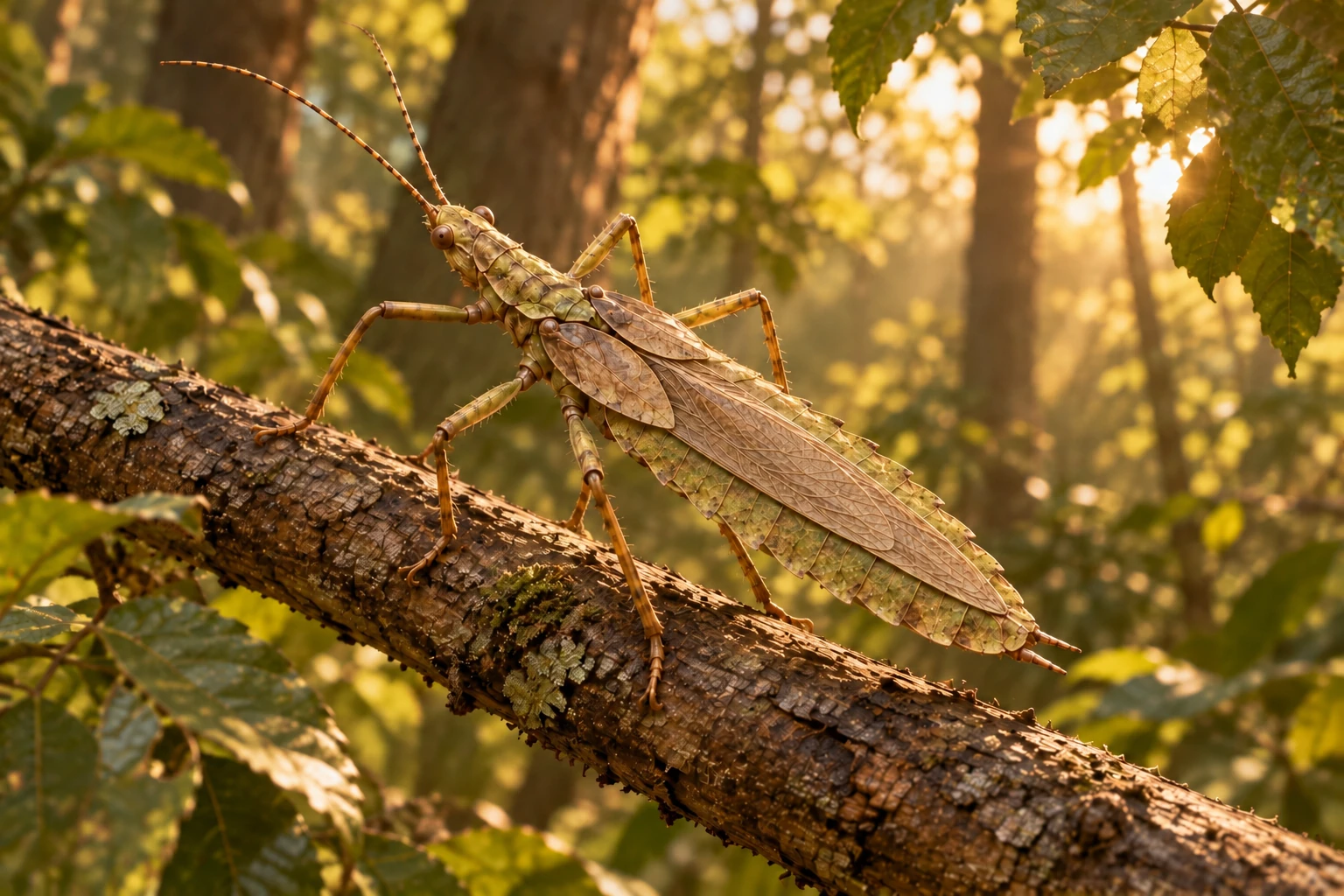
An illustrative reconstruction. Compare its anatomy with the evidence and limitations in the dossier. Lighting, coloration and scenery are artistic choices. This image does not document a fossil locality or behavior.
Original artwork · artistic interpretation.
Scientific view: source-informed reconstruction, credited paleoart or specimen-based imagery. Movie-style view: Original artistic interpretation. Reconstructions involve uncertainty.
MEET THE ANIMAL
Eophyllium was an insect, rather than a dinosaur. Its best-known fossil came from Messel in Germany and was described as an adult male. Researchers measured 63.1 millimeters from the front of its body to the end of its paired rear appendages, called cerci. That number describes this individual; it does not tell us the size of every member of the genus. [D1]
The fossil’s flattened, expanded abdomen helped it resemble a leaf. A Bonn research report compared this outline with living walking leaves, whose disguises can help them avoid being noticed. The fossil’s appearance suggests camouflage, but a preserved body cannot show every movement the living insect made. Suggestions that it stayed still or swayed like foliage are comparisons with living relatives, not observed fossil behavior. [D2]
A later study used Eophyllium as a fossil reference when investigating leaf-insect evolution. It discussed the European fossil separately from living leaf insects concentrated farther east. Names can change slightly across publications: E. messelense in that study refers to the fossil originally named E. messelensis. Those spellings do not describe two different animals. The fossil remains a useful clue about an ancient branch of the leaf-insect family. [D3]
PREHISTORIC ANIMAL DOSSIER
The animal, the evidence, and the questions still open.
Its leaf-shaped body supports camouflage, while stillness and swaying remain comparisons with living leaf insects. [D2]
Profile scope: Genus — Eophyllium; reconstruction anchored to the adult male E. messelensis, holotype MeI12560 from Messel, Germany. [D1]
Source supported identifies a description documented by the cited source. Inferred marks a reconstruction or functional estimate. Debated marks competing interpretations. Not established means the sources reviewed for this dossier do not support a firm conclusion; it does not mean a behavior never occurred.
A size reference is an estimate, not a population range. Nesting evidence does not by itself establish courtship, mate choice, or lifelong pairing.
63.1 mm including cerci
Measurement of one adult male holotype; not a species or genus size range. [D1]
Not established here
The reviewed holotype description reports no body-mass estimate. [D1]
Plant feeding inferred
Leaf-insect affinity suggests herbivory; its intestinal tract contains no identifiable food particles. [D1]
Eocene forest foliage inferred
Resemblance to leaves suggests a terrestrial foliage-dweller; this is a camouflage-based habitat inference. [D2]
Walking and flight inferred
Legs and developed male hindwings support these capabilities; speeds are unknown. [D1]
Segmented leaf-shaped abdomen
Lateral abdominal expansions, short forewings and slender forefemora without leafy dilations characterize the male. Some head, antenna and leg structures are missing. [D1]
Not established here
A male fossil does not identify its eggs, female anatomy or juvenile development. [D2]
Not established here
The reviewed comparison suggests possible sex differences, without preserving mate selection or a mating sequence. [D2]
Not established here
Modern stillness and swaying comparisons do not demonstrate groups or cooperation in the fossil genus. [D3]
Sources and inspection notes for the claims in this profile.
THE STORY IN THE FOSSILS
The 2021 phylogeny discusses the European fossil as a stem lineage. Its location does not mean today’s tropical leaf insects originated at Messel. [3]
The dossier identifies the scope of each reference estimate. A mount, an individual fossil and a species-wide adult range are different measurements. Comparison metrics remain unavailable where adult scope has not been established. Unknown does not mean zero.
Sources support the stated claims and scopes. Refer to the evidence notes for uncertainty.
KEEP EXPLORING
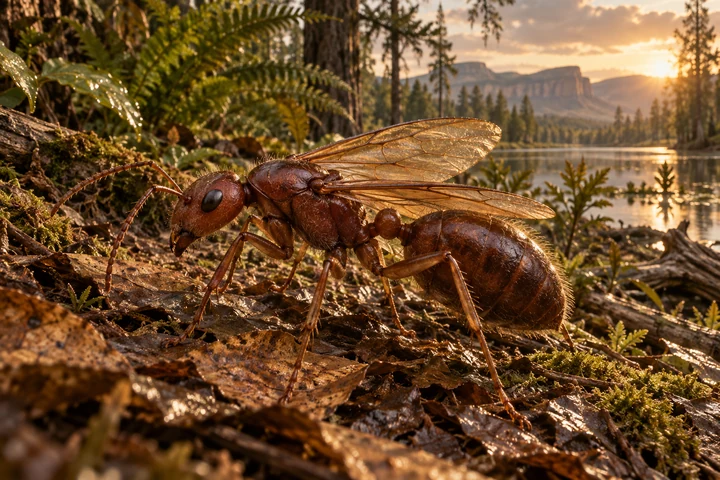
Titanomyrma
Prehistoric insect
Titanomyrma was an Eocene ant genus with strikingly large winged queens and unresolved ecological details.
Juracimbrophlebia
Prehistoric insect
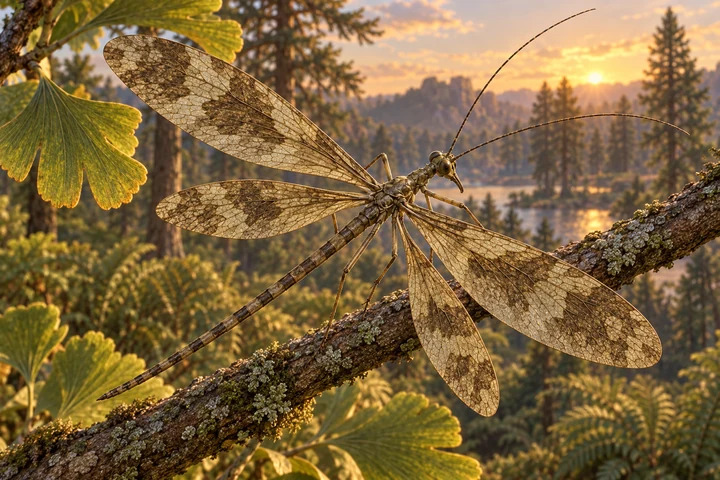
Juracimbrophlebia was a Jurassic hangingfly with wings resembling multilobed ginkgo-like leaves.
Cretophasmomima
Prehistoric insect
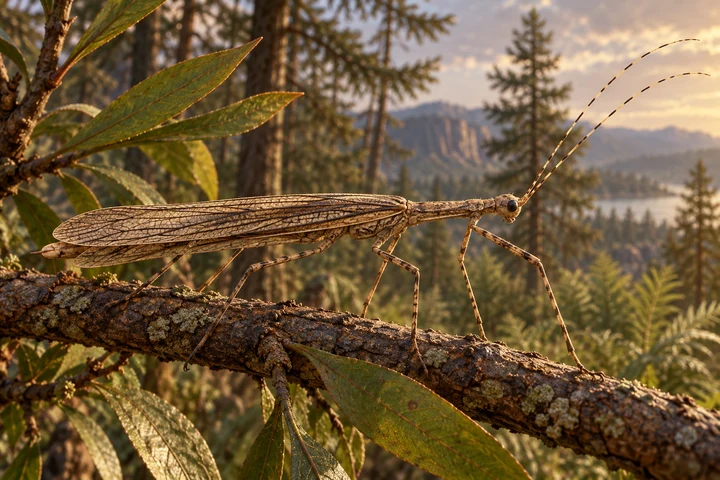
Cretophasmomima was an early stick-insect relative; Chinese fossils preserve patterned wings and both sexes.