
Size reference
Source supported38.5 mm as preserved
Holotype body lacks terminal abdominal segments; not complete length or a genus range. [D1]
EXHIBIT 222
Juracimbrophlebia
Prehistoric insect
Juracimbrophlebia was a Jurassic hangingfly with wings resembling multilobed ginkgo-like leaves. [2]
TWO WAYS TO PICTURE THE PAST
Compare the evidence with the familiar movie image. The illustrations are not to a shared scale.
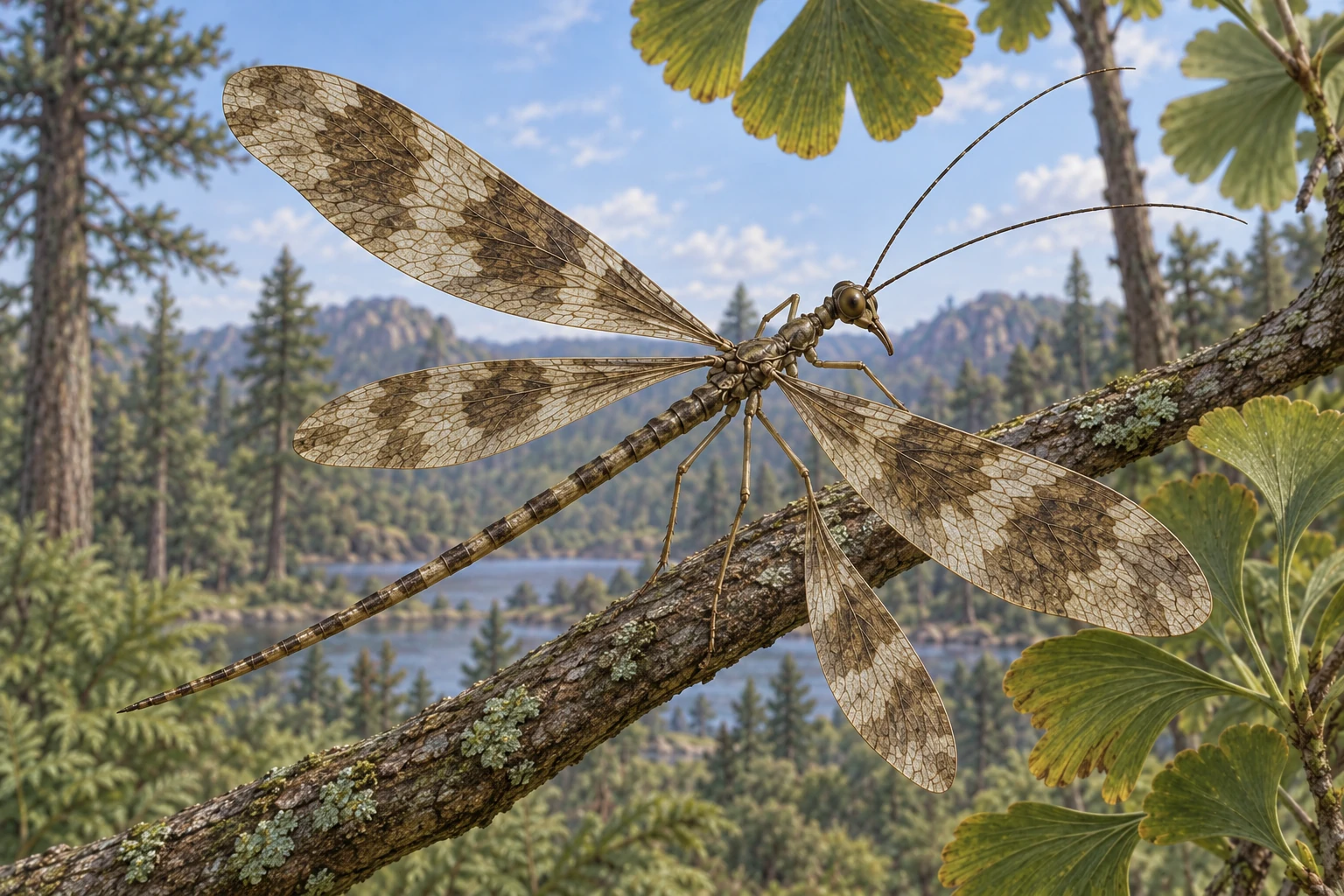
An illustrative reconstruction. Compare its anatomy with the evidence and limitations in the dossier. [1]
Source-informed reconstruction. Appearance evidence [1]. Original illustration; missing anatomy, coloration and scenery include interpretation.
Fossils constrain this life reconstruction. Missing anatomy, coloration and the environmental scene include interpretation; the dossier explains the evidence limits.
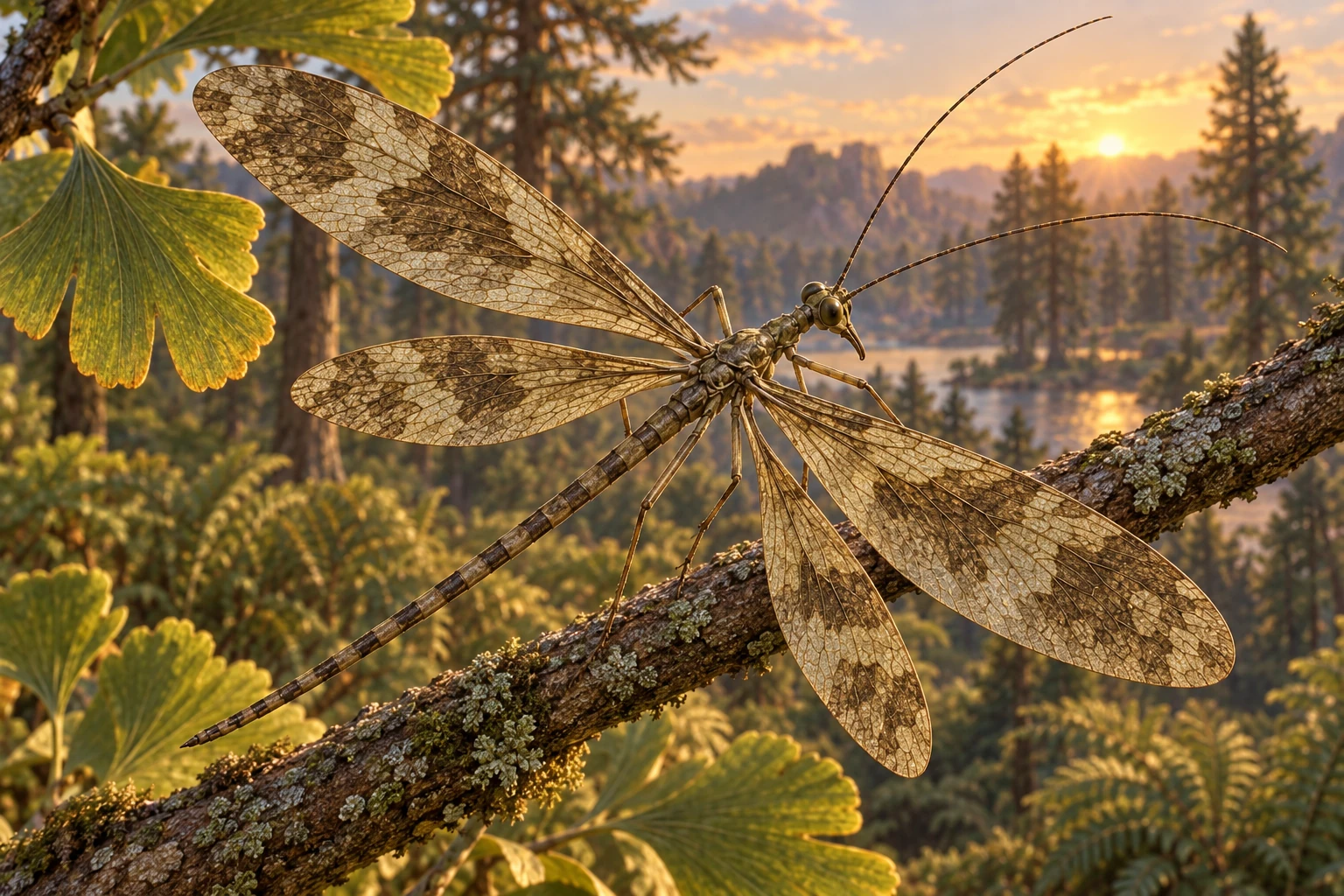
An illustrative reconstruction. Compare its anatomy with the evidence and limitations in the dossier. Lighting, coloration and scenery are artistic choices. This image does not document a fossil locality or behavior.
Original artwork · artistic interpretation.
Scientific view: source-informed reconstruction, credited paleoart or specimen-based imagery. Movie-style view: Original artistic interpretation. Reconstructions involve uncertainty.
MEET THE ANIMAL
Juracimbrophlebia was a hangingfly from Middle Jurassic China, about 165 million years ago. Its fossils came from Daohugou, where delicate insects and plants were preserved. The main specimen has four wings, long legs and a slender body. Its preserved body is38.5 millimeters long, but the final abdominal segments are missing. That number therefore does not give the complete living body length. [D1]
The wings look surprisingly like parts of a multilobed leaf. Scientists compared them with a ginkgo-like plant called Yimaia found in the same rocks. Four wings together with the narrow body could resemble the several lobes of a hanging leaf. This is a proposed example of mimicry: an animal’s outline resembling something else in its surroundings. [D2]
That disguise might have helped the insect hide from predators. It might also have helped a hunter wait near plant-feeding insects. These are explanations based on shape and comparison, rather than a fossil showing an attack. The leaf association cannot tell us its exact prey, and it does not prove that the insect and tree actively helped one another. [D2]
PREHISTORIC ANIMAL DOSSIER
The animal, the evidence, and the questions still open.
Leaf resemblance supports a mimicry hypothesis, rather than an observed partnership with a tree. [D2]
Profile scope: Genus — Juracimbrophlebia; anchored to J. ginkgofolia, Daohugou, China; the incomplete holotype has unknown sex. [D1]
Source supported identifies a description documented by the cited source. Inferred marks a reconstruction or functional estimate. Debated marks competing interpretations. Not established means the sources reviewed for this dossier do not support a firm conclusion; it does not mean a behavior never occurred.
A size reference is an estimate, not a population range. Nesting evidence does not by itself establish courtship, mate choice, or lifelong pairing.
38.5 mm as preserved
Holotype body lacks terminal abdominal segments; not complete length or a genus range. [D1]
Not established here
The adult description provides no body-mass estimate. [D1]
Predatory feeding inferred
Hangingfly comparisons suggest insect prey; no preserved meal establishes a prey species. [D2]
Ginkgoalean woodland inferred
Leaflike wings resemble co-occurring Yimaia foliage; exact living perch remains inferred from association. [D2]
Winged and grasping-legged
Four wings and modified hindlegs support flight and grasping, without measured performance. [D1]
Four veined leaflike wings
Long legs, prominent eyes and narrow rostrum accompany an incomplete straight abdomen. [D1]
Not established here
No attributable eggs described in this adult study. [D1]
Not established here
Missing genital region prevents determining the holotype’s sex. [D1]
Not established here
Leaf association does not establish coordinated insect groups. [D1]
Sources and inspection notes for the claims in this profile.
THE STORY IN THE FOSSILS
A resemblance strong enough to confuse fossil identification led researchers to investigate camouflage. Protection and hunting advantages remain alternative explanations. [2]
The dossier identifies the scope of each reference estimate. A mount, an individual fossil and a species-wide adult range are different measurements. Comparison metrics remain unavailable where adult scope has not been established. Unknown does not mean zero.
Sources support the stated claims and scopes. Refer to the evidence notes for uncertainty.
KEEP EXPLORING
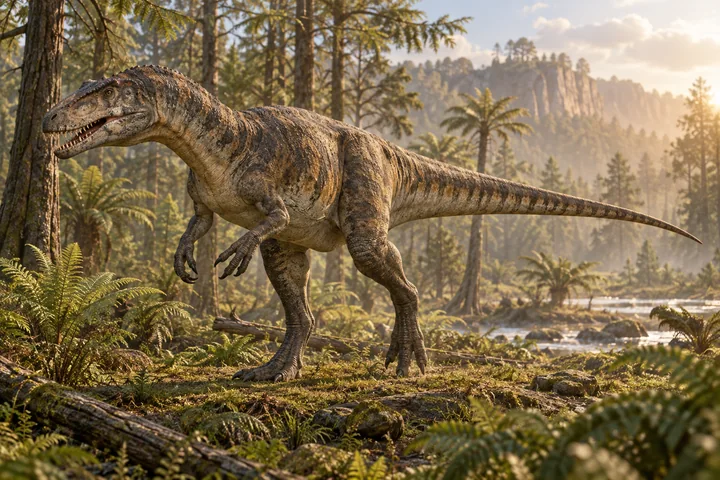
Megalosaurus bucklandii
Megalosaurus bucklandii was a Jurassic predator from England. Its fragmentary bones helped launch dinosaur science, while its modern identity is anchored by a distinctive lower jaw.
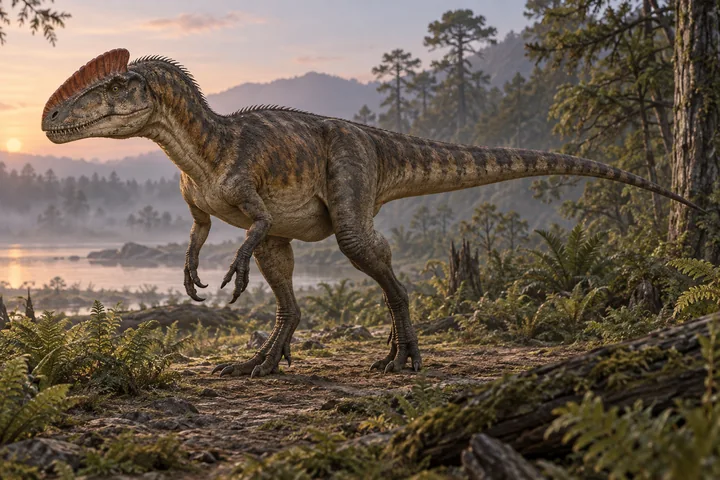
Monolophosaurus jiangi
Monolophosaurus is recognized by a single crest along its skull.
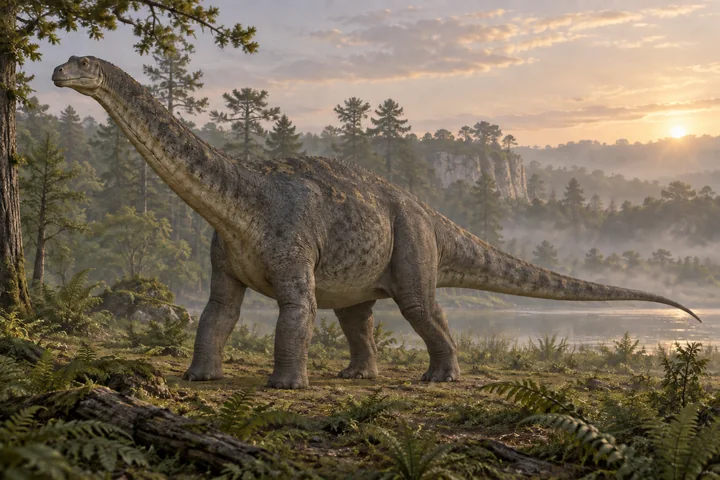
Cetiosaurus oxoniensis
Cetiosaurus was a large terrestrial plant-eater from Middle Jurassic England, represented by important partial skeletons rather than one complete fossil body.