
Size reference
Source supported12 mm preserved body
Female J. impunctata holotype; not a genus-wide adult range. [D1]
EXHIBIT 262
Jurassipanorpa
Prehistoric insect
Jurassipanorpa was a Jurassic scorpionfly relative identified through wing veins and unusual bristles. [1]
TWO WAYS TO PICTURE THE PAST
Compare the evidence with the familiar movie image. The illustrations are not to a shared scale.
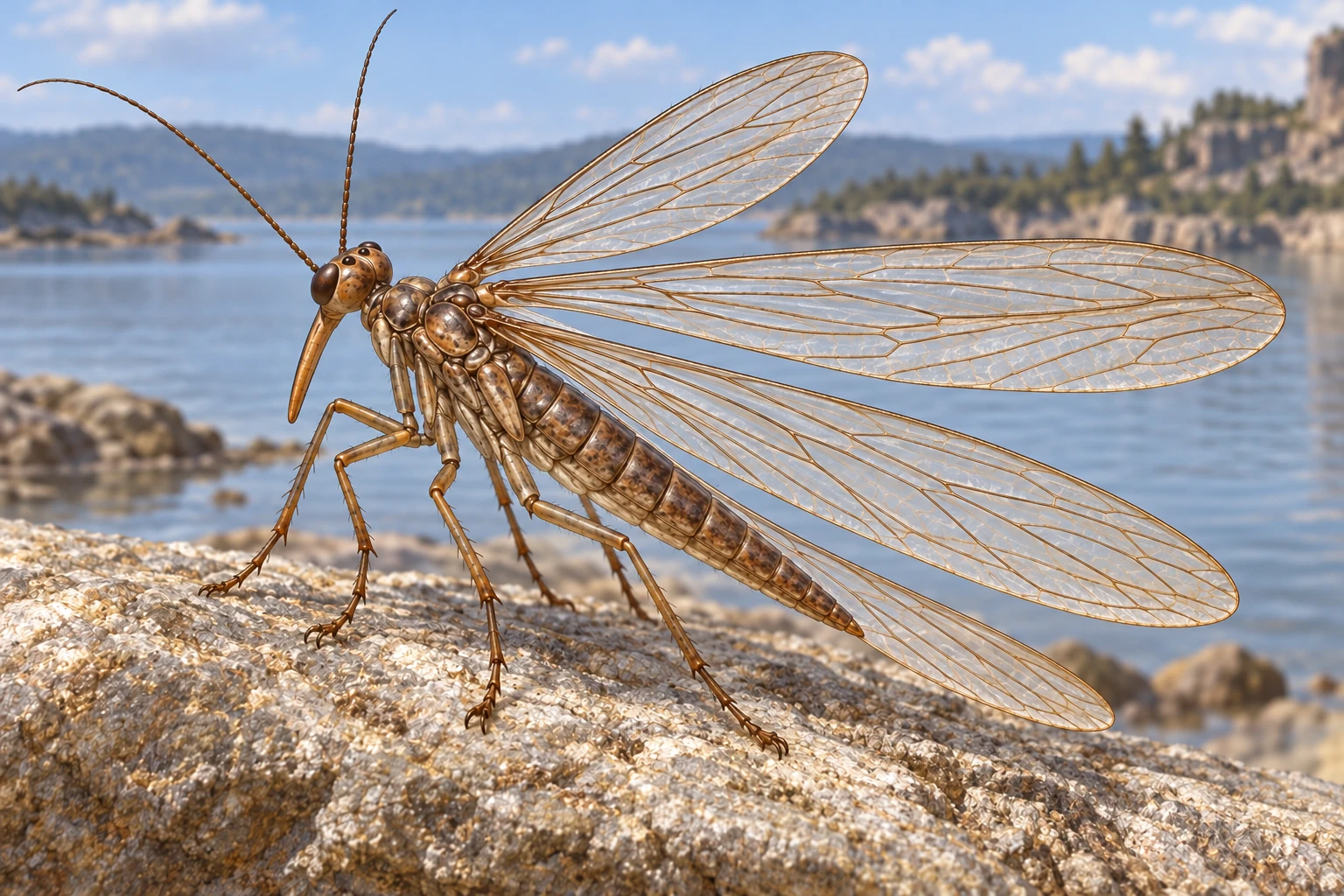
An illustrative reconstruction. Compare its anatomy with the evidence and limitations in the dossier. [1]
Source-informed reconstruction. Appearance evidence [1]. Original illustration; missing anatomy, coloration and scenery include interpretation.
Fossils constrain this life reconstruction. Missing anatomy, coloration and the environmental scene include interpretation; the dossier explains the evidence limits.
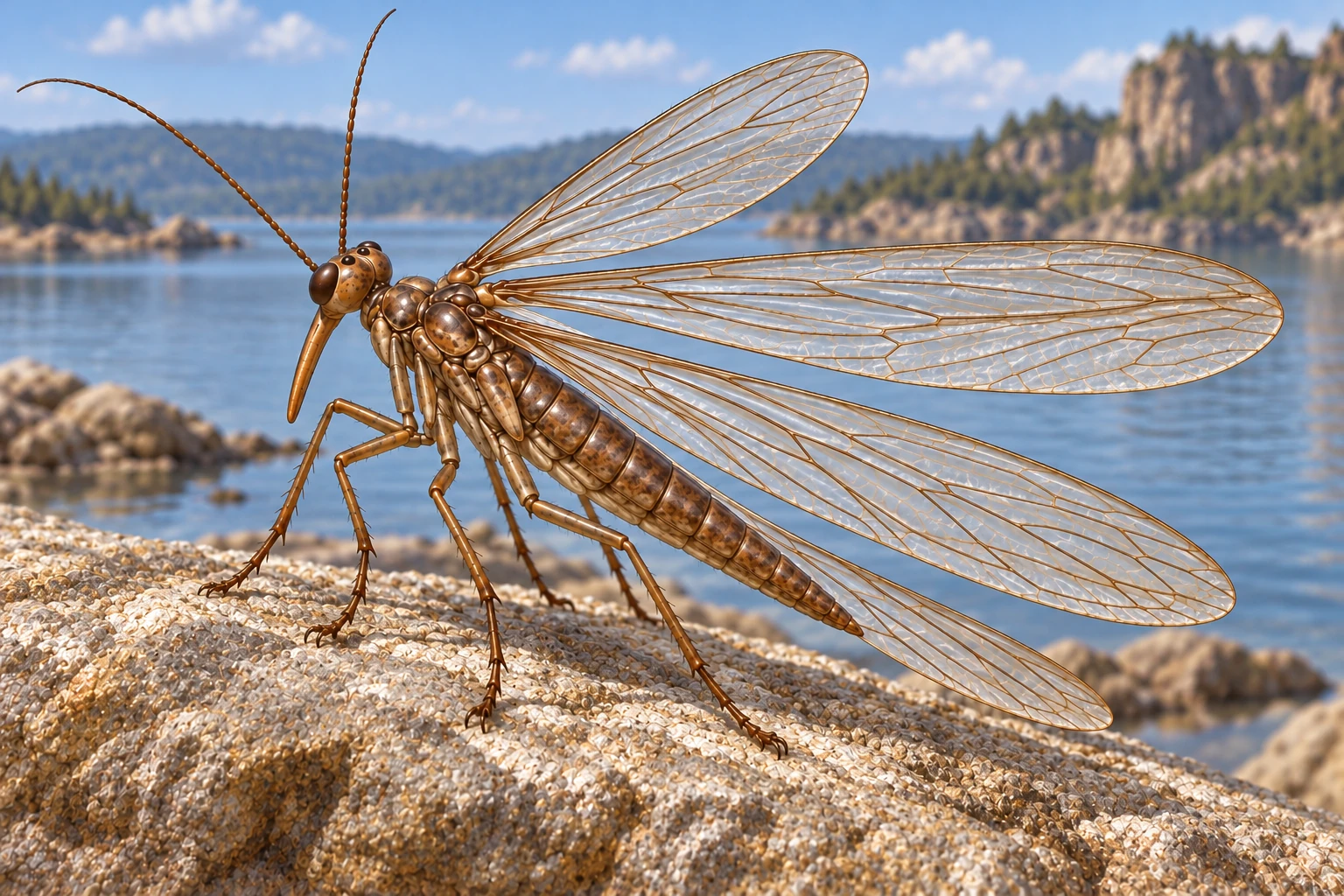
An illustrative reconstruction. Compare its anatomy with the evidence and limitations in the dossier. Lighting, coloration and scenery are artistic choices. This image does not document a fossil locality or behavior.
Original artwork · artistic interpretation.
Scientific view: source-informed reconstruction, credited paleoart or specimen-based imagery. Movie-style view: Original artistic interpretation. Reconstructions involve uncertainty.
MEET THE ANIMAL
Jurassipanorpa was a Jurassic insect from China. One preserved adult female had a body 12 millimeters long. Fossils preserve four narrow wings and downward-extended mouthparts; a second specimen supplies fine antennae. Unusual stiff hairs grew along some forewing veins. Unspotted wings distinguish the illustrated species from another species in the genus with spotted wings. [D1]
The original researchers placed this insect in the family containing familiar living scorpionflies. A later study questioned that placement after examining the original type and additional fossils. This shows why scientists compare body structures as well as wing patterns. A fossil can keep its genus name even when its position in a larger group changes. [D2]
A 2021 research project compared 155 living species using 182 features of adult anatomy. The authors also excluded Jurassipanorpa from that modern family. Their work helps explain how classification is tested, but it does not reveal this extinct insect’s meals, courtship or social habits. Those questions remain open here. A life reconstruction therefore combines preserved structures with cautious choices for missing details and living colors. [D3]
PREHISTORIC ANIMAL DOSSIER
The animal, the evidence, and the questions still open.
Originally placed in Panorpidae, this genus was excluded by later studies; its reviewed family placement remains unresolved. [D2] [D3]
Profile scope: Genus — Jurassipanorpa; impunctata and sticta. Gallery anchored to J. impunctata female holotype and paratype anatomy. [D1]
Source supported identifies a description documented by the cited source. Inferred marks a reconstruction or functional estimate. Debated marks competing interpretations. Not established means the sources reviewed for this dossier do not support a firm conclusion; it does not mean a behavior never occurred.
A size reference is an estimate, not a population range. Nesting evidence does not by itself establish courtship, mate choice, or lifelong pairing.
12 mm preserved body
Female J. impunctata holotype; not a genus-wide adult range. [D1]
Not established here
Original description gives no body-mass estimate. [D1]
Not established here
No identified meal or genus-specific feeding evidence is reported. [D1]
Not established here
Daohugou fossil locality does not establish a living perch or aquatic adult. [D2]
Flight and walking inferred
Wings and preserved leg fragments support these movements; speeds remain unknown. [D1]
Narrow wings with stout vein hairs
Four wings; unusual anterior-pointing setae occur on forewing anal veins. [D1]
Adult female documented
The type is female; eggs and juvenile stages remain unestablished here. [D1]
Not established here
Reviewed classification studies provide no genus-specific mating or mate-selection evidence. [D2]
Not established here
Morphological comparisons do not demonstrate colonies, cooperation or group living. [D3]
Sources and inspection notes for the claims in this profile.
THE STORY IN THE FOSSILS
The 2020 revision used newly studied fossil bodies to reconsider relationships among scorpionfly groups. Abdominal structure supplied information beyond wing veins. Its preliminary reassessment excluded Jurassipanorpa from Panorpidae, while leaving a fuller revision for later work. [2]
The 2021 analysis compared 155 living species using 182 adult morphological characters. It likewise excluded Jurassipanorpa from Panorpidae. A family assignment can change while a named fossil genus and its specimen measurements remain distinct. [3]
The dossier identifies the scope of each reference estimate. A mount, an individual fossil and a species-wide adult range are different measurements. Comparison metrics remain unavailable where adult scope has not been established. Unknown does not mean zero.
Sources support the stated claims and scopes. Refer to the evidence notes for uncertainty.
KEEP EXPLORING
Juracimbrophlebia
Prehistoric insect
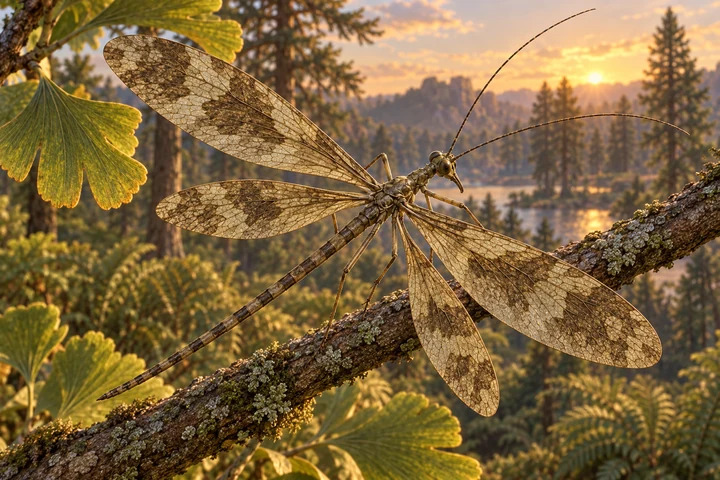
Juracimbrophlebia was a Jurassic hangingfly with wings resembling multilobed ginkgo-like leaves.
Kalligramma
Prehistoric insect
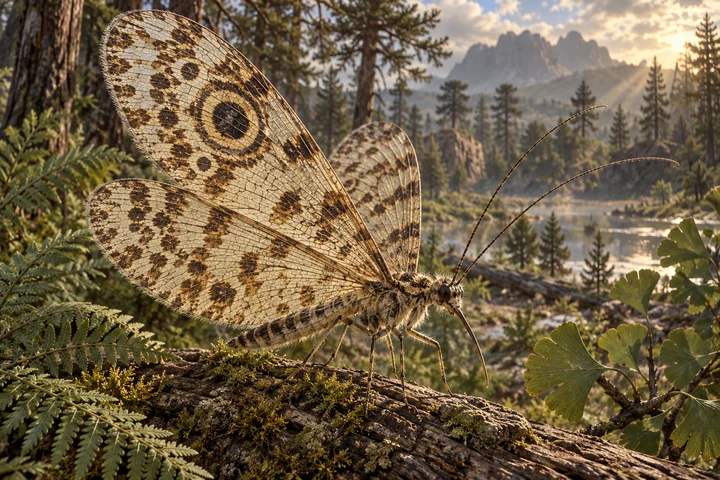
Kalligramma was a large lacewing whose patterned wings recall butterflies, despite its different ancestry.
Archaboilus
Prehistoric insect
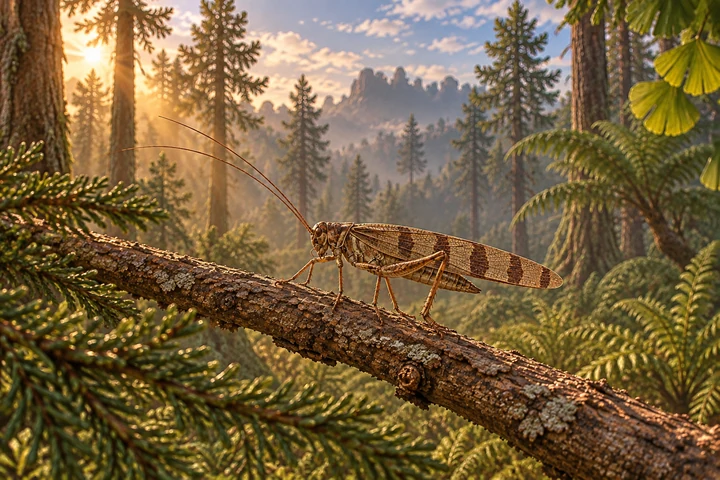
Archaboilus was a Jurassic katydid relative whose fossil wings preserve clues to ancient insect calls.