
Size reference
Source supportedA restored forewing about 90 mm long
K. elegans type preserves 75 mm of one wing; neither value is body length or total wingspan. [D1]
EXHIBIT 204
Kalligramma
Prehistoric insect
Kalligramma was a large lacewing whose patterned wings recall butterflies, despite its different ancestry. [1]
TWO WAYS TO PICTURE THE PAST
Compare the evidence with the familiar movie image. The illustrations are not to a shared scale.
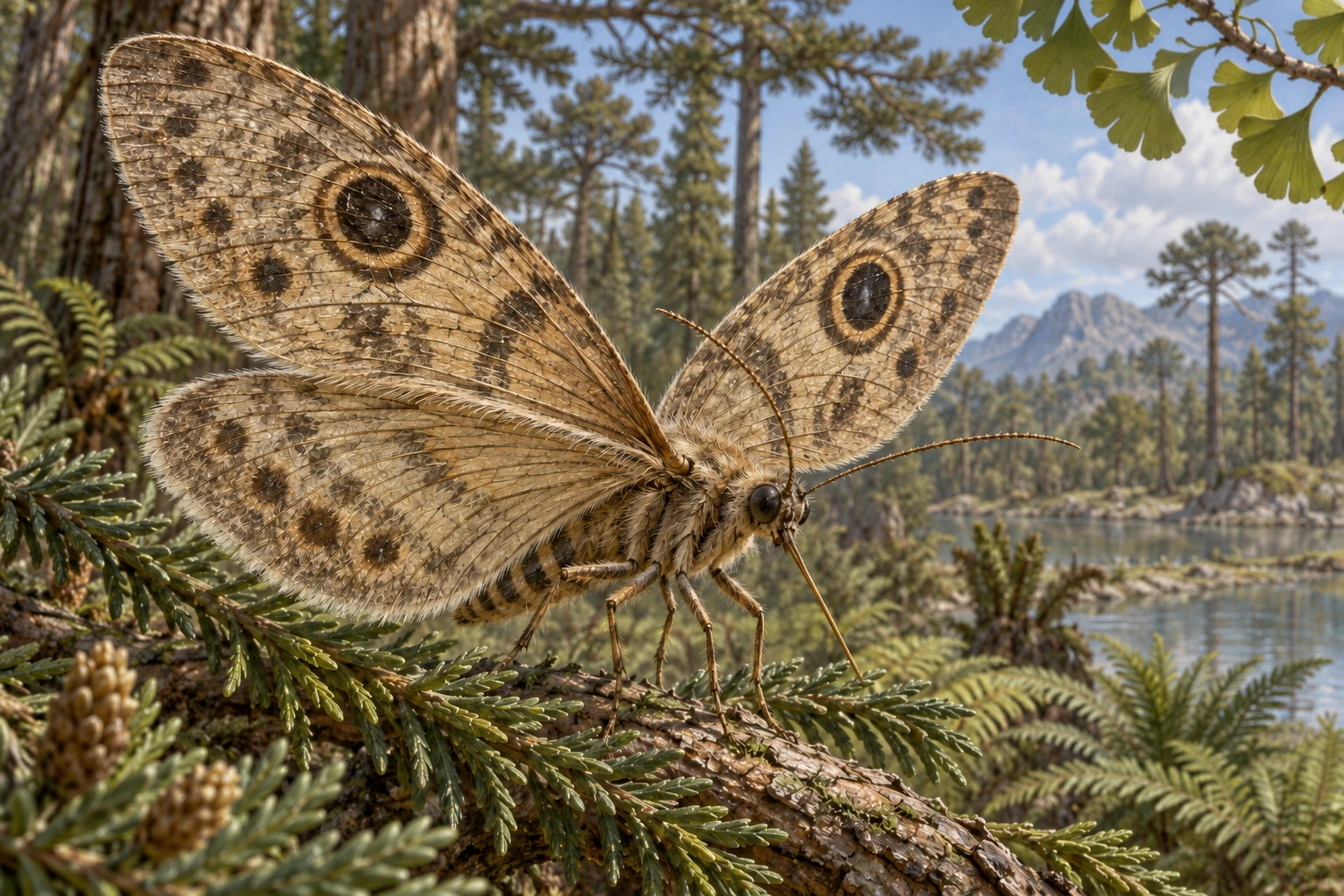
An illustrative reconstruction. Compare its anatomy with the evidence and limitations in the dossier. [1]
Source-informed reconstruction. Appearance evidence [1]. Original illustration; missing anatomy, coloration and scenery include interpretation.
Fossils constrain this life reconstruction. Missing anatomy, coloration and the environmental scene include interpretation; the dossier explains the evidence limits.
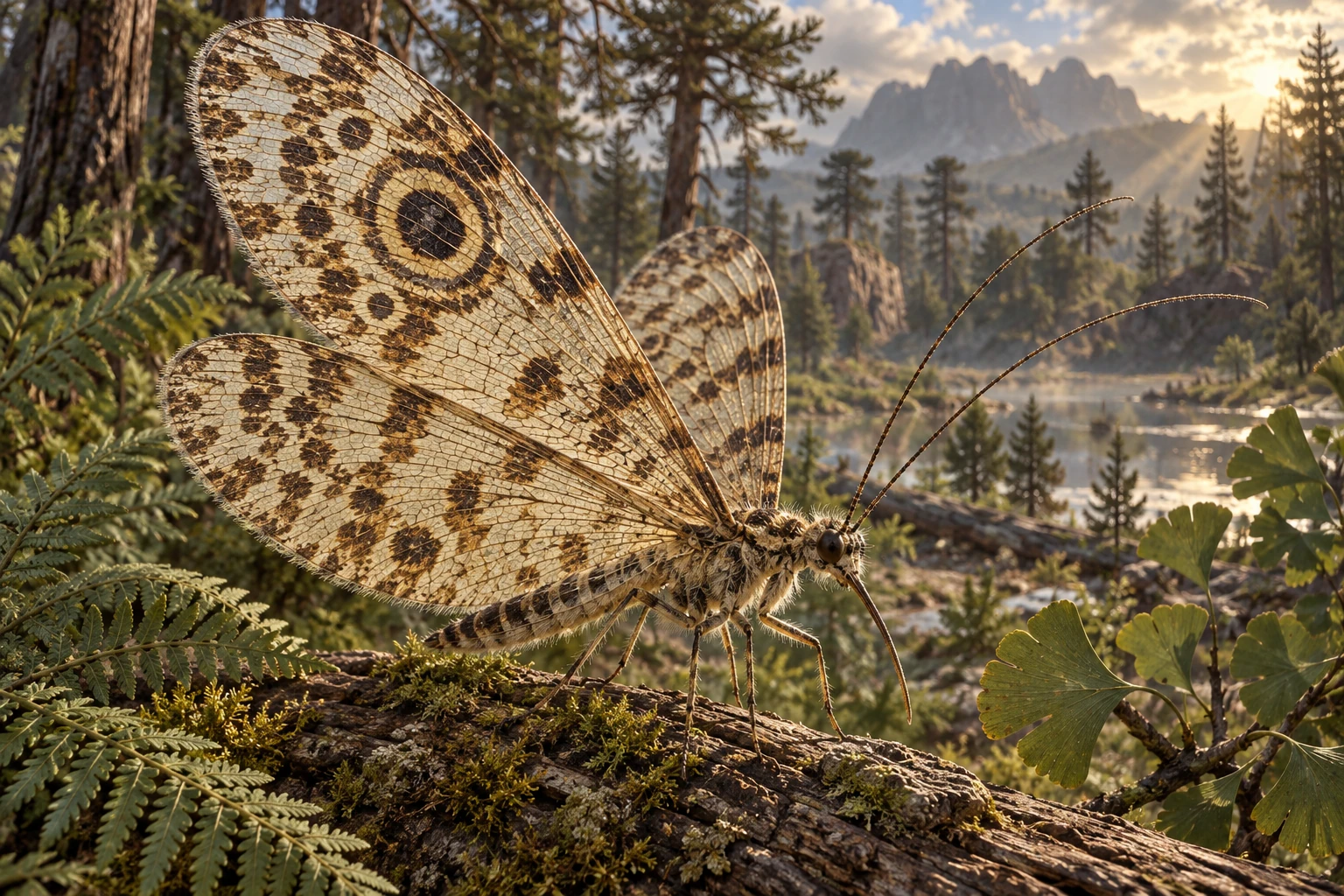
An illustrative reconstruction. Compare its anatomy with the evidence and limitations in the dossier. Lighting, coloration and scenery are artistic choices. This image does not document a fossil locality or behavior.
Original artwork · artistic interpretation.
Scientific view: source-informed reconstruction, credited paleoart or specimen-based imagery. Movie-style view: Original artistic interpretation. Reconstructions involve uncertainty.
MEET THE ANIMAL
Kalligramma was a large prehistoric lacewing with beautifully patterned wings. One Middle Jurassic species from China, Kalligramma elegans, is known from an incomplete forewing. The preserved part is 75 millimeters long, and researchers restored the complete wing at about 90 millimeters. Its dark central spot and smaller surrounding spots survive in the fossil. A single wing measurement must not be mistaken for the length of the whole insect. [D1]
These insects looked rather like butterflies, but they belonged to a different insect order. Researchers compared their wings and long feeding mouthparts with those of later butterflies. The mouthparts suggest drinking fluids associated with seed plants such as gymnosperms. Helping move pollen is a reasonable ecological interpretation, although it does not identify every plant visited by an individual insect. [D2]
The evidence leaves much of the life cycle open. A broad study of related lacewings does not supply Kalligramma eggs, larvae or cooperative groups. Wing patterns may have helped in defense, but that idea is different from an observed behavior. A reconstruction can show the likely adult outline while keeping these questions visible. [D3]
PREHISTORIC ANIMAL DOSSIER
The animal, the evidence, and the questions still open.
Long mouthparts and patterned wings support comparisons with butterflies, but these insects belonged to Neuroptera. [D2]
Profile scope: Genus — Kalligramma; Middle Jurassic K. elegans supplies the focal wing pattern. [D1]
Source supported identifies a description documented by the cited source. Inferred marks a reconstruction or functional estimate. Debated marks competing interpretations. Not established means the sources reviewed for this dossier do not support a firm conclusion; it does not mean a behavior never occurred.
A size reference is an estimate, not a population range. Nesting evidence does not by itself establish courtship, mate choice, or lifelong pairing.
A restored forewing about 90 mm long
K. elegans type preserves 75 mm of one wing; neither value is body length or total wingspan. [D1]
Not established here
The focal wing fossil does not yield a defensible body-mass estimate. [D1]
Plant-fluid feeding inferred
Sucking mouthparts in studied relatives and genus examples fit gymnosperm pollination drops; precise meals remain uncertain. [D2]
Mesozoic gymnosperm vegetation
Daohugou wing fossils establish regional occurrence; a woodland feeding scene is an ecological reconstruction. [D1]
Flight inferred from wings
Broad forewings and hind wings support flight; a numerical flight speed is unknown. [D2]
Veined wings with patterned eyespots
K. elegans has a central eyespot and surrounding spots; missing body anatomy is comparative. [D1]
Not established here
The reviewed family study does not establish Kalligramma eggs or larvae. [D3]
Not established here
Wing markings do not establish a mating display. [D2]
Not established here
The reviewed material does not establish cooperative groups. [D3]
Sources and inspection notes for the claims in this profile.
THE STORY IN THE FOSSILS
Similar wing patterns and feeding tools can arise in different insect lineages. Resemblance alone does not make a lacewing a butterfly. [2]
The dossier identifies the scope of each reference estimate. A mount, an individual fossil and a species-wide adult range are different measurements. Comparison metrics remain unavailable where adult scope has not been established. Unknown does not mean zero.
Sources support the stated claims and scopes. Refer to the evidence notes for uncertainty.
KEEP EXPLORING
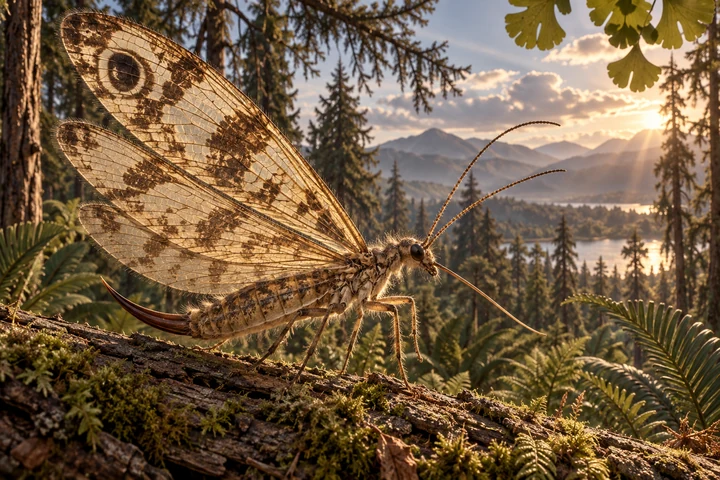
Oregramma
Prehistoric insect
Oregramma was an eyespotted lacewing with sucking mouthparts; one female preserves an unusually long curved ovipositor.
Pseudopulex
Prehistoric insect
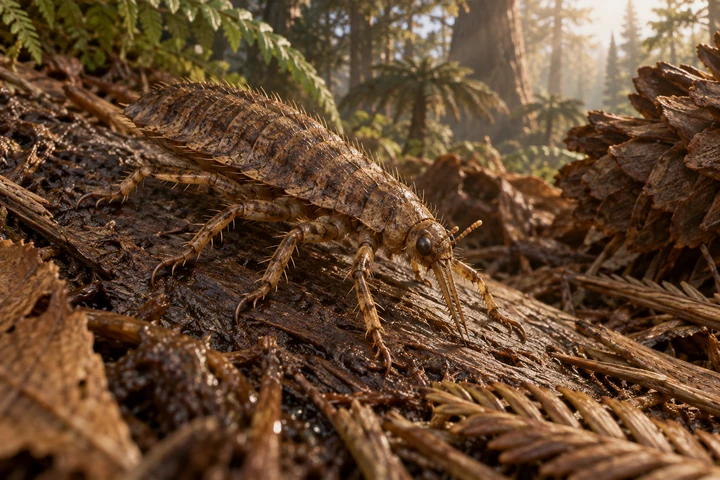
Pseudopulex was a wingless flea-like insect with long piercing mouthparts and strong claws.
Mamenchisaurus
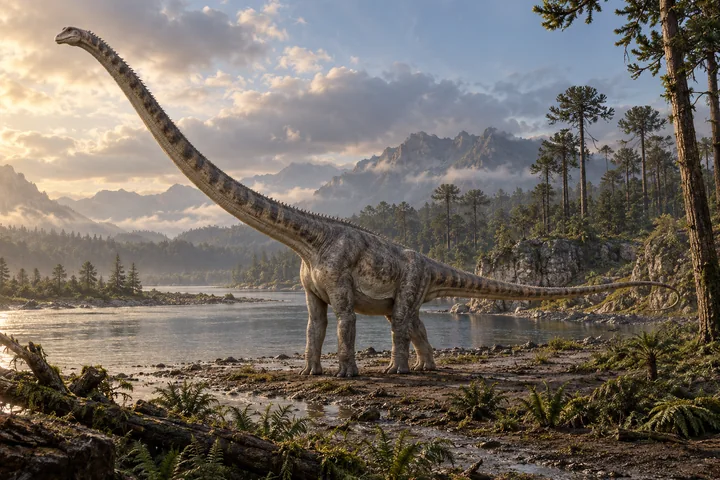
Mamenchisaurus includes long-necked Chinese sauropods. Differing species and recent research require revision of the traditional genus.