
Size reference
Source supported14.8 mm female; approximately 8 mm male
P. wangi type and allotype body measurements are specimen references, not a genus-wide size range. [D2]
EXHIBIT 206
Pseudopulex
Prehistoric insect
Pseudopulex was a wingless flea-like insect with long piercing mouthparts and strong claws. [1]
TWO WAYS TO PICTURE THE PAST
Compare the evidence with the familiar movie image. The illustrations are not to a shared scale.
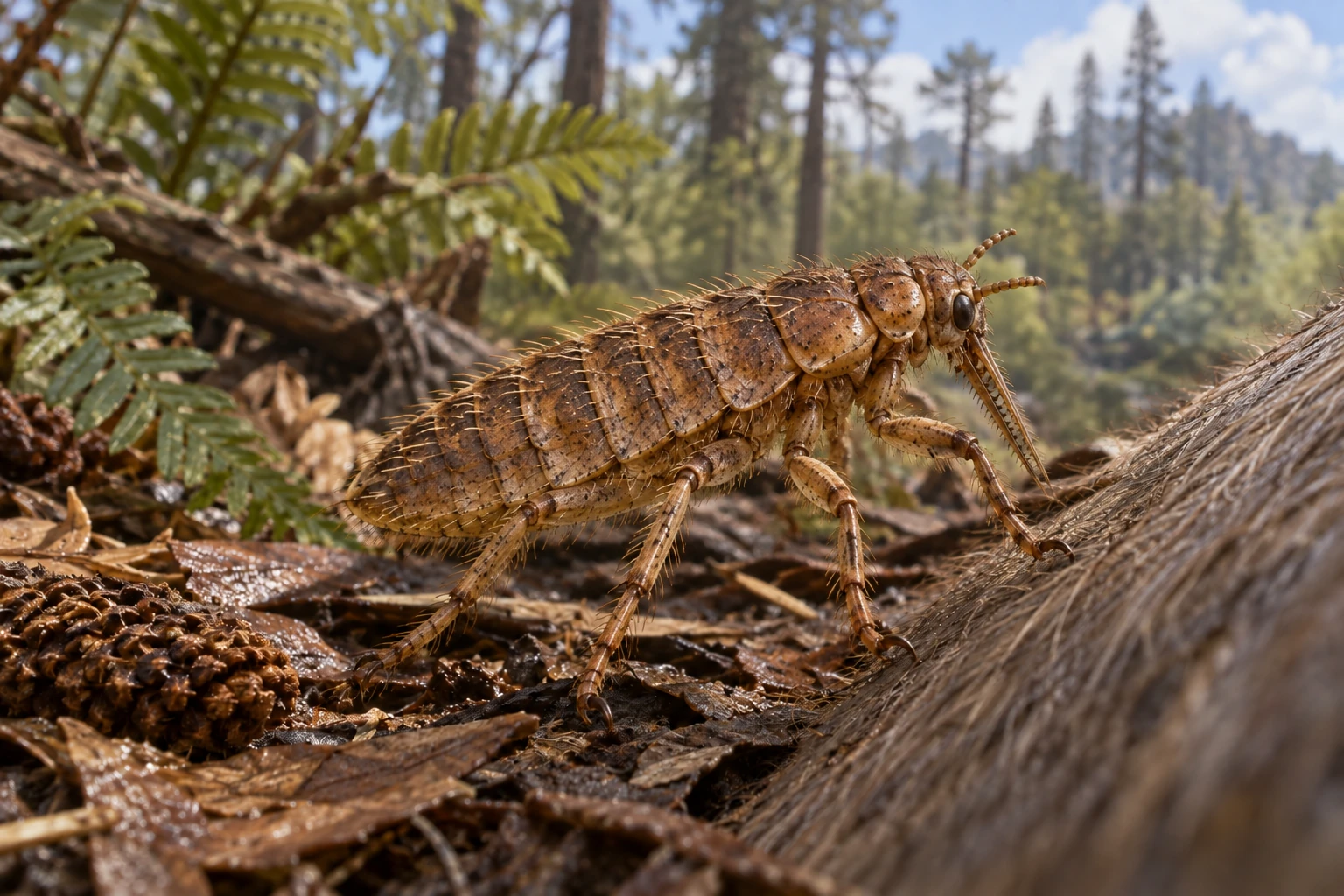
An illustrative reconstruction. Compare its anatomy with the evidence and limitations in the dossier. [1]
Source-informed reconstruction. Appearance evidence [1]. Original illustration; missing anatomy, coloration and scenery include interpretation.
Fossils constrain this life reconstruction. Missing anatomy, coloration and the environmental scene include interpretation; the dossier explains the evidence limits.
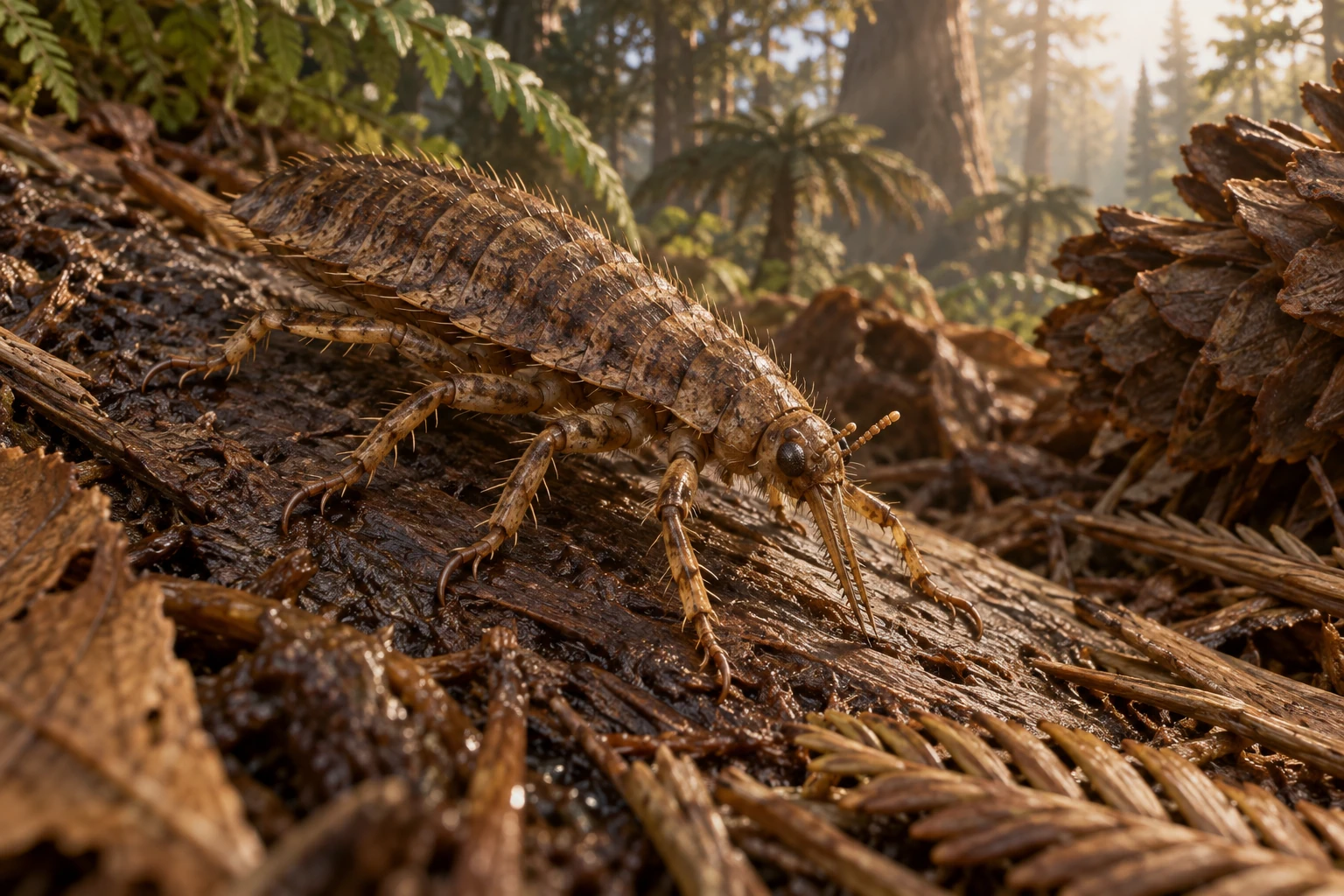
An illustrative reconstruction. Compare its anatomy with the evidence and limitations in the dossier. Lighting, coloration and scenery are artistic choices. This image does not document a fossil locality or behavior.
Original artwork · artistic interpretation.
Scientific view: source-informed reconstruction, credited paleoart or specimen-based imagery. Movie-style view: Original artistic interpretation. Reconstructions involve uncertainty.
MEET THE ANIMAL
Pseudopulex was a wingless insect from Jurassic and Cretaceous China. It had long legs with strong claws, a bristly body and long piercing mouthparts. These features led researchers to compare it with fleas and infer that it fed on vertebrate blood. The proposed hosts included several kinds of animals, but no fossil fixes its menu to a particular dinosaur or mammal. A possible host is not an identified host. [D1]
One species, Pseudopulex wangi, is represented by a female about 14.8 millimeters long and a male about 8 millimeters long. Those measurements belong to two specimens, not to all species in the genus. Its legs were unlike the specialized jumping legs of many modern fleas. Researchers considered whether males could make small jumps, but described that possibility as a hypothesis needing more evidence. [D2]
Another species provides an unusual clue: a female Pseudopulex tanlan had an expanded abdomen. Researchers suggested a recent blood meal, while acknowledging that carrying eggs could be another explanation. The shape does not preserve the meal or a verified clutch of eggs. It helps frame a question rather than close the case. [D3]
PREHISTORIC ANIMAL DOSSIER
The animal, the evidence, and the questions still open.
A distended P. tanlan abdomen suggests a blood meal, but the researchers also considered an egg-load explanation. [D3]
Profile scope: Genus — Pseudopulex; P. wangi supplies the focal body reconstruction, with other named species included. [D2]
Source supported identifies a description documented by the cited source. Inferred marks a reconstruction or functional estimate. Debated marks competing interpretations. Not established means the sources reviewed for this dossier do not support a firm conclusion; it does not mean a behavior never occurred.
A size reference is an estimate, not a population range. Nesting evidence does not by itself establish courtship, mate choice, or lifelong pairing.
14.8 mm female; approximately 8 mm male
P. wangi type and allotype body measurements are specimen references, not a genus-wide size range. [D2]
Not established here
No defensible body mass is supplied by the reviewed taxonomy. [D2]
Blood feeding inferred
Long serrated mouthparts support piercing a vertebrate host; no particular dinosaur, mammal or bird host is identified. [D1]
Jurassic and Cretaceous terrestrial ecosystems
Chinese compression fossils establish regional occurrence; proposed living hosts are ecological hypotheses. [D1]
Clawed attachment and walking inferred
Modern-style jumping is not established; possible rudimentary male jumping remains speculative. [D2]
Wingless, bristly body and piercing mouthparts
Long legs end in strong claws; the body differs from the laterally compressed outline of modern fleas. [D1]
Not established here
An inflated abdomen could reflect feeding or eggs; the reviewed fossil does not preserve a verified egg series. [D3]
Not established here
Preserved male genitalia do not reveal a courtship sequence. [D3]
Not established here
The reviewed taxonomy establishes no coordinated social organization. [D2]
Sources and inspection notes for the claims in this profile.
THE STORY IN THE FOSSILS
The P. tanlan study favored a recent blood meal, yet retained another explanation. Keeping that alternative matters when behavior is reconstructed from body shape. [3]
The dossier identifies the scope of each reference estimate. A mount, an individual fossil and a species-wide adult range are different measurements. Comparison metrics remain unavailable where adult scope has not been established. Unknown does not mean zero.
Sources support the stated claims and scopes. Refer to the evidence notes for uncertainty.
KEEP EXPLORING
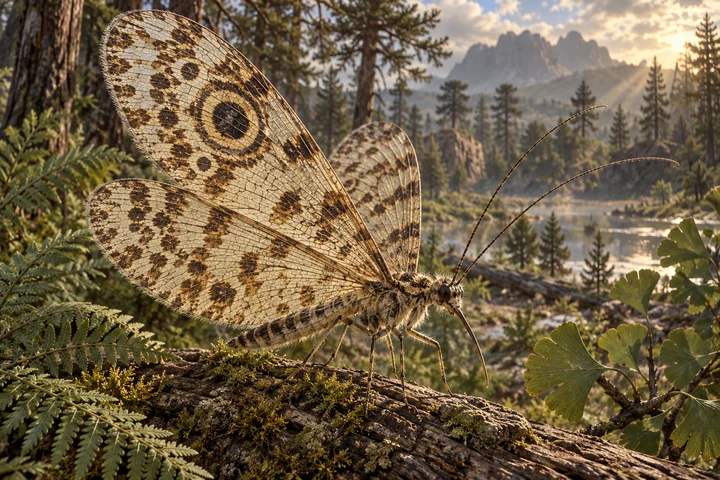
Kalligramma
Prehistoric insect
Kalligramma was a large lacewing whose patterned wings recall butterflies, despite its different ancestry.
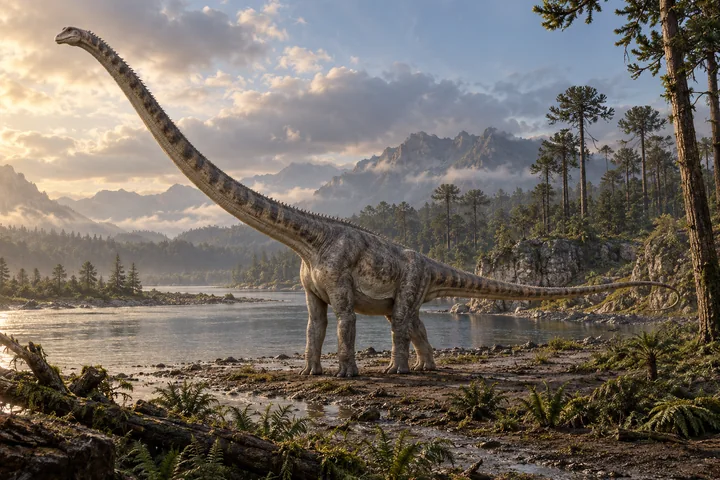
Mamenchisaurus
Mamenchisaurus includes long-necked Chinese sauropods. Differing species and recent research require revision of the traditional genus.
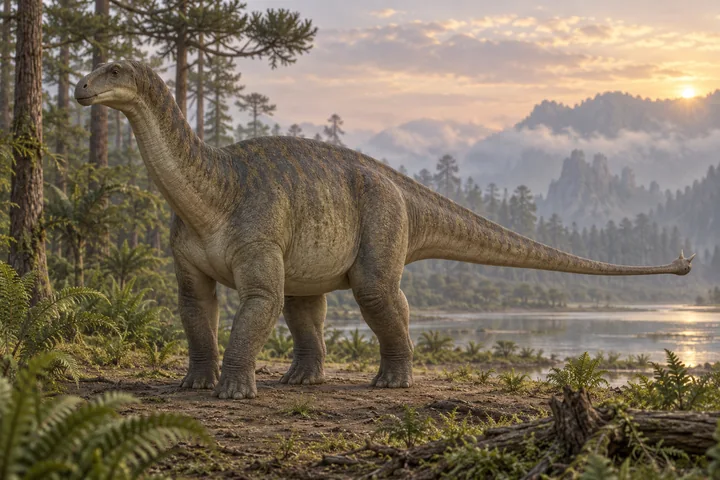
Shunosaurus lii
Shunosaurus was a Chinese plant-eater with a comparatively short neck, stout teeth and a small bony tail club.