
Body length
InferredAbout 6 m (museum reference)
A rounded reconstruction reference. No complete skeleton or specimen-specific maturity assessment accompanies this number. [D1]
EXHIBIT 57
Megalosaurus bucklandii
Megalosaurus bucklandii was a Jurassic predator from England. Its fragmentary bones helped launch dinosaur science, while its modern identity is anchored by a distinctive lower jaw.
TWO WAYS TO PICTURE THE PAST
Compare the evidence with the familiar movie image. The illustrations are not to a shared scale.
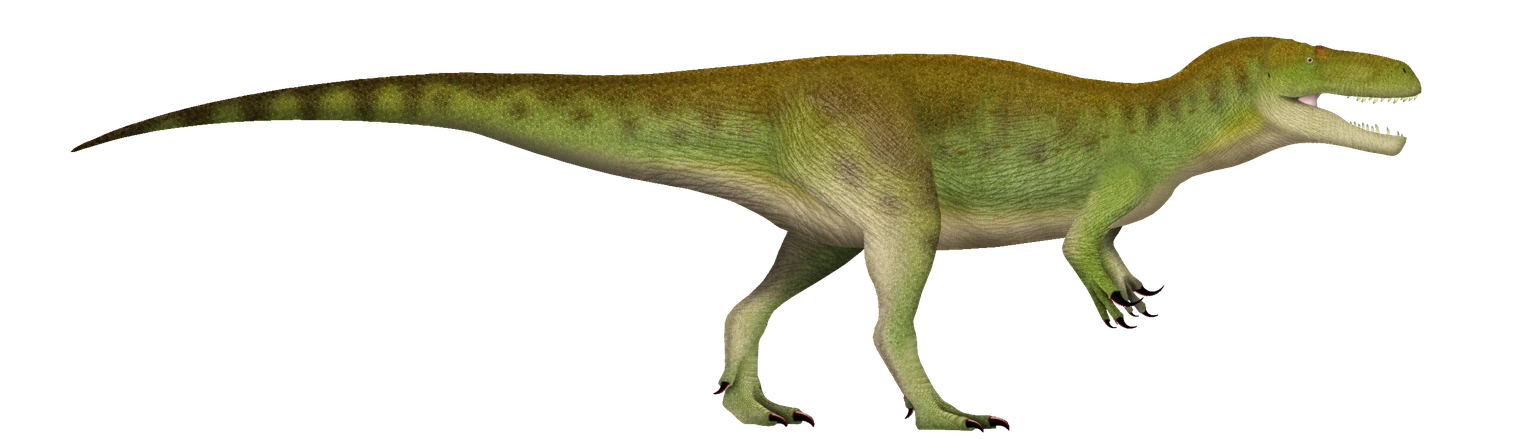
Life reconstruction of Megalosaurus bucklandii by TotalDino. The complete body combines preserved anatomy with reconstructed missing parts; soft tissues and colors are speculative. [2]
Megalosaurus TD.png · TotalDino. CC BY-SA 4.0. Current original resized to 1536px and converted to WebP; 640px thumbnail generated. Composition and colors unchanged.
Scientific reconstruction is an interpretation; source credit does not certify every anatomical detail.
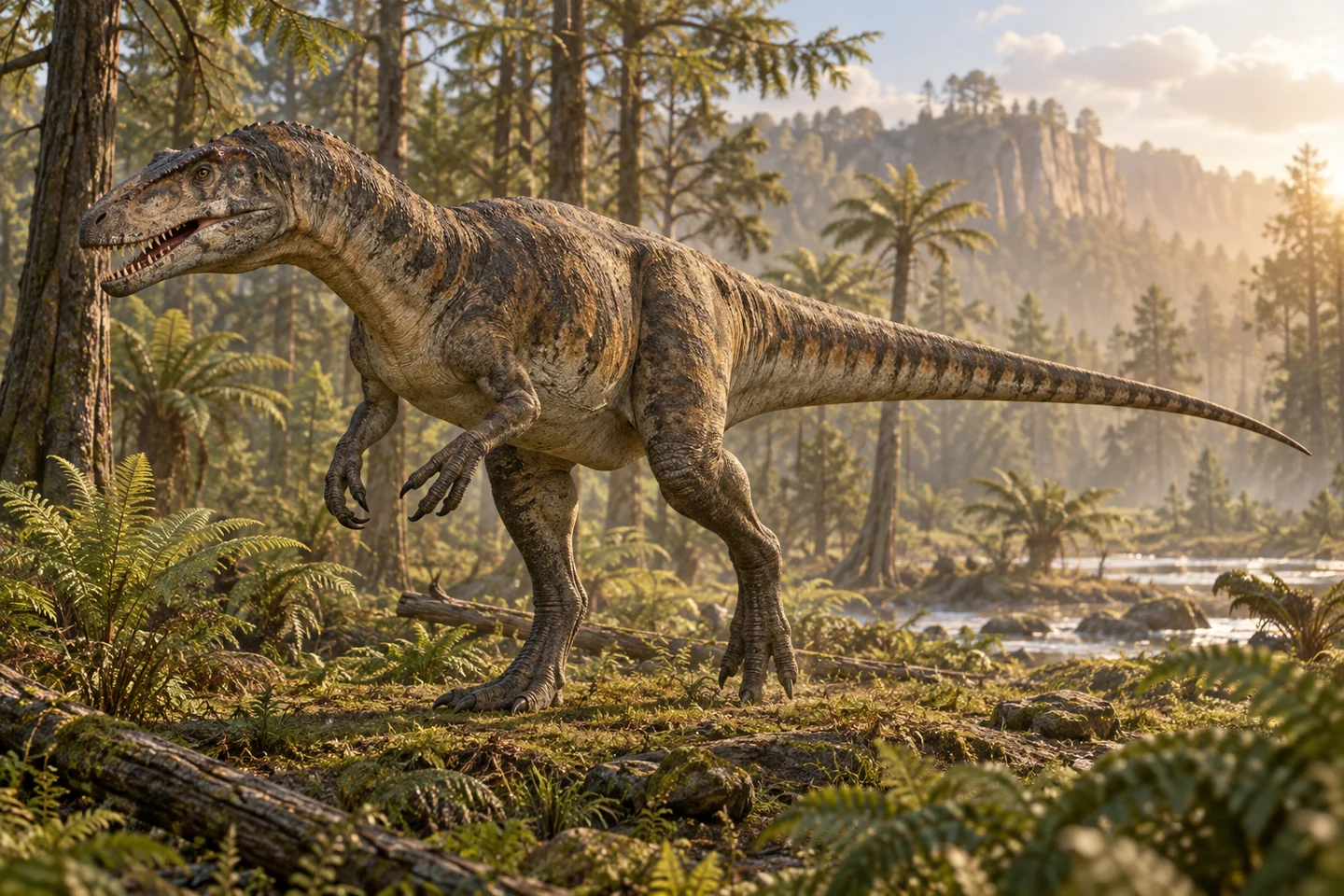
Original cinematic interpretation of Megalosaurus. Anatomy, soft tissues and colors are reconstructed choices. Lighting, coloration and scenery are artistic choices. This image does not document a fossil locality or behavior.
Original artwork · artistic interpretation.
Scientific view: source-informed reconstruction, credited paleoart or specimen-based imagery. Movie-style view: Original artistic interpretation. Reconstructions involve uncertainty.
MEET THE ANIMAL
Megalosaurus bucklandii was a meat-eating dinosaur from Middle Jurassic England. Its fossils were found around Oxfordshire, where a toothed jaw and other incomplete bones puzzled early researchers. Modern reconstructions show a two-legged animal, unlike the large four-legged lizard imagined when the bones were first studied. No complete Megalosaurus skeleton has been found, so reconstructing the whole body requires comparisons. [D1]
The lower jaw remains especially informative. Blade-like teeth with small cutting edges support meat eating, and scanning reveals replacement teeth hidden inside the jaw. These developing teeth could take the place of teeth lost during life. The jaw is also a reference for identifying the species, helping researchers decide whether another fossil really belongs to Megalosaurus bucklandii. [S1]
William Buckland named Megalosaurus in 1824, before the word dinosaur existed. Its changing reconstruction reflects a growing understanding of dinosaur anatomy: shorter arms, weight carried on the hindlimbs and a more horizontal body replaced the original lizard-like picture. The name has remained famous while the interpretation of its bones has improved. Historical artwork therefore records scientific ideas of its own time, rather than a direct view of the Jurassic animal. [S1]
PREHISTORIC ANIMAL DOSSIER
The animal, the evidence, and the questions still open.
A two-legged carnivore from Middle Jurassic England, Megalosaurus illustrates how fragmentary fossils can yield both a recognizable animal and a changing scientific interpretation.
Profile scope: Species — Megalosaurus bucklandii; excludes the many unrelated fossils historically placed in Megalosaurus.
Source supported identifies a description documented by the cited source. Inferred marks a reconstruction or functional estimate. Debated marks competing interpretations. Not established means the sources reviewed for this dossier do not support a firm conclusion; it does not mean a behavior never occurred.
A size reference is an estimate, not a population range. Nesting evidence does not by itself establish courtship, mate choice, or lifelong pairing.
About 6 m (museum reference)
A rounded reconstruction reference. No complete skeleton or specimen-specific maturity assessment accompanies this number. [D1]
Not established here
No suitably scoped body-mass estimate was established from the sources reviewed.
Meat-eating
The museum identifies it as a carnivore; this does not specify prey choice or hunting strategy. [D1]
Oxfordshire, England
Known fossils come from this region's Bathonian deposits. Locality establishes occurrence, rather than one preferred habitat. [D1]
Two-legged movement
Modern skeletal interpretation identifies a biped, replacing early four-legged restorations. [D1]
A diagnostic toothed lower jaw
The lectotype right dentary has distinctive surface and internal-opening features that support recognition of this species. [D2]
Not established here
The reviewed species sources do not establish nest structure, clutch size or parental care.
Not established here
No species-specific mating ritual or courtship display is established by the reviewed sources.
Not established here
The reviewed remains do not establish permanent groups, cooperative hunting or solitary living.
Sources and inspection notes for the claims in this profile.
THE STORY IN THE FOSSILS
William Buckland described Megalosaurus in 1824, before the word dinosaur existed. The Stonesfield material became a foundation for recognizing a previously unknown kind of animal. [2]
Its identity today depends on careful anatomical comparison, including the distinctive right lower jaw selected as its name-bearing specimen. The incomplete skeleton leaves room for interpretation without making the species unrecognizable. [2]
The dossier identifies the scope of each reference estimate. A mount, an individual fossil and a species-wide adult range are different measurements. Comparison metrics remain unavailable where adult scope has not been established. Unknown does not mean zero.
Sources support the stated claims and scopes. Refer to the evidence notes for uncertainty.
KEEP EXPLORING
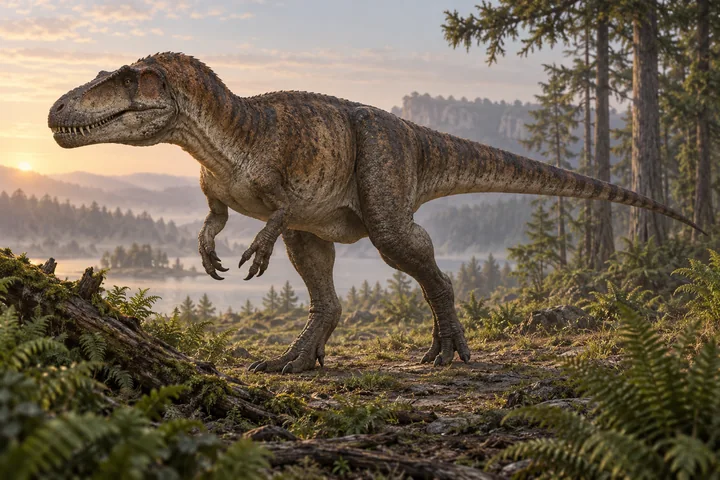
Torvosaurus tanneri
Torvosaurus combined powerful jaws with a rare embryonic record.
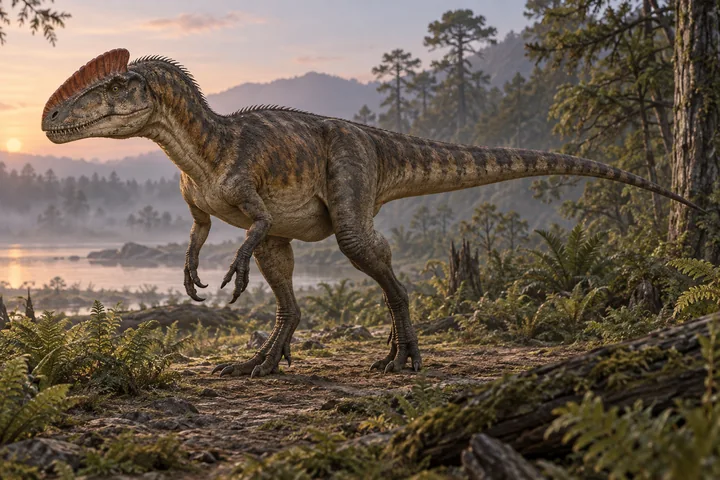
Monolophosaurus jiangi
Monolophosaurus is recognized by a single crest along its skull.
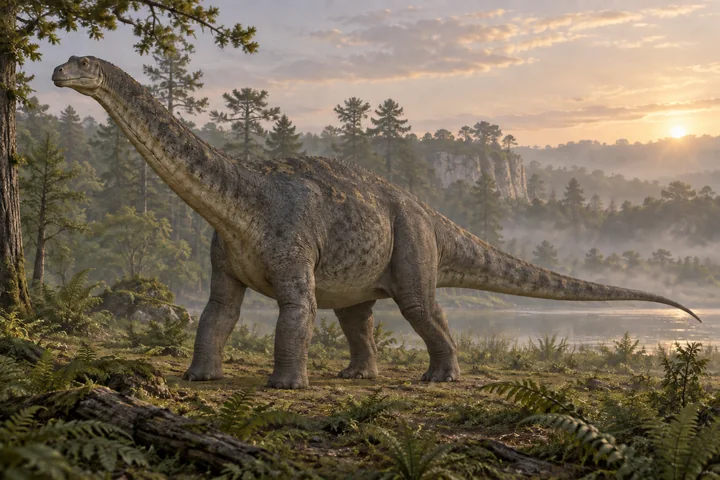
Cetiosaurus oxoniensis
Cetiosaurus was a large terrestrial plant-eater from Middle Jurassic England, represented by important partial skeletons rather than one complete fossil body.