
Body length
InferredAbout 18 m; museum reference
The directory supplies no named individual, maturity assessment or body-restoration method. This reference should not be read as a preserved total length or adult species maximum. [D4]
TWO WAYS TO PICTURE THE PAST
Compare the evidence with the familiar movie image. The illustrations are not to a shared scale.
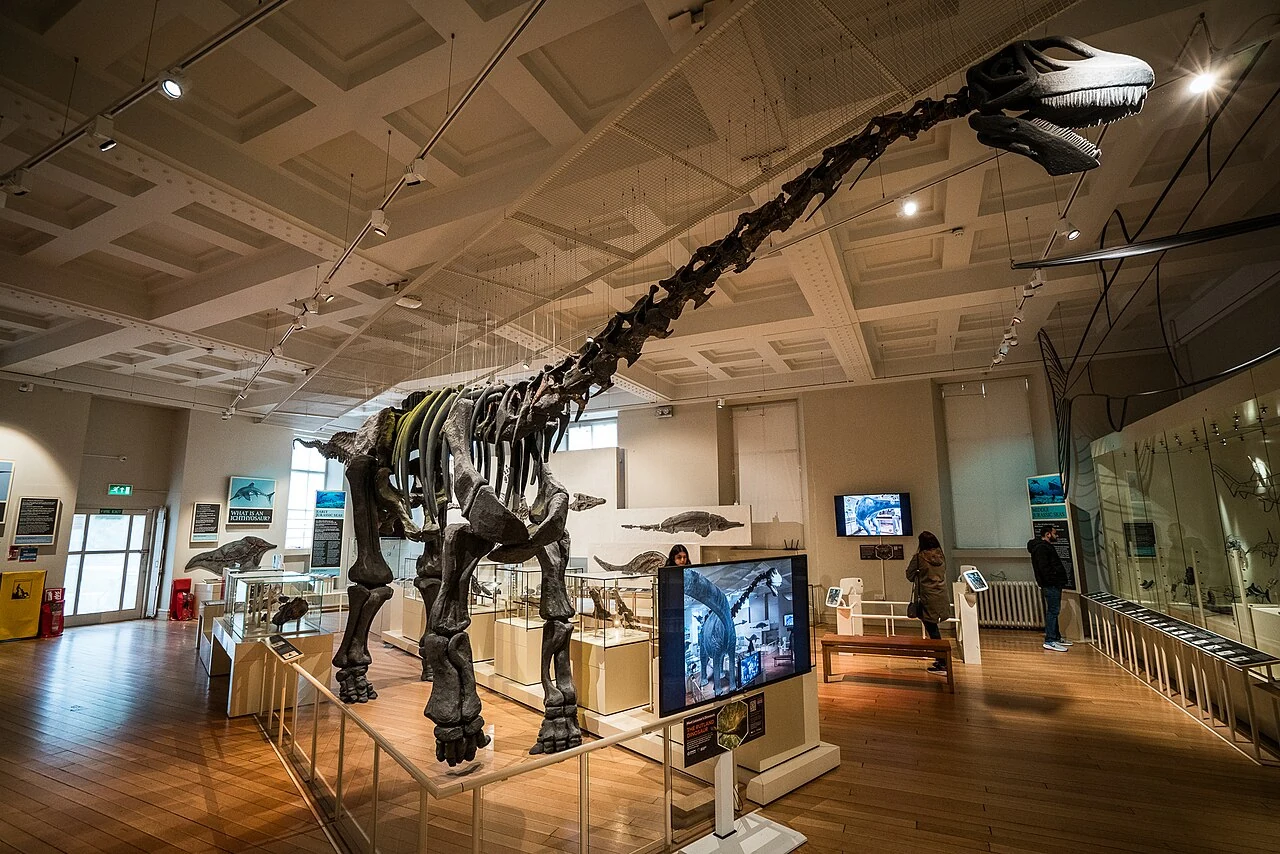
Cetiosaurus reconstruction at Leicester Museum, based on the partial Rutland skeleton. Restored portions, including the head, complete the display; it is not one complete skeleton recovered intact. [1]
Cetiosaurus Dinosaur Skeleton, Leicester Museum · Brian Deegan. CC BY-SA 2.0. Resized proportionally and converted to WebP; no anatomical edits. Same source license applies.
Skeletal mounts and drawings may restore missing parts; the caption identifies the displayed material.
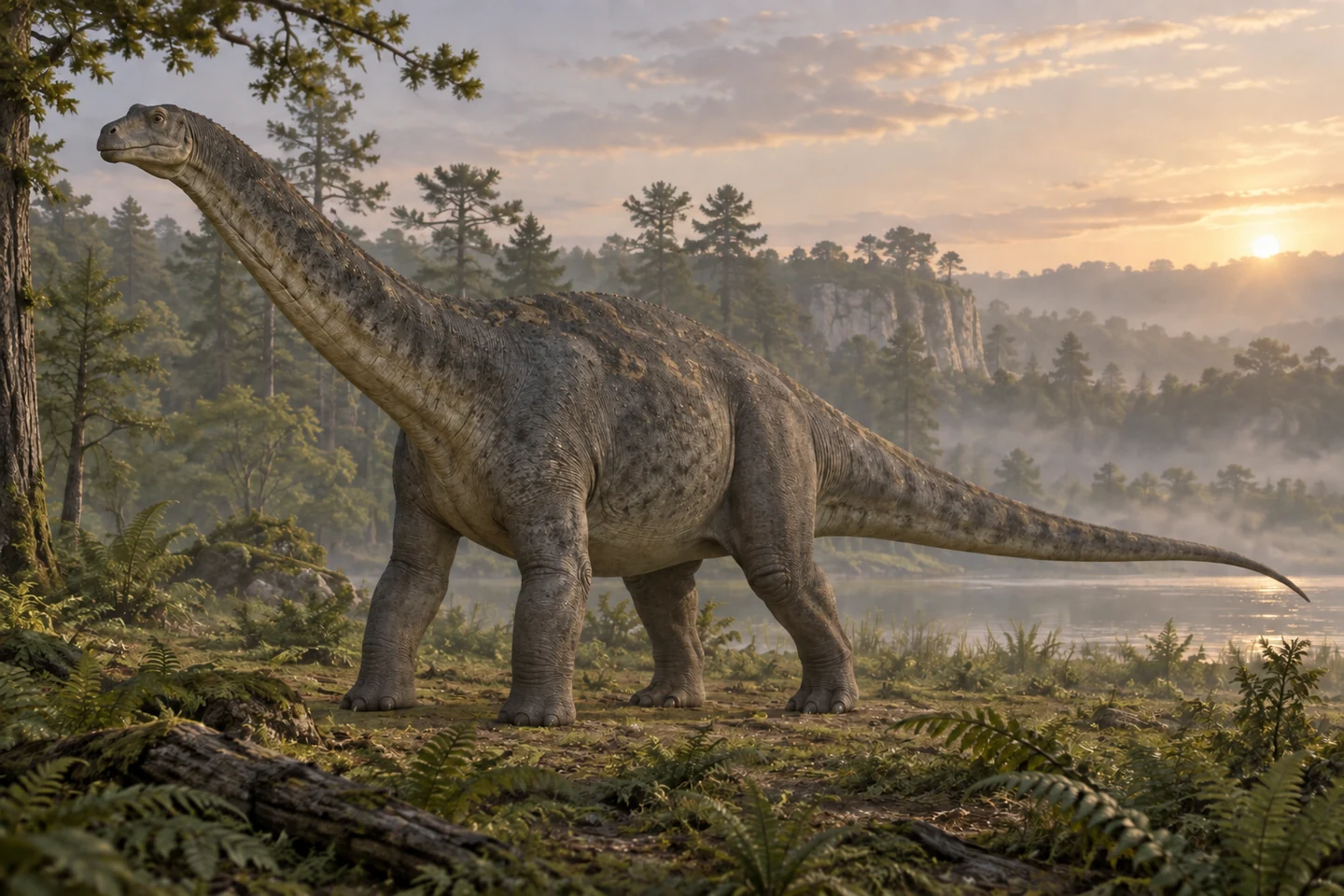
Original cinematic interpretation of Cetiosaurus oxoniensis. Colors, soft tissues, scenery and missing anatomy are reconstructed artistic choices; this is not a directly observed individual or behavior. Fine manus detail remains illustrative rather than an exact hand reconstruction. Lighting, coloration and scenery are artistic choices. This image does not document a fossil locality or behavior.
Original artwork · artistic interpretation.
Scientific view: source-informed reconstruction, credited paleoart or specimen-based imagery. Movie-style view: Original artistic interpretation. Reconstructions involve uncertainty.
MEET THE ANIMAL
Cetiosaurus was a plant-eating sauropod from Middle Jurassic Britain. A museum reference of about eighteen metres gives a general sense of size, without identifying one measured complete individual. Its name has been applied to different fossils over a long research history, so deciding which animal the name actually identifies is essential. [D4]
An official nomenclatural ruling in 2014 fixed Cetiosaurus oxoniensis as the type species. A type species anchors the meaning of a genus name, making future comparisons less ambiguous. Such a decision organizes naming rather than supplying a new body measurement. It helps keep one identifiable dinosaur separate from a collection of historical labels. [D3]
The Rutland skeleton is incomplete but preserves an informative neck series. Research used it to revise the estimated number of neck and back vertebrae, the bones of the backbone. A partial animal can therefore improve a whole-body reconstruction even without becoming a complete discovery. The important question is which parts are genuinely preserved and which details were inferred from them or restored for display. [D2]
PREHISTORIC ANIMAL DOSSIER
The animal, the evidence, and the questions still open.
The Oxfordshire material and the Rutland partial skeleton reveal a robust early eusauropod. Different deposits and individuals contribute to its anatomical reconstruction. [D1]
Profile scope: Genus profile centered on Cetiosaurus oxoniensis, the conserved type species. Historically assigned, dubious or subsequently reassigned species are not combined into this animal. [D3] [D1]
Source supported identifies a description documented by the cited source. Inferred marks a reconstruction or functional estimate. Debated marks competing interpretations. Not established means the sources reviewed for this dossier do not support a firm conclusion; it does not mean a behavior never occurred.
A size reference is an estimate, not a population range. Nesting evidence does not by itself establish courtship, mate choice, or lifelong pairing.
About 18 m; museum reference
The directory supplies no named individual, maturity assessment or body-restoration method. This reference should not be read as a preserved total length or adult species maximum. [D4]
About 11 tonnes; historical model reference
Paul identifies an OUMNH large specimen without an inventory or maturity assessment. The volume-and-scaling model is not a measured adult maximum. [D5]
Plants
The museum and anatomical revision identify a terrestrial herbivore. Specific food plants and detailed feeding height remain unresolved here. [D4] [D1]
Middle Jurassic terrestrial England
Reviewed material includes Bajocian Rutland and Bathonian Oxfordshire occurrences. Its original interpretation as a marine crocodile was superseded by terrestrial dinosaur anatomy; fossil burial setting alone does not establish aquatic habits. [D1]
Four-legged, weight-bearing reconstruction
Robust limb and pelvic remains support a quadrupedal sauropod reconstruction. Partial skeletons do not directly record speed or habitual neck posture. [D1]
Robust skeleton and distinctive vertebrae
The Oxfordshire diagnosis includes pyramid-shaped neural spines and tongue-like projections on distal tail vertebrae. The Rutland neck reconstruction has at most thirteen cervicals, rather than earlier estimates of fourteen. [D1] [D2]
Not established here
Reviewed genus-specific sources do not establish assigned eggs, nesting grounds, clutch sizes or parental care. Fossils attributed historically to other species cannot automatically fill these gaps.
Not established here
Focused searches and reviewed skeleton studies do not establish mating displays, mate choice, calls or sex-specific traits.
Not established here
Several differently sized Oxfordshire individuals are represented, but these remains do not establish lasting herd structure or family relationships.
Sources and inspection notes for the claims in this profile.
THE STORY IN THE FOSSILS
The name Cetiosaurus has carried many fossils and historical interpretations. A 2014 nomenclatural ruling fixed Cetiosaurus oxoniensis as its type species, preserving an identifiable British animal. [3]
The Rutland specimen is a partial skeleton, not a complete dinosaur recovered intact. Its nearly complete neck series nevertheless helped revise the number of neck and back vertebrae in reconstructions. [2]
The dossier identifies the scope of each reference estimate. A mount, an individual fossil and a species-wide adult range are different measurements. Comparison metrics remain unavailable where adult scope has not been established. Unknown does not mean zero.
Sources support the stated claims and scopes. Refer to the evidence notes for uncertainty.
KEEP EXPLORING
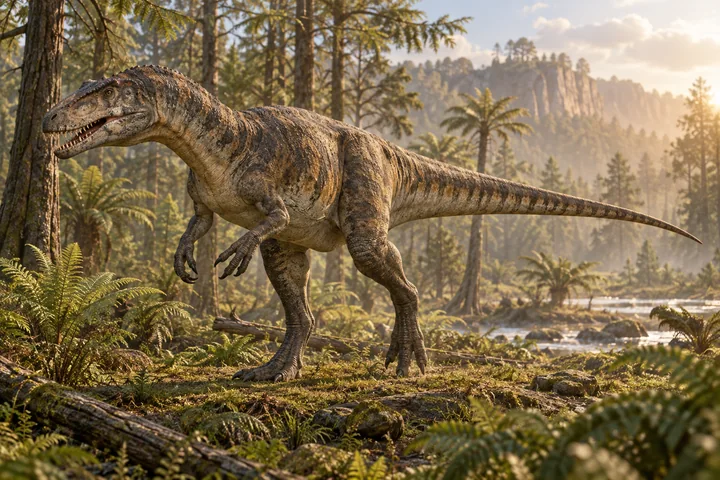
Megalosaurus bucklandii
Megalosaurus bucklandii was a Jurassic predator from England. Its fragmentary bones helped launch dinosaur science, while its modern identity is anchored by a distinctive lower jaw.
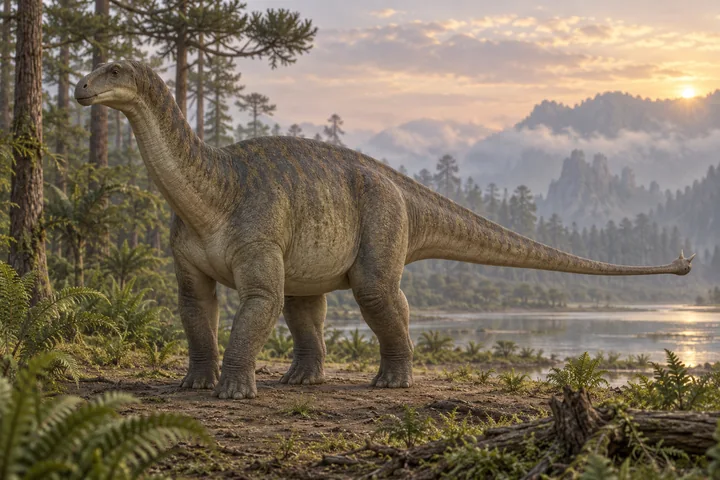
Shunosaurus lii
Shunosaurus was a Chinese plant-eater with a comparatively short neck, stout teeth and a small bony tail club.
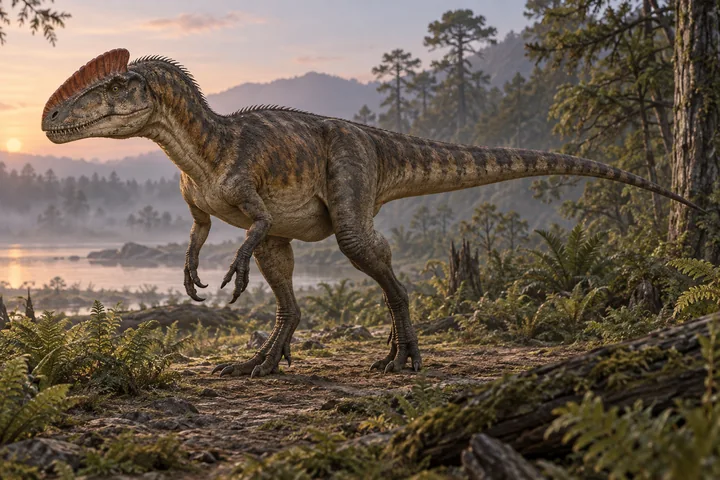
Monolophosaurus jiangi
Monolophosaurus is recognized by a single crest along its skull.