
Body length
InferredAbout 5.7 m (museum reference)
Rounded body reconstruction with no stated maturity assessment; not an adult maximum or measured complete skeleton. [D1]
EXHIBIT 102
Monolophosaurus jiangi
Monolophosaurus is recognized by a single crest along its skull. [2]
TWO WAYS TO PICTURE THE PAST
Compare the evidence with the familiar movie image. The illustrations are not to a shared scale.
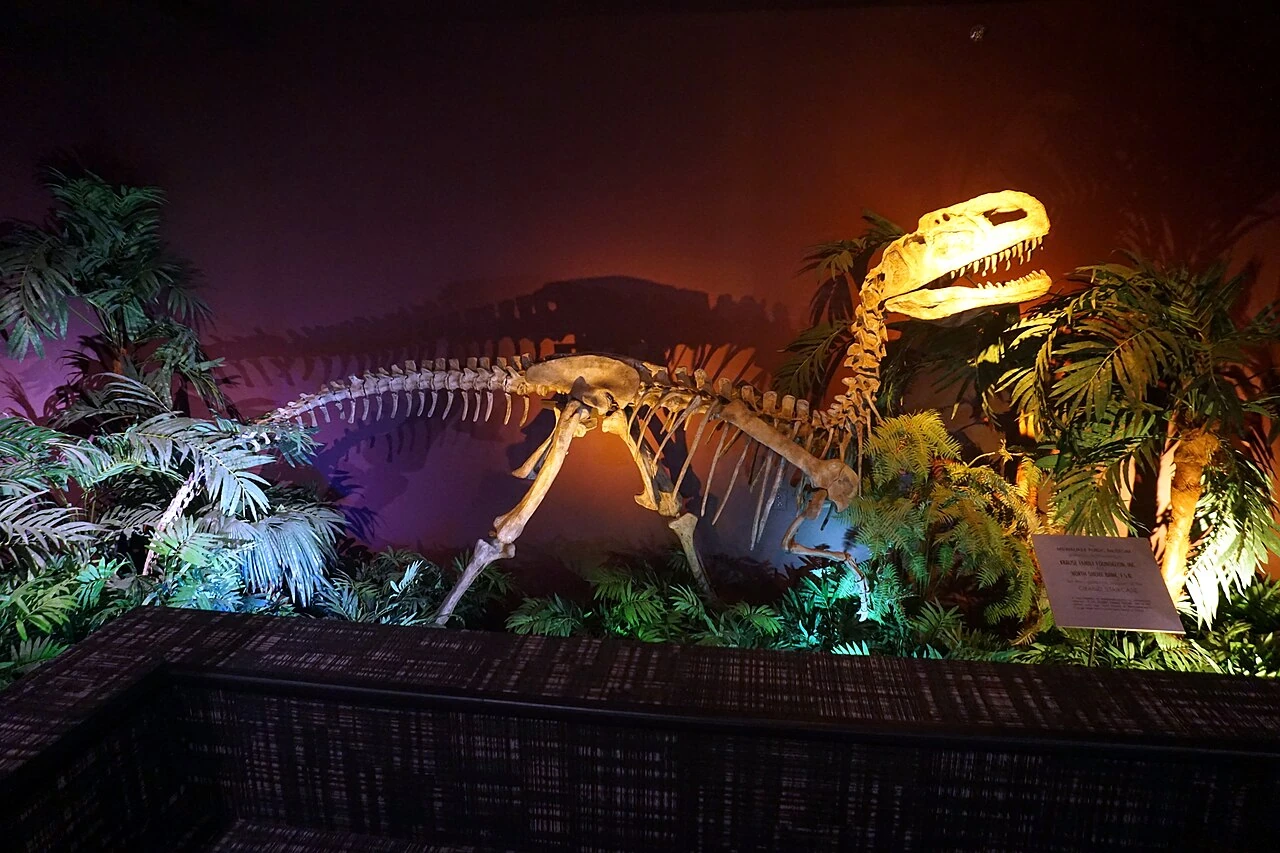
Monolophosaurus cast skeleton at Milwaukee Public Museum, photographed by Michael Barera. The genus has one accepted species, M. jiangi; the photo source does not provide an inventory number. Limbs, most of the tail and the display pose require reconstruction because the described holotype lacks those parts. [2]
Milwaukee Public Museum November 2022 001 (Monolophosaurus cast skeleton).jpg · Michael Barera. CC BY-SA 4.0. Current Commons image converted to WebP and proportionally resized for the thumbnail; no cropping, mirroring, anatomical edits or compositing. Original scale bars and annotations retained where present. Same source license applies.
Skeletal mounts and drawings may restore missing parts; the caption identifies the displayed material.
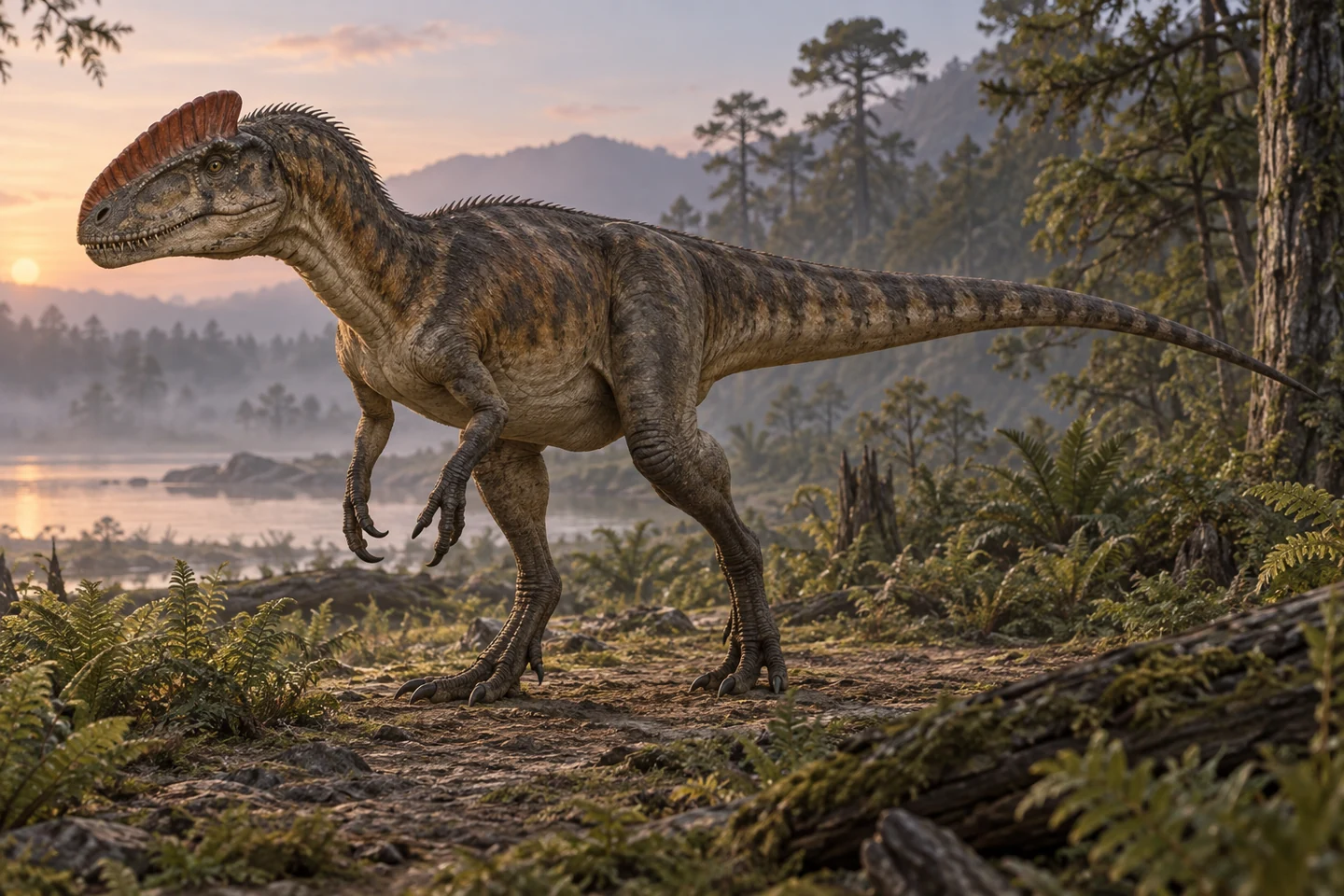
Original cinematic interpretation of Monolophosaurus jiangi. Colors, soft tissues, scenery and missing anatomy are reconstructed artistic choices; this is not a directly observed individual or behavior. Lighting, coloration and scenery are artistic choices. This image does not document a fossil locality or behavior.
Original artwork · artistic interpretation.
Scientific view: source-informed reconstruction, credited paleoart or specimen-based imagery. Movie-style view: Original artistic interpretation. Reconstructions involve uncertainty.
MEET THE ANIMAL
Monolophosaurus was a carnivorous dinosaur recognized by one crest along the middle of its skull. A museum reference of about 5.7 metres introduces its scale without establishing a measured adult maximum. Its toothed head and distinctive outline are easier to reconstruct than a complete account of hunting or social behavior. [D1]
The well-preserved skull has been compared carefully with Guanlong, another crested dinosaur. A revision rejected the idea that Guanlong was simply a young Monolophosaurus. Their differences involve anatomy, not just overall size. Comparing recognizable features helps researchers decide whether fossils represent growth stages of one animal or separate kinds of dinosaurs. [D2]
The crest has inspired suggestions about visual signals and possible sound-related functions. These proposals use comparisons with living archosaurs, the wider group including crocodilians and birds. Such comparisons can suggest questions to test, but they do not establish a mating display or prove one exclusive function. A conspicuous crest tells us that the animal had unusual head anatomy; it does not tell us exactly how other animals responded to it. [D5]
PREHISTORIC ANIMAL DOSSIER
The animal, the evidence, and the questions still open.
Complete displays restore absent limbs and much of the tail. [D3]
Profile scope: Species — Monolophosaurus jiangi. [D2]
Source supported identifies a description documented by the cited source. Inferred marks a reconstruction or functional estimate. Debated marks competing interpretations. Not established means the sources reviewed for this dossier do not support a firm conclusion; it does not mean a behavior never occurred.
A size reference is an estimate, not a population range. Nesting evidence does not by itself establish courtship, mate choice, or lifelong pairing.
About 5.7 m (museum reference)
Rounded body reconstruction with no stated maturity assessment; not an adult maximum or measured complete skeleton. [D1]
About 475 kg for an IVPP 84019 model
Paul's volume model restores missing limbs and soft tissues. Vertebral fusion suggests an adult or near-mature subadult; precise life stage remains uncertain. [D4] [D3]
Carnivorous theropod
The museum identifies meat-eating. No specific meal, prey preference or stomach content is established by the reviewed evidence. [D1]
Middle Jurassic Shishugou deposits
The original postcranial review places the holotype in the Middle Jurassic of Xinjiang. This fossil occurrence does not identify an exclusive landscape preference. [D3]
Two-legged reconstruction, with missing limbs
A bipedal theropod stance is reconstructed. The described specimen preserves axial and pelvic material but lacks the appendicular skeleton, so limb details in complete displays are restored. [D3]
Single midline skull crest
The well-preserved skull carries a distinctive crest; it differs from the crest and anatomy of Guanlong. Full mounts include missing parts, especially limbs. [D2] [D3]
Not established here
Focused nesting, egg and growth searches did not establish a Monolophosaurus clutch, incubation duration, parental care or breeding maturity.
Display proposed; courtship unknown
An archosaur comparison proposes visual and possible acoustic signaling for the hollow crest. It does not demonstrate sexual dimorphism, mate choice, a ritual or an exclusive crest function. [D5]
Not established here
A conspicuous crest may have communicated information, but reviewed evidence does not establish permanent groups, solitary habits or coordinated hunting.
Sources and inspection notes for the claims in this profile.
THE STORY IN THE FOSSILS
Monolophosaurus and Guanlong both have conspicuous crests, but the skull revision rejects the idea that Guanlong is a juvenile Monolophosaurus. Their differences are anatomical, not simply a small-versus-large comparison. [2]
Complete displays can conceal gaps. The postcranial review distinguishes original bone from plaster restoration and documents missing limbs. A coherent museum skeleton includes anatomical restoration. [3]
The dossier identifies the scope of each reference estimate. A mount, an individual fossil and a species-wide adult range are different measurements. Comparison metrics remain unavailable where adult scope has not been established. Unknown does not mean zero.
Sources support the stated claims and scopes. Refer to the evidence notes for uncertainty.
KEEP EXPLORING
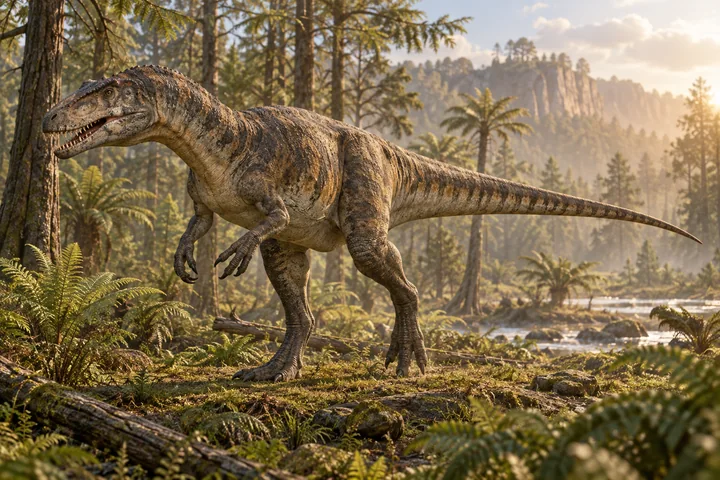
Megalosaurus bucklandii
Megalosaurus bucklandii was a Jurassic predator from England. Its fragmentary bones helped launch dinosaur science, while its modern identity is anchored by a distinctive lower jaw.
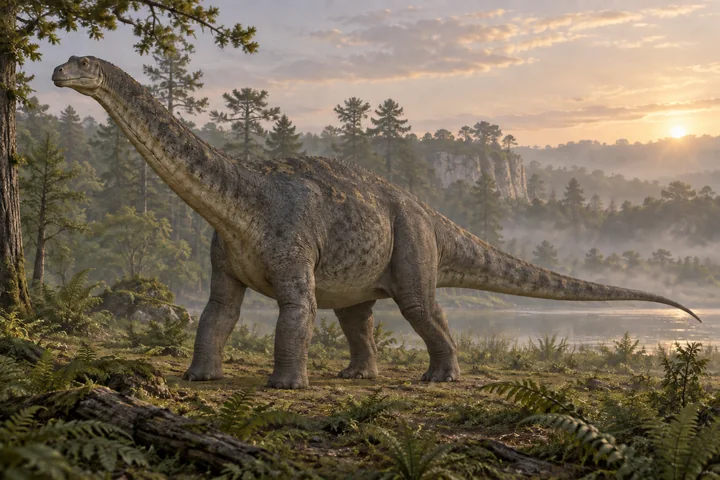
Cetiosaurus oxoniensis
Cetiosaurus was a large terrestrial plant-eater from Middle Jurassic England, represented by important partial skeletons rather than one complete fossil body.
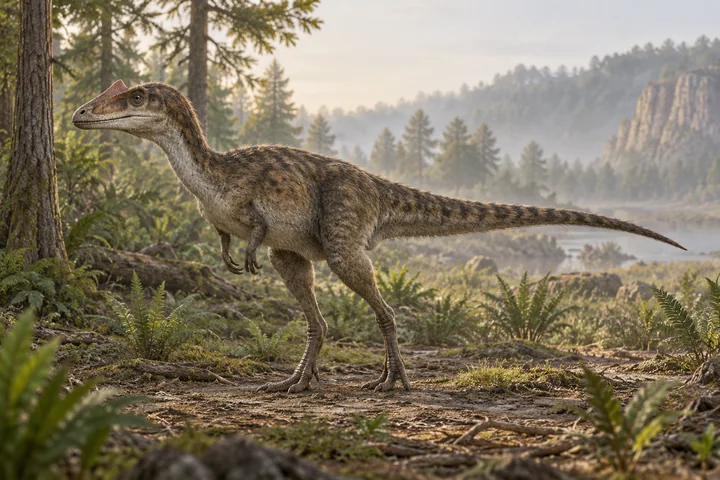
Proceratosaurus bradleyi
Proceratosaurus is known from one partial skull with enlarged nostrils and the base of a crest.