
Body length
InferredMuseum reconstructions differ
The Australian Museum gives 2–3 m; NHM gives 4.1 m. Both restore an incomplete skull into a whole body; neither supplies an adult range. [D3] [D2]
EXHIBIT 178
Proceratosaurus bradleyi
Proceratosaurus is known from one partial skull with enlarged nostrils and the base of a crest. [1]
TWO WAYS TO PICTURE THE PAST
Compare the evidence with the familiar movie image. The illustrations are not to a shared scale.
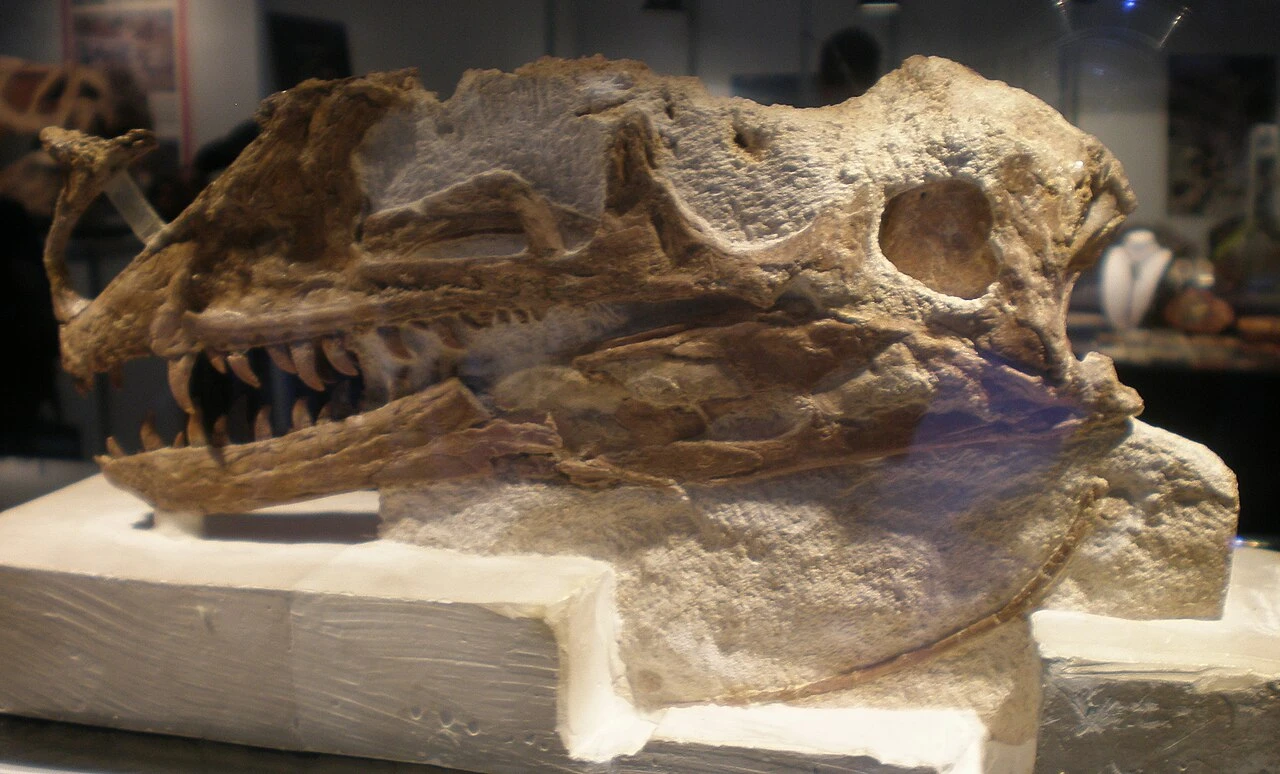
Display identified by the source as the Proceratosaurus bradleyi holotype skull, photographed by Derdadort at The Munich Show in 2013. The source gives no object-authenticity or element-restoration key, so this photograph is not automatically certified as original fossil rather than a cast. The missing upper crest and whole body cannot be recovered from this display. [1]
Proceratosaurus holotype.JPG · Derdadort. CC BY-SA 3.0. Current licensed Commons image converted to WebP and proportionally reduced for the thumbnail, without upsampling. No additional cropping, mirroring, anatomical edits or compositing. Existing source restoration and scale annotations retained. CC BY-SA 3.0 applies to these versions.
The photograph or figure shows the credited fossil material; displayed mounts and labels can include interpretation.
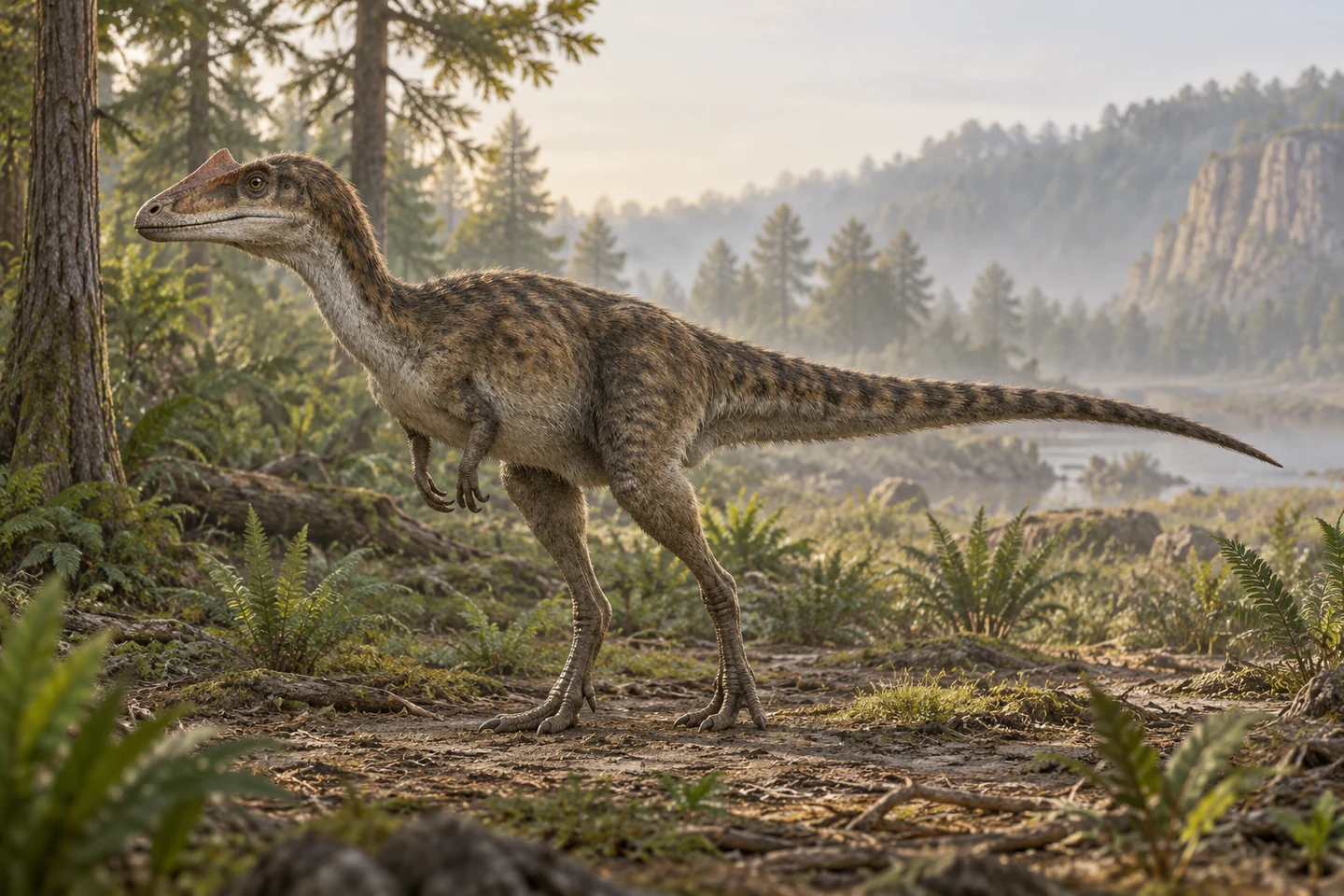
Original cinematic interpretation of Proceratosaurus. Only a partial skull and crest base are preserved. The modest crest outline, whole body and covering are comparative choices and do not establish its full living crest or adult size. Lighting, colors and scenery are artistic choices; this image does not document directly observed behavior. Lighting, coloration and scenery are artistic choices. This image does not document a fossil locality or behavior.
Original artwork · artistic interpretation.
Scientific view: source-informed reconstruction, credited paleoart or specimen-based imagery. Movie-style view: Original artistic interpretation. Reconstructions involve uncertainty.
MEET THE ANIMAL
Proceratosaurus was a carnivorous dinosaur from Middle Jurassic Britain. Its known remains consist of a partial skull, making the rest of its appearance provisional. The museum's general body reconstruction is about 4.1 metres long, but that estimate is not a complete individual measured from nose to tail. Missing body parts and an unspecified growth stage limit its use as an adult size reference. [D2]
Serrated teeth support animal feeding. A two-legged body and a balancing tail are reconstructed by comparison with theropod relatives, rather than directly preserved Proceratosaurus limbs. The museum describes the skull as belonging to a subadult. This indicates a growth-stage interpretation, not an observed breeding age, and provides no direct evidence of nests or parental care. [D3]
CT examination revealed extensive internal air spaces and helped identify it as an early tyrannosauroid. Large nostril openings and the base of a crest distinguish the head. The entire height and rear outline of that crest remain unknown. A preserved crest base can inform classification without demonstrating a complete ornament or a particular mating display. [D1]
PREHISTORIC ANIMAL DOSSIER
The animal, the evidence, and the questions still open.
CT examination helped identify this English dinosaur as an early tyrannosauroid. Its missing crest and body limit estimates of its appearance and size. [D1] [D2]
Profile scope: Genus — Proceratosaurus; P. bradleyi, type NHMUK PV R 4860. Whole-body reconstructions remain provisional. [D2]
Source supported identifies a description documented by the cited source. Inferred marks a reconstruction or functional estimate. Debated marks competing interpretations. Not established means the sources reviewed for this dossier do not support a firm conclusion; it does not mean a behavior never occurred.
A size reference is an estimate, not a population range. Nesting evidence does not by itself establish courtship, mate choice, or lifelong pairing.
Museum reconstructions differ
The Australian Museum gives 2–3 m; NHM gives 4.1 m. Both restore an incomplete skull into a whole body; neither supplies an adult range. [D3] [D2]
About 40 kg (published author estimate)
An institutional report quotes Rauhut. Its method and adult scope are unspecified, so it is not used as an adult comparison. [D5]
Carnivory inferred
Serrated teeth support animal feeding. A digital cranial study tests mechanical performance under assumptions; it does not identify meals or observed bite forces. [D3] [D6]
Bathonian England
The type is a partial skull from Minchinhampton, Gloucestershire. Its fossil locality does not by itself reconstruct the living animal’s preferred microhabitat. [D1]
Two-legged reconstruction
Bipedal posture and a long balancing tail are inferred from theropod relatives; no Proceratosaurus limb skeleton establishes gait or speed. [D3]
Large nostrils; partial nasal crest
CT work reveals extensive air spaces. The preserved crest begins near the snout tip; its complete height and rear outline are unknown. [D1]
Not established here
The museum describes the single skull as subadult. It provides no breeding age, eggs, nest or adult reproductive anatomy. [D3]
Not established here
A crest base is preserved, but one incomplete skull cannot demonstrate sex differences or a courtship sequence. A display function remains untested here. [D1]
Not established here
The partial-skull record supplies no associated group, family or trackway. Focused behavior searches found no genus-specific social evidence. [D2]
Sources and inspection notes for the claims in this profile.
THE STORY IN THE FOSSILS
Historical resemblance to Ceratosaurus encouraged an extravagant missing-crest reconstruction. Later study placed the preserved skull among early tyrannosauroids; unseen anatomy still needs qualification. [4] [1]
Modern digital skull models are a way to compare feeding mechanics. Sculpted missing regions and absent internal cavities make their results conditional. [6]
The dossier identifies the scope of each reference estimate. A mount, an individual fossil and a species-wide adult range are different measurements. Comparison metrics remain unavailable where adult scope has not been established. Unknown does not mean zero.
Sources support the stated claims and scopes. Refer to the evidence notes for uncertainty.
KEEP EXPLORING
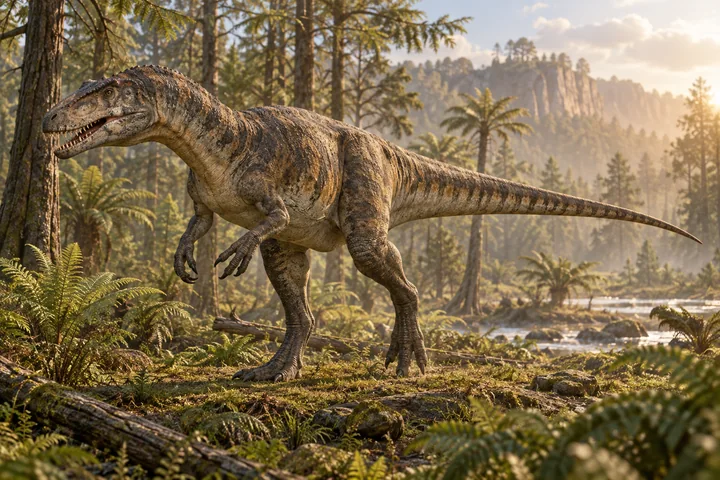
Megalosaurus bucklandii
Megalosaurus bucklandii was a Jurassic predator from England. Its fragmentary bones helped launch dinosaur science, while its modern identity is anchored by a distinctive lower jaw.
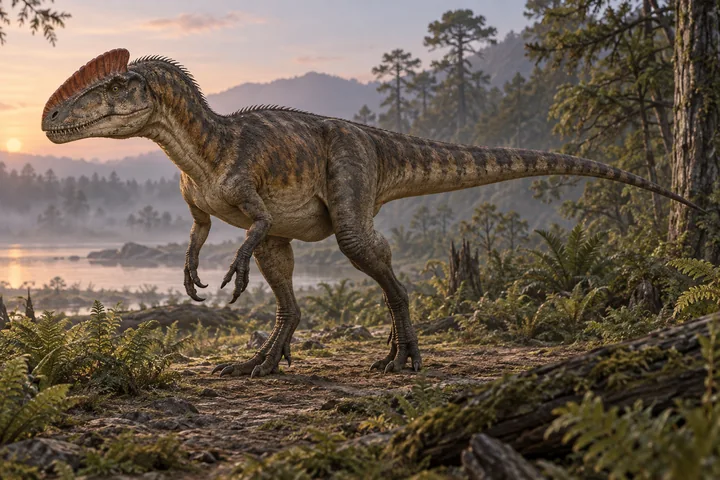
Monolophosaurus jiangi
Monolophosaurus is recognized by a single crest along its skull.
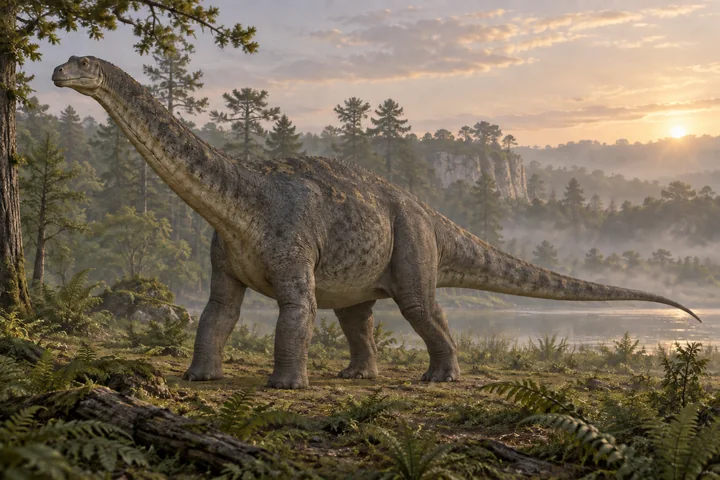
Cetiosaurus oxoniensis
Cetiosaurus was a large terrestrial plant-eater from Middle Jurassic England, represented by important partial skeletons rather than one complete fossil body.