
Body length
InferredAbout 10 m (museum genus reference)
This rounded profile value is not a measured G. monumentensis individual, a maximum or a range for every species. [D1]
EXHIBIT 78
Gryposaurus monumentensis
Gryposaurus was a duck-billed dinosaur with an arched nose; its species differ in skull construction.
TWO WAYS TO PICTURE THE PAST
Compare the evidence with the familiar movie image. The illustrations are not to a shared scale.
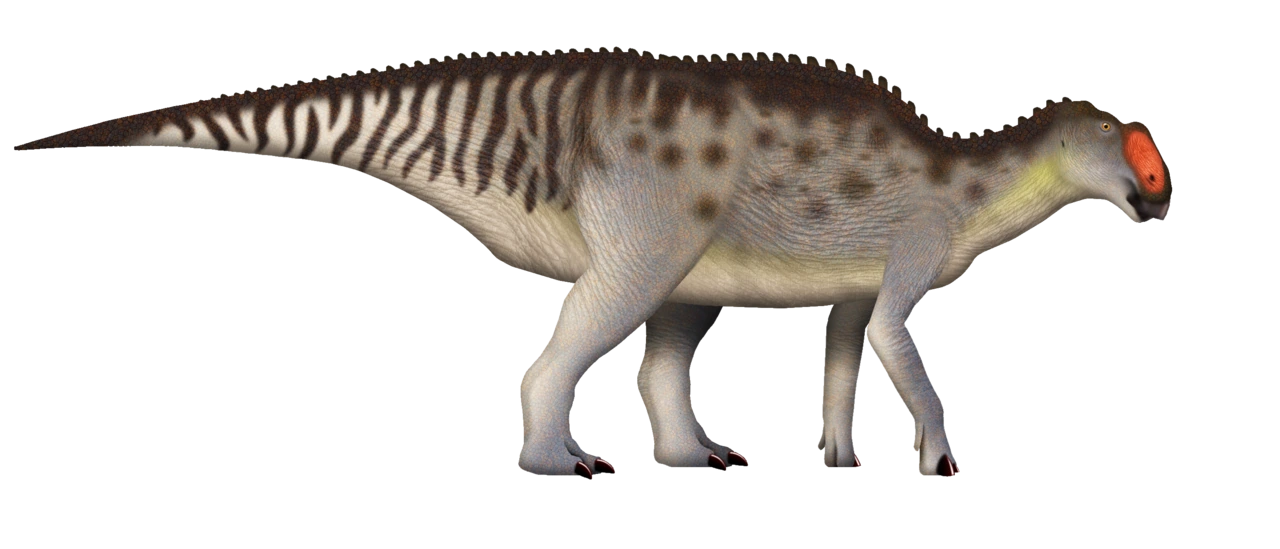
Life reconstruction of Gryposaurus monumentensis by TotalDino. This species has a particularly robust skull; the full body, missing anatomy, soft tissues and coloration include reconstruction. [2]
Gryposaurus TD.png · TotalDino. CC BY 4.0. Commons-listed 1280px current preview resized proportionally for the thumbnail and converted to WebP; no anatomical edits. Same source license applies.
Scientific reconstruction is an interpretation; source credit does not certify every anatomical detail.
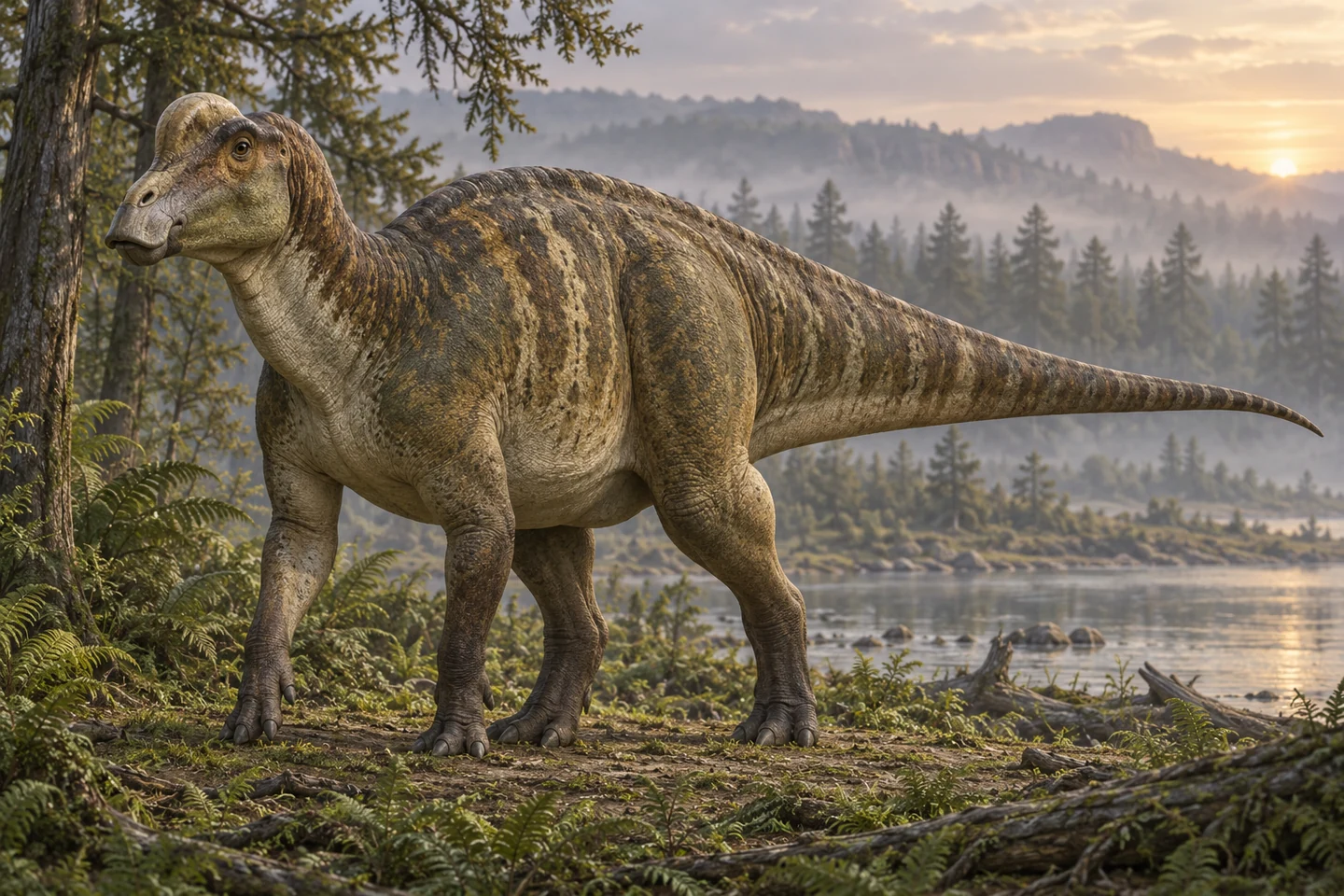
Original cinematic interpretation of Gryposaurus monumentensis. Coloration, soft tissues and scenery are artistic choices; reconstructed proportions do not establish a measured individual. Lighting, coloration and scenery are artistic choices. This image does not document a fossil locality or behavior.
Original artwork · artistic interpretation.
Scientific view: source-informed reconstruction, credited paleoart or specimen-based imagery. Movie-style view: Original artistic interpretation. Reconstructions involve uncertainty.
MEET THE ANIMAL
Gryposaurus was a plant-eating dinosaur from Late Cretaceous North America. The genus includes more than one species, so a single size reference cannot describe all its animals. A museum figure of about ten metres gives a broad introduction, while individual fossils belong to particular species and growth stages. Keeping those differences visible prevents several animals from being blended into one. [D1]
A study of Gryposaurus notabilis compared its reconstructed jaw muscles and feeding mechanics with those of Corythosaurus. The results suggest differences in how the jaws worked, but larger muscles alone do not establish a stronger bite. Such models help explain feeding equipment without revealing a precise meal or a favorite kind of vegetation. [D3]
A separate bonebed from the Oldman Formation contains juvenile Gryposaurus in two age groups. Researchers interpret the collection as evidence of young animals gathering, while also recognizing that the bones moved a short distance before burial. It is a local interpretation of a particular fossil group. It should not become a claim that every Gryposaurus species lived in identical adult herds. [D4]
PREHISTORIC ANIMAL DOSSIER
The animal, the evidence, and the questions still open.
The gallery features G. monumentensis; feeding models and juvenile associations concern other material.
Profile scope: Genus — Gryposaurus; species-specific findings are identified below.
Source supported identifies a description documented by the cited source. Inferred marks a reconstruction or functional estimate. Debated marks competing interpretations. Not established means the sources reviewed for this dossier do not support a firm conclusion; it does not mean a behavior never occurred.
A size reference is an estimate, not a population range. Nesting evidence does not by itself establish courtship, mate choice, or lifelong pairing.
About 10 m (museum genus reference)
This rounded profile value is not a measured G. monumentensis individual, a maximum or a range for every species. [D1]
About 405 kg for a juvenile individual
Mallon estimates G. notabilis CMN 8784 by developmental mass extrapolation, scaling femur length against adult AMNH 5350 (reference estimate 4,312 kg). This is not an adult genus average or a G. monumentensis estimate. [D5]
Plant-eating; feeding mechanics varied
Models of G. notabilis suggest different jaw mechanics from Corythosaurus, including possible size-related food partitioning. They do not identify a preserved diet or test G. monumentensis. [D3]
North American continental deposits
G. monumentensis comes from Utah’s Kaiparowits Formation; other species occur in Alberta and Montana. Its type skull was recovered from a river point-bar deposit. [D2]
Adults probably mainly used four legs
Comparative limb anatomy supports predominantly quadrupedal adult hadrosaurids. This is broader-family evidence; precise gait and speed for each Gryposaurus species remain uncertain. [D6]
Arched nasal bones; robust skull in G. monumentensis
The deep nasal arch distinguishes the genus. The Utah species has especially robust jaws and skull proportions; these traits should not be copied unchanged to all Gryposaurus. [D2]
Not established here
The reviewed sources establish juvenile remains but do not establish Gryposaurus nest construction, clutch size, egg incubation or parental care.
Not established here
No reviewed source demonstrates a mating display or sex-specific nasal arch. A prominent nose alone does not establish courtship behavior.
Juvenile aggregations inferred
A 2022 taphonomic study interprets two juvenile age classes in an Oldman Formation Gryposaurus sp. bonebed as a segregated group. Short-distance transport occurred; this does not establish adult herds or G. monumentensis behavior. [D4]
Sources and inspection notes for the claims in this profile.
THE STORY IN THE FOSSILS
The skull that anchors G. monumentensis came from southern Utah. Comparisons with Canadian and Montanan species show why a genus profile must preserve species differences rather than combine every measurement and trait into one animal. [2]
A separate feeding study tests G. notabilis. Its jaw muscles and leverage differ from Corythosaurus, but the comparison yields similar bite forces at similar body sizes. Larger muscles alone do not prove a stronger bite. [3]
The dossier identifies the scope of each reference estimate. A mount, an individual fossil and a species-wide adult range are different measurements. Comparison metrics remain unavailable where adult scope has not been established. Unknown does not mean zero.
Sources support the stated claims and scopes. Refer to the evidence notes for uncertainty.
KEEP EXPLORING
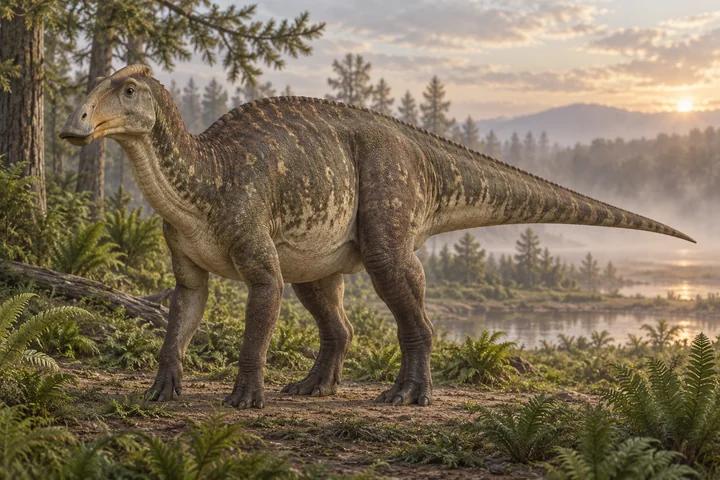
Maiasaura peeblesorum
Maiasaura preserves detailed evidence of growth, nesting and possible care.
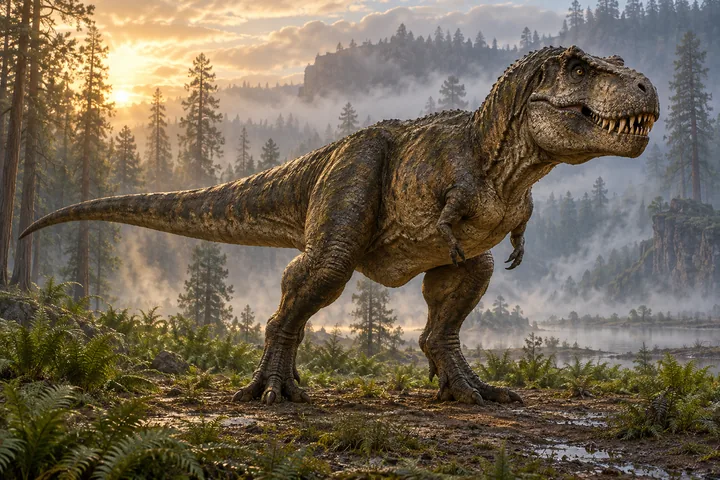
Tyrannosaurus rex
Tyrannosaurus rex was a large meat-eating dinosaur from the final part of the Cretaceous in western North America. Fossil teeth, bite marks and skeletons reveal a powerful animal whose behaviour still invites questions.
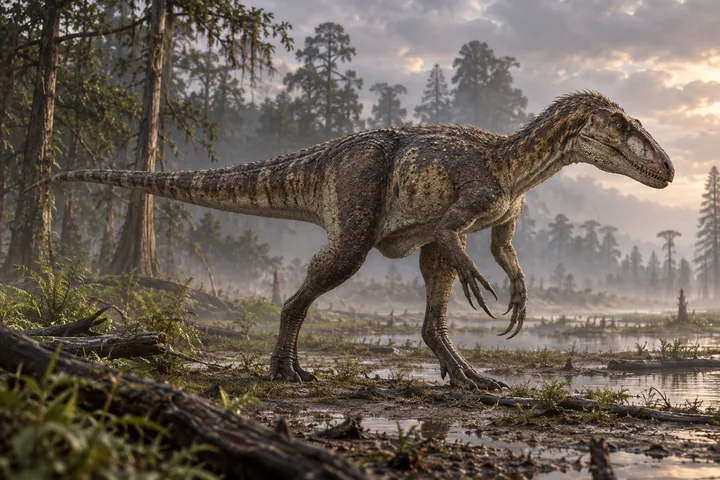
Dryptosaurus aquilunguis
Dryptosaurus was an eastern North American tyrannosauroid with a short upper arm and unusually large hand. Its partial skeleton and changing restorations reveal how evidence and imagination interact.