
Size reference
Source supportedAbout 4 mm larval body length
Reference to the preserved immature; not an adult size or genus-wide range. [D2]
EXHIBIT 261
Hallucinochrysa
Prehistoric insect
Hallucinochrysa was a Cretaceous lacewing relative whose larva carried fern hairs on elaborate back projections. [1]
TWO WAYS TO PICTURE THE PAST
Compare the evidence with the familiar movie image. The illustrations are not to a shared scale.
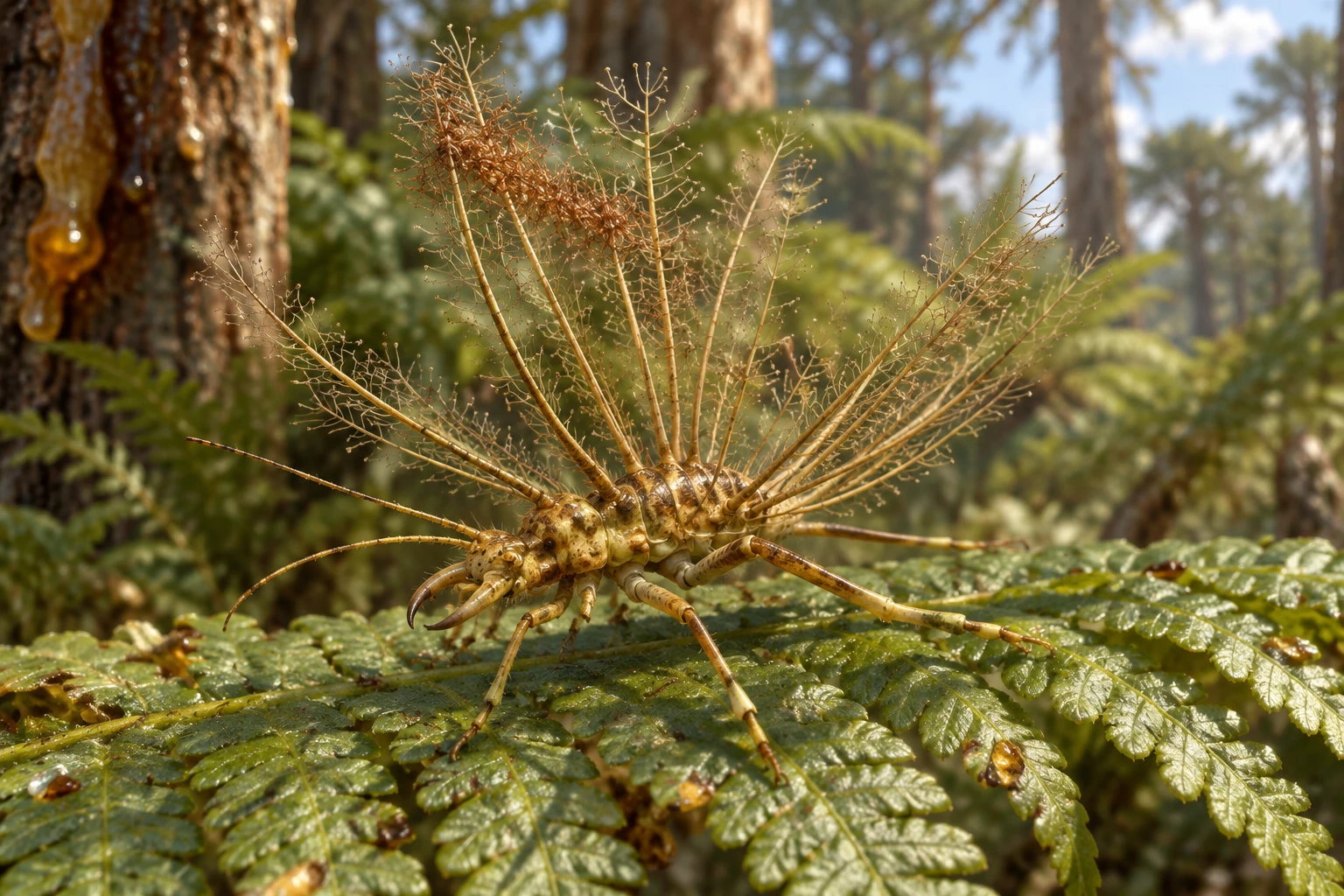
An illustrative reconstruction. Compare its anatomy with the evidence and limitations in the dossier. [1]
Source-informed reconstruction. Appearance evidence [1]. Original illustration; missing anatomy, coloration and scenery include interpretation.
Fossils constrain this life reconstruction. Missing anatomy, coloration and the environmental scene include interpretation; the dossier explains the evidence limits.
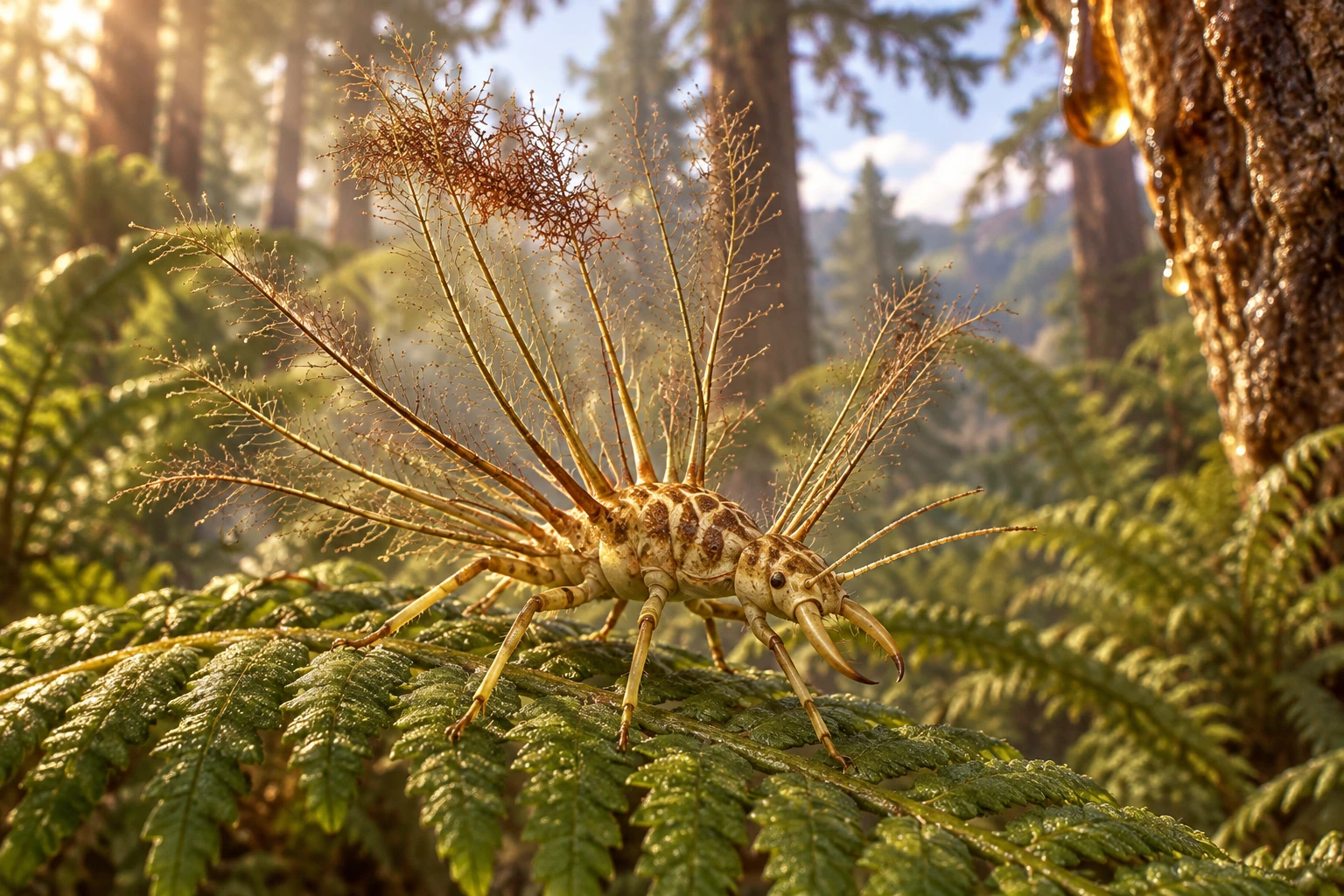
An illustrative reconstruction. Compare its anatomy with the evidence and limitations in the dossier. Lighting, coloration and scenery are artistic choices. This image does not document a fossil locality or behavior.
Original artwork · artistic interpretation.
Scientific view: source-informed reconstruction, credited paleoart or specimen-based imagery. Movie-style view: Original artistic interpretation. Reconstructions involve uncertainty.
MEET THE ANIMAL
Hallucinochrysa was an insect known from a tiny larva trapped in Spanish amber. A later anatomical study described its body as about four millimeters long. That measurement belongs to an immature individual, rather than a winged adult. Its six walking legs were separate from the much longer projections growing from its back. Those projections could extend beyond the body and carried many fine hairs. [D2]
The original study found fern hairs tangled among these structures. This is evidence that the larva carried material from its surroundings. Researchers interpreted the packet as a disguise and a possible shield against enemies. Its curved jaws also suggest predatory feeding, by comparison with lacewing relatives. The amber does not preserve a complete hunting scene, and the exact colors used in a living reconstruction are uncertain. [D1]
A later comparison examined several ancient debris-carrying larvae. Hallucinochrysa carried fern hairs, while another genus preserved in Lebanese amber carried soil particles. The comparison helps scientists study how similar protective designs developed in different insects. It does not identify Hallucinochrysa’s eggs or adult appearance. Keeping those limits visible lets the unusual preserved larva tell its own story without supplying an imaginary winged adult. [D3]
PREHISTORIC ANIMAL DOSSIER
The animal, the evidence, and the questions still open.
Fern hairs attached to specialized projections provide evidence of debris carrying; protection and concealment are functional interpretations. [D1]
Profile scope: Genus — Hallucinochrysa; anchored to the H. diogenesi larval holotype CES418.1 from El Soplao, Spain. Its adult is unknown. [D1]
Source supported identifies a description documented by the cited source. Inferred marks a reconstruction or functional estimate. Debated marks competing interpretations. Not established means the sources reviewed for this dossier do not support a firm conclusion; it does not mean a behavior never occurred.
A size reference is an estimate, not a population range. Nesting evidence does not by itself establish courtship, mate choice, or lifelong pairing.
About 4 mm larval body length
Reference to the preserved immature; not an adult size or genus-wide range. [D2]
Not established here
The reviewed larval description supplies no mass estimate. [D2]
Predatory feeding inferred
Curved jaws and comparison with chrysopoid larvae suggest predation; no identified meal is reported. [D1]
Terrestrial fern vegetation inferred
The packet contains fern hairs; its exact living perch and woodland microhabitat remain uncertain. [D2]
Walking inferred
Three pairs of thoracic legs support crawling; the known larva has no adult wings. [D2]
Long, hair-bearing back projections
Tubular tubercles and specialized setae supported the preserved fern-hair packet; these projections are not additional legs. [D1]
Larval stage documented
The specimen is interpreted as a later instar. Attributed eggs, pupae and adults remain unknown here. [D2]
Not established here
Comparative larval fossils provide no adult mating or mate-selection evidence for this genus. [D3]
Not established here
Debris carrying is an individual adaptation; the comparison does not establish cooperation or colonies. [D3]
Sources and inspection notes for the claims in this profile.
THE STORY IN THE FOSSILS
The 2018 comparison separates Hallucinochrysa’s fern-hair packet from soil carried by another genus. Similar concealment strategies need not use the same materials. [3]
The dossier identifies the scope of each reference estimate. A mount, an individual fossil and a species-wide adult range are different measurements. Comparison metrics remain unavailable where adult scope has not been established. Unknown does not mean zero.
Sources support the stated claims and scopes. Refer to the evidence notes for uncertainty.
KEEP EXPLORING
Buccinatormyia
Prehistoric insect
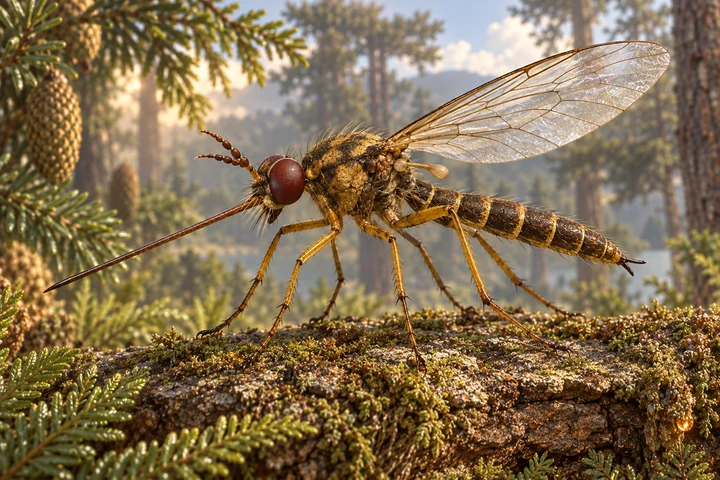
Buccinatormyia was a Cretaceous fly with a long proboscis; a Spanish specimen carried gymnosperm pollen.
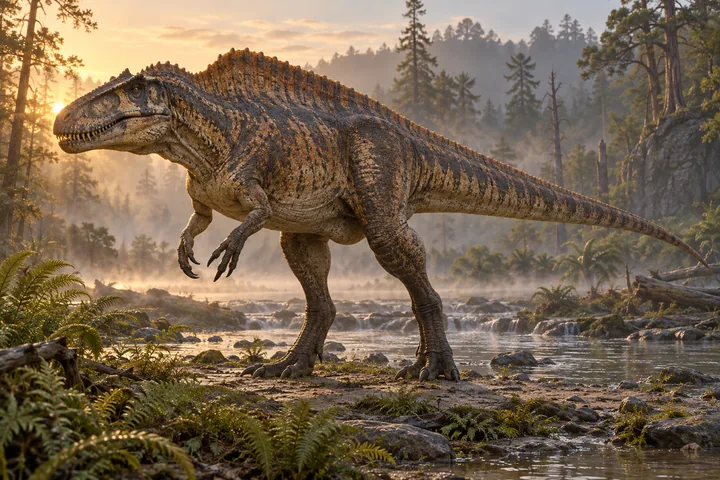
Acrocanthosaurus
This Early Cretaceous carnivore is known from North American fossils. Its high vertebral spines give it a distinctive raised back profile.
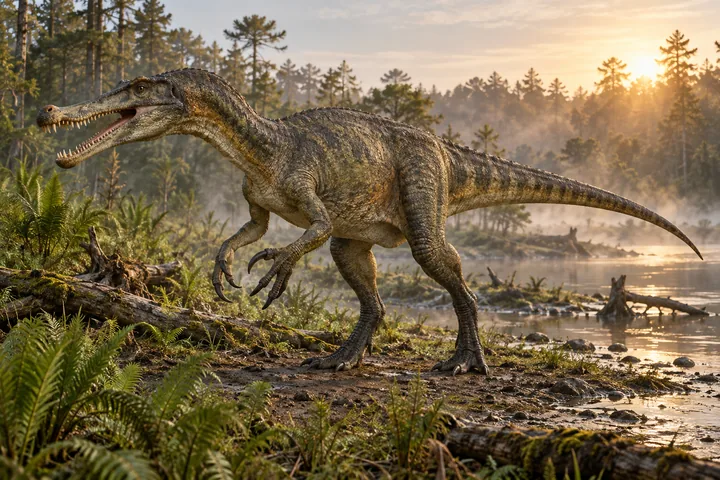
Baryonyx
Baryonyx had a crocodile-like snout and an enlarged hand claw. Its preserved last meal supports a carnivorous diet that included more than fish.