
Body length
InferredAbout 10 m (museum reference)
The museum gives an approximate reconstructed length. The reference does not identify a maturity-tested adult or a population range. [D1]
EXHIBIT 15
Baryonyx
A Baryonyx fossil preserved fish scales and dinosaur bones in its abdominal region.
TWO WAYS TO PICTURE THE PAST
Compare the evidence with the familiar movie image. The illustrations are not to a shared scale.

The artist identifies this reconstruction as Baryonyx walkeri. This view illustrates one form within the genus, rather than every species or individual. Fossil-informed anatomy: Long rosette-tipped snout, set-back nostrils, rounded teeth and an enlarged thumb claw. Coloration and some soft tissues are interpretive; species reconstruction represents the genus. [1] [2] [3]
Baryonyx walkeri by PaleoGeek.png — PaleoGeekSquared. CC BY-SA 4.0. Remote source artwork displayed without additional cropping; Wikimedia supplies any display-size derivative.
Scientific picture served by Wikimedia · internet connection required.
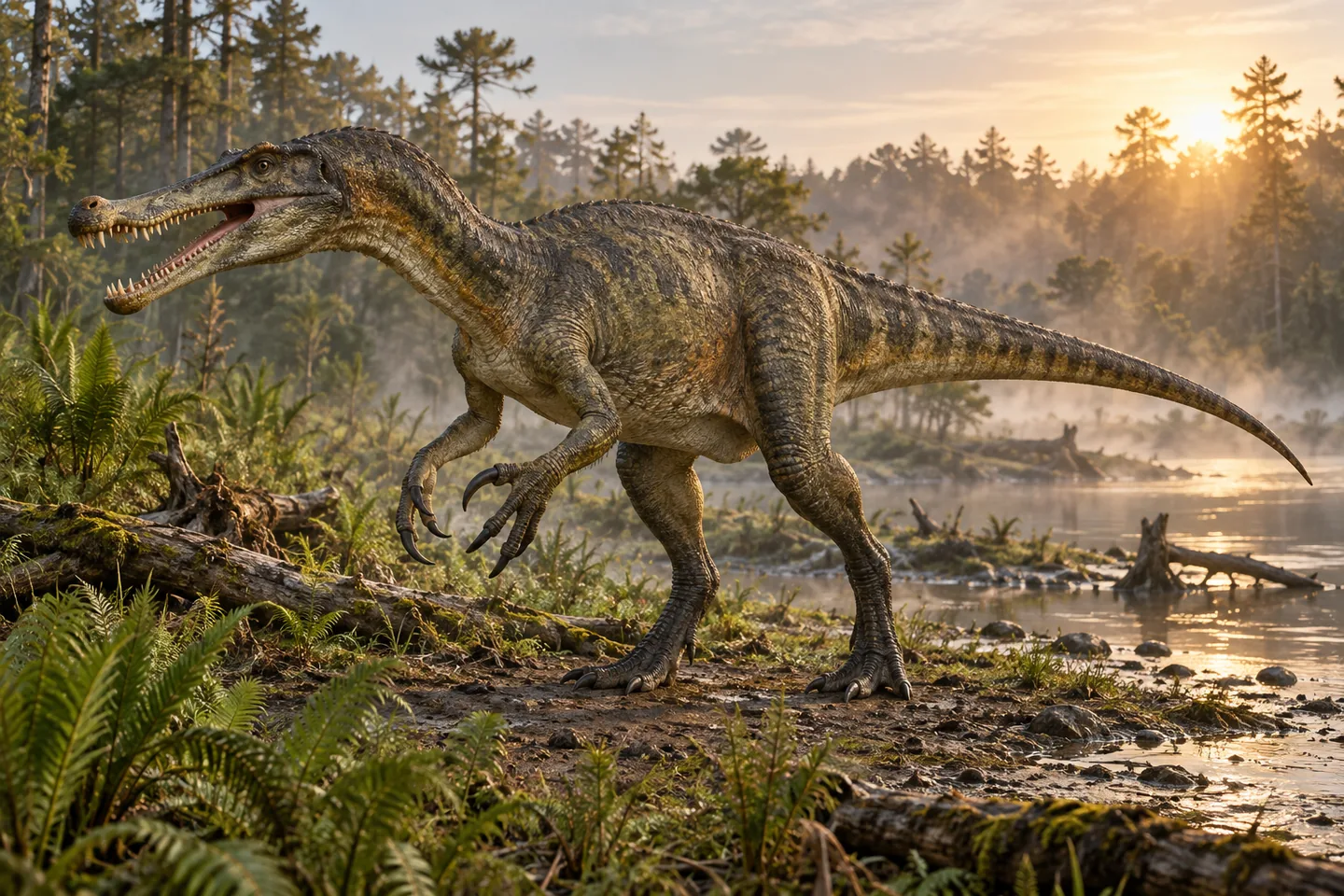
Cinematic Baryonyx with an elongated crocodile-like head and enlarged thumb claws; keep strong forelimbs and artistic coloring. Dramatic lighting, surface detail and scenery are artistic choices. This is an original cinema-inspired picture, rather than a frame from a film or a documented fossil locality.
Original artwork · artistic interpretation.
Scientific view: credited paleoart interpreting fossil evidence, served online by Wikimedia. Movie-style view: Original artistic interpretation. Colors, soft tissues and settings involve reconstruction.
MEET THE ANIMAL
Baryonyx was a large Early Cretaceous predatory dinosaur discovered in Surrey, England. Finding an enormous claw bone in a claypit in 1983 led to the discovery of a much more substantial skeleton. The original scientific description emphasized a combination of familiar predatory-dinosaur features and unusual anatomy. An isolated find could therefore become the starting point for recognizing a dinosaur that researchers had not previously understood. [S1]
Its long snout and tooth arrangement distinguish it from the deeper heads of many other large predators. Research comparing spinosaur jaws links these features with feeding, including taking fish. Food remains found in the apparent stomach region of Baryonyx also include a small plant-eating dinosaur. That evidence indicates that fish were not necessarily its only food, while it cannot by itself reveal whether the dinosaur meat was hunted or scavenged. [S2]
The claw is real, but proposals about exactly how it was used remain interpretations. Comparative studies consider the powerful arms and jaws together when discussing food handling. They offer testable explanations of feeding capability rather than a complete record of a meal. Specific nests, courtship displays and parenting remain unresolved in the evidence reviewed here. [S2]
PREHISTORIC ANIMAL DOSSIER
The animal, the evidence, and the questions still open.
Baryonyx is a spinosaur with a long snout, conical teeth and an enlarged thumb claw. Food remains associated with its principal skeleton include fish scales and herbivorous dinosaur bones, indicating a broader diet than fish alone.
Profile scope: Genus — Baryonyx; principal specimen concerns B. walkeri
Source supported identifies a description documented by the cited source. Inferred marks a reconstruction or functional estimate. Debated marks competing interpretations. Not established means the sources reviewed for this dossier do not support a firm conclusion; it does not mean a behavior never occurred.
A size reference is an estimate, not a population range. Nesting evidence does not by itself establish courtship, mate choice, or lifelong pairing.
About 10 m (museum reference)
The museum gives an approximate reconstructed length. The reference does not identify a maturity-tested adult or a population range. [D1]
About 2 tonnes (museum reference)
The profile lists a rounded 2,000 kg reconstruction estimate. Its method and life stage are not specified. [D1]
Fish and other dinosaur remains
Fish scales and Iguanodon bones were found in the skeleton's apparent stomach region. Those remains support mixed feeding but do not distinguish hunting from scavenging. [D2]
Early Cretaceous Europe
The museum lists fossils from England and Spain. This establishes regional occurrence rather than a verified preference for one waterside habitat. [D1]
Two-legged terrestrial movement
The museum describes a bipedal animal. The inspected account's wading reconstruction does not establish detailed underwater performance. [D1] [D2]
Long snout, conical teeth, enlarged thumb claw
The discovered claw bone measured roughly 31 cm along its outer curve. That measurement concerns a preserved claw, not the length of a complete keratin-covered claw. [D2]
Not established here
Reviewed sources do not establish Baryonyx clutch size, nest architecture or parental care.
Not established here
Reviewed sources do not establish Baryonyx mating displays, posture or courtship sequence.
Not established here
Reviewed sources do not establish Baryonyx group size or coordinated hunting behaviour.
Sources and inspection notes for the claims in this profile.
THE STORY IN THE FOSSILS
The Surrey discovery included a curved claw bone about 31 centimetres long. A keratin sheath would have enlarged it in life. The skull has set-back nostrils, a widened snout tip and rounded tooth cross sections, features interpreted as useful for catching fish. [1] [2]
Fish scales and Iguanodon bones in the abdominal region indicate a varied meal. Its fossils occur in the Wealden Group, associated with rivers and swampy lagoons. Researchers debate whether Baryonyx chiefly caught prey from shorelines or also submerged itself while foraging. [2] [3]
We have not established a comparable adult total-length estimate for this taxon in this draft. Specimen measurements in the text describe those individuals. The cited dates are approximately 125 million years ago. Published genus-level educational dating; not a specimen age. Unknown does not mean zero.
Sources and evidence notes for this exhibit.
KEEP EXPLORING
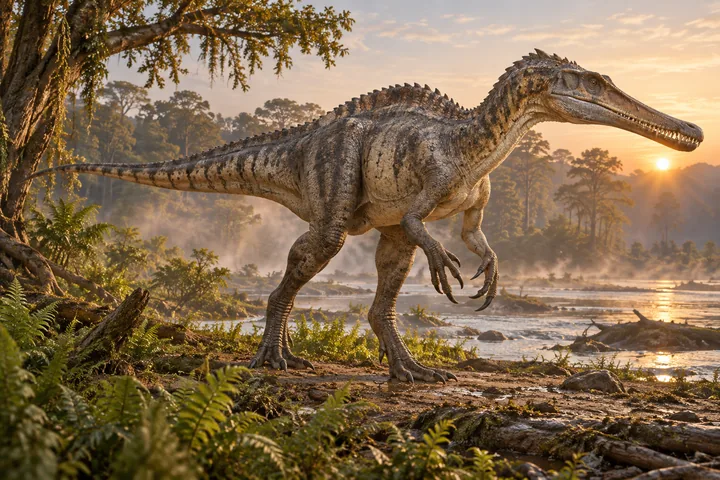
Suchomimus
Suchomimus combined a crocodile-like snout with enormous curved thumb claws.
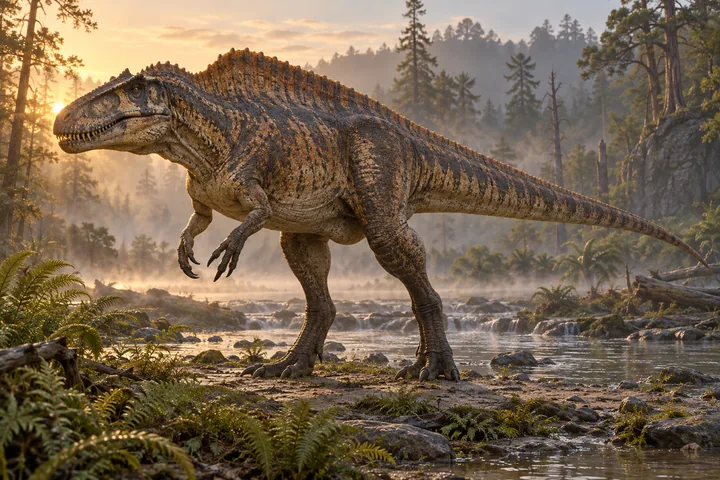
Acrocanthosaurus
Acrocanthosaurus carried unusually tall spines on its back, hip and tail vertebrae.
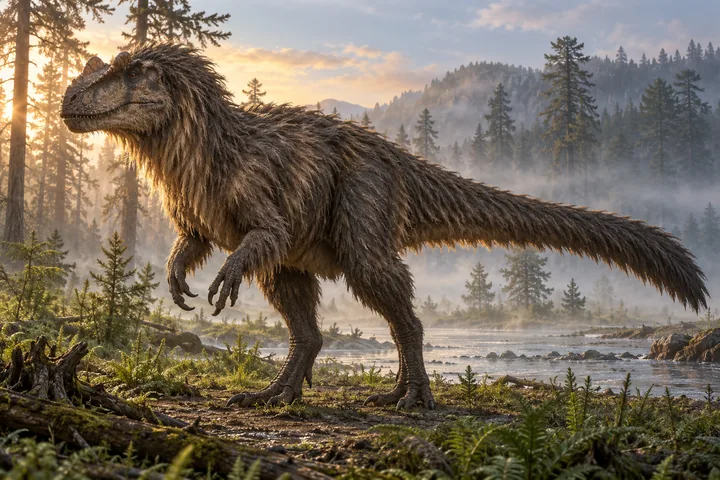
Yutyrannus huali
Yutyrannus preserves direct evidence of long filamentous feathers on a giant theropod.