
Body length
InferredAbout 9 m; holotype reference
The museum reports 9 m for the holotype. This is a specimen reference, not the full species size range. [D2]
EXHIBIT 20
Yutyrannus huali
Yutyrannus preserves direct evidence of long filamentous feathers on a giant theropod.
TWO WAYS TO PICTURE THE PAST
Compare the evidence with the familiar movie image. The illustrations are not to a shared scale.

The artist identifies this reconstruction as Yutyrannus huali. Fossil-informed anatomy: Crested snout, three-fingered hands and long filamentous plumage; full coat coverage is inferred. Feather covering is supported by fossil impressions; coloration and exact distribution are interpretive. [1] [2]
Yutyrannus huali.png — Tom Parker (Tomopteryx). CC BY-SA 4.0. Remote source artwork displayed without additional cropping; Wikimedia supplies any display-size derivative.
Scientific picture served by Wikimedia · internet connection required.
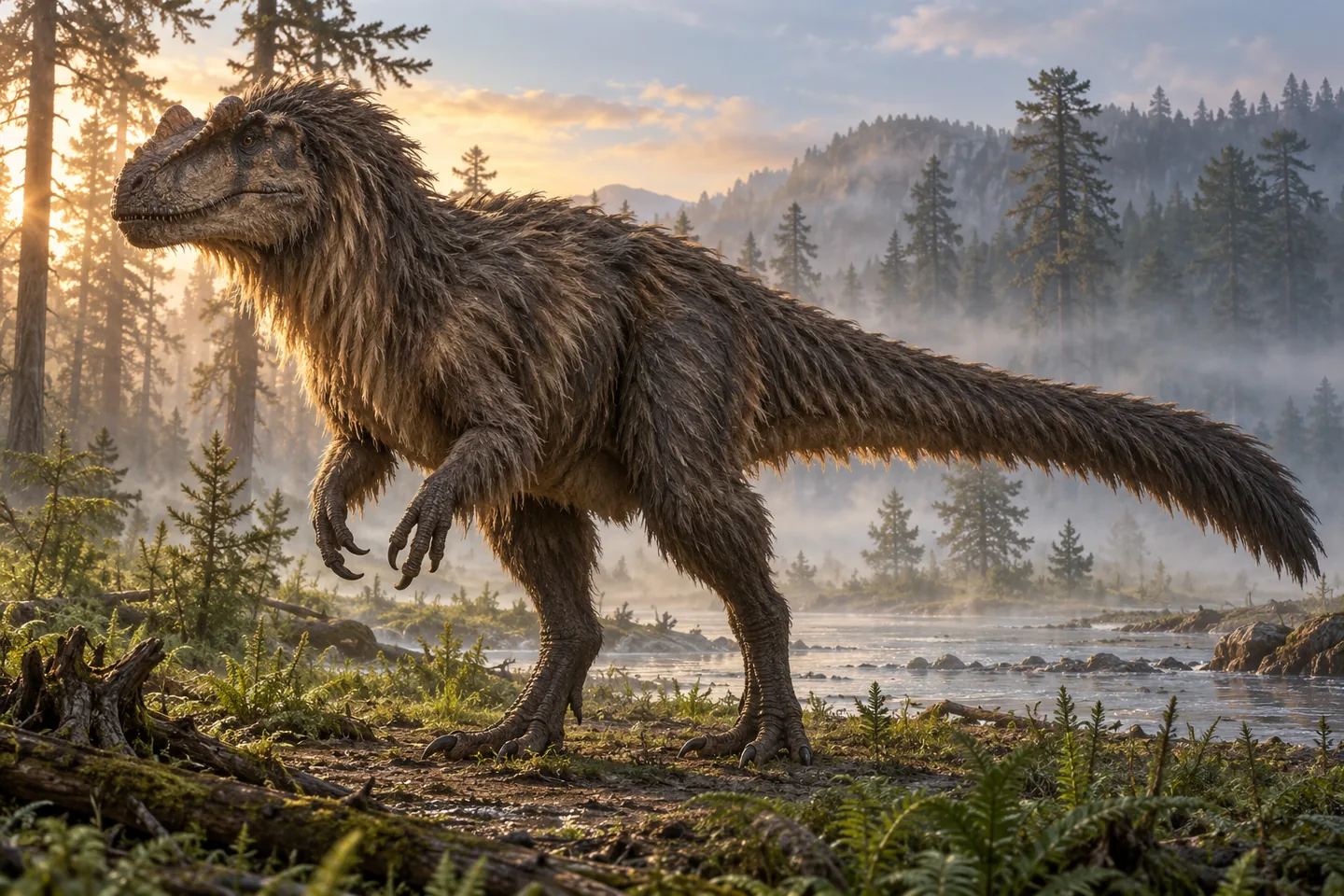
Cinematic Yutyrannus huali with shaggy filamentous plumage, a raised nasal crest and three-fingered arms; coat distribution and colors are reconstructed. Dramatic lighting, surface detail and scenery are artistic choices. This is an original cinema-inspired picture, rather than a frame from a film or a documented fossil locality.
Original artwork · artistic interpretation.
Scientific view: credited paleoart interpreting fossil evidence, served online by Wikimedia. Movie-style view: Original artistic interpretation. Colors, soft tissues and settings involve reconstruction.
MEET THE ANIMAL
Yutyrannus huali was a large meat-eating dinosaur from Early Cretaceous China. It was an early member of the wider tyrannosaur group, with longer arms and three fingers on each hand rather than the tiny two-fingered hands of later relatives. A shallow crest along the head contributed to its outline. Feather impressions provide unusually direct evidence of its outer covering as well as its skeleton. [S1]
Preserved feather patches make a broad covering plausible, but they do not show every surface of the body equally well. The feathers also do not make Yutyrannus a flying animal. Comparing its plumage with that of relatives helps researchers ask how feathers were used outside flight, while keeping actual impressions separate from missing areas restored in an illustration. [S1]
Three skeletons are known, but precise discovery information depends on what a fossil dealer reported. That limits certainty about the original environment and which animals were nearby. A shared reported origin also should not become proof of coordinated pack hunting. Yutyrannus supplies remarkable feather evidence while demonstrating why preserved anatomy, reconstructed body covering and uncertain quarry history deserve different levels of confidence. [S1]
PREHISTORIC ANIMAL DOSSIER
The animal, the evidence, and the questions still open.
Yutyrannus huali was a large Early Cretaceous tyrannosauroid from northeastern China. Three described skeletons preserve filamentous feathers, giving direct evidence of plumage in a large predatory dinosaur.
Profile scope: Species: Yutyrannus huali.
Source supported identifies a description documented by the cited source. Inferred marks a reconstruction or functional estimate. Debated marks competing interpretations. Not established means the sources reviewed for this dossier do not support a firm conclusion; it does not mean a behavior never occurred.
A size reference is an estimate, not a population range. Nesting evidence does not by itself establish courtship, mate choice, or lifelong pairing.
About 9 m; holotype reference
The museum reports 9 m for the holotype. This is a specimen reference, not the full species size range. [D2]
About 1,400 kg; holotype estimate
The museum explicitly identifies this as an estimated holotype mass. It is not a measured live weight or a species average. [D2]
Carnivore; large terrestrial predator
The museum identifies this species as a carnivorous bipedal predator; particular prey choices are not established here. [D2]
Yixian Formation, northeastern China
The original description assigns the fossils to the Lower Cretaceous Yixian Formation in Liaoning. Dealer-reported quarry provenance warrants caution about precise locality claims. [D1] [D2]
Bipedal; flightless
The museum describes a two-legged terrestrial predator. Its filamentous covering does not establish aerial flight. [D2]
Filamentous feathers; three-fingered hands; nasal crest
Feathers occur directly in all three described specimens; the original description documents three-fingered hands. Whole-body feather coverage is reconstructed from preserved patches. [D1] [D2]
Not established here
The reviewed sources do not establish taxon-specific nest structure, clutch size or parental care.
Plumage or crest display is possible
The museum discusses possible display functions for its feathers and crests. This does not reveal a courtship sequence, mating system or the sex of displaying animals. [D2]
Not established here
Three skeletons and a dealer's report of shared provenance do not by themselves demonstrate coordinated hunting. [D2]
Sources and inspection notes for the claims in this profile.
THE STORY IN THE FOSSILS
The 2012 description was based on three nearly complete skeletons from China’s Yixian Formation, representing different growth stages. Yutyrannus retained three-fingered hands, unlike later tyrannosaurids. Its skull had a high midline nasal crest, interpreted as a possible display structure rather than a proven signaling device. [1] [2]
Long feather filaments occur on different regions across the three fossils, including the neck, arm, pelvis, foot and tail. An extensive coat is therefore plausible, but complete coverage is inferred. Poor preservation also limits conclusions about whether the individual filaments were simple or compound. [2]
We have not established a comparable adult total-length estimate for this taxon in this draft. Specimen measurements in the text describe those individuals. The cited dates are approximately 125 million years ago. Approximately 125 Ma for the probable Yixian source beds; exact dealer-reported quarry is uncertain. Unknown does not mean zero.
Sources and evidence notes for this exhibit.
KEEP EXPLORING
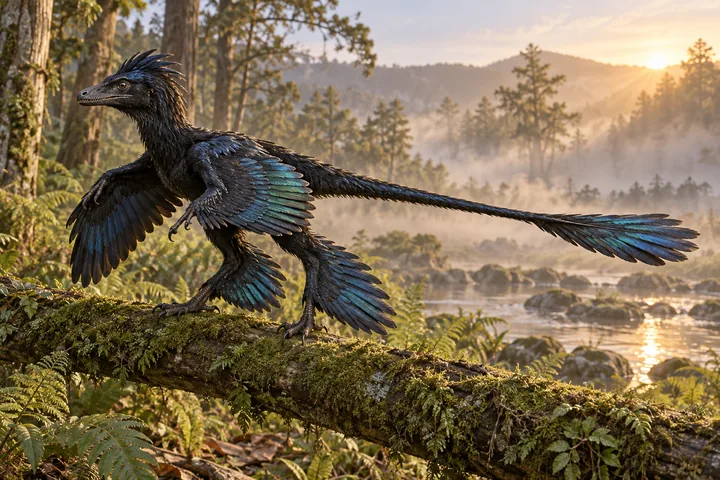
Microraptor
Flight feathers grew on its hind legs as well as its arms.
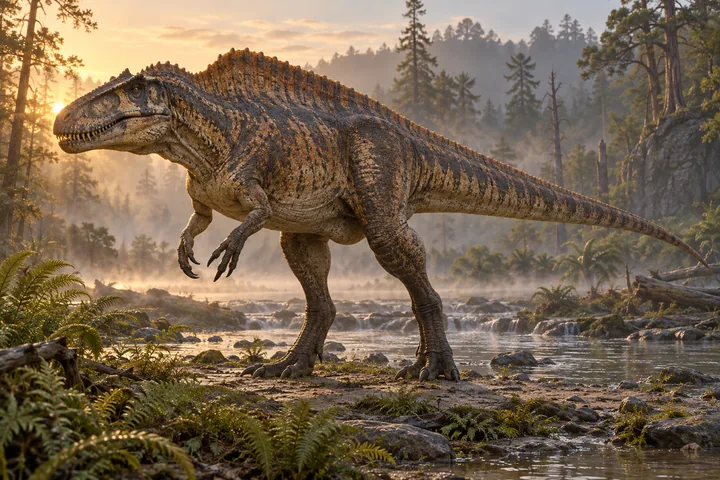
Acrocanthosaurus
Acrocanthosaurus carried unusually tall spines on its back, hip and tail vertebrae.
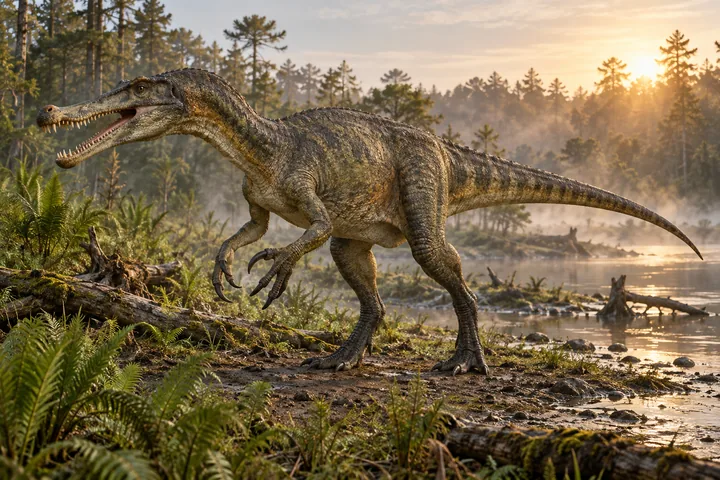
Baryonyx
A Baryonyx fossil preserved fish scales and dinosaur bones in its abdominal region.