
Length
Not establishedNot established here
Tooth-whorl dimensions and exhibit models do not provide a measured complete-animal length range. [D1]
EXHIBIT 248
Helicoprion
Prehistoric fish
A cartilaginous fish with one spiral tooth whorl supported inside the lower jaw. [1]
TWO WAYS TO PICTURE THE PAST
Compare the evidence with the familiar movie image. The illustrations are not to a shared scale.
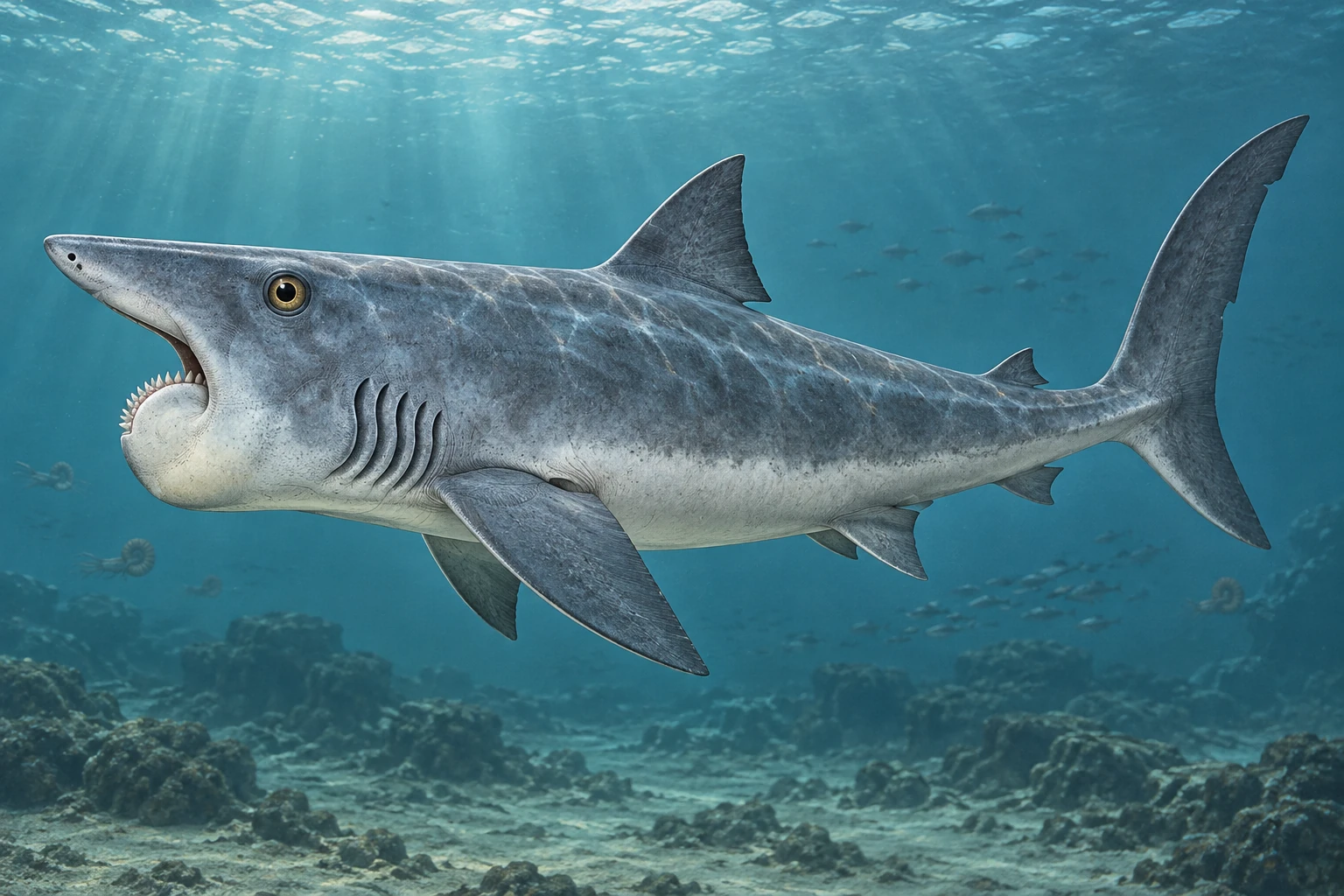
An illustrative reconstruction. Compare its anatomy with the evidence and limitations in the dossier. [1]
Source-informed reconstruction. Appearance evidence [1]. Original illustration; missing anatomy, coloration and scenery include interpretation.
Fossils constrain this life reconstruction. Missing anatomy, coloration and the environmental scene include interpretation; the dossier explains the evidence limits.
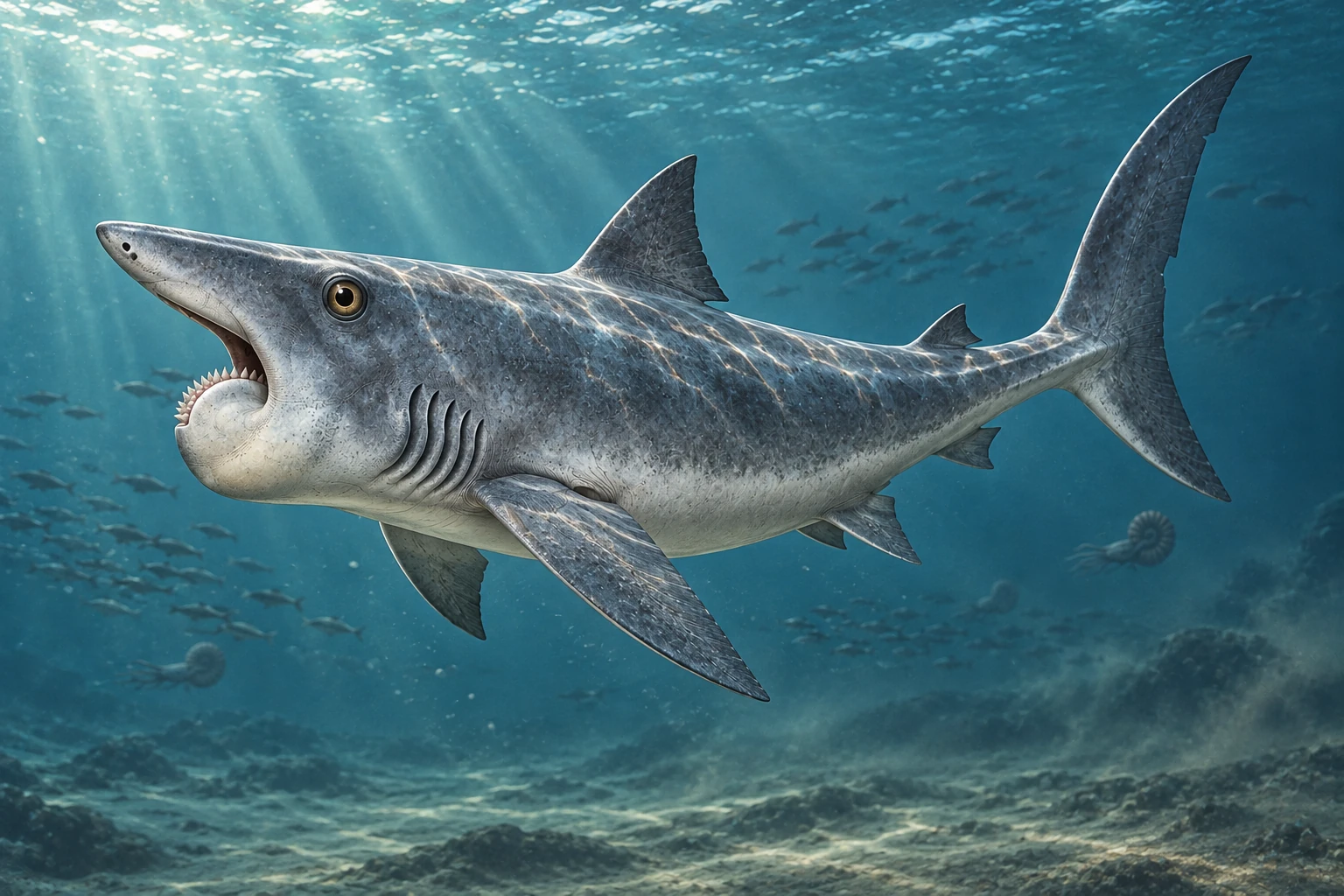
An illustrative reconstruction. Compare its anatomy with the evidence and limitations in the dossier. Lighting, coloration and scenery are artistic choices. This image does not document a fossil locality or behavior.
Original artwork · artistic interpretation.
Scientific view: source-informed reconstruction, credited paleoart or specimen-based imagery. Movie-style view: Original artistic interpretation. Reconstructions involve uncertainty.
MEET THE ANIMAL
Helicoprion was a cartilaginous fish with an extraordinary spiral of teeth. It was related more closely to the lineage containing living ratfishes than to modern sharks. The spiral was part of its lower jaw, not a wheel mounted on its back or nose. [D4]
Imagine solving a puzzle when the strongest pieces are teeth. A Western Australian fossil was first named as a species of Edestus. Additional discoveries revealed that it belonged to Helicoprion instead. The history of the name tells us how new evidence can change an identification. [D5]
Computer scans of an Idaho fossil showed cartilage supporting one spiral along the jaw midline. Much of the spiral stayed hidden inside the jaw region. Its newest exposed teeth could interact with food as the lower jaw moved; it was not a powered circular saw. [D1]
Researchers modeled that movement and found that soft-bodied prey suited it better than hard shells. A model explains a possible feeding mechanism, but it is not an observed dinner. We still lack direct evidence for courtship, social groups or reproduction from the material reviewed here. [D3]
PREHISTORIC ANIMAL DOSSIER
The animal, the evidence, and the questions still open.
Museum fossils and CT scans locate the tooth whorl; mechanical models test how it could have processed prey. [D4] [D3]
Profile scope: Genus-wide exhibit; jaw anatomy follows Idaho specimen IMNH37899, while complete body outlines require related-fish reconstruction. [D1]
Source supported identifies a description documented by the cited source. Inferred marks a reconstruction or functional estimate. Debated marks competing interpretations. Not established means the sources reviewed for this dossier do not support a firm conclusion; it does not mean a behavior never occurred.
A size reference is an estimate, not a population range. Nesting evidence does not by itself establish courtship, mate choice, or lifelong pairing.
Not established here
Tooth-whorl dimensions and exhibit models do not provide a measured complete-animal length range. [D1]
Not established here
The reviewed jaw model does not establish body mass. [D3]
Soft-bodied animal prey favored
A mechanical model favors soft prey; it predicts hard shells could slip forward. No meal is preserved in that study. [D3]
Permian marine waters
Tooth whorls occur in marine rocks; the Idaho jaw specimen comes from the Phosphoria Formation. [D1]
Swimming body reconstructed
Fins and gill configuration in the published restoration rely on related fishes, rather than this jaw fossil. [D1]
A single spiral in the lower jaw
CT exposes jaw cartilage bracing one midline tooth whorl. Most of the spiral was concealed, with outer crowns available for feeding. [D1]
Not established here
Focused searches and the reviewed feeding study provide no direct pregnancy, egg or birth evidence. [D3]
Not established here
Jaw mechanics cannot establish mating displays or courtship; none was documented in the reviewed sources. [D3]
Not established here
The reviewed fossil and feeding sources do not establish schooling, pair bonds or parental care. [D3]
Sources and inspection notes for the claims in this profile.
THE STORY IN THE FOSSILS
The first Western Australian fragment did not explain the whole animal. Its teeth prompted an initial placement in Edestus. Later discoveries made the spiral arrangement clear, but the surrounding body was still missing. That history explains why a strange tooth fossil can pass through several reconstructions before researchers find a better anatomical test. [5]
The museum research team used CT scanning to examine cartilage hidden around an Idaho tooth whorl. Digital work connected an old specimen with a new explanation: the spiral belonged within the lower jaw. Its unusual anatomy also supported a closer relationship to the lineage of living ratfishes than to modern sharks. [4]
The dossier identifies the scope of each reference estimate. A mount, an individual fossil and a species-wide adult range are different measurements. Comparison metrics remain unavailable where adult scope has not been established. Unknown does not mean zero.
Sources support the stated claims and scopes. Refer to the evidence notes for uncertainty.
KEEP EXPLORING
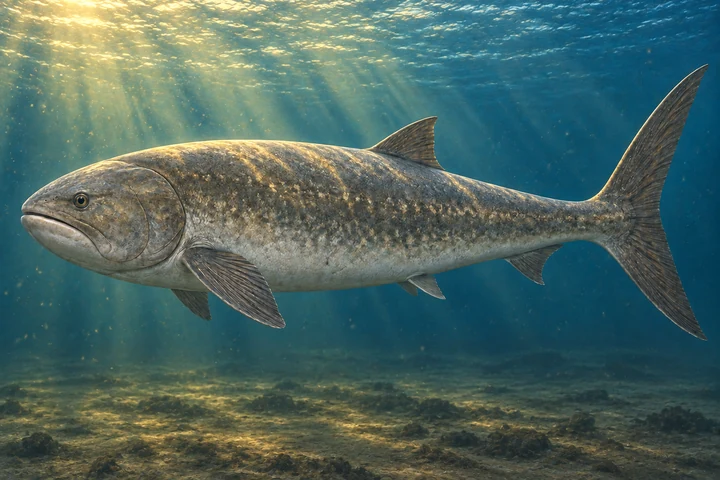
Leedsichthys problematicus
Prehistoric fish
A giant ray-finned fish whose filtering apparatus and incomplete skeleton make size reconstruction a careful puzzle.
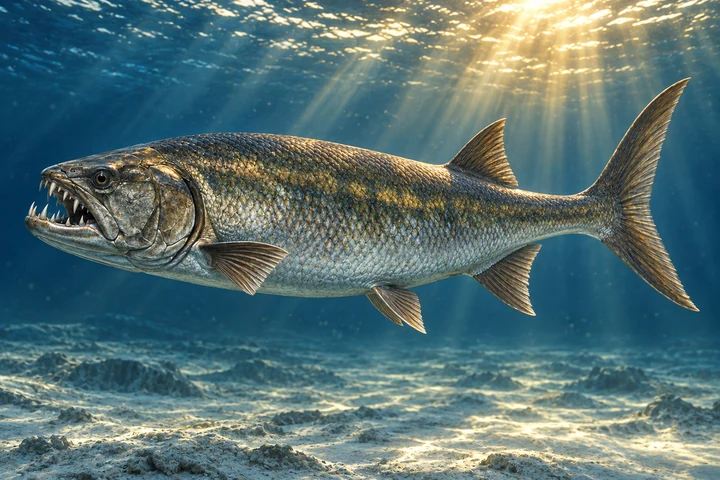
Xiphactinus audax
Prehistoric fish
A large toothed ray-finned fish, with a famous fossil preserving another fish inside it.
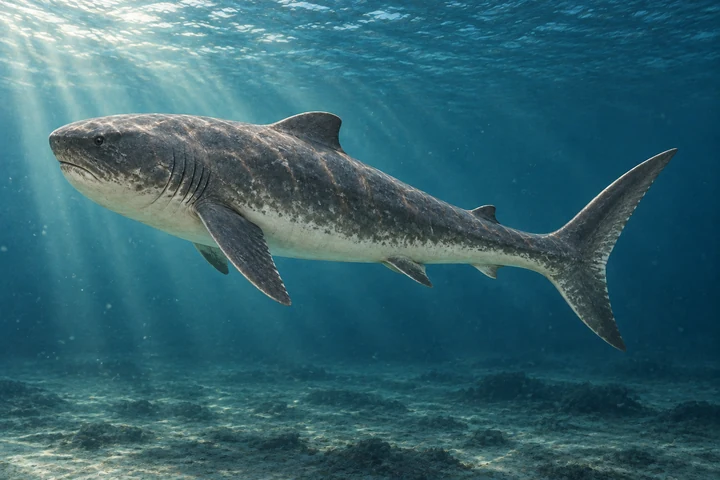
Ptychodus
Prehistoric fish
An extinct crushing-toothed shark whose articulated Mexican fossils reveal a streamlined swimming body.