
Length
Inferred8–16.5 m individual standard-length models
Five incomplete individuals were scaled in 2013. Standard length excludes the caudal fin; these estimates are not an adult species range. [D1]
EXHIBIT 232
Leedsichthys problematicus
Prehistoric fish
A giant ray-finned fish whose filtering apparatus and incomplete skeleton make size reconstruction a careful puzzle. [3]
TWO WAYS TO PICTURE THE PAST
Compare the evidence with the familiar movie image. The illustrations are not to a shared scale.
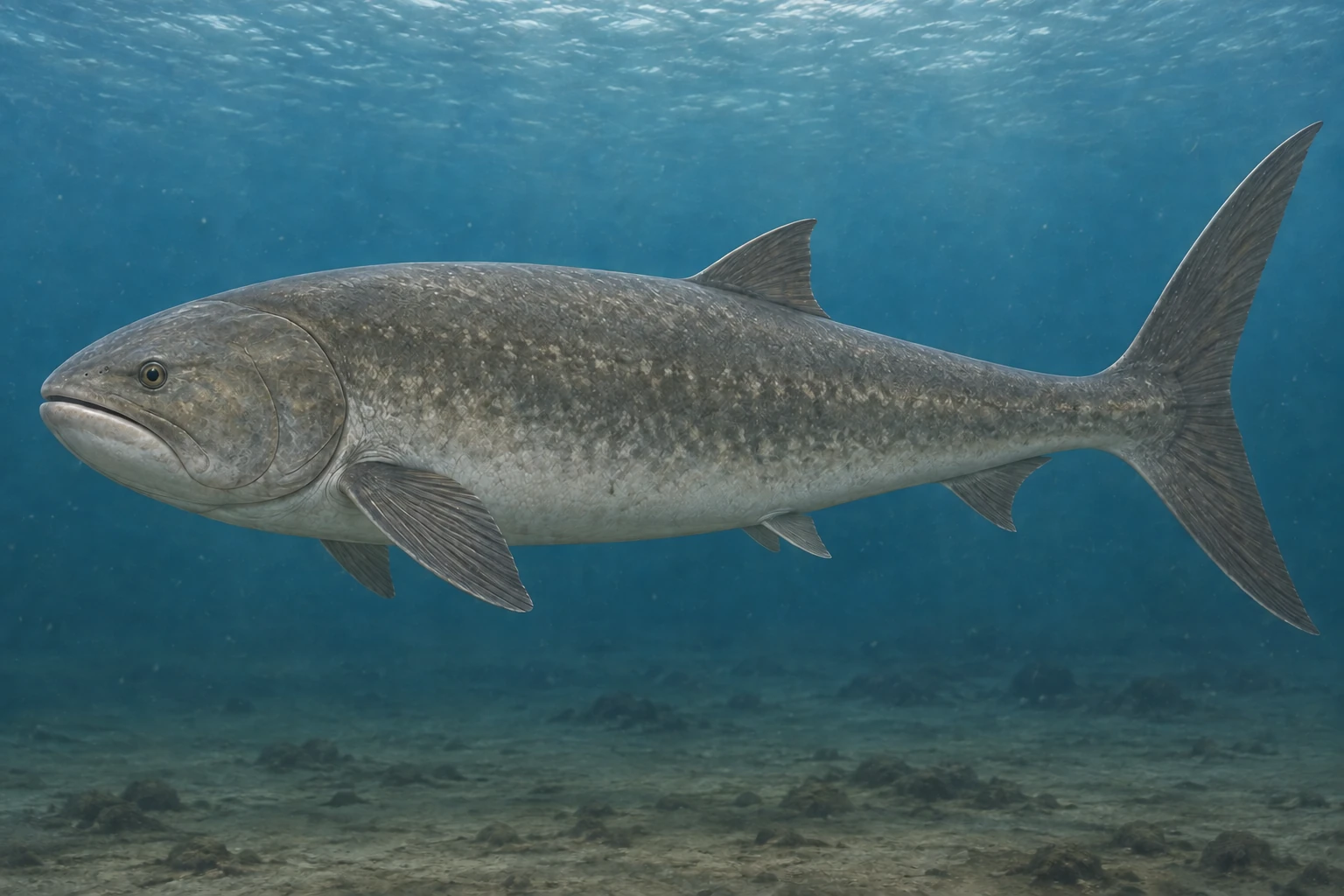
An illustrative reconstruction. Compare its anatomy with the evidence and limitations in the dossier. [4]
Source-informed reconstruction. Appearance evidence [4]. Original illustration; missing anatomy, coloration and scenery include interpretation.
Fossils constrain this life reconstruction. Missing anatomy, coloration and the environmental scene include interpretation; the dossier explains the evidence limits.
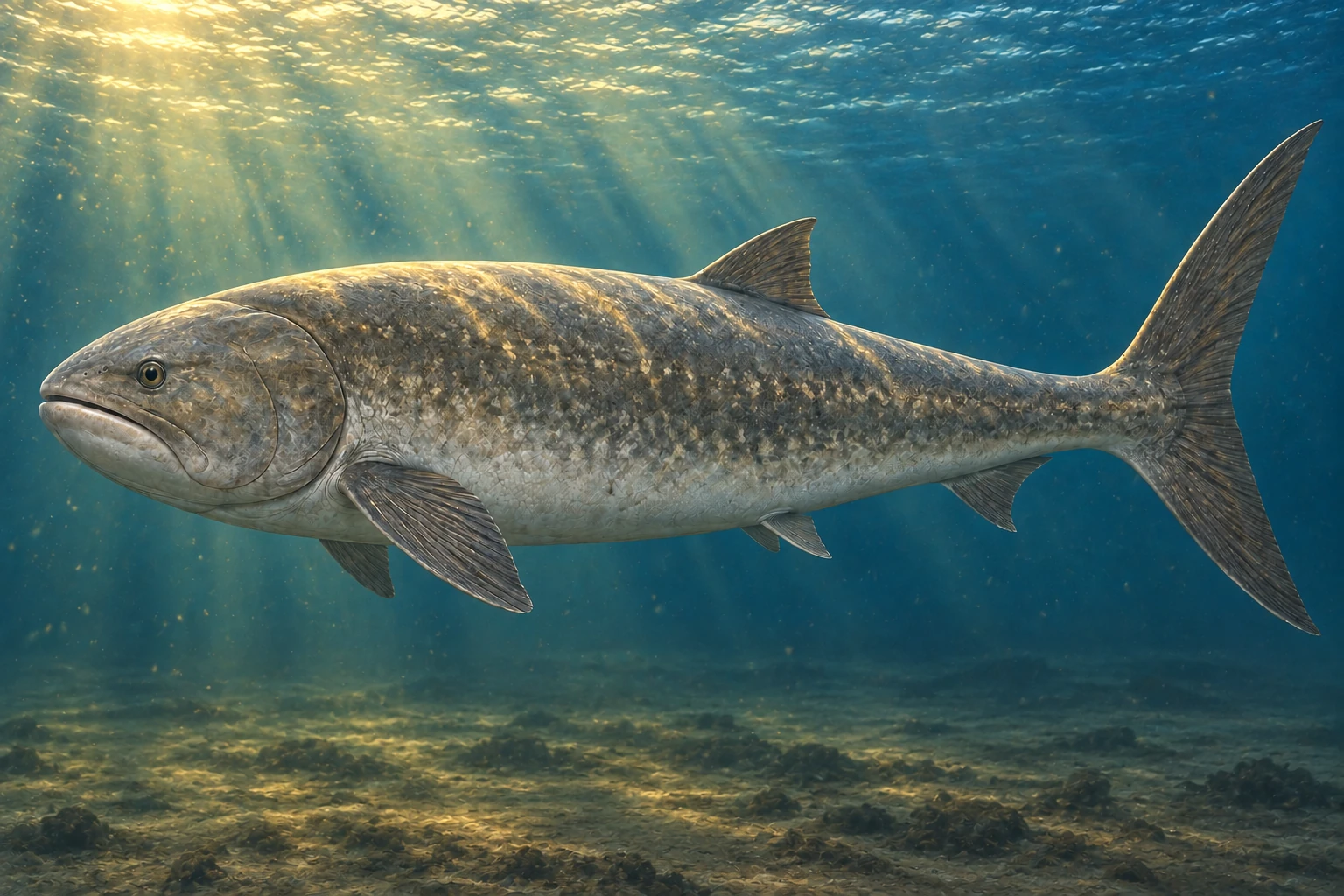
An illustrative reconstruction. Compare its anatomy with the evidence and limitations in the dossier. Lighting, coloration and scenery are artistic choices. This image does not document a fossil locality or behavior.
Original artwork · artistic interpretation.
Scientific view: source-informed reconstruction, credited paleoart or specimen-based imagery. Movie-style view: Original artistic interpretation. Reconstructions involve uncertainty.
MEET THE ANIMAL
Leedsichthys was a giant ray-finned fish, not a dinosaur, shark or whale. Its feeding apparatus suggests that it strained small organisms from seawater. The Natural History Museum includes small animal foods in that interpretation, rather than picturing a giant fish chasing equally giant prey. [D3]
Its size is difficult to reconstruct because the skeleton is incomplete. A2013 study estimated standard lengths of8–16.5 m for five different fossil individuals. Standard length stops before the tail fin. Those calculations must not be presented as five complete skeletons or a proven range for all adults. [D1]
Historical records help explain one tail specimen assembled from several pieces. Such records can reveal which bones were collected together and how a museum mount took shape. A large display is useful for understanding scale, but every restored portion still needs a clear distinction from preserved material. [D2]
Some tail rays contain healed damage. Researchers examined the repair tissue and proposed that a marine-reptile attack had been survived. The fossil shows that bone repaired itself during life, but it does not record a fight in motion, identify the predator or reveal how this fish lived in groups. [D4]
PREHISTORIC ANIMAL DOSSIER
The animal, the evidence, and the questions still open.
Large filtering structures belong to a bony fish, not a whale. Fragile, incompletely ossified remains leave major gaps in a whole-body reconstruction. [D3]
Profile scope: Genus exhibit represented by L. problematicus, especially British Oxford Clay material; length models concern particular incomplete individuals, not a complete adult species range. [D1]
Source supported identifies a description documented by the cited source. Inferred marks a reconstruction or functional estimate. Debated marks competing interpretations. Not established means the sources reviewed for this dossier do not support a firm conclusion; it does not mean a behavior never occurred.
A size reference is an estimate, not a population range. Nesting evidence does not by itself establish courtship, mate choice, or lifelong pairing.
8–16.5 m individual standard-length models
Five incomplete individuals were scaled in 2013. Standard length excludes the caudal fin; these estimates are not an adult species range. [D1]
Not established here
Length scaling does not directly establish mass; no comparable adult kilogram estimate is adopted from the inspected works. [D1]
Suspension feeding inferred
Gill-raker filtering structures support feeding on small organisms; the museum interpretation includes animal plankton rather than large prey. [D3]
Jurassic marine setting
British Oxford Clay material belongs to a marine pachycormiform fish; deposition and collection history are kept distinct. [D1]
Fin-driven marine swimming reconstructed
The tail is preserved in parts. Exact speed and small-fin positions depend on incomplete material and comparison. [D2]
Large filtering apparatus and fin rays
Poor skeletal ossification limits reconstruction, but preserved tail rays can retain healed damage. [D4]
Not established here
Growth rings estimate age under stated assumptions; they do not establish fossil eggs, spawning season or fertility. [D1]
Not established here
Repaired fin rays reveal injury response, not mating signals or seasonal display colors. [D4]
Not established here
Historical assembly of tail pieces does not demonstrate a living school, pair bond or nursery. [D2]
Sources and inspection notes for the claims in this profile.
THE STORY IN THE FOSSILS
Microscopic sections of tail rays reveal repair tissue joining damaged bone. Researchers interpreted the injury as a survived attack by a marine reptile. The healing is evidence of a living response; the identity of the attacker remains an interpretation. [4]
An old tail specimen was assembled from separate pieces whose history matters. Museum documents help connect those pieces correctly, showing why fossil measurements depend on both anatomy and reliable collection records. [2]
The dossier identifies the scope of each reference estimate. A mount, an individual fossil and a species-wide adult range are different measurements. Comparison metrics remain unavailable where adult scope has not been established. Unknown does not mean zero.
Sources support the stated claims and scopes. Refer to the evidence notes for uncertainty.
KEEP EXPLORING
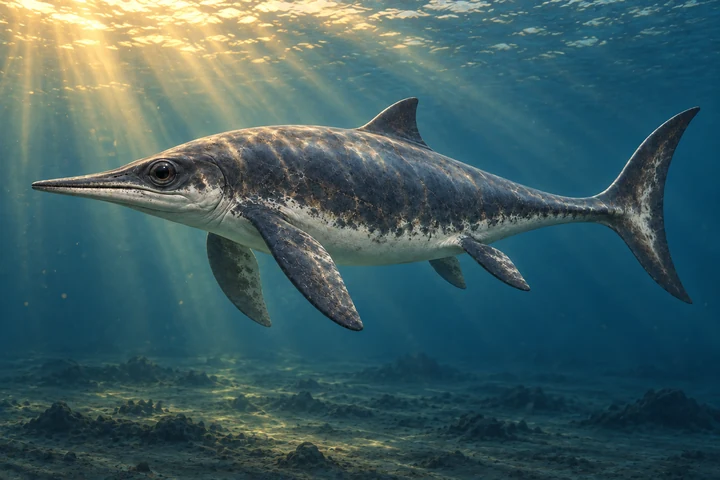
Ophthalmosaurus icenicus
Marine reptile
A large-eyed ichthyosaur whose British fossils must be separated from debated North American relatives.
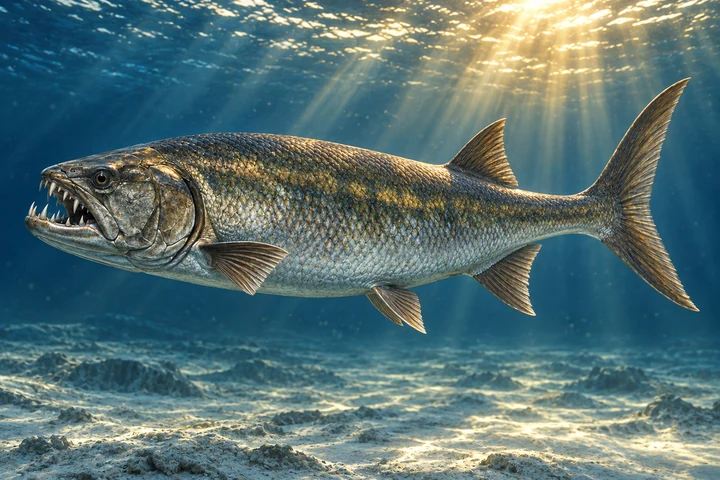
Xiphactinus audax
Prehistoric fish
A large toothed ray-finned fish, with a famous fossil preserving another fish inside it.
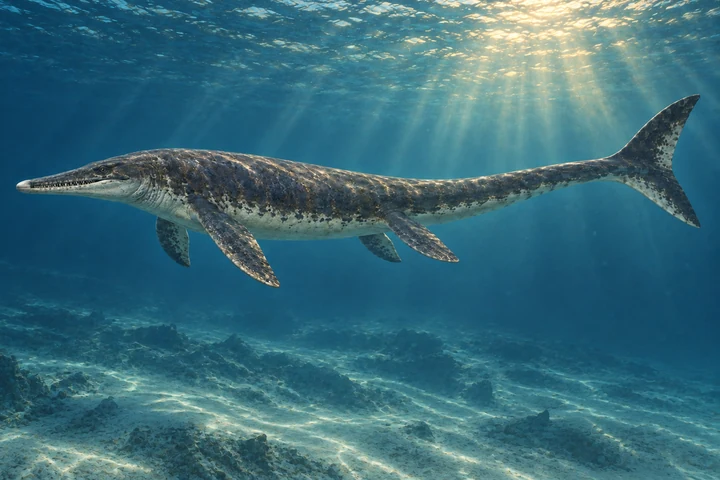
Tylosaurus proriger
Marine reptile
A marine lizard with an elongated adult snout tip, whose fossil identities are still being revised.