Length
InferredAbout 5 m (museum reference)
A rounded museum reference, not a measured population range; the page does not specify the specimen, method or growth stage. [D1]
EXHIBIT 49
Kentrosaurus
Spikes whose position remains debated.
TWO WAYS TO PICTURE THE PAST
Compare the evidence with the familiar movie image. The illustrations are not to a shared scale.

The artist identifies this reconstruction as Kentrosaurus aethiopicus. This view illustrates one form within the genus, rather than every species or individual. Fossil-informed anatomy: Compact quadrupedal stegosaur with back osteoderms and conspicuous spikes; lateral-spike position remains uncertain, with hips supported by one study. Colour and keratin extent are reconstructed. Plate and spike soft-tissue coverings and exact posture are artistic interpretation; no source-page accuracy warning was found. The position of the large lateral spikes remains debated; hip placement is one published reconstruction. [1] [2]
Kentrosaurus aethiopicus.png — Connor Ashbridge (Ddinodan). CC BY-SA 4.0. Remote source artwork displayed without additional cropping; Wikimedia supplies any display-size derivative.
Scientific picture served by Wikimedia · internet connection required.
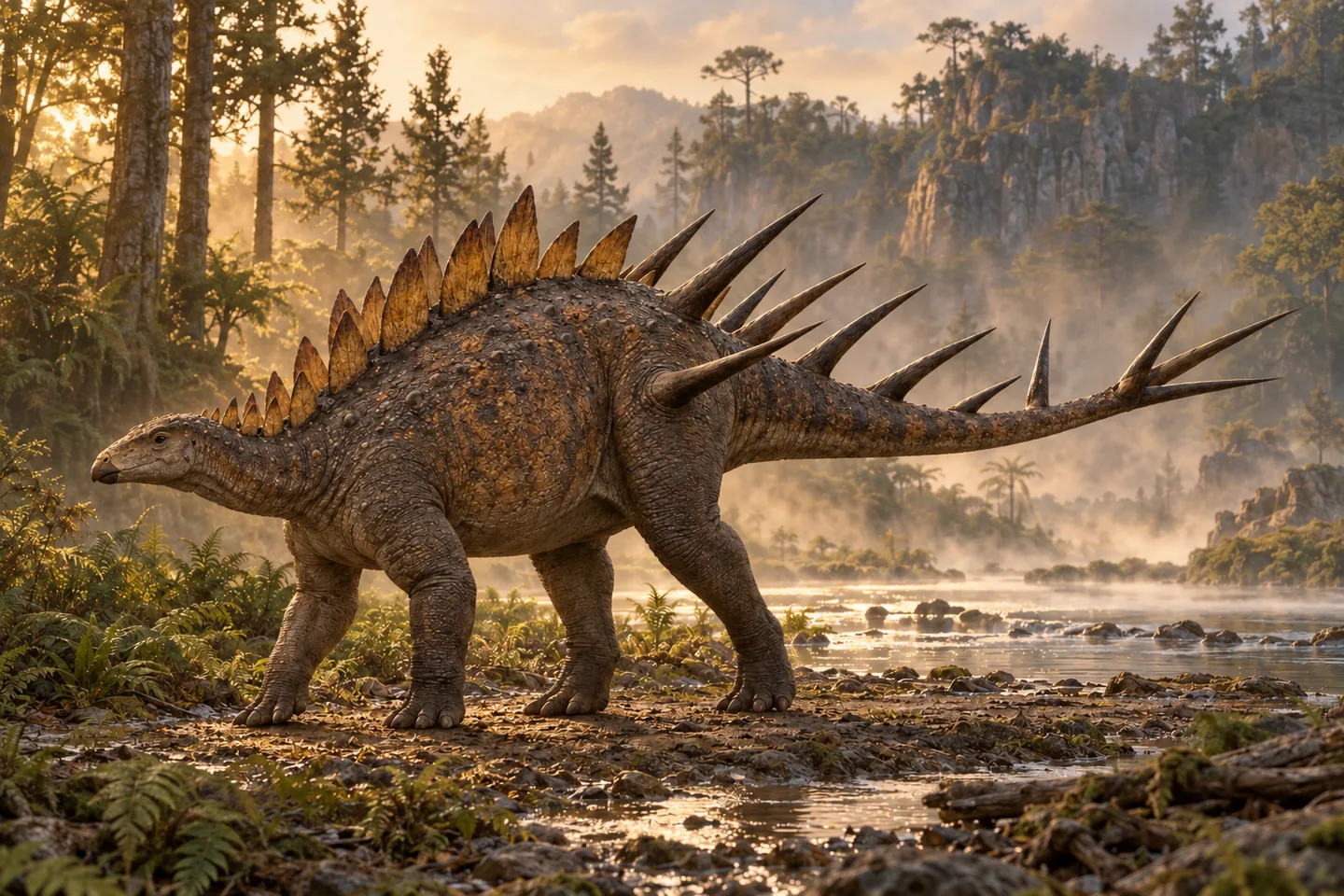
Cinematic compact Kentrosaurus with back plates and rear spikes; large paired lateral spikes positioned at the hips as a labelled reconstruction, robust forelimbs and speculative colours. Dramatic lighting, surface detail and scenery are artistic choices. This is an original cinema-inspired picture, rather than a frame from a film or a documented fossil locality.
Original artwork · artistic interpretation.
Scientific view: credited paleoart interpreting fossil evidence, served online by Wikimedia. Movie-style view: Original artistic interpretation. Colors, soft tissues and settings involve reconstruction.
MEET THE ANIMAL
Kentrosaurus aethiopicus was a plant-eating stegosaur from Late Jurassic Tendaguru, in what is now Tanzania. Its neck and chest carried bony plates, while paired spines gave the back and tail an imposing outline. These are fossil structures, rather than invented accessories. Their presence makes the dinosaur recognizable without proving every proposed use of its armor. [S1]
Computer modeling has tested whether the spiked tail could function as a defensive weapon. Reconstructed muscles, joints and comparisons with living reptiles suggest swings capable of causing serious injury. The models address what the body could do; they do not preserve an actual fight or show how often the tail was used. Mechanical capability is a different kind of evidence from a witnessed encounter. [S2]
Museum material proposes feeding on low plants and provides approximate body-mass references. Such educational estimates do not define the weights of an adult population. Food choice is likewise reconstructed rather than demonstrated by a preserved meal. Kentrosaurus combines clear evidence of a plated, spiny body with questions about how that equipment affected its movements and daily survival. [D3]
PREHISTORIC ANIMAL DOSSIER
The animal, the evidence, and the questions still open.
Kentrosaurus was a Tanzanian stegosaur bearing plates and prominent spikes. The large lateral spikes have been placed near either the shoulders or hips, illustrating uncertainty in assembling separate fossil elements.
Profile scope: Genus: Kentrosaurus; detailed modelling and museum estimates concern K. aethiopicus.
Source supported identifies a description documented by the cited source. Inferred marks a reconstruction or functional estimate. Debated marks competing interpretations. Not established means the sources reviewed for this dossier do not support a firm conclusion; it does not mean a behavior never occurred.
A size reference is an estimate, not a population range. Nesting evidence does not by itself establish courtship, mate choice, or lifelong pairing.
About 5 m (museum reference)
A rounded museum reference, not a measured population range; the page does not specify the specimen, method or growth stage. [D1]
About 1,000–1,500 kg (museum references)
Berlin's educational material provides this approximate interval. It does not specify the specimen, maturity or calculation method; it is not an adult population distribution. [D3]
Low-growing plants likely
Museum material identifies a plant eater and proposes low shrubs. Exact food selection is reconstructed rather than shown by a preserved meal here. [D1] [D3]
Late Jurassic Tanzania; Tendaguru fossil setting
The reviewed sources place K. aethiopicus in Tanzania's Late Jurassic deposits. They do not establish its preferred microhabitat. [D1] [D2]
Four-legged posture; rearing mechanically possible
Skeletal models support quadrupedal posture and possible three-point rearing. Mechanical feasibility does not establish how often the animal used that pose. [D2]
Plates and spikes; lateral-spike position debated
Mallison argues for hip attachment while discussing the competing shoulder placement. The Berlin mounted skeleton combines bones from more than one individual. [D2]
Not established here
The reviewed sources do not establish nest structure, incubation or parental care for Kentrosaurus.
Not established here
The reviewed sources do not establish a courtship sequence or mating system for Kentrosaurus.
Not established here
The reviewed sources do not establish usual group size or lasting social organization for Kentrosaurus.
Sources and inspection notes for the claims in this profile.
THE STORY IN THE FOSSILS
Kentrosaurus belongs to the plated and spiked stegosaur group. Researchers have debated whether its large lateral spikes sat near the shoulders or hips. One study argues that their bases match attachment areas on the pelvic shield, illustrating how reconstruction depends on relationships among separate bones. [2]
A computer model built from scans of the Berlin skeleton tested how different armour arrangements would shift the animal’s centre of mass. The changes were insufficient to explain major differences in upper-arm robustness among stegosaurs. The mounted skeleton combines the name-bearing specimen with other material. [2]
We have not established a comparable adult total-length estimate for this taxon in this draft. Specimen measurements in the text describe those individuals. The cited dates are approximately 155–150 million years ago. Unknown does not mean zero.
Sources and evidence notes for this exhibit.
KEEP EXPLORING
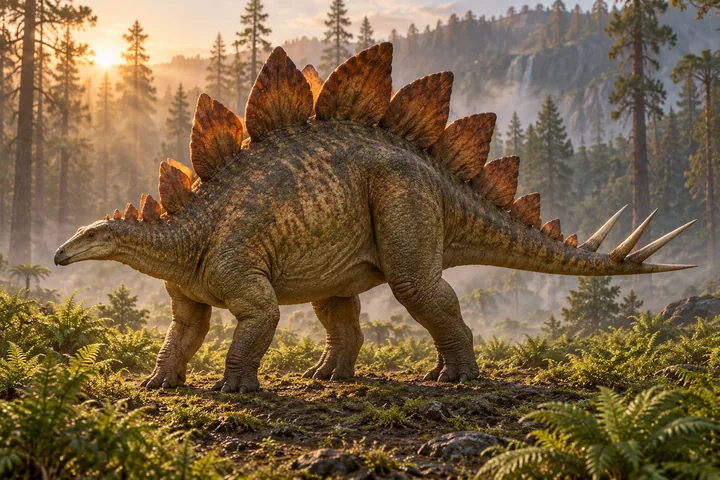
Stegosaurus stenops
A small head, a skyline of plates, and four spikes at the tail.
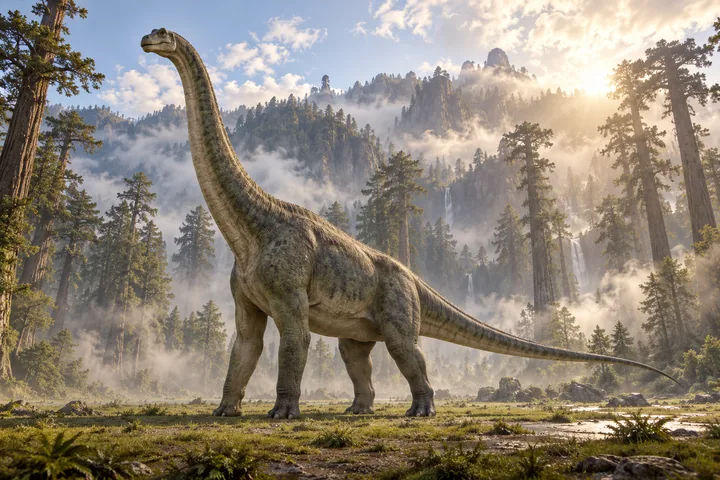
Brachiosaurus altithorax
Air-filled ribs, towering shoulders, and a fossil record with big gaps.