
Length
InferredAbout 26 m (museum reference)
A rounded museum reference, not a measured population range; the page does not specify the specimen, method or growth stage. [D1]
EXHIBIT 50
Diplodocus
Double-beamed bones beneath a whip-like tail.
TWO WAYS TO PICTURE THE PAST
Compare the evidence with the familiar movie image. The illustrations are not to a shared scale.

The artist identifies this reconstruction as Diplodocus carnegii. This view illustrates one form within the genus, rather than every species or individual. Fossil-informed anatomy: Four-legged sauropod with very long neck and whip-like tail; slender elongated proportions, comb-like teeth and two-beamed chevrons beneath the tail. The source describes the continuous dorsal spine row as a hypothesis. Colour, soft tissue and exact neck pose remain reconstructed. [1] [2]
Diplodocus carnegii.jpg — Fred Wierum. CC BY-SA 4.0. Remote source artwork displayed without additional cropping; Wikimedia supplies any display-size derivative.
Scientific picture served by Wikimedia · internet connection required.
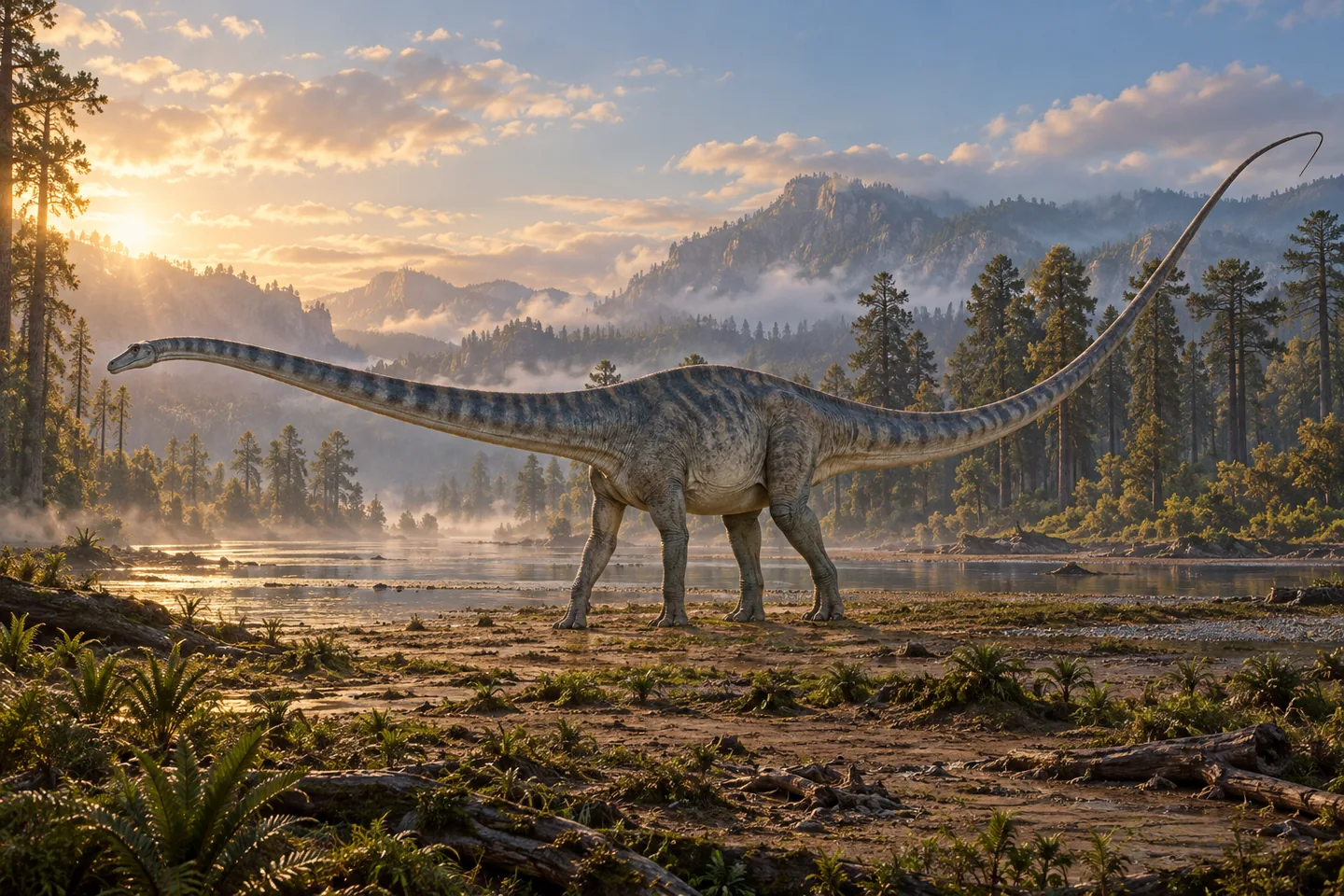
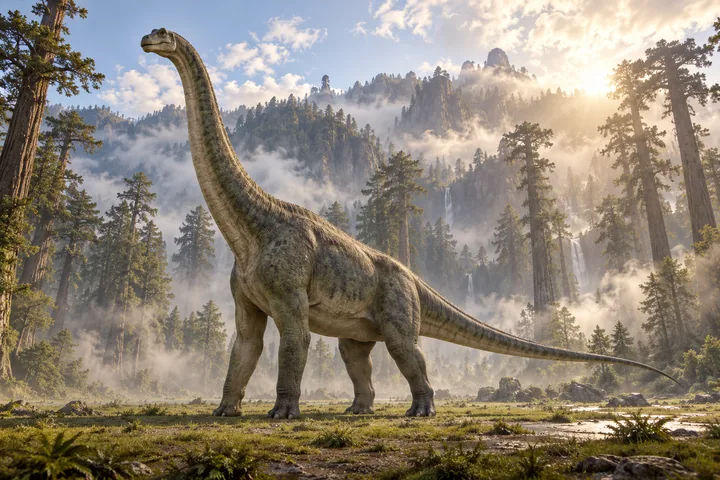
Cinematic Diplodocus emphasizing an immense tapering tail and long forward-reaching neck; four supporting limbs, balanced body, raised tail and speculative colours. Dramatic lighting, surface detail and scenery are artistic choices. This is an original cinema-inspired picture, rather than a frame from a film or a documented fossil locality.
Original artwork · artistic interpretation.
Scientific view: credited paleoart interpreting fossil evidence, served online by Wikimedia. Movie-style view: Original artistic interpretation. Colors, soft tissues and settings involve reconstruction.
MEET THE ANIMAL
Diplodocus was a Late Jurassic plant eater known from the Morrison Formation of North America. An extremely long neck and tapering tail gave this sauropod its striking proportions. The name means double-beamed, referring to unusual two-pronged bones beneath part of the tail. Those bones, called chevrons, form a more specific identifying clue than simply being a very large dinosaur. [S1]
Narrow teeth arranged like a rake supported feeding on vegetation. Replacement teeth maintained the feeding apparatus as older teeth wore down. Researchers use the skeleton to investigate neck flexibility and the area within reach of the head, but a reconstructed feeding pose should not become a proven lifelong routine. The fossils do not let us listen to the animal’s actual calls. [S1]
The famous London Dippy is a plaster replica of a Diplodocus carnegii skeleton whose original is housed in Pittsburgh. It represents a particular species within the genus. Recognizing the difference between a cast, an original fossil and a living animal matters when interpreting a museum display. Dippy illustrates a remarkable body plan while reminding us that familiar exhibits are carefully constructed scientific representations. [S1]
PREHISTORIC ANIMAL DOSSIER
The animal, the evidence, and the questions still open.
Diplodocus combined a long neck with an exceptionally long, tapering tail and double-beamed bones beneath it. The famous Dippy mount includes material from several skeletons, so its completeness should not be confused with one untouched individual.
Profile scope: Genus: Diplodocus; Dippy is a composite D. carnegii museum mount.
Source supported identifies a description documented by the cited source. Inferred marks a reconstruction or functional estimate. Debated marks competing interpretations. Not established means the sources reviewed for this dossier do not support a firm conclusion; it does not mean a behavior never occurred.
A size reference is an estimate, not a population range. Nesting evidence does not by itself establish courtship, mate choice, or lifelong pairing.
About 26 m (museum reference)
A rounded museum reference, not a measured population range; the page does not specify the specimen, method or growth stage. [D1]
About 15,000 kg (museum reference)
A rounded museum reference, not a measured population range; the page does not specify the specimen, method or growth stage. [D1]
Plant eater with comb-like front teeth
The museum reconstructs feeding on leaves and softer plants. Exact browsing height and plant selection are not established here. [D1]
Morrison Formation; seasonally dry landscapes reconstructed
The museum places fossils across the western USA and reconstructs a hot, dry landscape with cycads and tree ferns. A formation covers multiple local environments. [D1]
Four-legged walking with an elevated tail
The skeleton is reconstructed as quadrupedal, with its tail held off the ground. Neck posture remains a subject of reconstruction and discussion. [D1]
Long neck, tapering tail, double-beamed chevrons
The distinctive bones below the tail inspired the name. Dippy includes replacement material from other specimens, which affects interpretation of its proportions. [D1] [D2]
Not established here
The reviewed sources do not establish nest structure, incubation or parental care for Diplodocus.
Not established here
The reviewed sources do not establish a courtship sequence or mating system for Diplodocus.
Not established here
The reviewed sources do not establish usual group size or lasting social organization for Diplodocus.
Sources and inspection notes for the claims in this profile.
THE STORY IN THE FOSSILS
Diplodocus carried a very long neck and whip-like tail on four legs. Its name refers to two-beamed bones beneath the tail, structures later recognized in other sauropods too. Fossils come from the Morrison Formation, a sequence of rocks extending across several western US states. [1]
The famous Carnegie skeleton began with a mostly complete Diplodocus found in Wyoming in 1899. Missing parts were supplied from other skeletons, and casts travelled to museums abroad. That history made Diplodocus internationally familiar, while also showing why a museum mount should not be treated as one untouched fossil individual. [2]
We have not established a comparable adult total-length estimate for this taxon in this draft. Specimen measurements in the text describe those individuals. The cited dates are approximately 152–145 million years ago. Unknown does not mean zero.
Sources and evidence notes for this exhibit.
KEEP EXPLORING
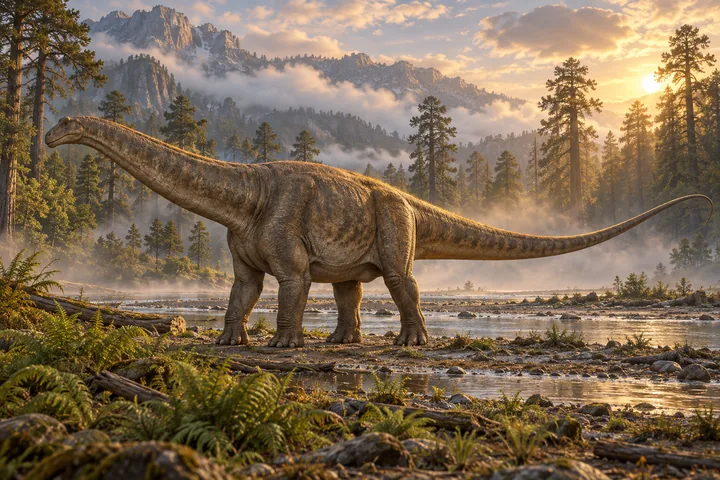
Apatosaurus
A narrow skull restored after decades with the wrong head.
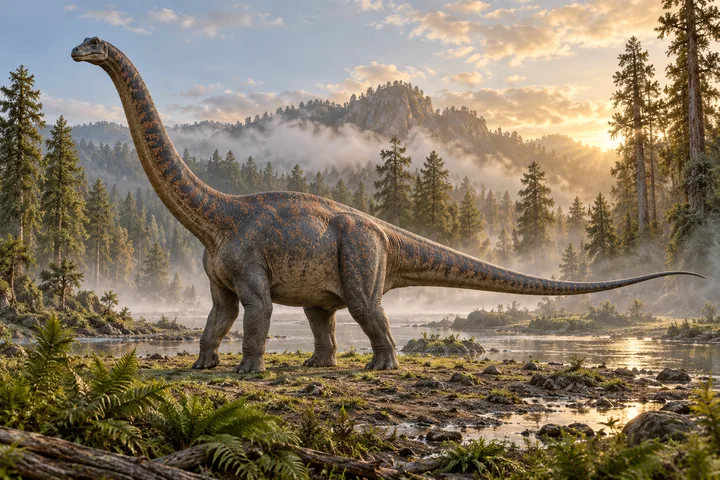
Brontosaurus
The thunder lizard revived by detailed anatomical comparison.
Brachiosaurus altithorax
Air-filled ribs, towering shoulders, and a fossil record with big gaps.