
Length
InferredAbout 3 m; museum reference
The museum gives an educational length without an individual, life stage or method. It is not an established adult range. [D2]
TWO WAYS TO PICTURE THE PAST
Compare the evidence with the familiar movie image. The illustrations are not to a shared scale.
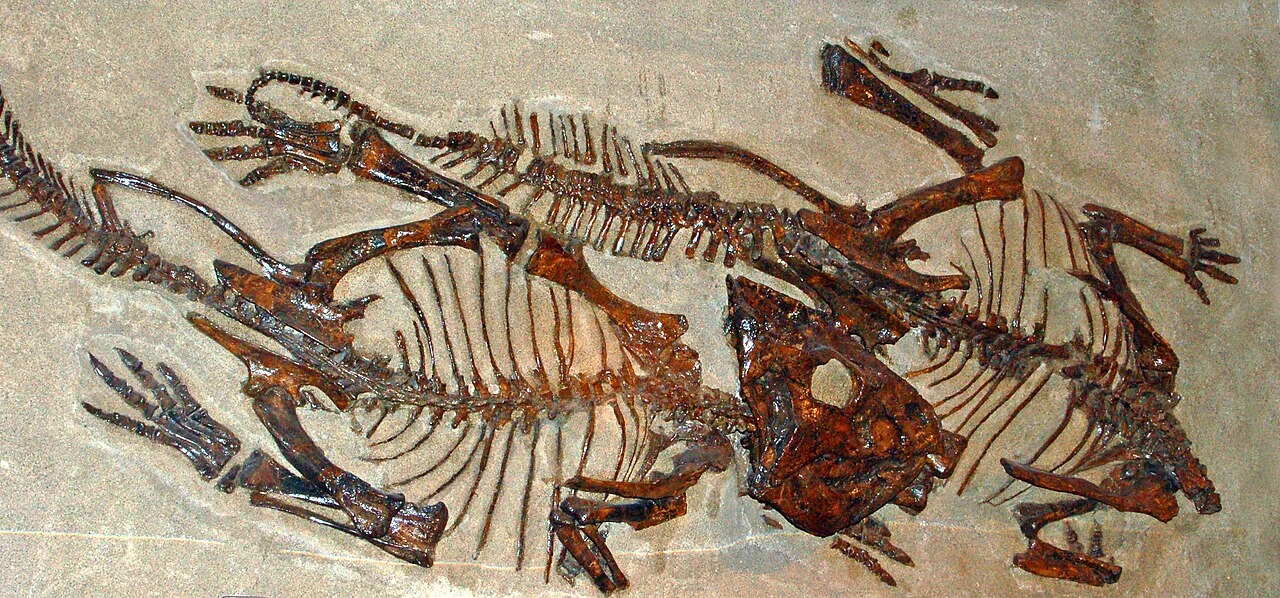
Museum displays identified as Leptoceratops at the Canadian Museum of Nature. The source does not identify their specimen numbers or life stages; mounting includes restoration. Fossil colors do not establish living colors or soft tissues. [1]
Leptoceratopsidae - Leptoceratops.JPG · Hectonichus. CC BY-SA 3.0. Proportionally resized Commons preview and converted to WebP; no anatomy edits.
The photograph or figure shows the credited fossil material; displayed mounts and labels can include interpretation.
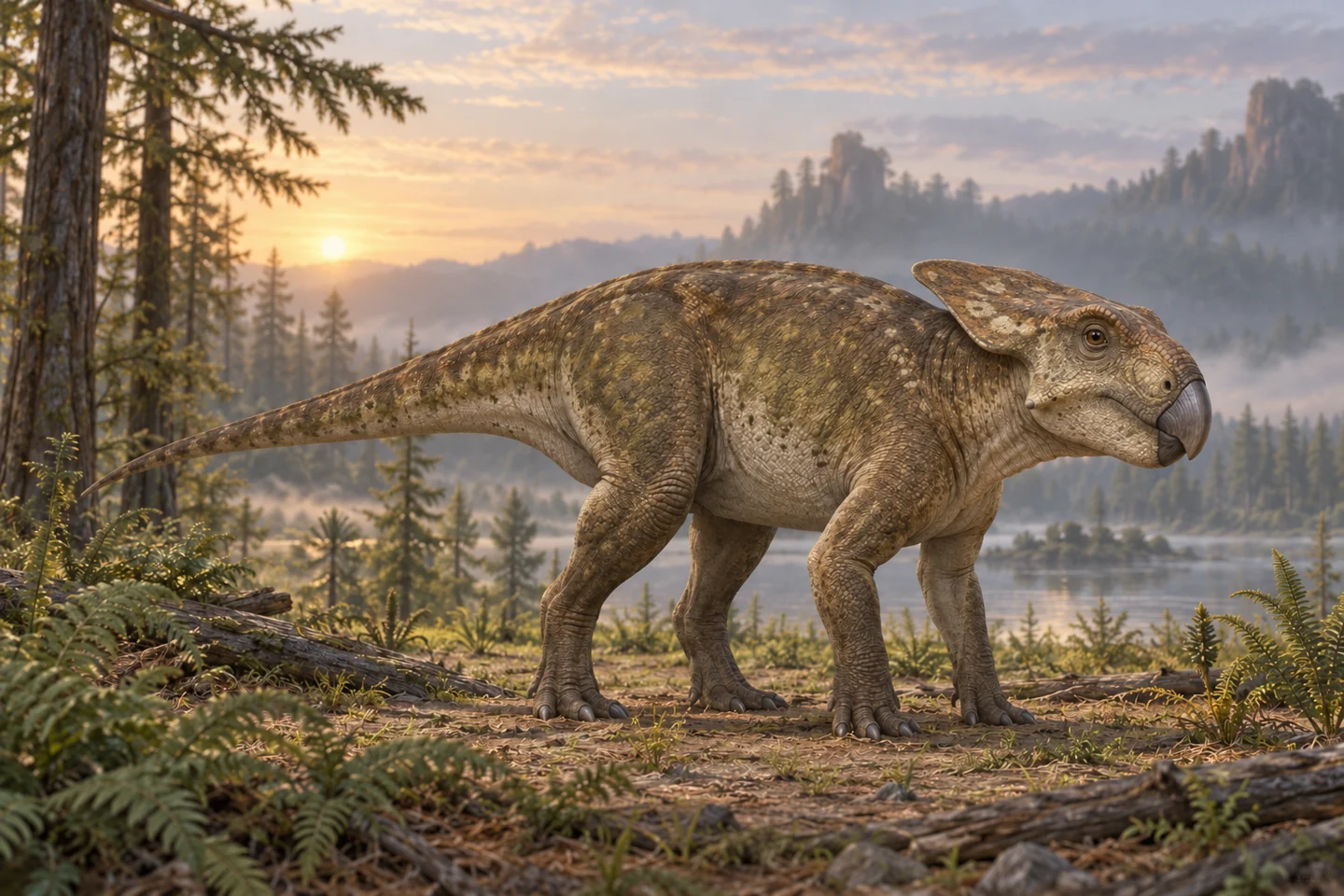
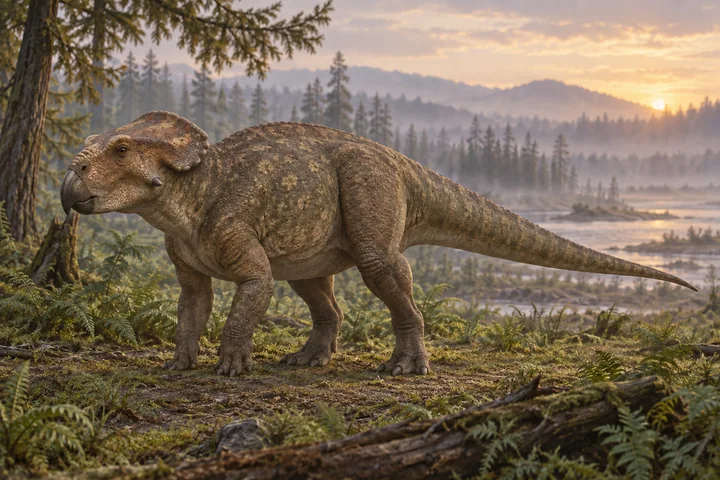
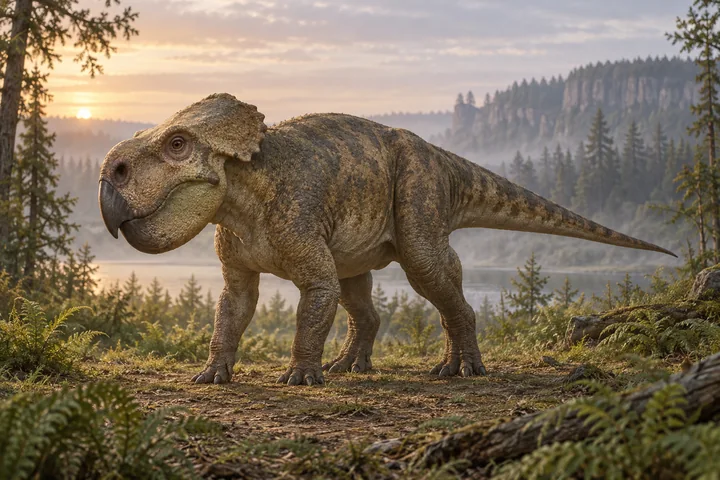
Original cinematic interpretation of Leptoceratops gracilis. Colors, soft tissues, scenery and missing anatomy are reconstructed artistic choices; this is not a directly observed individual or behavior. The quiet stance is a comparative reconstruction rather than evidence for a particular gait or social behavior. The short low frill and complete body outline are reconstructed interpretations. Lighting, coloration and scenery are artistic choices. This image does not document a fossil locality or behavior.
Original artwork · artistic interpretation.
Scientific view: source-informed reconstruction, credited paleoart or specimen-based imagery. Movie-style view: Original artistic interpretation. Reconstructions involve uncertainty.
MEET THE ANIMAL
Leptoceratops was a plant-eating dinosaur from near the end of the Cretaceous in North America. A museum reference of about three metres gives a rough idea of size without establishing a measured adult range. It belonged to the wider ceratopsian group, but its profile should be understood through its own fossil evidence rather than a scaled-down picture of a giant horned dinosaur. [D2]
Microscopic tooth scratches in one specimen trace a curved path. Researchers used them to model a chewing stroke involving both closing and pulling the lower jaw backward. This is more complex than a simple scissors-like bite. The wear provides evidence of food processing without revealing every plant the animal ate or an entire seasonal feeding routine. [D3]
Shoulder and limb anatomy favors mainly four-legged movement, while earlier two-legged interpretations remain part of the discussion. The comparison does not measure running speed. A restored skeleton may present a stance, but the evidence can support questions about movement. Leptoceratops is informative when details of feeding and locomotion stay distinct from that display pose. [D4]
PREHISTORIC ANIMAL DOSSIER
The animal, the evidence, and the questions still open.
A deep lower jaw and curved tooth-wear scratches suggest sophisticated food processing. Proposed communal nesting remains tentative. [D3] [D5]
Profile scope: L. gracilis, using named Canadian and United States material; historical species now assigned to other genera are excluded. [D8]
Source supported identifies a description documented by the cited source. Inferred marks a reconstruction or functional estimate. Debated marks competing interpretations. Not established means the sources reviewed for this dossier do not support a firm conclusion; it does not mean a behavior never occurred.
A size reference is an estimate, not a population range. Nesting evidence does not by itself establish courtship, mate choice, or lifelong pairing.
About 3 m; museum reference
The museum gives an educational length without an individual, life stage or method. It is not an established adult range. [D2]
About 416 kg; AMNH5205 model
Limb-circumference estimate. The type collection contains two individuals; maturity is unconfirmed. This reference model is not a species range. [D6] [D1]
Plant eater with complex chewing
Museum classification supports herbivory. In CMN8889, curved wear scratches support a rotating, retracting lower-jaw power stroke; specific plants are unresolved. [D2] [D3]
Continental environments near the end of the Cretaceous
Scollard material in Alberta and Hell Creek occurrences in Montana document latest Maastrichtian settings. These occurrences do not establish one preferred microhabitat. [D7] [D5]
Probably mainly quadrupedal
A 2019 comparison favors four-footed locomotion from shoulder and limb anatomy. Earlier bipedal interpretations remain relevant; exact gait and speed are unmeasured. [D4]
Deep jaws and a short, hornless skull
The original material preserves an unusually deep lower jaw, single-rooted teeth and no nasal horn. Its relatively long tail includes tall spines and chevrons. [D1]
Communal nesting proposed, unconfirmed
A 2019 conference abstract interprets three adult/juvenile bonebeds as collapsed nesting burrows. Egg identity, parenting and recurrent brood use remain hypotheses requiring fuller testing. [D5]
Not established here
Reviewed skull and dental studies do not establish sexually distinct ornamentation, mating season or courtship rituals. [D3]
Possible aggregations; interpretation provisional
Multiple age classes occur in the reported Montana assemblages. The communal-burrow hypothesis does not establish herd size, family relationships or lifelong social organization. [D5]
Sources and inspection notes for the claims in this profile.
THE STORY IN THE FOSSILS
Microscopic scratches in CMN8889 trace a curved path across the tooth surfaces. They led to a jaw-motion model involving both closure and backward movement, rather than a simple scissors-like bite. [3]
Leptoceratops combines a small frill with a strong jaw and no nasal horn. Those features distinguish it from the much larger horned dinosaurs familiar from the same final Cretaceous interval. [1] [2]
The dossier identifies the scope of each reference estimate. A mount, an individual fossil and a species-wide adult range are different measurements. Comparison metrics remain unavailable where adult scope has not been established. Unknown does not mean zero.
Sources support the stated claims and scopes. Refer to the evidence notes for uncertainty.
KEEP EXPLORING
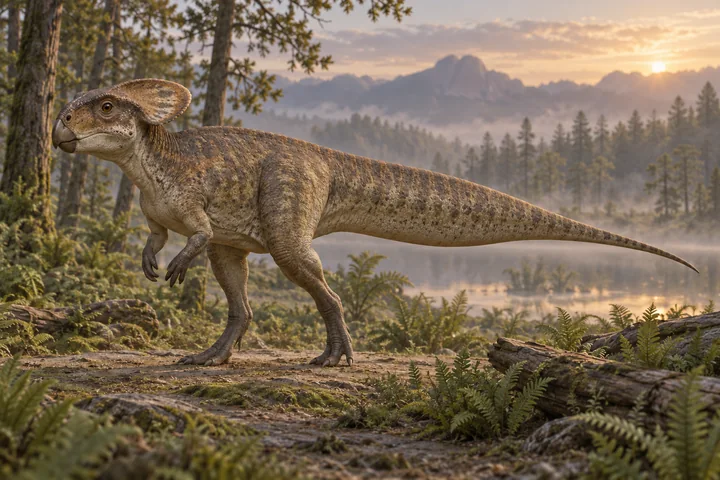
Yamaceratops dorngobiensis
Yamaceratops was a small beaked ceratopsian whose cheek and jaw anatomy records a distinctive early neoceratopsian combination.
Montanoceratops cerorhynchus
Montanoceratops was a small beaked ceratopsian; incomplete skull material has repeatedly changed how its head is reconstructed.
Udanoceratops tschizhovi
Udanoceratops was a large beaked ceratopsian with a strikingly deep lower jaw and an incompletely known body.