
Length
InferredAbout 1.5 m; institutional reference
Holtz gives an educational reconstruction without specimen, life stage or method. It is not the measured length of juvenile MPC-D100/553. [D5]
EXHIBIT 132
Yamaceratops dorngobiensis
Yamaceratops was a small beaked ceratopsian whose cheek and jaw anatomy records a distinctive early neoceratopsian combination. [1]
TWO WAYS TO PICTURE THE PAST
Compare the evidence with the familiar movie image. The illustrations are not to a shared scale.
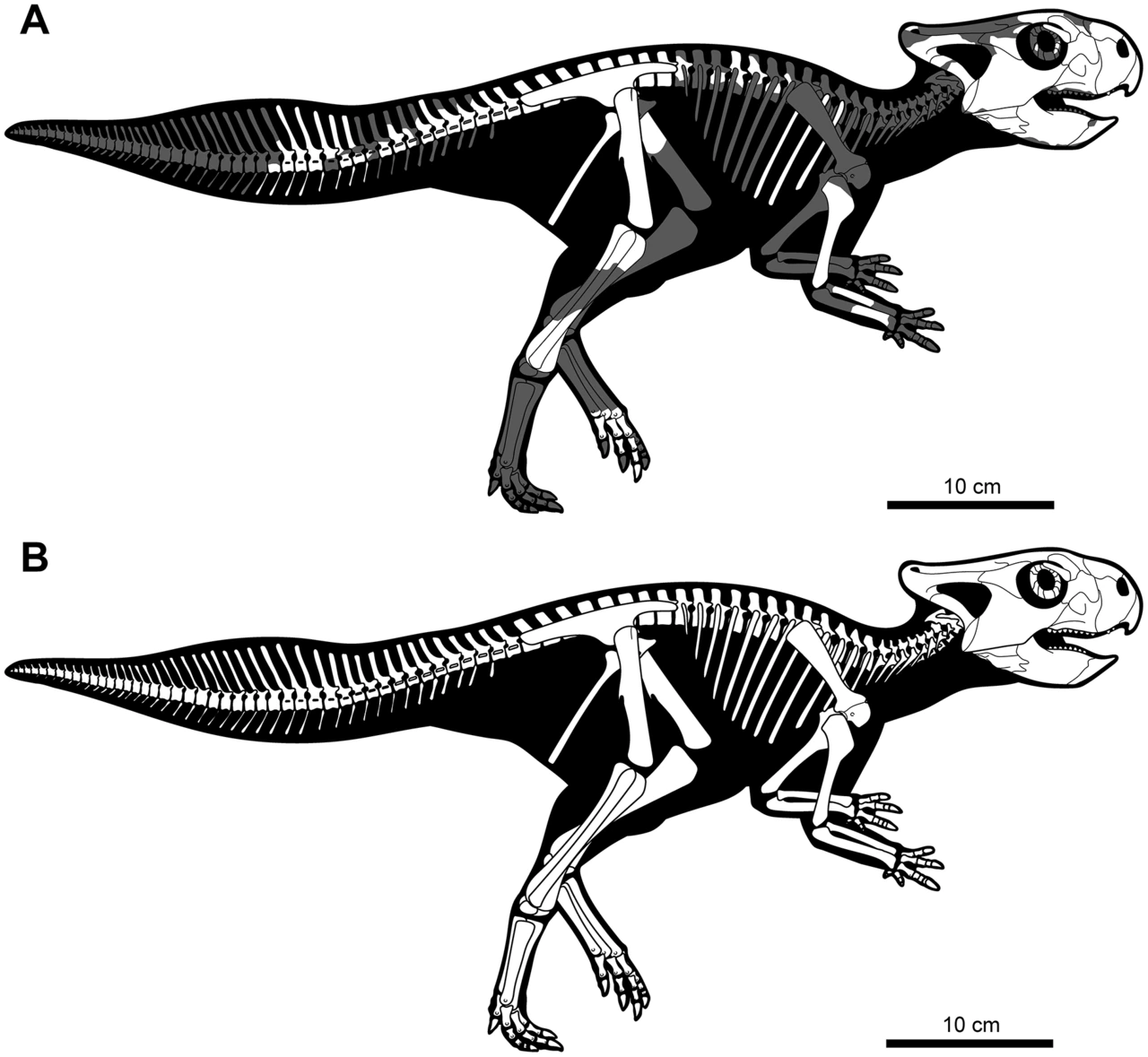
Juvenile Y. dorngobiensis MPC-D100/553. Upper diagram marks preserved bones in white and missing bones in gray; lower diagram restores the skeleton comparatively. Living colors and soft tissues are unknown. [2]
Skeletal Yamaceratops MPC-D 100 553 specimen.png · Minyoung Son, Yuong-Nam Lee, Badamkhatan Zorigt, Yoshitsugu Kobayashi, Jin-Young Park, Sungjin Lee, Su-Hwan Kim and Kang Young Lee. CC BY 4.0. Proportionally resized Commons preview and converted to WebP; no anatomy edits.
Skeletal mounts and drawings may restore missing parts; the caption identifies the displayed material.
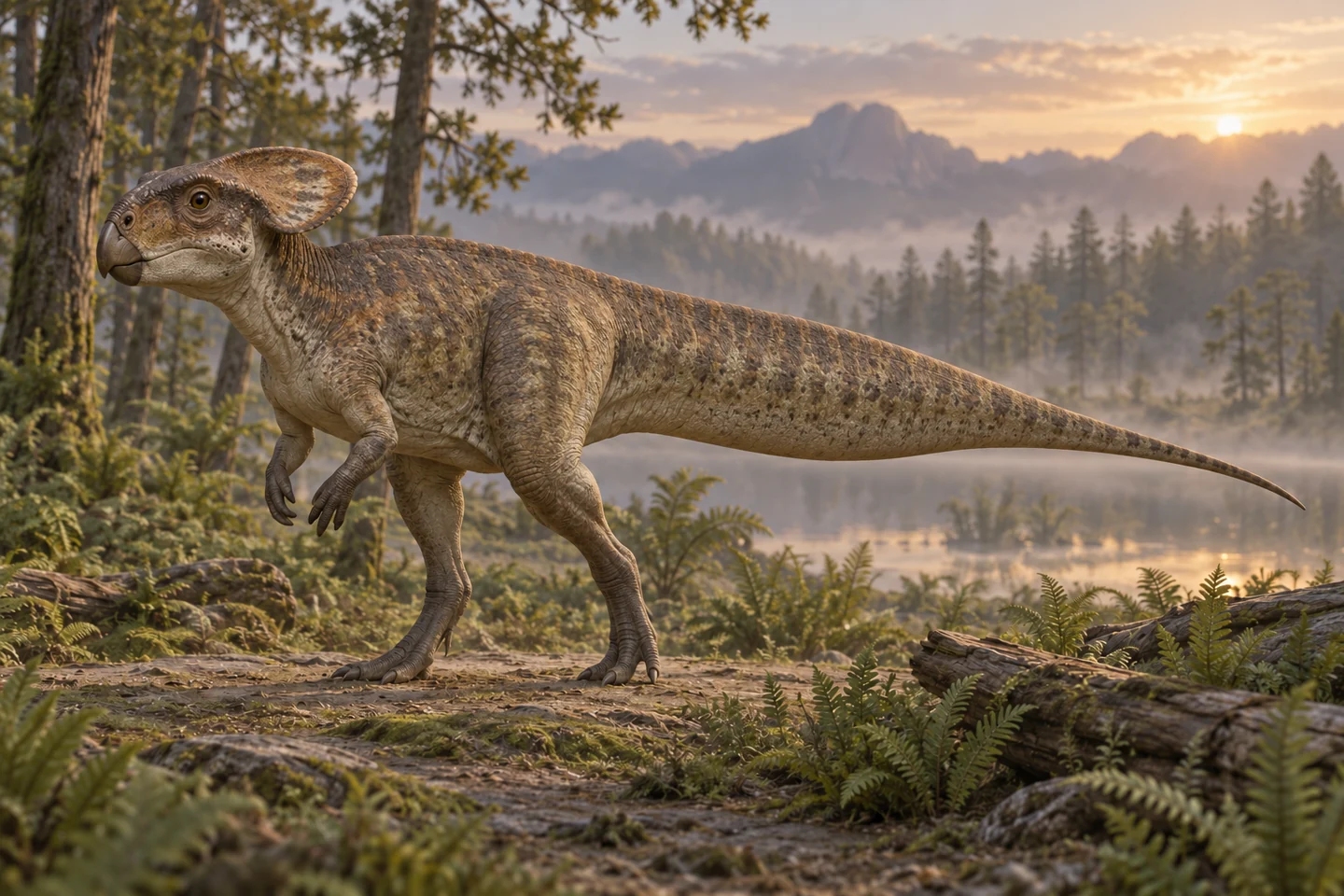
Original cinematic interpretation of Yamaceratops dorngobiensis. Colors, soft tissues, scenery and missing anatomy are reconstructed artistic choices; this is not a directly observed individual or behavior. The deep middle-tail profile is interpreted from skeletal proportions; soft tissues and living posture remain reconstructed. A low broad frill and deeper middle tail follow the reviewed skeletal interpretation; the complete soft-tissue silhouette remains uncertain. Lighting, coloration and scenery are artistic choices. This image does not document a fossil locality or behavior.
Original artwork · artistic interpretation.
Scientific view: source-informed reconstruction, credited paleoart or specimen-based imagery. Movie-style view: Original artistic interpretation. Reconstructions involve uncertainty.
MEET THE ANIMAL
Yamaceratops was a small ceratopsian, a member of the wider group that includes horned dinosaurs. Its beak and ridged cheek teeth suggest plant eating, without providing a preserved menu. Jaw and cheek anatomy combine features not all found together in other early relatives. Such combinations help explain evolution without making the animal a confirmed direct ancestor. [D1]
Its Mongolian red-bed locality was originally given an Early Cretaceous age, but later geological work placed it in the Late Cretaceous Javkhlant Formation. The deposits record alluvial plains and fans with varying wet and dry conditions. Revising the rock context changes when the dinosaur enters the story, even though the identified bones remain the same evidence of anatomy. [D3]
An egg from the locality once suggested possible ceratopsian reproduction. CT analysis later identified the embryo as a bird, so the egg supplies no Yamaceratops nesting evidence. This is an important distinction between proximity and identity: a fossil found nearby is not automatically part of the same animal's biology. The reassessment removes an attractive story while improving the accuracy of the profile. [D4]
PREHISTORIC ANIMAL DOSSIER
The animal, the evidence, and the questions still open.
The juvenile skeleton reveals a deep middle tail and immaturity; its age-at-death estimate does not identify reproductive maturity. [D2]
Profile scope: Y. dorngobiensis: type skull IGM100/1315 and juvenile skeleton MPC-D100/553, kept distinct in size and maturity. [D2]
Source supported identifies a description documented by the cited source. Inferred marks a reconstruction or functional estimate. Debated marks competing interpretations. Not established means the sources reviewed for this dossier do not support a firm conclusion; it does not mean a behavior never occurred.
A size reference is an estimate, not a population range. Nesting evidence does not by itself establish courtship, mate choice, or lifelong pairing.
About 1.5 m; institutional reference
Holtz gives an educational reconstruction without specimen, life stage or method. It is not the measured length of juvenile MPC-D100/553. [D5]
About 1.2 kg; juvenile model
The 2022 developmental extrapolation concerns MPC-D100/553. It assumes a fully grown holotype and skull-to-femoral-circumference isometry; neither assumption makes this an adult mass. [D2]
Probably plant eating
A beak and ridged cheek teeth support herbivory by anatomical comparison. No reviewed stomach contents or other direct evidence identify its preferred plants. [D1]
Seasonally wet and dry alluvial terrain
The red beds at Shine Us Khudag belong to the Upper Cretaceous Javkhlant Formation, overturning the original Early Cretaceous assignment. Sediments record alluvial plains and fans; local climatic and depositional conditions varied. [D3]
Bipedal reconstruction
The juvenile postcranium supports walking on the hind limbs. Adult gait and movement speeds are not directly established. [D2]
Hooked beak and deep middle tail
MPC-D100/553 has middle-tail neural spines about four times the height of their vertebral bodies; missing parts are reconstructed. [D2]
Not established here
Three humeral growth lines indicate a minimum age near three years for MPC-D100/553. Skeletal immaturity does not reveal breeding age or parental care. [D2]
Not established here
The original study proposes jaw-muscle support for the early frill. That functional hypothesis does not establish a mating display or exclude additional functions. [D1]
Not established here
The articulated juvenile was interpreted as rapidly buried following desiccation. This individual does not demonstrate a herd, nesting aggregation or burrow. [D2]
Sources and inspection notes for the claims in this profile.
THE STORY IN THE FOSSILS
Its jaw and cheek bones combine features that did not all appear together in other early ceratopsians. That mosaic helps explain why reconstructing the evolution of the group requires more than a simple ancestral sequence. [1]
An egg from the same locality once suggested possible ceratopsian reproduction. Later CT analysis identified its embryo as a bird; it therefore supplies no Yamaceratops nesting evidence. [4]
The dossier identifies the scope of each reference estimate. A mount, an individual fossil and a species-wide adult range are different measurements. Comparison metrics remain unavailable where adult scope has not been established. Unknown does not mean zero.
Sources support the stated claims and scopes. Refer to the evidence notes for uncertainty.
KEEP EXPLORING
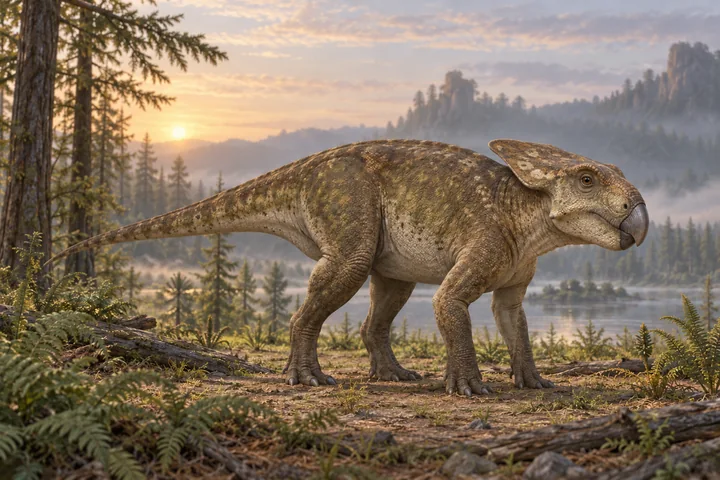
Leptoceratops gracilis
Leptoceratops was a hornless, short-frilled plant eater whose teeth preserve evidence of complex chewing.
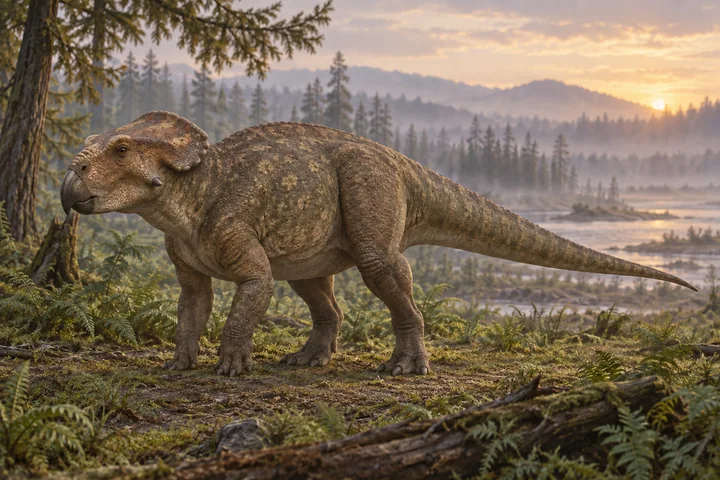
Montanoceratops cerorhynchus
Montanoceratops was a small beaked ceratopsian; incomplete skull material has repeatedly changed how its head is reconstructed.
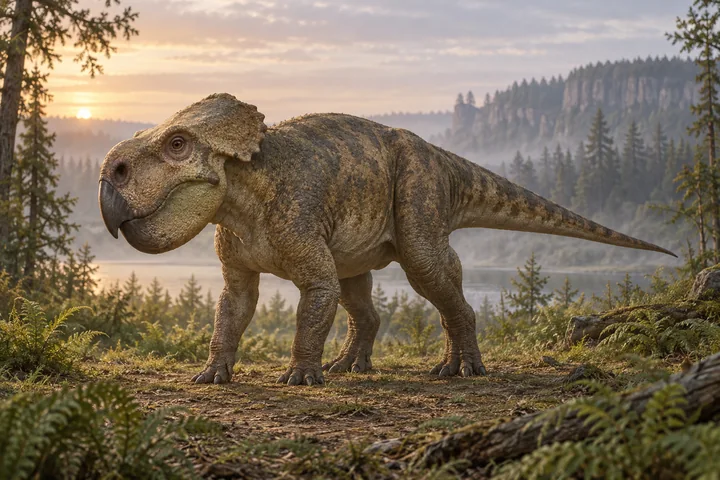
Udanoceratops tschizhovi
Udanoceratops was a large beaked ceratopsian with a strikingly deep lower jaw and an incompletely known body.